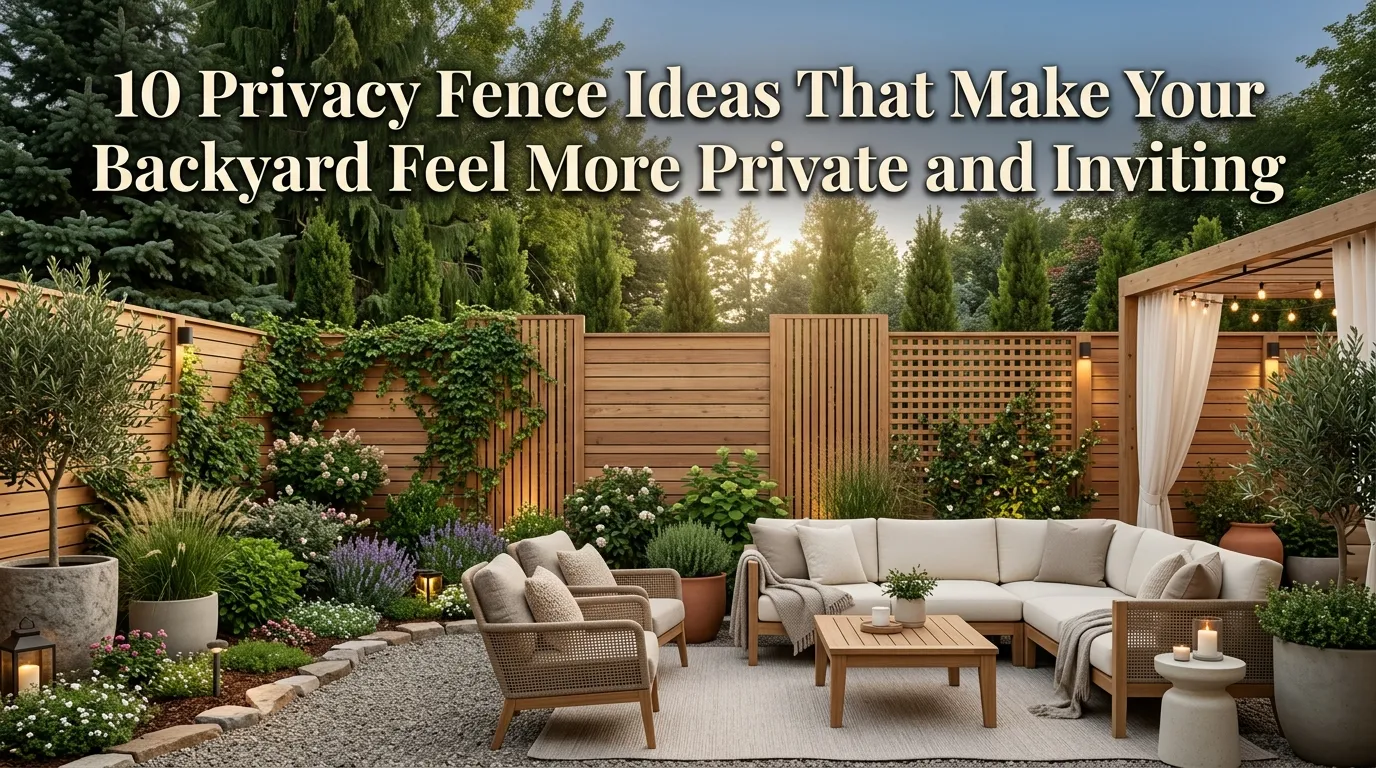
10 Privacy Fence Ideas That Make Your Backyard Feel More Private and Inviting
A backyard can look beautiful and still feel a little too exposed. Maybe the patio faces a neighboring yard, your pool area is visible from the street, or you simply want a quieter place to enjoy coffee without feeling like you’re on display. The right fence can solve that problem while adding structure, character, and style to the outdoor space.
Privacy fencing no longer has to mean a tall, plain wooden barrier. Today’s homeowners have plenty of ways to combine screening with landscaping, warm wood tones, modern materials, decorative details, and comfortable outdoor living areas. A thoughtfully designed fence can become part of the landscape rather than something that simply blocks the view.
I’ve noticed that the most successful backyard privacy solutions usually do more than create separation. They also consider sunlight, airflow, maintenance, the home’s architecture, and how the outdoor space is actually used. A fence around a dining area may need a different approach from one surrounding a swimming pool or a small urban patio.
Before choosing materials, think about what you are trying to hide, how much privacy you actually need, and how much maintenance you’re willing to handle. Local zoning rules and HOA requirements can also affect fence height, placement, and materials, so checking those details before installation is worthwhile.
The ideas below range from classic wood fencing to modern slatted screens and greenery-filled boundaries. Whether you’re planning a complete backyard makeover or looking for one practical improvement, you’ll find options that can make your outdoor space feel more secluded without sacrificing its personality.
Table of Contents
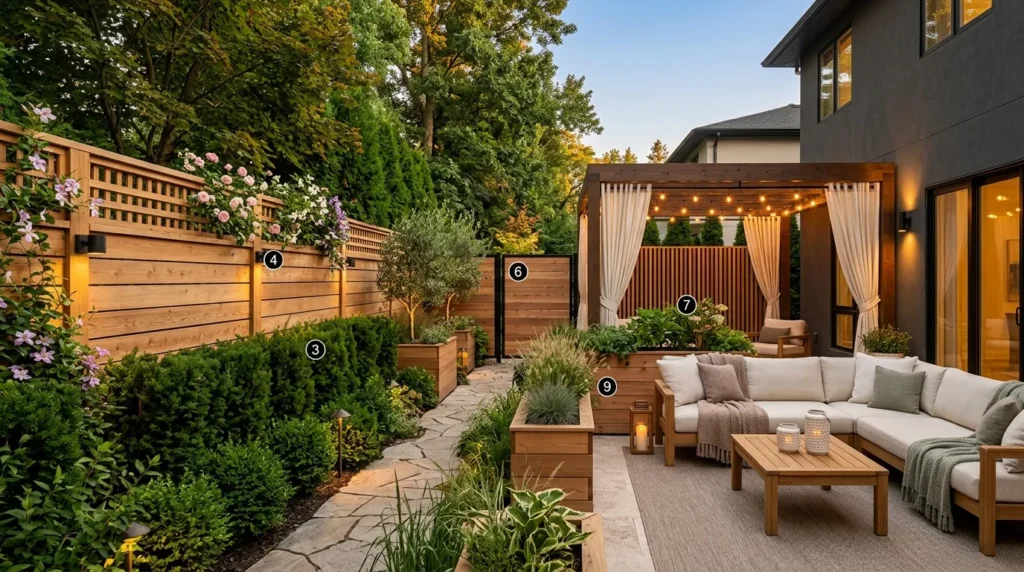
1. Horizontal Wood Slats
A modern wood fence that provides privacy while keeping the backyard visually warm and open.
2. Lattice Privacy Panels
Decorative panels that combine screening with climbing plants and a lighter appearance.
3. Evergreen Fence Line
Layered evergreen planting that creates a natural privacy barrier around the yard.
4. Mixed Wood And Metal
A contemporary combination of wood and metal that adds architectural interest.
5. Tall Cedar Fence
Classic cedar boards that create a substantial privacy boundary with natural character.
6. Fence And Pergola
A connected privacy structure that adds shade, definition, and an outdoor-room feeling.
7. Black Modern Panels
Dark fencing that gives contemporary yards a clean, sophisticated backdrop.
8. Bamboo Screening
A natural-looking screening solution that brings texture and a relaxed garden atmosphere.
9. Layered Plant Privacy
A combination of fencing, shrubs, trees, and ornamental grasses for depth and softness.
10. Decorative Privacy Wall
A statement wall that creates seclusion while becoming a focal point in the backyard.
1. Horizontal Wood Slats
Quick Benefits
- Creates a clean contemporary appearance
- Provides substantial visual screening
- Works well with modern homes
- Adds warmth to hardscaped yards
- Can be combined with landscaping
Why It Works
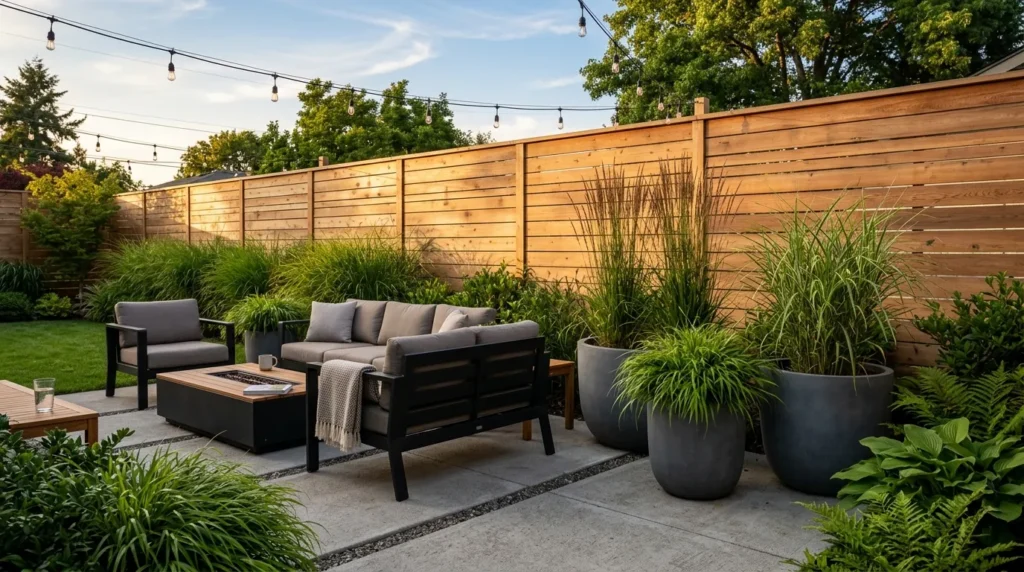
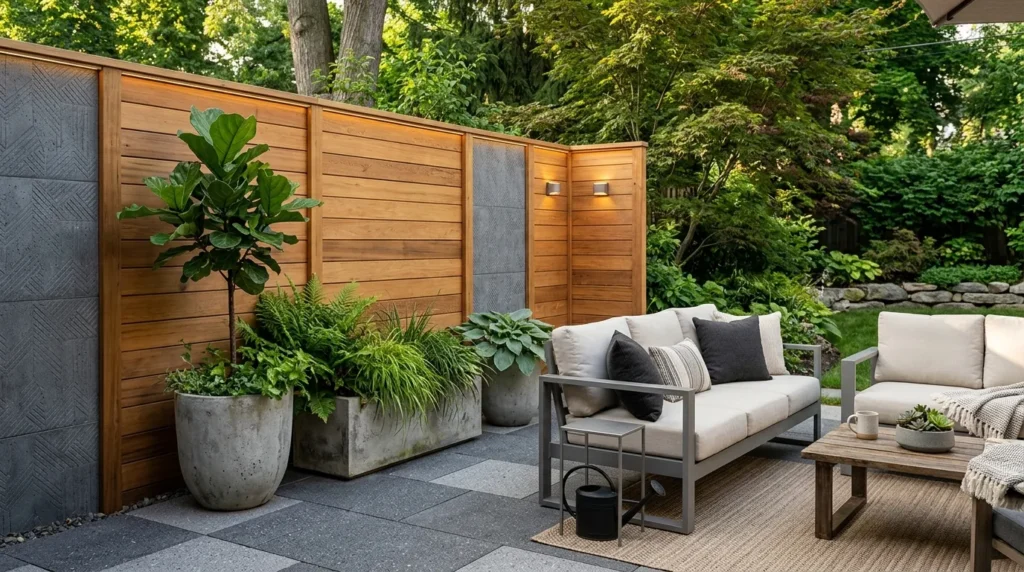
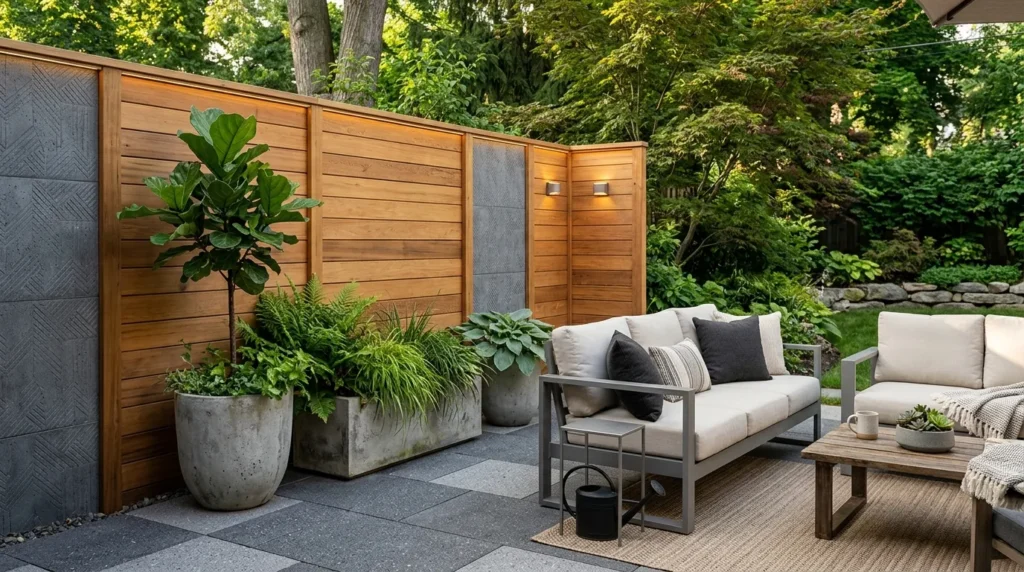
Horizontal wood slats are one of the easiest ways to make a traditional privacy fence feel more current. Instead of installing vertical boards that can look visually heavy, horizontal boards create strong lines that can make the boundary feel wider and more intentional.
This approach works particularly well around patios, decks, and modern outdoor kitchens because the warm texture of wood balances materials such as concrete, stone, and metal. Cedar, redwood, and other naturally durable woods can provide attractive color variation while maintaining a relatively simple design.
Spacing between boards can also change the character of the fence. Tighter spacing provides greater visual privacy, while small gaps allow some light and airflow to pass through. The important thing is to consider the view from both sides rather than designing only for the homeowner’s perspective.
A mistake many homeowners make is choosing a fence solely for height. Proportion matters too. A well-designed horizontal fence can feel private without making the backyard look enclosed.
How To Style It
Pair horizontal wood fencing with simple landscaping rather than competing with it. Large planters, ornamental grasses, boxwoods, or low shrubs can soften the bottom edge of the fence.
For a contemporary backyard, consider combining the wood with black metal furniture, concrete pavers, and neutral cushions. For a warmer look, add teak seating, terracotta planters, and soft outdoor lighting.
If the fence is particularly long, avoid leaving the entire surface completely bare. A few strategically placed planters or climbing plants can break up the visual length.
For evening use, small downward-facing lights mounted near the fence can highlight the wood grain without making the boundary feel overly bright.
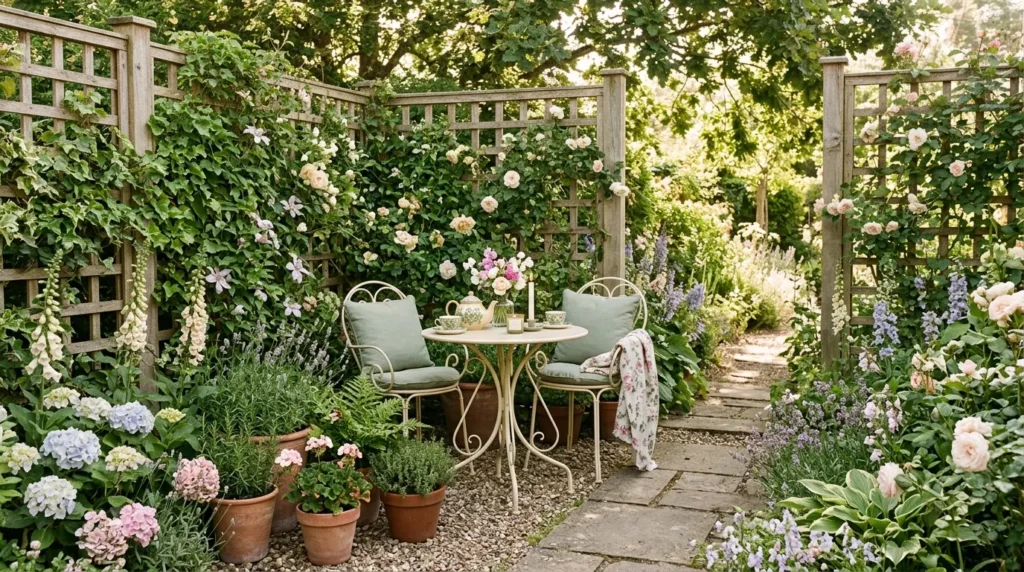
2. Lattice Privacy Panels
Quick Benefits
- Adds decorative detail
- Works beautifully with climbing plants
- Allows filtered light
- Can soften a tall fence
- Suitable for cottage and traditional yards
Why It Works
Lattice panels are useful when you want privacy without the solid visual weight of a completely closed fence. The open framework creates a lighter transition between the yard and its surroundings while still providing a useful amount of screening.
They’re particularly effective when paired with plants. Climbing roses, clematis, jasmine, or other suitable vines can gradually cover sections of lattice and turn a functional boundary into a garden feature.
The design also gives you flexibility. You can use solid boards along the lower portion of the fence and lattice above them. This creates privacy where people are most likely to look while allowing additional sunlight and airflow near the top.
For smaller yards, this can be especially useful. A completely solid wall may make a compact outdoor space feel smaller, while a decorative upper section gives the eye somewhere to travel.
How To Style It
A classic white or natural-wood lattice works well with cottage-style gardens. Surround it with flowering shrubs, climbing vines, and weathered planters for a softer appearance.
For a more contemporary approach, use dark-stained wood or charcoal-colored panels and limit the planting to one or two carefully selected varieties.
If you are using vines, install appropriate support and consider their mature size before planting. Some vigorous climbers can become difficult to manage if they aren’t regularly trimmed.
Place a small bench, bistro table, or garden seating near the lattice rather than directly against it. This creates a cozy destination while preserving room for plants to grow.
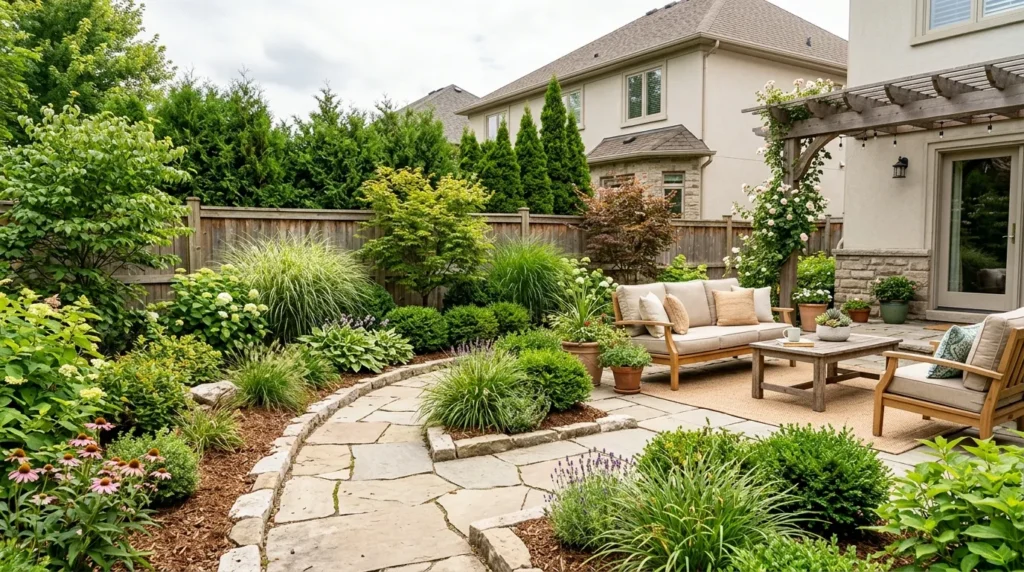
3. Evergreen Fence Line
Quick Benefits
- Creates year-round screening
- Softens hard fence materials
- Adds greenery and texture
- Provides a natural-looking boundary
- Can support a layered landscape
Why It Works
Sometimes the best privacy solution isn’t another wall. Evergreen trees and shrubs can create a living screen that feels more integrated with the landscape.
Plants such as arborvitae, certain hollies, wax myrtle, or other regionally appropriate evergreens can provide year-round foliage. However, plant selection should always be based on your USDA growing zone, mature dimensions, soil conditions, and available sunlight.
The major advantage is visual softness. Instead of looking at a hard boundary, you see layers of foliage, branches, and changing textures.
Evergreens also work beautifully alongside existing fencing. A simple wood or vinyl fence can become almost invisible once plants mature around it.
Spacing matters. Planting shrubs too close together may create maintenance problems later, while excessive spacing can leave gaps that defeat the privacy goal. Check the mature width of each plant rather than relying on the size of nursery containers.
How To Style It
Create a layered planting bed instead of placing one straight row of identical plants.
Use taller evergreen screening toward the back, medium-height shrubs in front, and lower plants or ornamental grasses near the lawn or patio.
Mulch can give the planting area a finished appearance and make routine maintenance easier. Decorative rocks can also work in appropriate landscapes, particularly around modern fencing.
For a softer Pinterest-friendly look, combine different shades of green rather than using one plant variety throughout the entire boundary.
Remember that living screens require ongoing care. Watering, pruning, pest monitoring, and occasional replacement are part of the long-term design.
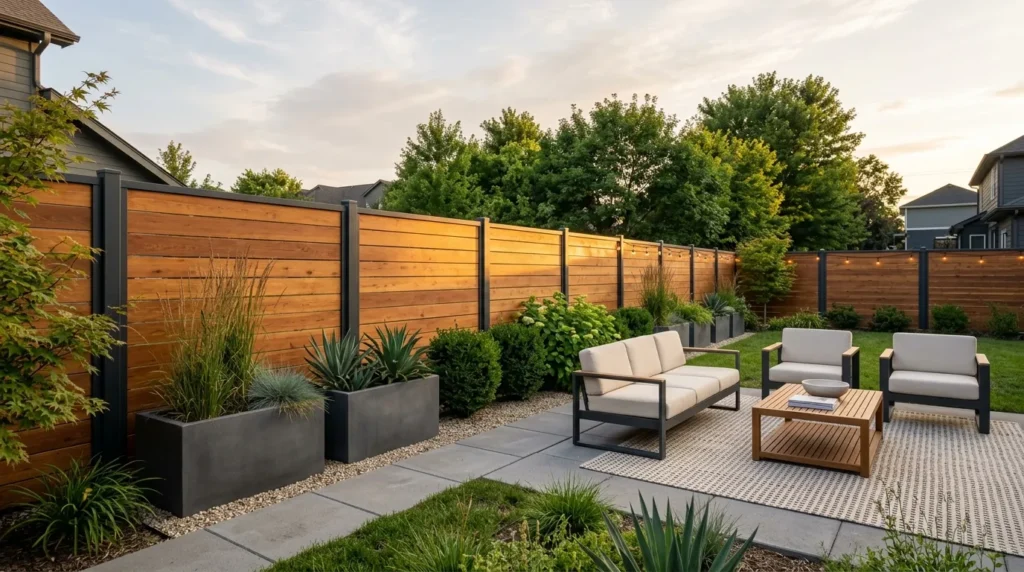
4. Mixed Wood And Metal
Quick Benefits
- Creates a modern architectural look
- Combines warmth and durability
- Adds visual contrast
- Works with contemporary landscaping
- Offers flexible design possibilities
Why It Works
Combining wood and metal is an effective way to make a privacy fence feel like an intentional architectural feature.
Wood contributes warmth and natural texture, while metal introduces clean lines and contrast. The combination can work especially well with contemporary homes that already use black window frames, metal railings, modern lighting, or minimalist landscaping.
One common approach is to use metal posts or frames with wood boards between them. Another is to alternate sections of solid wood with decorative metal panels.
This gives you more flexibility than relying on a single material. Wood can provide the majority of the visual screening, while metal sections break up long stretches and create rhythm.
The contrast is also useful around outdoor living spaces. A wood-and-metal fence can coordinate with black patio furniture, steel fire pits, modern planters, and concrete surfaces.
How To Style It
Keep the rest of the backyard relatively restrained so the fence remains visually important.
Choose one dominant wood tone and one metal finish. Black or dark metal generally creates strong contrast against natural wood, while lighter finishes can produce a softer contemporary appearance.
Add large planters with structured greenery near the fence. Grasses, clipped shrubs, and architectural plants can complement the straight lines.
If your patio contains several different materials already, repeat at least one of them in the fence. For example, metal edging or black lighting can visually connect the fence to the rest of the backyard.
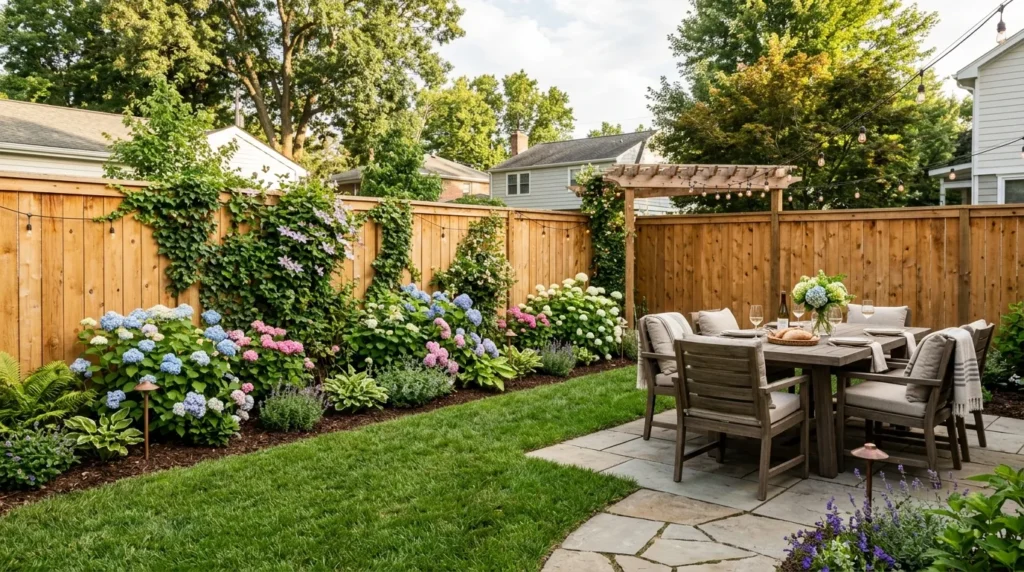
5. Tall Cedar Fence
Quick Benefits
- Classic privacy solution
- Naturally warm appearance
- Works with many home styles
- Provides strong visual screening
- Can be stained or left natural
Why It Works
A tall cedar fence remains popular because it solves the basic privacy problem effectively while maintaining a natural appearance.
Cedar has a distinctive grain and warm color that can make a backyard feel more inviting than some manufactured fencing materials. Over time, untreated cedar can weather toward a silvery-gray appearance, while stains can help preserve or change its original tone.
The simplicity is part of its appeal. You don’t need an elaborate design to create a polished backyard boundary.
Cedar also works across many styles. It can complement a traditional suburban yard, a modern patio, a farmhouse-inspired landscape, or a garden filled with mature trees.
Before installation, verify local requirements for fence height and placement. Regulations can vary by municipality and neighborhood, particularly for fences near property lines, streets, corners, or pools.
How To Style It
Avoid making a tall cedar fence the only visual element along the perimeter. Add planting beds, raised planters, or shrubs to create a gradual transition between the fence and the yard.
Warm outdoor lighting looks particularly attractive against cedar after sunset. Use lighting to highlight nearby trees, pathways, or seating rather than illuminating the entire fence uniformly.
For a modern appearance, combine natural cedar with simple concrete pavers and streamlined furniture.
For a traditional look, add hydrangeas, roses, climbing vines, or other plants appropriate for your climate.
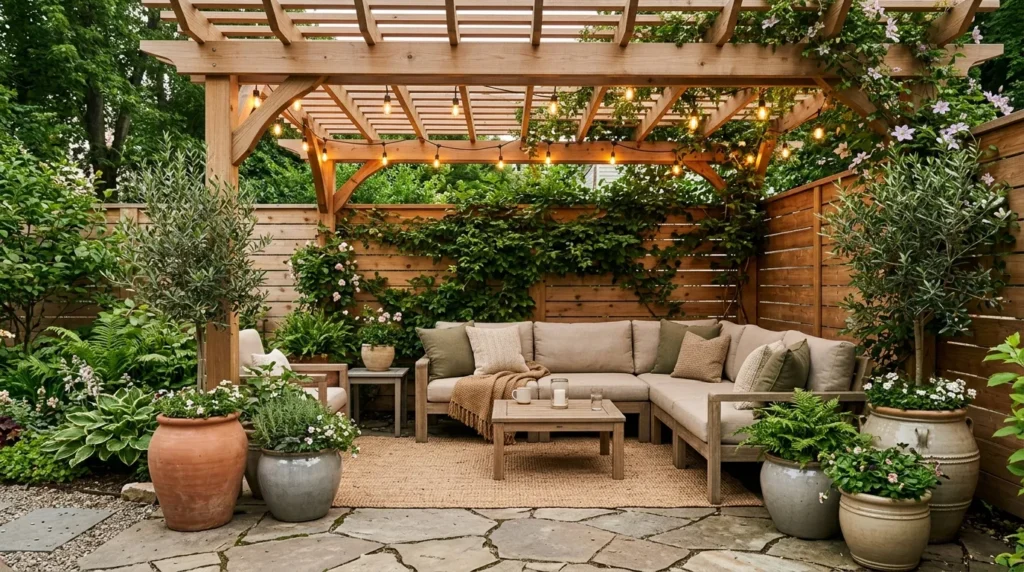
6. Fence And Pergola
Quick Benefits
- Creates a defined outdoor room
- Adds vertical interest
- Can provide partial shade
- Works well around patios
- Creates opportunities for climbing plants
Why It Works
A fence doesn’t have to remain a flat boundary. Extending sections upward into a pergola-like structure can create a more immersive outdoor room.
This approach works particularly well when privacy is needed around a patio, dining area, hot tub, or outdoor kitchen. Instead of screening the entire backyard, you concentrate the privacy treatment where people actually spend time.
The overhead structure can also support climbing plants or lightweight shade solutions where appropriate. Even without a full roof, the change in height gives the outdoor area a stronger sense of definition.
I’ve found that this type of structure is especially useful for yards where homeowners want privacy without completely surrounding every square foot.
How To Style It
Position the pergola extension around the main seating or dining area rather than automatically building it along the entire property boundary.
Use wood tones that coordinate with the fence. Add outdoor curtains only when they are suitable for the structure and climate, and choose fabrics designed for exterior use.
Climbing plants can soften the posts over time. Choose species appropriate for your region and make sure the structure is designed to support the mature plant weight.
Complete the area with a dining table, lounge chairs, outdoor rug, or pendant-style exterior lighting designed for outdoor use.
7. Black Modern Panels
Quick Benefits
- Creates a sophisticated backdrop
- Works with modern landscaping
- Makes greenery stand out
- Offers strong visual definition
- Pairs well with neutral furniture
Why It Works
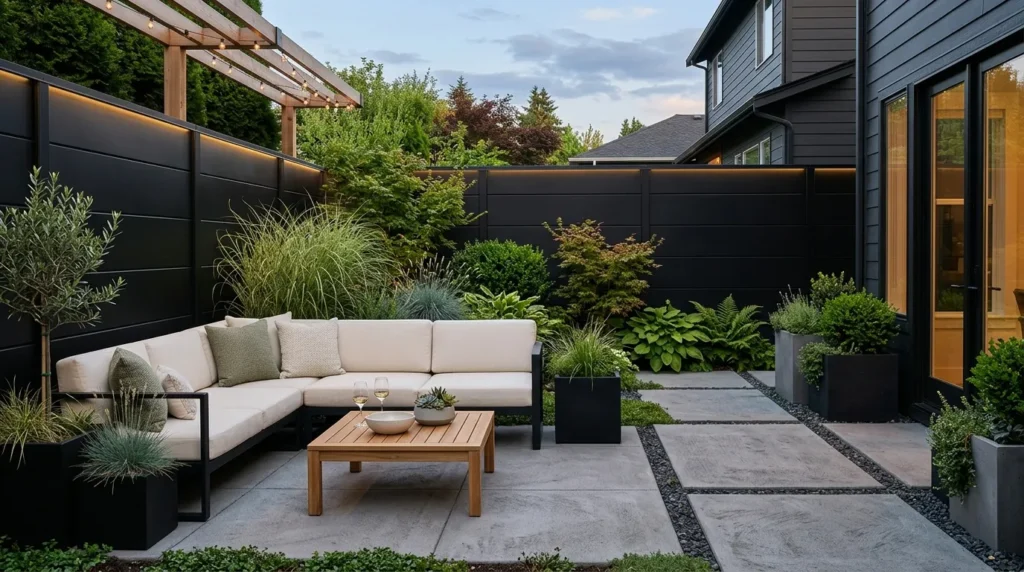
Black fencing can seem bold, but it often works surprisingly well outdoors because it provides a quiet background for plants and architectural elements.
Dark panels can visually recede, particularly when surrounded by greenery. Instead of becoming the main focus, the fence can create a backdrop that makes trees, grasses, flowers, and light-colored furniture stand out.
This approach is especially effective in contemporary landscapes where the goal is clean geometry and limited color variation.
Material choice matters, however. Consider how the surface will perform in your climate, how much direct sun it receives, and what maintenance the manufacturer recommends.
The overall look can be dramatic without requiring complicated landscaping.
How To Style It
Use greenery to soften the contrast. Ornamental grasses, leafy shrubs, climbing plants, and trees can all look striking against a dark background.
Keep furniture relatively simple. Beige, cream, natural wood, and muted gray upholstery can create a comfortable contrast.
For lighting, warm-toned outdoor illumination can prevent the black fence from feeling too severe at night.
If you have a small backyard, avoid adding too many competing dark elements. Let the fence act as the backdrop while the furniture and planting provide the visual variety.
8. Bamboo Screening
Quick Benefits
- Brings natural texture outdoors
- Creates a relaxed atmosphere
- Can cover existing structures
- Works with tropical and bohemian styles
- Adds visual warmth
Why It Works
Bamboo screening can quickly change the character of an outdoor space by introducing a natural, textured surface.
It’s especially appealing for patios, balconies, pool areas, and garden spaces where you want a more relaxed atmosphere. Rather than looking like a conventional perimeter fence, bamboo can give the space a garden-retreat feeling.
However, bamboo products vary considerably in durability. Some are designed for exterior use and weather exposure, while others may deteriorate quickly in demanding conditions. Choose a product appropriate for outdoor installation and follow its maintenance recommendations.
Bamboo can also be used as an additional screening layer rather than as the primary structural fence. This can be useful when an existing boundary needs a visual refresh.
How To Style It
Pair bamboo with natural wood furniture, woven textures, linen-look outdoor cushions, and plenty of greenery.
Large ceramic planters can anchor the screening visually. Add tropical-looking plants where climate permits, or use hardy regional alternatives that provide a similar lush effect.
For a resort-inspired patio, combine bamboo screening with warm lighting and comfortable lounge furniture.
Keep the surrounding palette relatively natural. Too many bright colors can compete with the organic texture of the bamboo.
9. Layered Plant Privacy
Quick Benefits
- Creates depth and dimension
- Softens fencing
- Supports biodiversity
- Looks natural and established
- Can adapt to different yard sizes
Why It Works
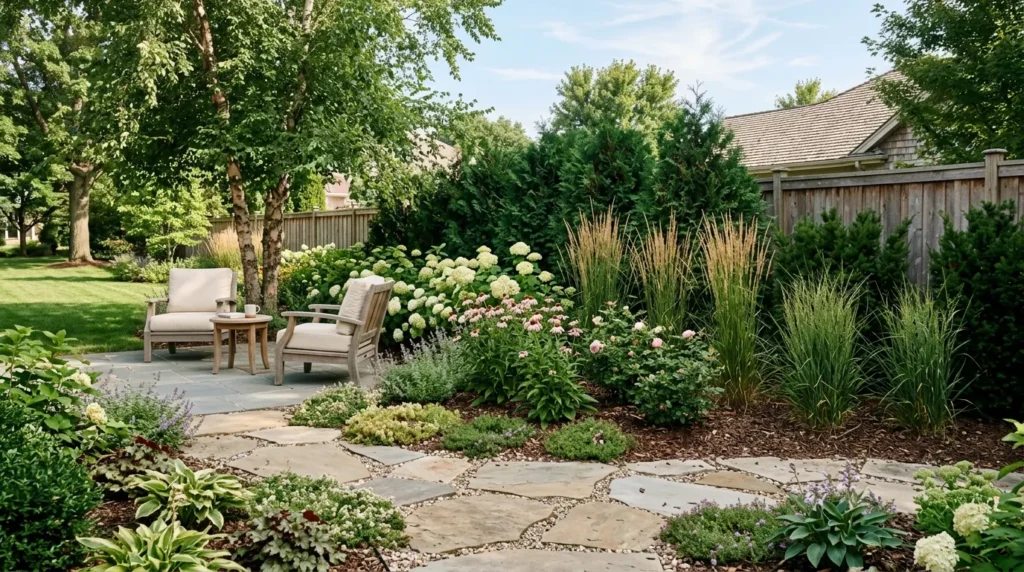
Layering is one of the most effective landscaping techniques for making a privacy boundary look natural rather than constructed.
Instead of relying on one tall fence or one row of shrubs, combine different heights and textures. A fence can form the structural background, medium shrubs can occupy the middle layer, and grasses or groundcover can soften the foreground.
This creates depth and makes the backyard feel more like a garden.
It also gives you flexibility. If one plant struggles, you don’t lose the entire screening system. Different species can provide seasonal interest, flowers, foliage, or texture.
The key is choosing plants that can coexist under the same light and moisture conditions. Mature size is equally important.
How To Style It
Start with the tallest screening element, then work forward.
Place larger shrubs or small trees near the fence, medium plants in the middle, and lower grasses or perennials near pathways and seating.
Use repetition to keep the planting cohesive. You don’t need dozens of species. Three to five complementary plant types can create a sophisticated effect.
Consider seasonal changes when planning the bed. Evergreen structure can maintain privacy through winter while flowering plants provide color during warmer months.
10. Decorative Privacy Wall
Quick Benefits
- Creates a strong focal point
- Provides concentrated privacy
- Works around patios and pools
- Adds architectural character
- Can conceal unattractive views
Why It Works
A decorative privacy wall can be a better solution than fencing the entire yard when the main problem is one particular sightline.
Perhaps the neighboring house is visible from your dining table, or a utility structure sits directly behind the seating area. Instead of creating a large perimeter barrier, a strategically positioned wall can block the unwanted view while preserving openness elsewhere.
Materials can include wood, masonry, composite products, or other suitable exterior materials. Decorative cutouts, vertical slats, built-in planters, or contrasting textures can make the wall feel like a design feature rather than an obstruction.
This is also an excellent approach for smaller yards where a full perimeter fence might feel overwhelming.
How To Style It
Think of the wall as an outdoor accent wall.
Place it behind a seating area, outdoor dining table, fireplace, or garden feature. Add plants around its base to soften the transition.
Vertical planters can work well when appropriate, particularly in smaller spaces. Wall-mounted lighting can also emphasize the texture after dark.
Choose materials that coordinate with the architecture of the house. Repeating exterior colors, wood tones, or stone textures helps the privacy wall feel connected to the overall property.
Choosing The Right Privacy Fence
The best privacy fence isn’t necessarily the tallest or most expensive option. It is the one that solves your specific privacy problem while fitting your home, landscape, budget, and maintenance preferences.
Start by identifying the sightlines that bother you most. Stand in the areas where you normally sit, eat, entertain, or relax and look toward neighboring properties. You may discover that you only need screening in one or two locations.
Next, consider the amount of privacy required. Full visual blocking provides the most separation, but partially open designs can preserve sunlight and airflow.
Material is another important consideration. Wood offers warmth and flexibility, while metal can provide a modern architectural appearance. Living screens create softness but require ongoing care. Composite and other manufactured materials may offer different maintenance characteristics depending on the product.
Don’t forget the practical details. Check property boundaries, local fence regulations, HOA requirements, underground utilities, drainage, and access for maintenance before construction begins.
A well-planned privacy solution should feel like part of the backyard—not an afterthought added simply to block a view.
Privacy Fence Materials To Consider
Wood
Wood remains a versatile choice because it can be stained, painted, spaced, layered, or combined with other materials. Cedar and redwood are common choices for outdoor applications, although climate and maintenance requirements should guide the final decision.
Metal
Metal panels and frames can create clean lines and strong architectural contrast. They work especially well with contemporary landscapes and can be combined with wood for a warmer finish.
Composite
Composite fencing can offer a consistent appearance and may appeal to homeowners who prefer reduced routine maintenance. Product performance varies, so always review manufacturer specifications and installation requirements.
Living Plants
Shrubs, trees, and vines can create beautiful screening while contributing greenery to the landscape. The tradeoff is maintenance and the time required for plants to reach useful screening size.
Natural Screening
Bamboo and similar natural materials can provide texture and an informal garden feel. Their suitability depends on the specific product, local climate, installation method, and expected exposure.
How Tall Should A Privacy Fence Be?
A privacy fence is commonly designed around the height needed to block the relevant sightline rather than simply choosing the tallest possible structure.
For example, a patio may require a different screening height than a swimming pool or side yard. A raised deck can also change the height needed because the viewing position is higher.
Local regulations are important here. Fence-height limits can vary by city, zoning district, property location, and HOA rules. Some areas also have special requirements near streets, driveways, intersections, or easements.
Before purchasing materials, verify the applicable rules and confirm your property boundaries. A beautiful fence that has to be moved later is an expensive mistake.
How To Make A Fence Look More Expensive
You don’t necessarily need a luxury material to create a polished appearance.
Focus on proportion, consistency, and finishing details.
Choose a cohesive color palette and repeat materials throughout the backyard. For example, natural wood fencing can coordinate with a wood dining table or planter boxes.
Pay attention to the transition between the fence and ground. A narrow planting bed can make a basic fence feel much more intentional.
Lighting also makes a significant difference after sunset. Use carefully positioned fixtures to highlight landscaping, pathways, or architectural features.
Finally, avoid overcrowding. A few large, well-positioned planters often look more sophisticated than many small decorative objects.
Common Privacy Fence Mistakes To Avoid
One of the biggest mistakes is choosing a fence before considering the entire landscape.
A fence should work with the home’s exterior, patio materials, landscaping, and outdoor furniture. Otherwise, it can look disconnected.
Another common issue is ignoring mature plant size. A shrub that looks perfectly sized at the garden center may eventually become much wider and taller than expected.
Homeowners also sometimes overlook maintenance. Natural wood may need periodic care, while living screens require watering and pruning.
Finally, don’t assume that more privacy is always better. Completely enclosing a small backyard can sometimes make it feel smaller. A combination of partial screening, plants, and strategically positioned walls may provide the same practical privacy with a more open feeling.
FAQ
What is the best material for a privacy fence?
The best material depends on your priorities. Wood is popular for its warmth and flexibility, while metal works well for modern designs. Composite materials may appeal to homeowners seeking a different maintenance profile, and living plants provide a natural alternative. Consider climate, budget, maintenance, appearance, and local regulations before choosing.
How can I make my backyard more private without building a tall fence?
Use layered solutions. Evergreen shrubs, ornamental trees, lattice panels, pergolas, decorative screens, and strategically placed privacy walls can block specific sightlines without enclosing the entire yard. This approach can also make a small backyard feel more open while still creating comfortable private areas.
Are horizontal fences good for privacy?
Yes, horizontal fences can provide excellent privacy when the boards are installed with appropriate spacing and height. They also create a modern appearance. Tight board spacing offers stronger visual screening, while slightly wider gaps allow more light and airflow. Always consider local regulations and structural requirements.
How do I soften the look of a privacy fence?
Plants are one of the easiest ways to soften fencing. Add shrubs, ornamental grasses, vines, planters, or small trees along the boundary. Varying plant heights and textures can make a fence look integrated into the landscape rather than like a separate structure.
What plants are best for backyard privacy?
The best plants depend on your USDA growing zone, soil, sunlight, available space, and desired maintenance level. Evergreen shrubs and trees are often useful because they retain foliage for much of the year, but local species and site conditions should guide your selection.
Can a privacy fence increase backyard appeal?
A thoughtfully designed fence can improve the visual organization of a backyard by defining outdoor rooms, framing landscaping, and creating a consistent backdrop. The result depends heavily on proportion, material choice, maintenance, and how well the fence coordinates with the home and surrounding landscape.
Do I need permission to install a privacy fence?
Possibly. Fence requirements vary by municipality, zoning rules, property conditions, and HOA restrictions. Height, placement, materials, and location near streets or property lines may all be regulated. Check local requirements before installation and confirm the location of property boundaries.
Conclusion
The right privacy solution can completely change the feeling of a backyard. Instead of seeing privacy fencing as a purely functional boundary, think of it as another layer of your outdoor design.
A warm cedar fence can create a classic garden backdrop. Horizontal slats can complement a modern patio. Lattice can bring climbing plants into the design, while evergreen screening adds softness and year-round structure. For smaller spaces, a decorative privacy wall or pergola can focus screening exactly where you need it without closing off the entire yard.
The most successful approach is usually the one that balances privacy with light, airflow, landscaping, maintenance, and everyday usability. Start by identifying the views you want to block and the areas where you spend the most time.
Then choose one or two ideas that fit your home’s architecture and your landscape rather than trying to change everything at once.
A thoughtful privacy upgrade can make an outdoor space feel more comfortable, defined, and inviting—and sometimes a relatively simple change is all it takes to make your backyard feel much more like your own.
Related Articles
- 11 Backyard Privacy Ideas for a More Secluded Outdoor Space
- 12 Backyard Landscaping Ideas for a Beautiful Outdoor Retreat
- 11 Backyard Pool Landscaping Ideas
- 12 Backyard Decor Ideas for Outdoor Entertaining
- 10 Small Patio Ideas That Make the Most of Limited Space