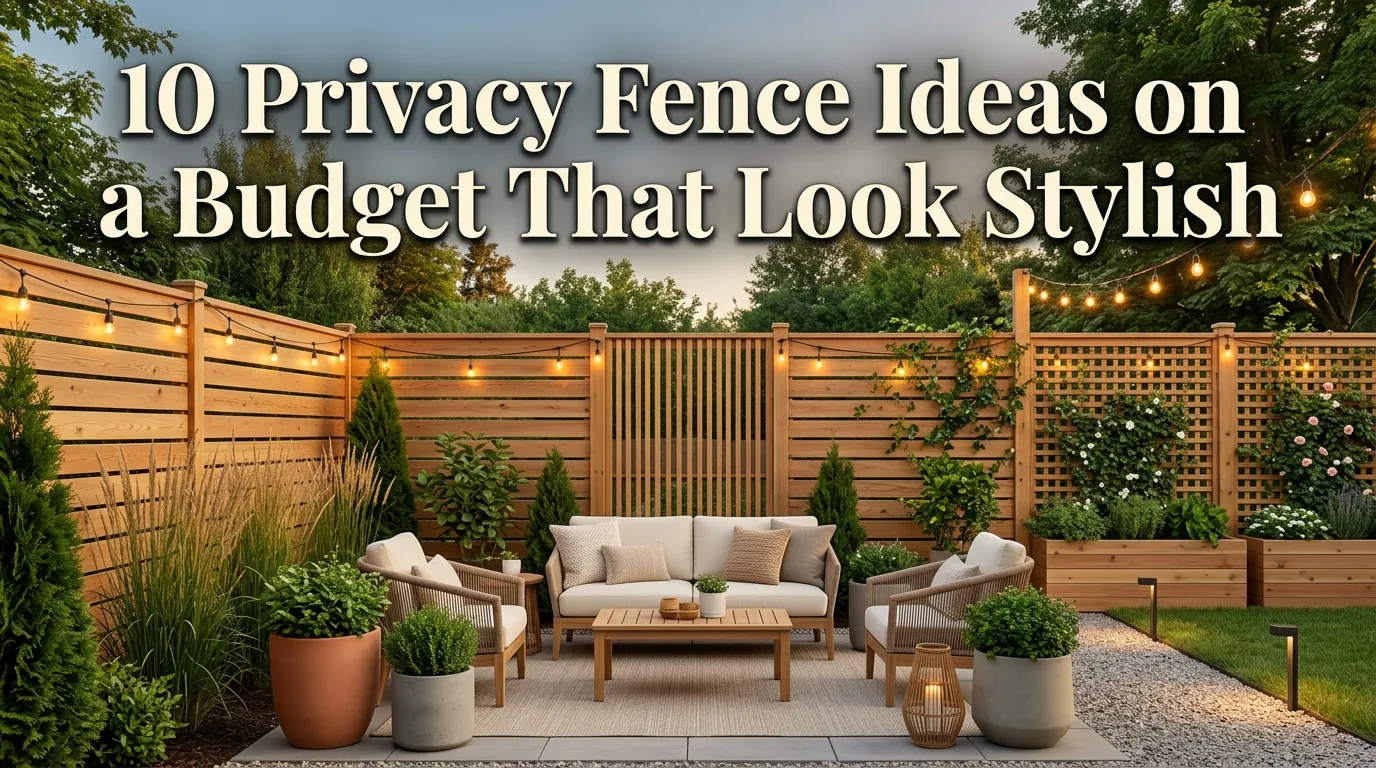
10 Privacy Fence Ideas on a Budget That Look Stylish
Creating a more private backyard doesn’t have to mean spending thousands of dollars on a custom fence. With the right materials, smart placement, and a little creativity, you can block unwanted views while keeping your outdoor space attractive and comfortable.
A privacy project can become surprisingly expensive when homeowners focus only on building a tall, solid perimeter fence. In many backyards, that’s not actually necessary. You may only need to screen one seating area, hide a particular sightline, or add height to an existing boundary. Those smaller solutions can make a noticeable difference while keeping material and labor costs under control.
I’ve found that the most budget-friendly outdoor privacy ideas usually have one thing in common: they work with what is already there. An existing fence, deck, pergola, wall, railing, or mature landscaping can become the foundation for a much less expensive privacy upgrade.
The materials don’t have to look cheap, either. Wood lattice, simple garden panels, climbing plants, repurposed boards, outdoor fabric, and strategically placed containers can all add privacy when they’re used thoughtfully. The trick is to make the finished design look intentional rather than like a collection of temporary fixes.
Before starting, check local fence regulations and HOA requirements, especially if you’re changing the height or location of an existing fence. It’s also worth considering maintenance. A low upfront price isn’t necessarily a bargain if the material needs frequent replacement.
Below are practical ideas ranging from simple DIY screens to inexpensive landscaping tricks. Some work for renters and small patios, while others are better suited to homeowners who can make permanent changes. Choose the option that solves your particular privacy problem rather than automatically covering the entire yard.
Table of Contents
1. Lattice Fence Extension
Add affordable lattice above an existing fence for extra height and visual screening.
2. Reclaimed Wood Screen
Turn inexpensive or reclaimed boards into a warm, rustic privacy feature.
3. Outdoor Curtain Panels
Use weather-resistant curtains to create flexible privacy around patios and decks.
4. Trellis With Vines
Combine inexpensive trellises with climbing plants for a living privacy screen.
5. Pallet Privacy Wall
Repurpose suitable wooden pallets into a decorative backyard screen.
6. Bamboo Roll Screening
Cover an existing fence or railing with bamboo for quick natural texture.
7. Container Plant Screen
Use tall potted plants to block views without installing a permanent structure.
8. Simple Slat Screen
Build a streamlined screen from affordable wood boards for a modern appearance.
9. Fabric Privacy Screen
Create a lightweight barrier using outdoor fabric and a simple support structure.
10. Shrub Privacy Border
Use affordable shrubs and layered planting to create a natural screen over time.
1. Lattice Fence Extension
Quick Benefits
- Uses an existing fence
- Requires fewer materials
- Adds privacy without a full replacement
- Allows airflow and filtered light
- Works with climbing plants
Why It Works
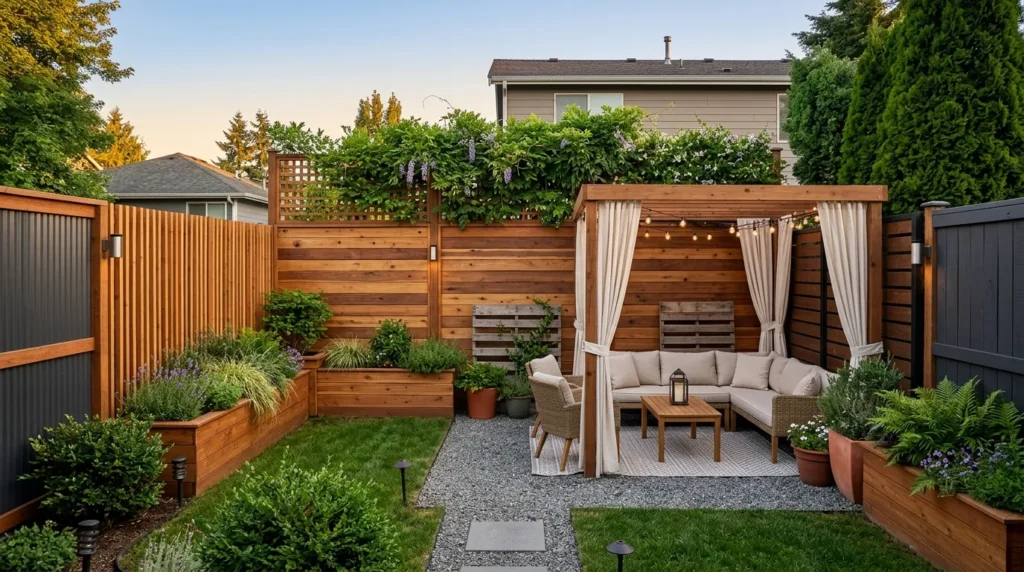
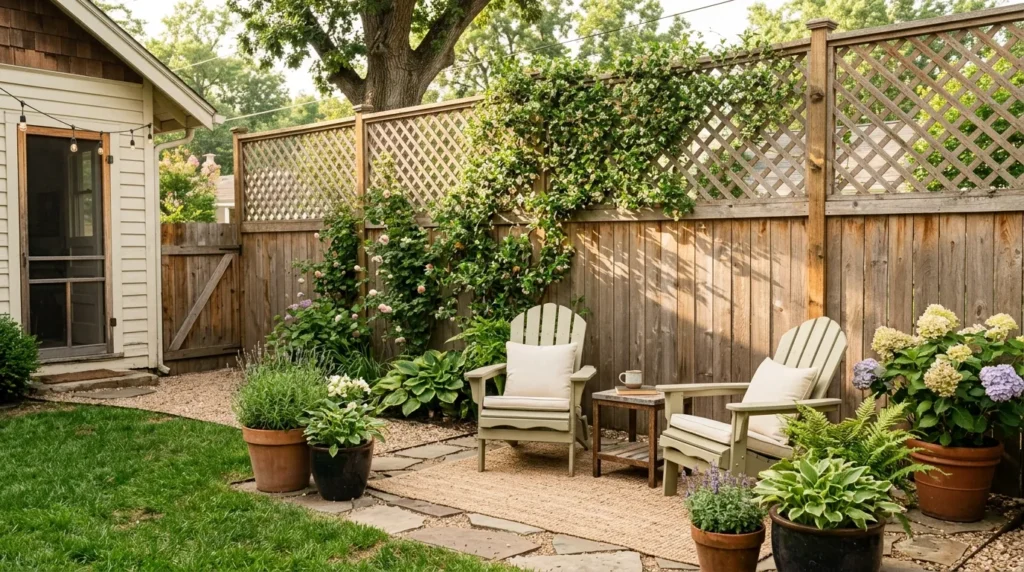
If your existing fence is structurally sound but simply isn’t tall enough, replacing the entire thing may be unnecessary. Adding lattice panels along the top can provide additional screening for considerably less material than building a new full-height fence.
This is especially useful when the privacy problem comes from a neighboring deck, second-story window, or elevated patio. A few extra feet in the right location can sometimes solve the sightline without changing the entire perimeter.
Lattice also has a lighter visual appearance than extending a solid wall. The open pattern allows some sunlight and airflow through while giving climbing plants a framework to grow on.
One important point is structural support. Don’t simply attach a heavy extension to a fence that wasn’t designed to carry additional weight. Inspect the existing posts and follow appropriate installation methods.
How To Style It
Choose lattice that complements your existing fence rather than creating a completely different look. Natural wood can be stained to coordinate with the lower boards, while painted panels can create a crisp traditional appearance.
For additional softness, plant a suitable climbing vine near the base. Over time, foliage can fill portions of the lattice and create a more natural privacy screen.
If you have a small patio behind the fence, add a few large planters near the boundary instead of filling the entire area with decorations. This keeps the design simple and inexpensive.
2. Reclaimed Wood Screen
Quick Benefits
- Can use inexpensive materials
- Adds rustic character
- Easy to customize
- Creates a warm visual backdrop
- Can hide unattractive views
Why It Works
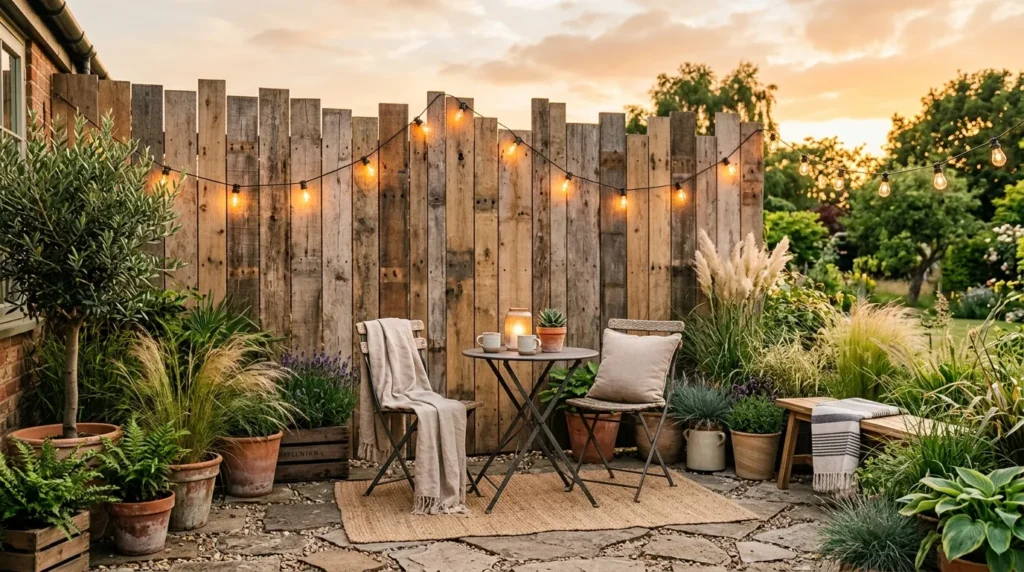
Reclaimed or salvaged wood can become a surprisingly attractive privacy screen when the boards are arranged thoughtfully. Instead of purchasing premium fencing lumber for every section, you can use suitable leftover boards, salvaged lumber, or inexpensive new boards to create a smaller screening feature.
This works best when you don’t need to enclose the entire yard. A six- to eight-foot-wide screen behind a patio sofa, outdoor dining table, or hot tub can provide privacy exactly where it’s needed.
The irregularity of reclaimed wood can actually become part of the design. Different board widths and subtle variations in tone create texture that would be difficult to achieve with a standard fence.
However, don’t assume every piece of reclaimed wood is appropriate outdoors. Avoid questionable materials, visibly damaged boards, or wood with unknown treatments. Use sound material suitable for exterior projects.
How To Style It
Arrange boards vertically for a traditional screen or horizontally for a more contemporary appearance.
A natural weathered finish works well with cottage, farmhouse, and rustic gardens. For a cleaner look, use an exterior stain in one consistent color.
Place tall grasses, large planters, or climbing greenery in front of the screen to soften the edges.
You can also install small outdoor-rated lights nearby. At night, the warm illumination can make the wood screen feel like a deliberate architectural feature rather than a budget project.
3. Outdoor Curtain Panels
Quick Benefits
- Relatively inexpensive
- Easy to change
- Works on patios and decks
- Provides flexible privacy
- Adds softness and texture
Why It Works
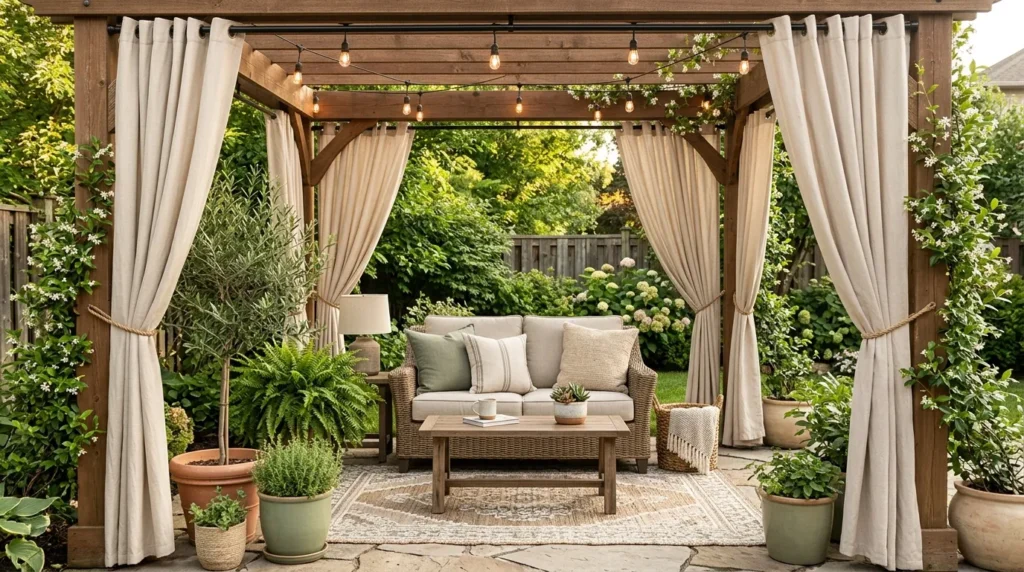
Outdoor curtains are one of the simplest ways to create privacy around a seating area without building a permanent fence.
They’re particularly useful when your privacy concern is limited to a patio, pergola, covered deck, or balcony. Instead of screening the whole backyard, curtains can be drawn only when you want more separation.
This approach also works well for renters because a curtain system can sometimes be installed without major permanent changes, depending on the structure and lease requirements.
The key is choosing fabric intended for outdoor use and a support system designed for the location. Wind can put considerable stress on curtain rods, cables, and mounting hardware, so secure installation matters.
How To Style It
White, cream, taupe, and light gray curtains can create a relaxed outdoor-room feeling. Darker shades provide a stronger visual boundary but may feel heavier in a small space.
Pair curtains with simple outdoor furniture and a textured rug designed for exterior use.
When open, tie the panels neatly to the sides. When privacy is needed, close them around the seating area.
This also gives you a way to change the appearance seasonally without rebuilding anything.
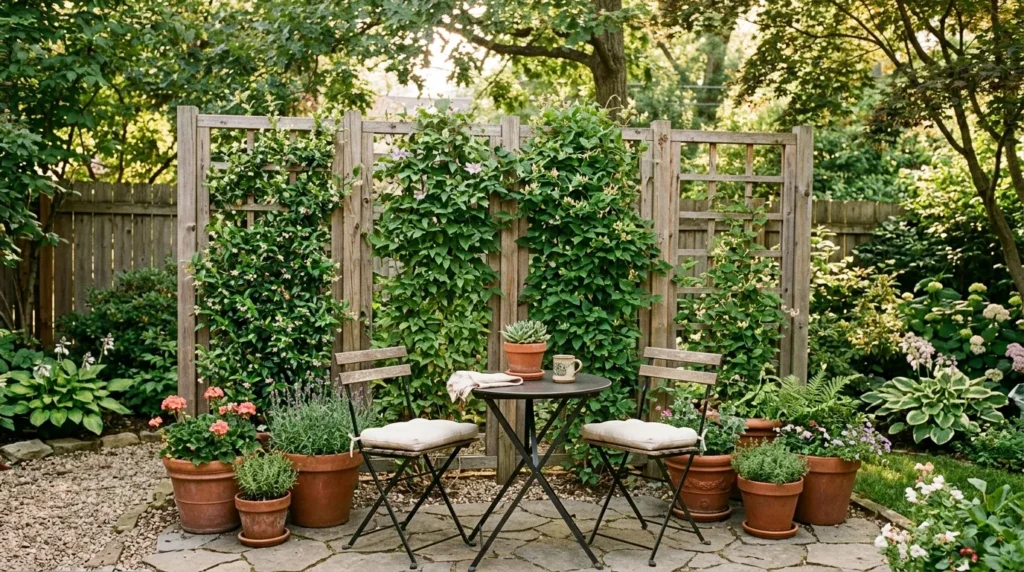
4. Trellis With Vines
Quick Benefits
- Combines privacy and greenery
- Relatively low material cost
- Adds garden character
- Can soften existing fencing
- Works in small spaces
Why It Works
A basic trellis becomes much more useful when it supports a vigorous but manageable climbing plant.
Instead of paying for a completely solid privacy wall, you can create a vertical garden layer that gradually fills in with foliage. This is particularly attractive when the goal is to make a patio or garden feel secluded rather than completely block every view.
The downside is patience. Plants need time to establish, and the exact screening effect depends on the species, climate, sunlight, and growing conditions.
Choose plants appropriate for your region and available space. Some vines can become extremely vigorous, so research mature size and maintenance requirements before planting.
How To Style It
Install several trellises in a row if you need a longer screen, leaving consistent spacing between them for a more intentional appearance.
Combine the trellises with simple planter boxes or a narrow garden bed.
For a cottage-inspired yard, flowering climbers can add seasonal color. For a cleaner contemporary look, choose foliage-focused plants and keep the surrounding landscape simple.
Once the plants establish, the trellis may become almost invisible.
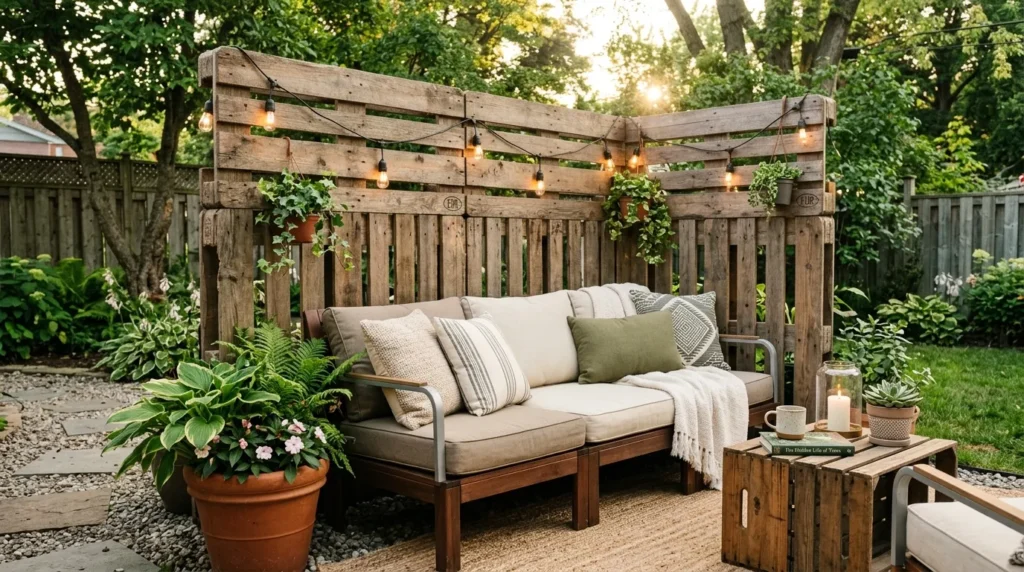
5. Pallet Privacy Wall
Quick Benefits
- Can reuse available materials
- Creates a strong DIY appearance
- Easy to customize
- Useful for small privacy zones
- Adds rustic texture
Why It Works
Wood pallets are often associated with inexpensive DIY projects because they can sometimes be obtained at little or no cost. But not every pallet is suitable for backyard construction.
If you’re considering pallets, use only clean, structurally sound pallets appropriate for the intended project. Avoid pallets with unknown chemical exposure or signs of contamination.
Rather than building an entire perimeter from pallets, use them as a compact privacy screen. A small wall behind an outdoor sofa or between neighboring patio spaces requires far fewer materials.
The result can be surprisingly attractive when the wood is cleaned, finished, and combined with plants.
How To Style It
Keep the palette simple. A natural wood finish works well with greenery and outdoor furniture.
You can add narrow planter boxes or containers along the base, provided the structure is designed to support them safely.
For a more polished appearance, arrange the pallets consistently and trim or finish exposed edges.
String-style outdoor lighting can add atmosphere, but make sure all electrical products are rated for exterior use and installed appropriately.
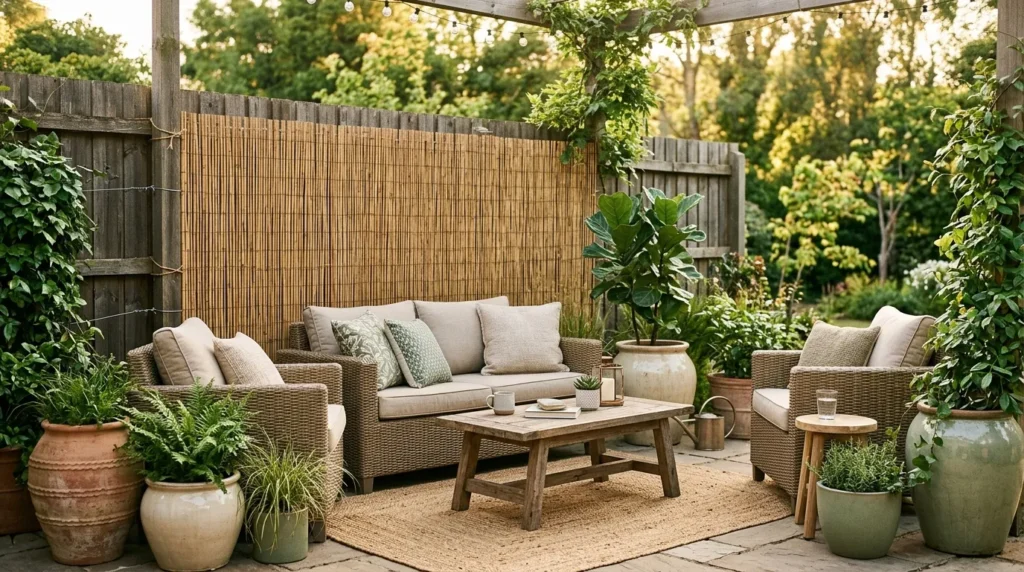
6. Bamboo Roll Screening
Quick Benefits
- Fast visual transformation
- Adds natural texture
- Can cover existing structures
- Useful for patios and decks
- Creates a relaxed atmosphere
Why It Works
Bamboo roll screening can be a practical way to refresh an existing fence, railing, or boundary without constructing an entirely new structure.
Its natural texture makes a plain fence feel more like part of a garden. It can also be particularly effective around outdoor seating areas where the goal is to create a relaxed, resort-like atmosphere.
The cost varies by product and size, but screening only the sections where privacy is needed can keep the project much more affordable.
Make sure the bamboo product you choose is intended for outdoor exposure. Weather, moisture, insects, and direct sunlight can all affect its longevity.
How To Style It
Combine bamboo with warm wood furniture, woven outdoor accessories, neutral cushions, and leafy plants.
If you want the space to feel more contemporary, use bamboo against simple black or charcoal furniture.
For a tropical-inspired look, add large foliage plants where your climate allows. In colder regions, choose hardy plants that provide a similar layered effect.
The goal is to create a cohesive outdoor retreat rather than simply attaching screening to a fence.
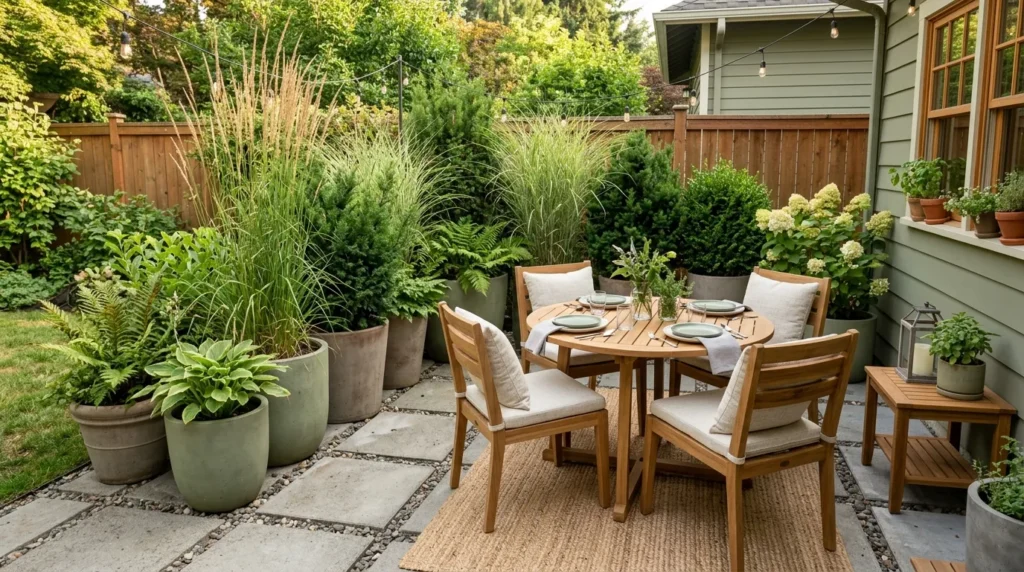
7. Container Plant Screen
Quick Benefits
- No permanent fence required
- Great for renters
- Easy to rearrange
- Adds greenery and privacy
- Works on patios and decks
Why It Works
Large containers can create privacy surprisingly effectively when you choose plants with enough height and density.
This is particularly useful for renters, small patios, townhomes, and outdoor dining spaces where permanent construction isn’t practical.
Instead of trying to screen the entire property, place several tall containers along the specific edge where you need privacy. The plants become both decoration and functional screening.
The containers themselves also offer flexibility. You can rearrange them when your outdoor layout changes or move them seasonally when appropriate.
Choose plants based on the amount of sun and water available. Container plants generally require more attentive watering than plants growing directly in the ground.
How To Style It
Use matching containers if you want a clean, designer-inspired appearance. Different containers can work for a more eclectic garden style.
Tall grasses are particularly useful because they provide movement and vertical height without creating an extremely heavy barrier.
Large evergreen shrubs can provide more substantial screening in suitable climates.
Arrange the containers in groups rather than perfectly straight lines. Slight variation in height often creates a more natural appearance.
8. Simple Slat Screen
Quick Benefits
- Modern appearance
- Uses relatively simple construction
- Can screen specific areas
- Easy to coordinate with patios
- Works with inexpensive lumber
Why It Works
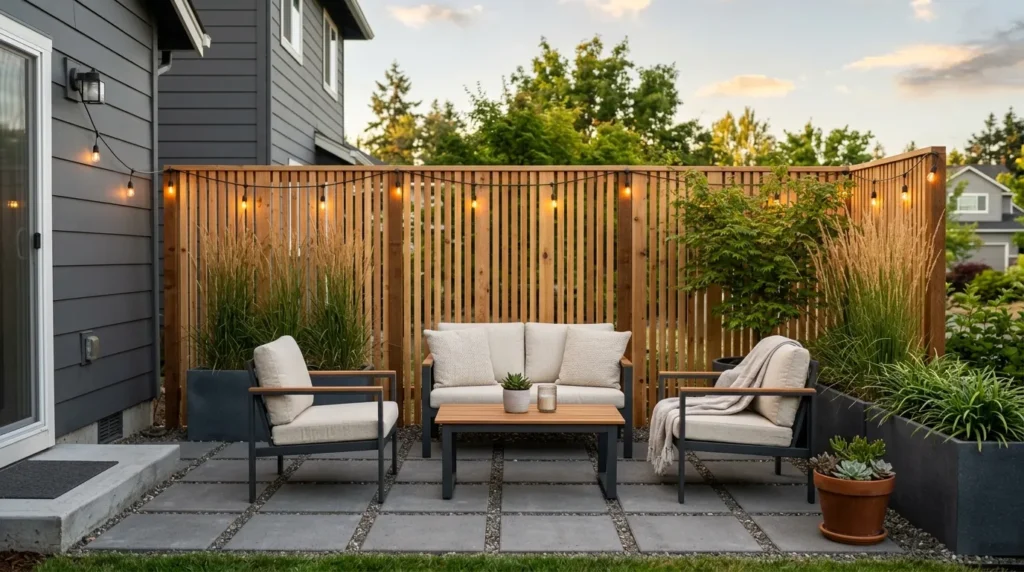
A simple slatted screen can give you the appearance of custom outdoor architecture without requiring a full custom fence.
The concept is straightforward: vertical or horizontal boards are installed with carefully planned spacing to interrupt the view while maintaining some openness.
It’s an excellent option when you need privacy around an outdoor dining area, air-conditioning equipment, trash bins, pool equipment, or a small seating area.
Spacing determines how private the screen feels. Narrower gaps provide more visual blocking, while wider gaps make the structure feel lighter.
As with any outdoor construction project, the posts and connections need to be properly supported for the local conditions.
How To Style It
Natural wood works beautifully with contemporary landscaping. Stain the boards in a warm brown tone for a cozy appearance or use a darker exterior finish for a modern look.
Add one or two large planters beside the screen rather than decorating every inch.
If the screen sits behind a patio sofa, coordinate its wood tone with the furniture or deck.
Repeating the same material elsewhere in the backyard can make an inexpensive project look much more intentional.
9. Fabric Privacy Screen
Quick Benefits
- Low material cost
- Lightweight appearance
- Flexible design
- Good for temporary privacy
- Works in small outdoor areas
Why It Works
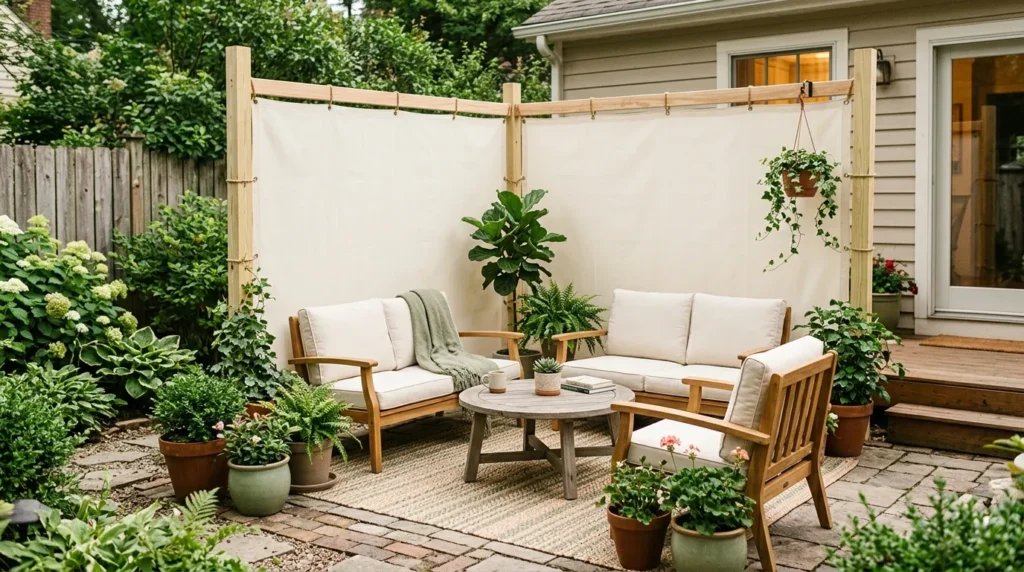
Fabric can provide a surprisingly useful privacy layer when a permanent fence isn’t necessary.
Outdoor fabric panels can be attached to an appropriate frame, pergola, railing, or other suitable structure to create a temporary visual barrier.
This approach works particularly well when privacy needs change. You may want more screening during outdoor meals or when entertaining but prefer an open backyard the rest of the time.
Fabric also introduces color and softness that hard fencing cannot provide.
Choose durable exterior fabric designed for outdoor conditions and consider how wind will affect the installation.
How To Style It
Neutral fabrics are the easiest to coordinate with different outdoor furniture. Cream, sand, light gray, and muted taupe can create a relaxed appearance.
For a more colorful patio, use a single accent shade that repeats in cushions or planters.
Keep the fabric panels neatly proportioned to the structure. Oversized or loosely hanging material can make the project look temporary rather than intentional.
Add greenery near the base to connect the screen visually to the rest of the yard.
10. Shrub Privacy Border
Quick Benefits
- Creates natural screening
- Improves the landscape
- Can become more substantial over time
- Adds seasonal interest
- Works with existing fences
Why It Works
Plants can be one of the most attractive ways to improve backyard privacy on a budget, especially when you don’t need an immediate full-height barrier.
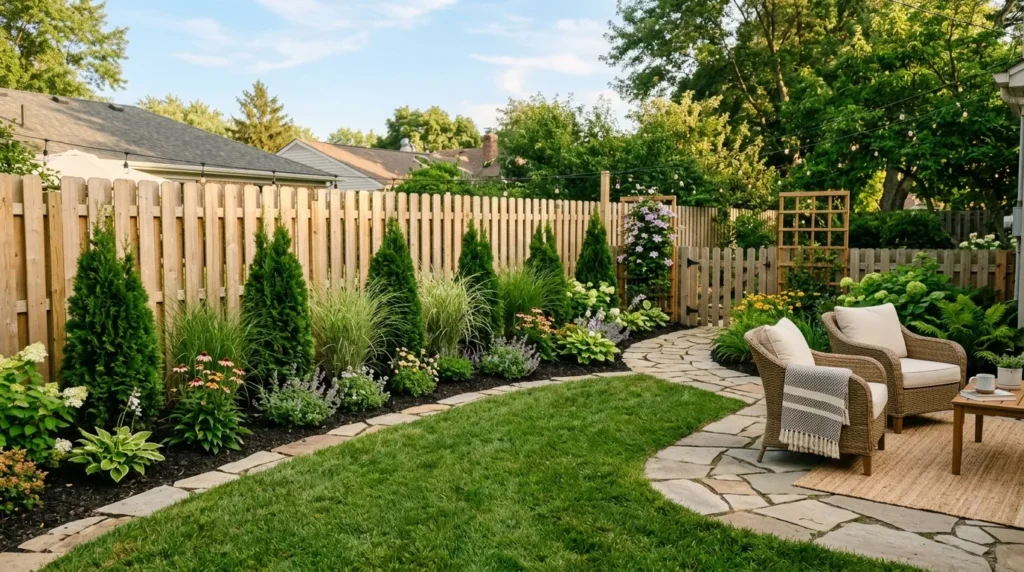
A row of affordable shrubs can gradually grow into a dense screen while simultaneously improving the appearance of the property.
The biggest advantage is that the planting becomes part of the landscape instead of looking like a separate construction project.
However, patience and maintenance are required. A newly planted shrub won’t instantly provide the same screening as a mature fence.
Choose varieties suited to your region and consider their mature width before deciding how closely to plant them.
How To Style It
Instead of creating one perfectly uniform row, combine shrubs with ornamental grasses and lower plants.
Use mulch to give the planting bed a clean finished appearance while helping conserve soil moisture.
Evergreen varieties can provide more consistent screening, while flowering shrubs can add seasonal interest.
If immediate privacy is important, combine the shrubs with an existing fence or inexpensive temporary screen while the plants establish.
How To Choose A Budget Privacy Fence
The cheapest privacy solution isn’t always the best one. The goal is to spend money where it actually improves privacy.
Start by identifying the exact sightline you want to block.
Stand in your backyard at the places where you normally sit and look toward the surrounding properties. Mark the areas where you can see neighboring patios, windows, driveways, or streets.
You may discover that only one section needs serious screening.
That observation can dramatically reduce the project cost.
Next, look at what you already have. An existing fence, pergola, deck railing, mature tree, or garden bed can become part of your privacy strategy.
Then consider whether you need immediate privacy or can wait for plants to grow.
If you need privacy immediately, a screen or fence extension makes sense. If you’re planning for the long term, shrubs and vines can gradually provide additional coverage.
Ways To Save Money On A Privacy Fence
Screen Only What You Need
A full perimeter fence can consume a large portion of your budget. If the privacy problem is limited to one direction, focus your money there.
Use An Existing Structure
Adding screening to an existing fence or pergola is often less expensive than starting from scratch.
Mix Materials
Use solid fencing where privacy is most important and less expensive lattice or plant screening elsewhere.
Choose Standard Dimensions
Custom sizing and complicated designs can increase labor and material waste. Simple repeated sections are generally easier to construct.
Buy Plants Strategically
Smaller plants are often less expensive than mature specimens. If you’re willing to wait, they can provide substantial savings.
Do The Design Yourself
Even if you hire someone for installation, planning the layout and researching suitable materials yourself can help you make better purchasing decisions.
Budget Fence Ideas For Small Backyards
Small yards often benefit from partial privacy rather than complete enclosure.
A compact slatted screen behind a loveseat can create a private outdoor room without making the yard feel closed in.
Tall containers can define a patio edge while remaining movable.
A trellis with climbing plants can add vertical interest without taking up much floor space.
You can also combine a short fence with taller landscaping. This layered approach gives you privacy while preserving views above the boundary.
For very small spaces, think vertically. Walls, trellises, planters, and pergola structures can provide useful screening without consuming much ground area.
Budget Privacy Ideas For Renters
Renters have fewer permanent options, but that doesn’t mean outdoor privacy is impossible.
Large potted plants, movable screens, outdoor curtains, freestanding trellises, and decorative room dividers can all create separation without permanently modifying the property.
Before installing anything attached to a wall, fence, railing, or structure, check your lease requirements.
The most flexible approach is usually to create a small outdoor room within the space you control. Position seating so that it faces away from neighboring views, then use plants or movable screens behind the seating area.
Sometimes changing the furniture layout costs nothing but creates an immediate privacy improvement.
How To Make A Cheap Fence Look Expensive
Good design often matters more than the price of the material.
Keep the color palette consistent.
Use larger plants instead of lots of tiny decorative pieces.
Repeat materials between the fence, planters, furniture, and patio.
Hide messy construction edges with landscaping.
Use lighting selectively.
Most importantly, avoid combining too many unrelated styles.
A simple wood screen with well-chosen plants can look far more sophisticated than an expensive fence surrounded by clutter.
FAQ
What is the cheapest way to create backyard privacy?
Using an existing fence or structure is often the most economical starting point. You can add lattice, outdoor fabric, bamboo screening, trellises, or plants rather than replacing the entire boundary. Container plants can also provide targeted privacy without permanent construction.
How can I make a cheap fence look better?
Use landscaping to soften it. Add shrubs, ornamental grasses, vines, or large planters along the fence line. Keeping the materials and colors coordinated also helps. A simple fence with thoughtful planting can look much more polished than a complicated fence surrounded by unrelated decorations.
What is the cheapest privacy fence material?
Costs vary by region, availability, and installation method. Basic wood products are often popular for budget projects because they can be customized and used for DIY construction. Reclaimed materials may reduce upfront costs when they are suitable and safe for outdoor use.
How do I add privacy to an existing fence?
You can consider lattice extensions, trellis panels, bamboo screening, climbing plants, outdoor fabric, or strategically placed shrubs. The best option depends on how much additional privacy you need and whether the existing fence can safely support an extension.
Are privacy plants cheaper than a fence?
They can be, particularly if you use smaller plants and allow them time to mature. However, plants require watering, pruning, and ongoing care. They also don’t provide instant screening, so combining plants with an existing fence or temporary screen can be a practical compromise.
How can I get backyard privacy without a fence?
Try tall container plants, shrubs, trees, pergolas, trellises, outdoor curtains, decorative screens, or carefully positioned furniture. You don’t necessarily need to enclose the entire yard to create a private outdoor area.
Can I build a privacy fence myself?
Some homeowners can handle simple privacy screens or small fence sections as DIY projects, depending on local rules, tools, materials, and experience. Larger or structurally demanding installations may require professional help. Always check local regulations and property boundaries before construction.
Conclusion
Creating a private backyard on a budget is mostly about solving the right problem rather than building the biggest fence.
If one neighbor’s patio is visible from your seating area, screen that sightline. If your existing fence is slightly too short, consider a lattice extension instead of replacing it. If you’re renting, use containers, curtains, trellises, or movable screens.
Plants can also become one of your best long-term privacy investments. Shrubs, grasses, vines, and small trees add beauty while gradually creating a more secluded outdoor environment.
The most successful budget projects usually combine two or three simple solutions. A basic fence might become much more attractive with bamboo screening and planters. A trellis becomes more private as vines mature. A small slatted screen can turn an ordinary patio into a comfortable outdoor room.
Start with the area that bothers you most, choose a solution that fits your budget and maintenance level, and build from there. You don’t need a completely new backyard to create a space that feels quieter, more comfortable, and more like your own.
Related Articles
- 11 Backyard Privacy Ideas for a More Secluded Outdoor Space
- 12 Backyard Decor Ideas for an Affordable Outdoor Makeover
- 11 Backyard Landscaping Ideas for Every Budget
- 10 Small Patio Ideas for Cozy Outdoor Living
- 11 DIY Garden Projects That Anyone Can Complete