
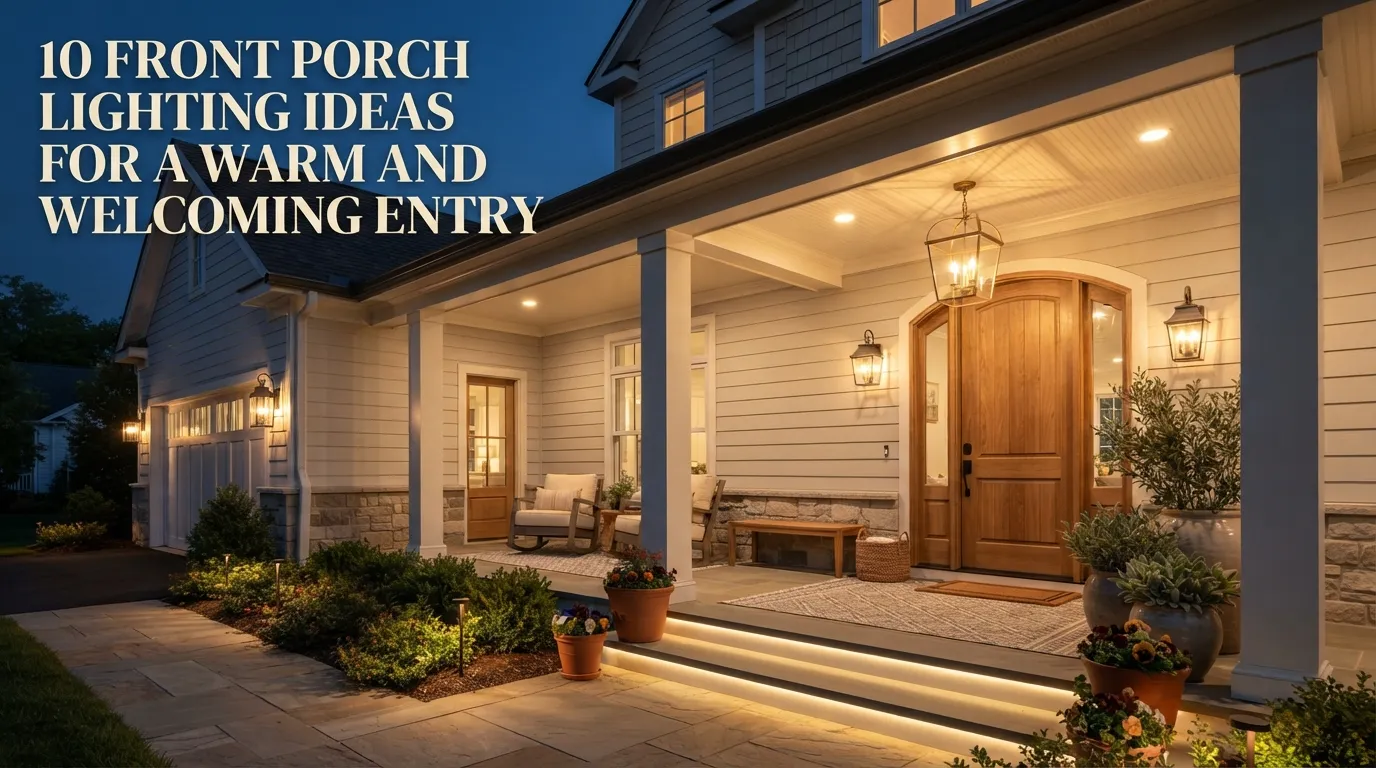
10 Front Porch Lighting Ideas for a Warm and Welcoming Entry
The right front porch lighting can completely change how your home looks after sunset. A porch that feels simple and understated during the day can become warm, inviting, and beautifully defined once the right lights are switched on.
Good lighting is about more than decoration, though. Your front entry needs enough illumination to help you see steps, pathways, door hardware, and changes in elevation safely. At the same time, overly bright fixtures can make a porch feel harsh rather than welcoming.
The best approach is usually to combine practical lighting with decorative elements. Wall sconces can illuminate the door, pendant lights can create a focal point on a covered porch, and low-level landscape lighting can help define steps and pathways. Decorative lanterns and string lights can then add another layer of atmosphere.
I’ve noticed that porch lighting looks most polished when the fixtures relate to the architecture of the home. A traditional house might suit lantern-style sconces, while a modern exterior can look better with simple geometric fixtures. Farmhouse homes often work beautifully with black metal, aged finishes, or classic barn-inspired silhouettes.
Scale is equally important. A tiny light beside a large front door can disappear visually, while an oversized fixture may overwhelm a narrow entrance. When choosing fixtures, consider the door, ceiling height, porch width, and surrounding landscaping together.
You also don’t have to rely on one type of light. Layering different sources can make a porch feel more dimensional and comfortable.
These front porch lighting ideas will help you think beyond simply placing a light beside the door. You’ll find practical options for small entries, covered porches, modern homes, farmhouse exteriors, steps, pathways, and cozy evening spaces.
Table of Contents
1. Classic Wall Sconces
Use matching wall lights to frame the front door with balanced illumination.
2. Statement Pendant Light
Make a covered porch more dramatic with an attractive overhead fixture.
3. Lantern-Style Lights
Bring timeless character to traditional and farmhouse-style exteriors.
4. Recessed Ceiling Lights
Create clean, understated illumination across a covered porch.
5. String Light Canopy
Add a relaxed glow to a porch ceiling or seating area.
6. Step And Path Lights
Improve visibility while highlighting steps and walkways.
7. Modern Linear Fixtures
Use streamlined lighting to complement contemporary architecture.
8. Hanging Lanterns
Add height, warmth, and character with suspended outdoor lighting.
9. Landscape Accent Lights
Illuminate nearby plants, columns, and architectural details.
10. Layered Porch Lighting
Combine several light sources for a balanced evening atmosphere.
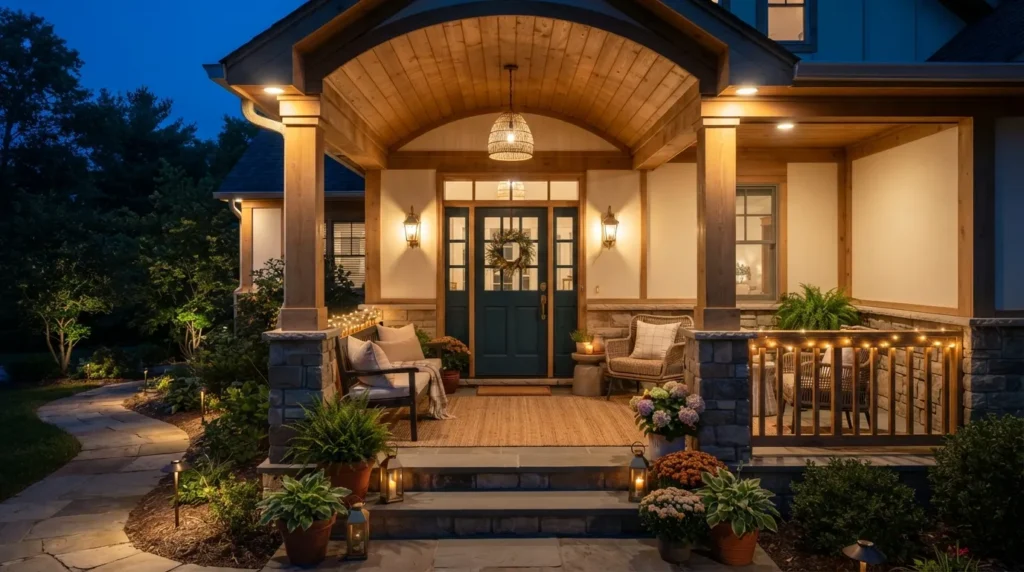
1. Classic Wall Sconces
Quick Benefits
- Frames the front door
- Provides useful illumination
- Works with many architectural styles
- Creates visual symmetry
- Easy to incorporate into existing designs
Why It Works
Wall sconces are one of the most versatile choices for a front entry because they combine function and decoration in one fixture.
Placing matching sconces on both sides of the door creates symmetry and makes the entrance feel intentionally designed.
The light can also help illuminate the area where you unlock the door, greet guests, or navigate the threshold.
The fixture style should relate to your home’s architecture rather than simply following a trend. Traditional lanterns, streamlined cylinders, industrial-inspired fixtures, and farmhouse designs can all work in the right setting.
How To Style It
Choose two matching fixtures when the door has enough wall space.
Keep the fixture scale proportional to the door and surrounding architecture.
Black metal works well with farmhouse and modern exteriors.
Bronze or aged finishes can suit traditional homes.
For a contemporary entrance, consider simple geometric sconces.
Use outdoor-rated fixtures and bulbs suitable for exterior conditions.
Position them to provide useful illumination without shining directly into people’s eyes.
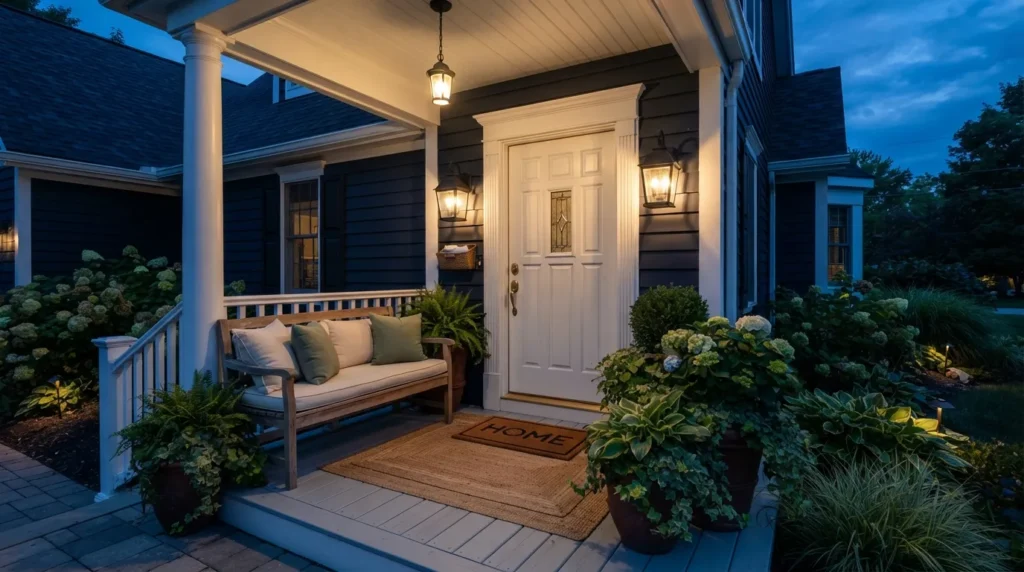
2. Statement Pendant Light
Quick Benefits
- Creates a focal point
- Works beautifully on covered porches
- Adds architectural interest
- Provides overhead illumination
- Helps define seating areas
Why It Works
A pendant can turn a covered porch ceiling into an important design feature.
Rather than relying only on wall-mounted lights, an overhead fixture draws attention upward and helps visually anchor the porch.
This is especially effective when the porch has a high ceiling or a defined seating area.
The fixture should be appropriately rated for its location and protected from weather exposure as required.
How To Style It
Choose a pendant that complements the home’s architecture.
A black metal lantern can suit farmhouse or traditional homes.
A simple geometric pendant can work with contemporary architecture.
For a coastal-inspired porch, lighter materials and finishes can create a relaxed appearance.
Center the fixture over a seating area or porch entrance when appropriate.
Make sure the hanging height provides adequate clearance for people walking beneath it.
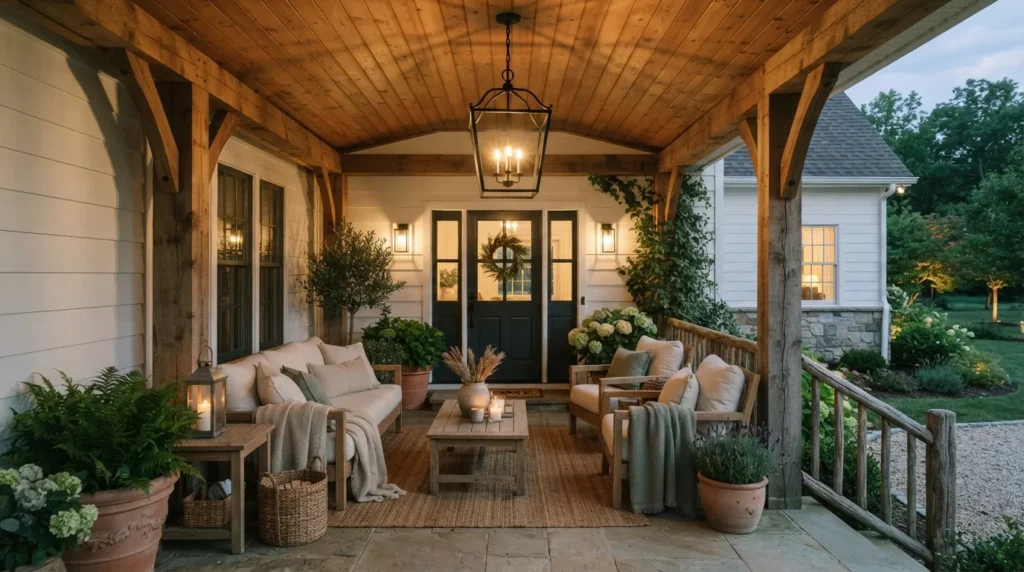
3. Lantern-Style Lights
Quick Benefits
- Adds traditional character
- Works with farmhouse homes
- Creates warm visual interest
- Available in many sizes
- Complements natural materials
Why It Works
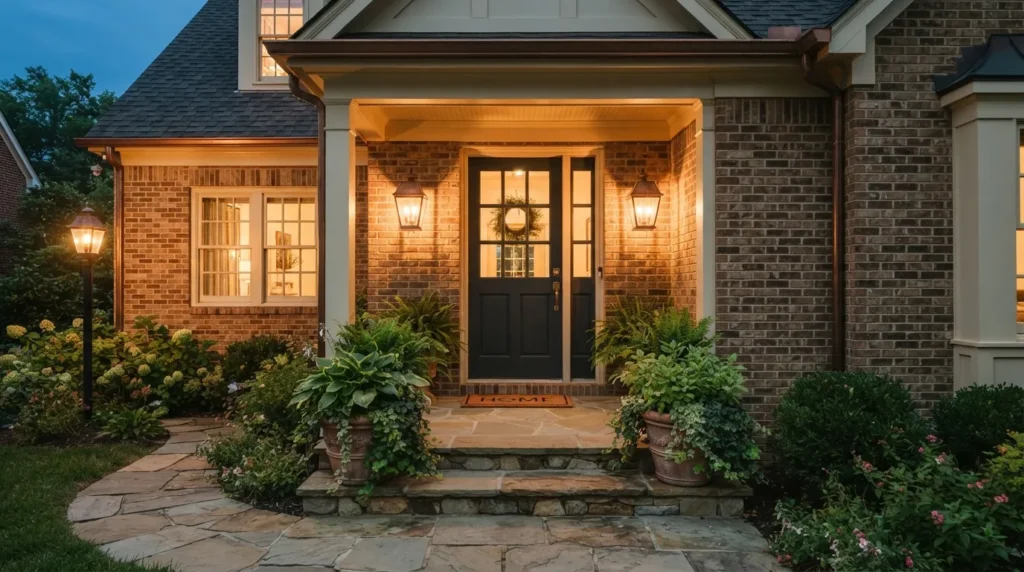
Lantern-style fixtures have remained popular because they combine recognizable traditional shapes with practical outdoor illumination.
They work particularly well on homes with brick, stone, siding, wood, or other classic exterior materials.
A lantern doesn’t have to look old-fashioned. Modern versions often simplify the silhouette while retaining the recognizable frame and glass panels.
How To Style It
Place lantern sconces beside the door.
For larger porches, repeat the lantern style on columns or secondary entry points where appropriate.
Black creates strong contrast against light siding.
Bronze and aged finishes can blend beautifully with brick and stone.
Choose clear or lightly diffused glass depending on the amount of glare you want.
Avoid mixing too many different fixture styles around the front of the home.
4. Recessed Ceiling Lights
Quick Benefits
- Creates clean illumination
- Keeps the ceiling visually simple
- Works well for modern homes
- Provides broad coverage
- Doesn’t compete with architectural features
Why It Works
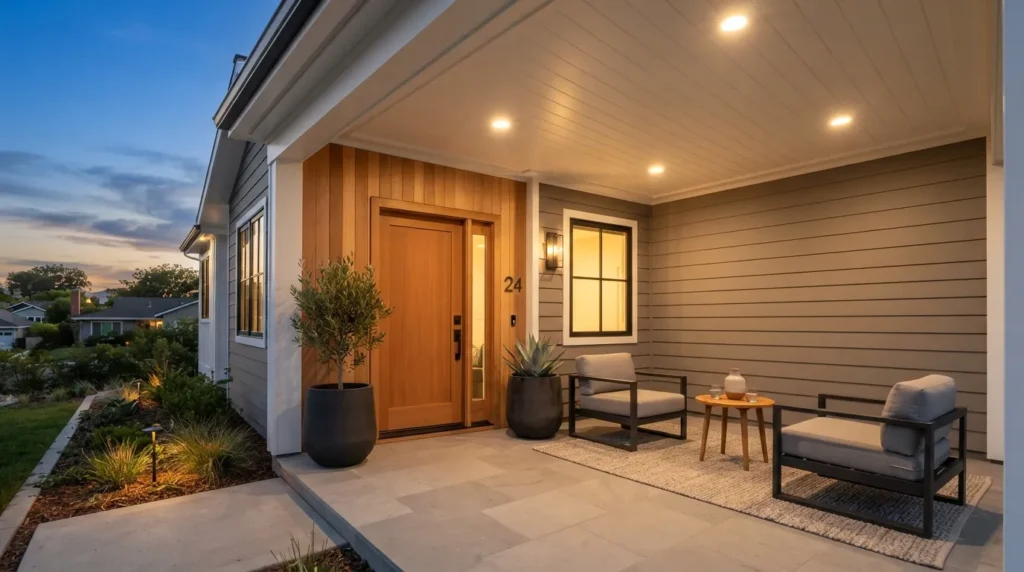
Recessed lighting can be an excellent choice when you want the porch to feel bright without making the light fixture itself the focal point.
It’s especially useful on covered porches where there is enough ceiling structure for the appropriate installation.
Instead of creating one intense pool of light, multiple appropriately positioned fixtures can distribute illumination more evenly.
How To Style It
Plan the placement around the porch’s dimensions.
Use several fixtures when necessary rather than depending on one extremely bright light.
Combine recessed lighting with wall sconces near the door.
Choose a color temperature that creates a comfortable appearance while still providing useful visibility.
Have electrical work installed by a qualified professional when required.
Keep the ceiling uncluttered so the architecture remains the focus.
5. String Light Canopy
Quick Benefits
- Creates a relaxed atmosphere
- Adds decorative warmth
- Works well for entertaining
- Makes seating areas inviting
- Can be visually dramatic
Why It Works
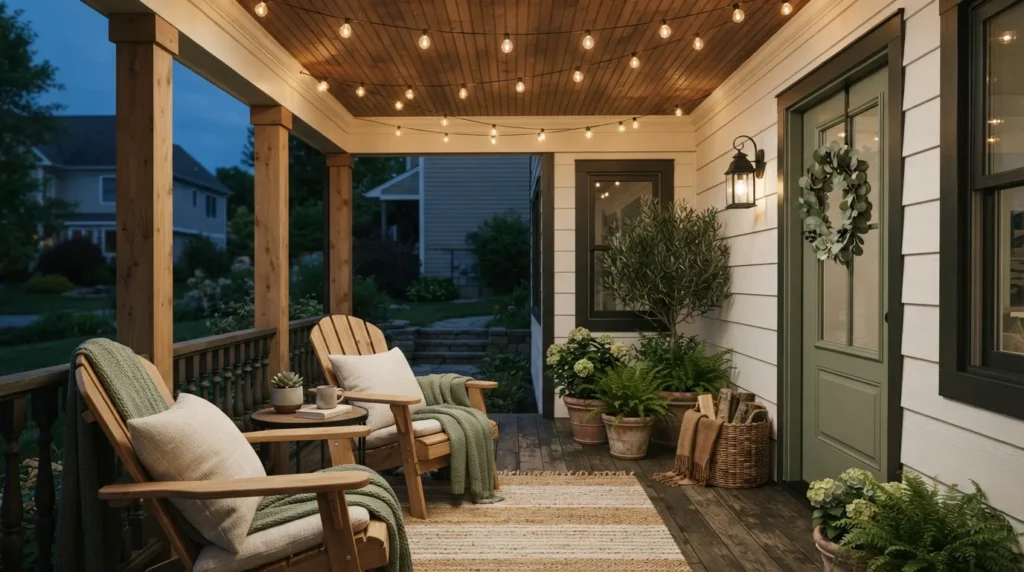
String lights can give a front porch a softer, more casual atmosphere.
They’re particularly effective when the porch includes a seating area where you spend time in the evening.
Rather than using them as the only source of illumination, think of string lights as an accent layer.
Their repeated points of light create a cozy visual rhythm across the ceiling or railing.
How To Style It
Use outdoor-rated string lights intended for the conditions where they’ll be installed.
Hang them in neat parallel lines or a simple perimeter arrangement.
Avoid creating low-hanging loops across areas where people walk.
Combine them with practical wall lighting near the door.
Warm-toned bulbs can create a softer evening appearance.
Keep the rest of the porch relatively simple so the lights remain visually appealing rather than overwhelming.
6. Step And Path Lights
Quick Benefits
- Improves visibility
- Defines pathways
- Highlights landscape features
- Makes steps easier to navigate
- Adds another lighting layer
Why It Works
A beautiful front entrance needs to be functional after dark.
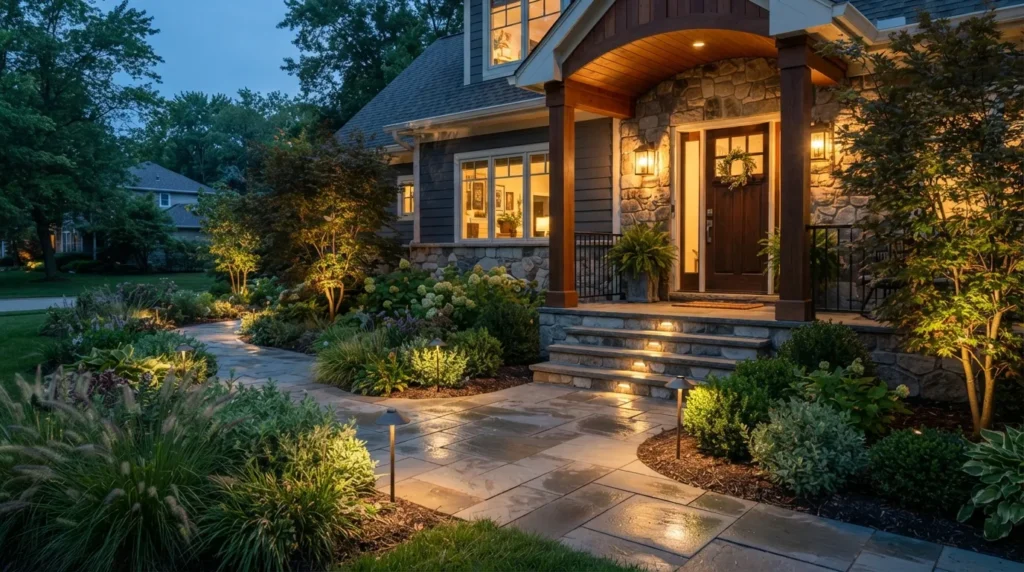
Step and path lighting can help people see changes in elevation and understand where to walk.
It can also make landscaping feel more intentional by gently highlighting borders, plants, and hardscape.
These lights should be positioned for useful visibility rather than simply creating decorative points of light.
How To Style It
Use low-level fixtures along pathways.
Install suitable step lights where there are changes in elevation.
Avoid excessive brightness.
Space fixtures so the illuminated areas overlap naturally where appropriate.
Use consistent fixture finishes throughout the landscape.
Combine pathway lighting with porch sconces for a cohesive approach.
If you’re installing electrical landscape lighting, follow applicable safety requirements and manufacturer instructions.
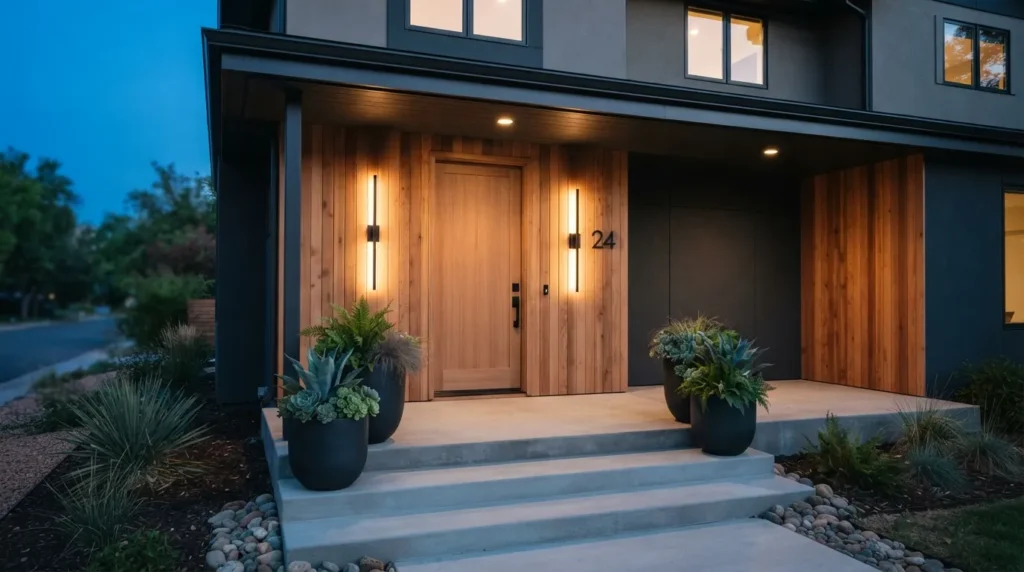
7. Modern Linear Fixtures
Quick Benefits
- Complements contemporary homes
- Creates clean lines
- Provides a minimalist appearance
- Works with modern architecture
- Easy to coordinate
Why It Works
Modern architecture often benefits from lighting with simple geometry.
Long rectangular sconces, slim vertical fixtures, and streamlined horizontal designs can echo the clean lines already present in the building.
The goal is to complement the architecture rather than introduce decorative details that compete with it.
How To Style It
Choose fixtures with simple silhouettes.
Black works well against white, gray, concrete, and natural wood.
Use matching fixtures around the entry for symmetry.
Pair linear sconces with recessed ceiling lights for layered illumination.
Keep decorative accessories minimal.
Use landscaping to introduce softer shapes around the clean architectural lines.
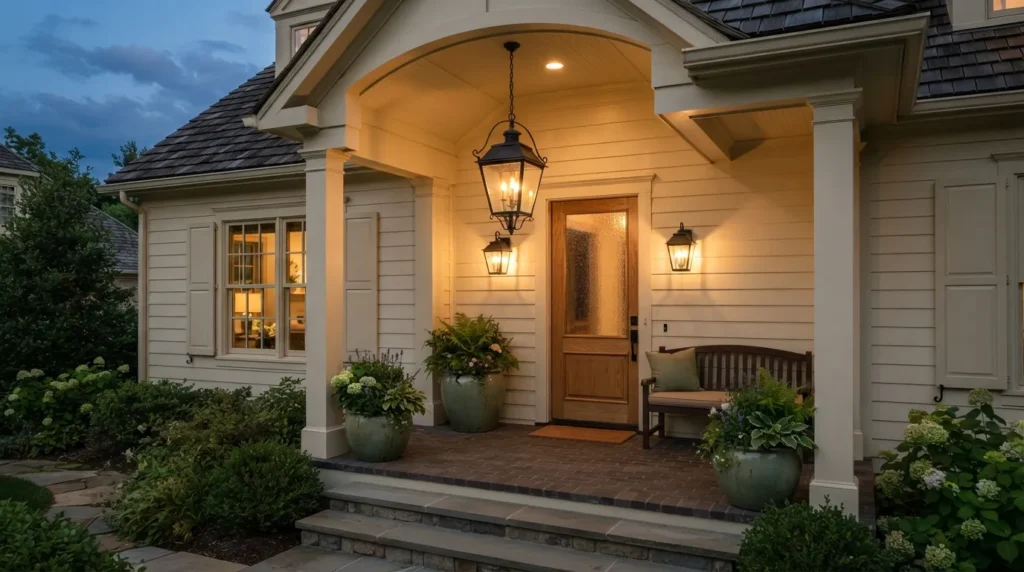
8. Hanging Lanterns
Quick Benefits
- Adds visual height
- Creates a focal point
- Works with covered porches
- Provides atmospheric lighting
- Complements traditional architecture
Why It Works
A hanging lantern can make a porch ceiling feel more intentional.
It’s particularly useful when a porch has enough height to accommodate a suspended fixture without interfering with movement.
The lantern becomes part of the architecture, drawing attention to the entrance while providing useful overhead light.
How To Style It
Choose a fixture proportionate to the porch.
Large porches can handle larger lanterns.
Smaller porches need a more compact design.
Coordinate the finish with door hardware, railings, or other exterior details.
Use wall sconces near the door if additional task lighting is needed.
Make sure the fixture is securely mounted and rated for the intended outdoor location.
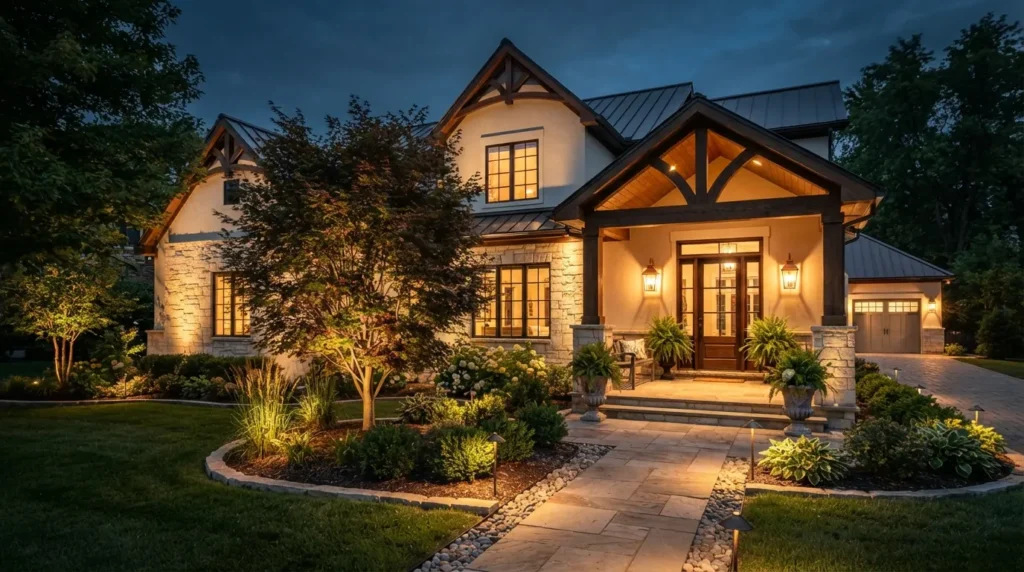
9. Landscape Accent Lights
Quick Benefits
- Highlights landscaping
- Adds depth after sunset
- Enhances architectural details
- Creates visual layers
- Makes plants part of the evening design
Why It Works
The area surrounding your front porch can be just as important as the porch itself.
Landscape accent lights can softly illuminate trees, shrubs, columns, planters, stone walls, and other features.
This creates depth rather than leaving the porch as a bright island surrounded by darkness.
The effect is particularly attractive when the light source itself is subtle and the illuminated feature becomes the focus.
How To Style It
Use suitable landscape fixtures to highlight selected features.
Aim lights at architectural columns, attractive trees, textured walls, or large planters.
Avoid illuminating every plant.
Leave some areas darker to create contrast.
Use similar color temperature throughout nearby exterior lighting.
Coordinate landscape lighting with porch fixtures for a cohesive nighttime appearance.
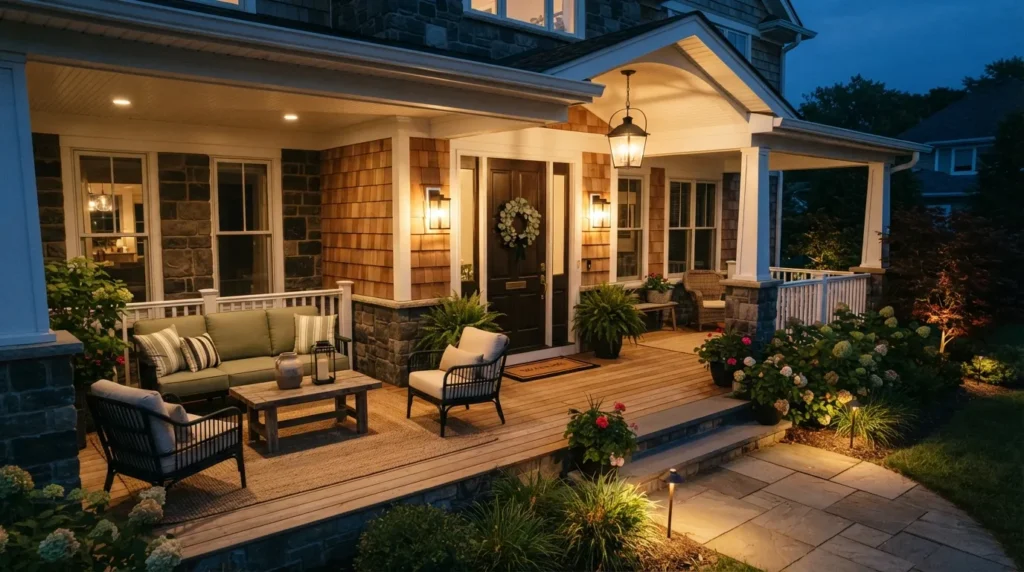
10. Layered Porch Lighting
Quick Benefits
- Creates balanced illumination
- Adds visual depth
- Supports multiple activities
- Makes the porch feel inviting
- Allows greater flexibility
Why It Works
Layering is often the most effective approach because different lights serve different purposes.
A wall sconce can illuminate the door.
A pendant can provide overhead lighting.
Landscape lights can define the surrounding yard.
Accent or string lights can add atmosphere.
Instead of asking one fixture to do everything, each source contributes to the overall effect.
How To Style It
Begin with the practical lighting around the entrance.
Add overhead illumination if the porch is covered.
Use path or step lighting where needed.
Introduce landscape accents around plants or architectural details.
Finally, add decorative lighting such as suitable string lights or lanterns.
Keep the brightness balanced.
The porch should feel illuminated rather than flooded with light.
How Bright Should Front Porch Lighting Be?
There isn’t one ideal brightness for every porch.
The right amount depends on the size of the entry, surrounding darkness, fixture design, and what the light needs to accomplish.
A small entry may need relatively little illumination, while a large porch with steps and multiple pathways requires more.
Think about different lighting purposes:
Entry lighting: Helps illuminate the door, lock, and immediate threshold.
Path lighting: Helps people navigate walkways and changes in elevation.
Ambient lighting: Creates general illumination across the porch.
Accent lighting: Highlights plants or architectural features.
Avoid simply choosing the brightest bulb available. Excessive brightness can create glare and make the surrounding landscape appear even darker by comparison.
Warm or Cool Light for a Front Porch?
For many residential porches, warm or neutral-white light creates a comfortable appearance.
Warmer light can complement wood, brick, stone, and natural landscaping.
Cooler light may work better for certain contemporary architectural designs, but it can feel stark if used excessively.
The most important consideration is consistency.
If your porch sconces look warm while nearby landscape lights appear noticeably blue, the lighting scheme can feel disconnected.
Choose compatible color temperatures for the fixtures that visually interact with one another.
How To Make a Small Front Porch Look Bigger With Lighting
Lighting can influence how spacious a small porch feels.
Use wall sconces rather than bulky floor lamps.
Recessed ceiling lights can provide illumination without visually occupying space.
Place lights near architectural edges to define the boundaries of the porch.
Avoid overcrowding the area with decorative fixtures.
A simple combination of one or two wall lights, a well-lit doorway, and subtle landscape lighting may be enough.
Keeping the light distribution even can also prevent dark corners from making the porch feel smaller.
Front Porch Lighting Mistakes to Avoid
Using fixtures that are too small: Tiny lights can disappear beside a large entry.
Choosing fixtures that are too large: Oversized lights can overwhelm a narrow porch.
Using only one light source: A single bright fixture can create harsh shadows.
Ignoring glare: Position fixtures carefully so light isn’t directed into people’s eyes.
Mixing unrelated finishes: Coordinate fixture finishes with existing exterior hardware.
Forgetting the surrounding landscape: A brightly lit porch can look disconnected from a completely dark yard.
Using indoor fixtures outdoors: Choose products specifically rated for the environmental conditions of their installation location.
Ignoring electrical safety: Outdoor electrical installations should meet applicable local requirements and be handled by qualified professionals when necessary.
FAQ
What is the best lighting for a front porch?
Wall sconces are one of the most versatile options because they provide useful illumination around the entrance while also adding decorative character. Covered porches can benefit from pendant or recessed ceiling lighting, while steps and pathways may need additional low-level lighting. The best solution often combines several types rather than relying on one fixture.
Should front porch lights be warm or cool?
Warm or neutral-white light is often comfortable for residential entrances and works particularly well with natural wood, brick, stone, and greenery. However, the best color temperature depends on the home’s architecture and the other exterior lighting. Keeping nearby fixtures visually consistent usually matters more than choosing a particular temperature.
How many lights should a front porch have?
The number depends on the porch size and layout. A small entrance may only need one or two wall fixtures. A larger porch may benefit from sconces, overhead lighting, and landscape or pathway lights. Focus on providing even, useful illumination rather than maximizing the number of fixtures.
Are string lights good for a front porch?
String lights can work well as decorative or ambient lighting, especially on covered porches with seating areas. They generally work best as one layer of a lighting plan rather than the only source of illumination. Choose outdoor-rated products and install them so they don’t interfere with walking areas or door operation.
How high should porch lights be mounted?
Mounting height depends on the fixture, ceiling height, door size, and manufacturer recommendations. Wall lights should provide useful illumination around the entrance without being positioned where they create uncomfortable glare. Always follow the fixture’s installation instructions and applicable local requirements.
How can I make my front porch cozy at night?
Combine practical entry lighting with softer ambient sources. Wall sconces can illuminate the doorway, while a pendant, suitable string lights, or landscape accents can add atmosphere. Comfortable seating, plants, natural materials, and a restrained color palette can further enhance the evening setting.
Are LED lights good for front porches?
LEDs can be a practical choice because they are available in many brightness levels and color temperatures and can provide efficient illumination. Select outdoor-rated bulbs or fixtures appropriate for the environment, and choose a brightness and color temperature that suits the porch rather than simply selecting the highest output.
Conclusion
Front porch lighting has an important job: it needs to make your entrance practical while also creating an atmosphere that feels welcoming after dark.
The easiest way to achieve that balance is to think in layers.
Start with the door.
Wall sconces or another suitable entry fixture can provide the illumination you need when arriving home or greeting guests.
Then look at the rest of the porch.
A pendant can define a covered seating area. Recessed lights can provide clean overhead illumination. String lights can add decorative warmth. Path and step lights can help guide movement through the landscape.
Finally, look beyond the porch itself.
A few carefully positioned landscape lights can illuminate trees, planters, columns, or architectural details and help connect the entry to the rest of the property.
Don’t feel that you need to use every idea.
A small porch might look best with two attractive sconces and subtle landscape lighting. A larger covered porch may benefit from several layers.
Choose fixtures that suit your home’s architecture, use outdoor-rated products, pay attention to scale, and avoid excessive brightness.
When the lighting is balanced, your front porch can feel just as inviting in the evening as it does during the day.
Related Articles
- 10 Outdoor Lighting Ideas for a Beautiful Backyard
- 10 Front Porch Decorating Ideas for Every Season
- 10 Farmhouse Front Porch Ideas for a Welcoming Home
- 10 Backyard Seating Ideas for Comfortable Outdoor Living
- 10 Outdoor Summer Styling Ideas