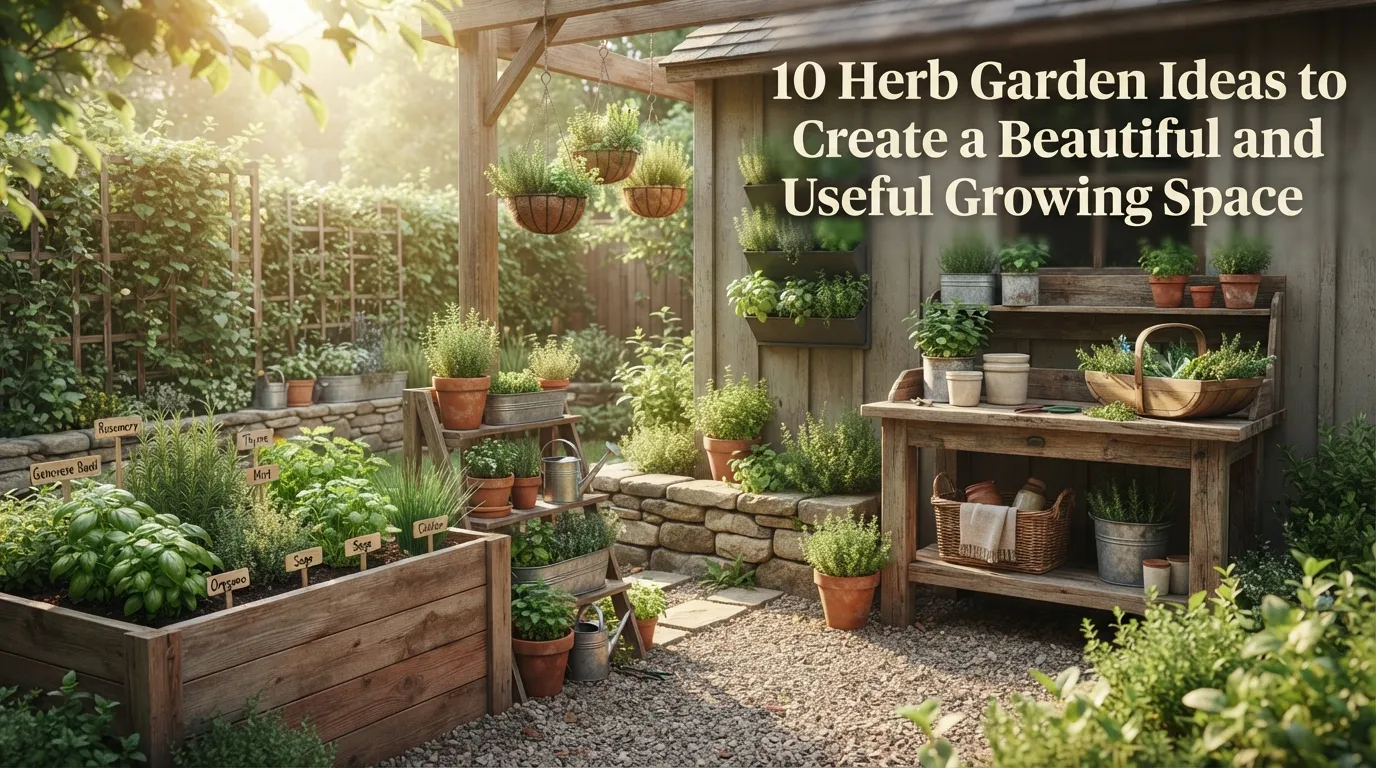
10 Herb Garden Ideas to Create a Beautiful and Useful Growing Space
Growing herbs at home is one of those small gardening projects that can make an outdoor space feel both prettier and more useful. A few pots of basil on a sunny patio, a raised bed filled with rosemary and thyme, or a simple collection of herbs beside the kitchen door can give you fresh ingredients while adding texture and greenery to your garden.
The best part is that an herb garden doesn’t have to take up much room.
If you have a large backyard, you can dedicate an entire raised bed or garden border to herbs. If you’re working with a small patio, balcony, or rental-friendly outdoor space, containers can do the job beautifully. Even a sunny windowsill can become a practical mini herb garden.
I’ve noticed that the most successful herb gardens are usually the ones that fit naturally into everyday routines. When herbs are easy to reach, you’re more likely to use them. When they’re planted in attractive containers or organized beds, they can also become part of the garden’s overall design.
Before planting, pay attention to sunlight, drainage, mature size, watering needs, and your local growing conditions. Herbs have different preferences, so grouping plants with similar needs can make maintenance much easier.
You can also use an herb garden as an opportunity to add personality to your outdoor space. Terracotta pots create a classic Mediterranean feel, wooden planters suit farmhouse gardens, while sleek containers can complement a modern patio.
Whether you want fresh herbs for cooking, fragrant plants around your seating area, or a simple beginner-friendly gardening project, these herb garden ideas offer practical ways to grow herbs while making the space look intentional and inviting.
Table of Contents
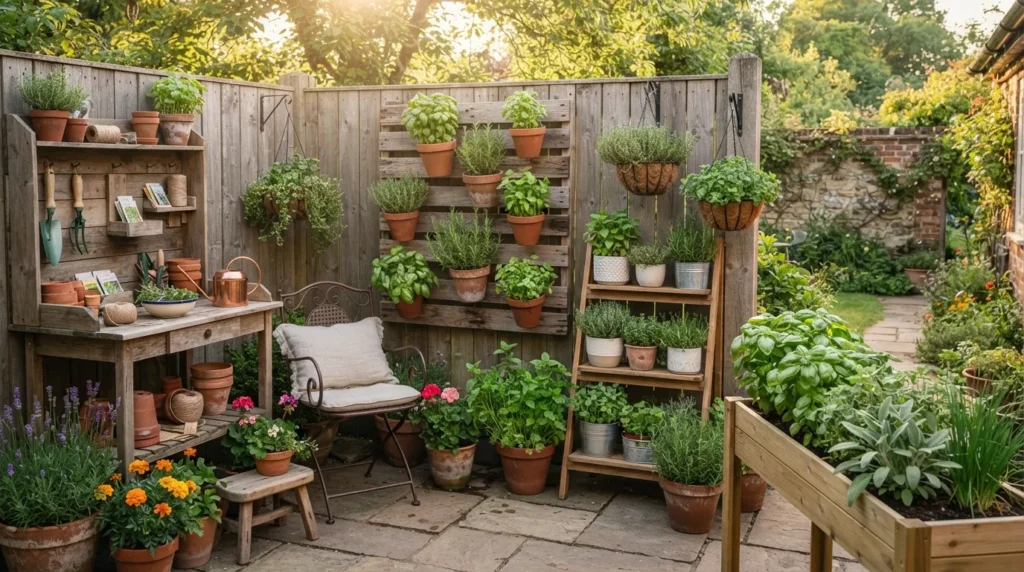
1. Raised Herb Beds
Create an organized growing area with raised beds that make herbs easy to access.
2. Patio Herb Pots
Grow useful herbs in individual containers around a sunny patio.
3. Kitchen Door Garden
Place frequently used herbs close to the kitchen for convenient harvesting.
4. Vertical Herb Wall
Use vertical space to grow herbs when ground space is limited.
5. Rustic Herb Planters
Combine herbs with natural materials for a relaxed farmhouse-inspired garden.
6. Mediterranean Herb Garden
Create a sunny, drought-tolerant planting style inspired by Mediterranean landscapes.
7. Tiered Herb Garden
Use multiple planting levels to grow several herbs in a compact footprint.
8. Hanging Herb Garden
Suspend herb containers to save floor space and add vertical interest.
9. Herb Garden Border
Use herbs as attractive edging around vegetable beds, patios, or pathways.
10. Indoor-Outdoor Herb Garden
Create a flexible herb-growing system that can transition between indoor and outdoor spaces.
1. Raised Herb Beds
Quick Benefits
- Keeps herbs organized
- Improves accessibility
- Creates clear planting zones
- Works well in larger gardens
- Makes harvesting convenient
Why It Works
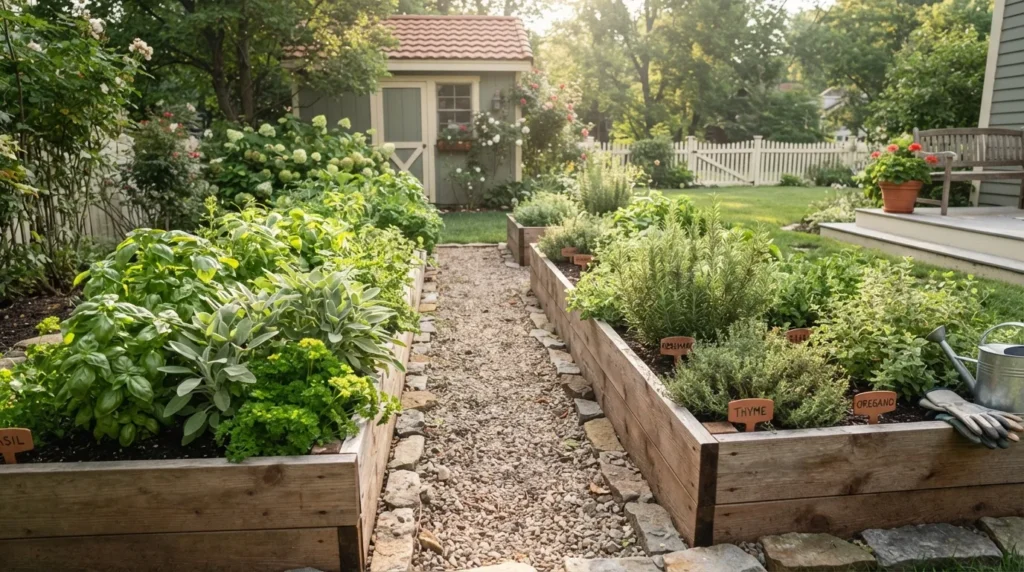
Raised beds are one of the easiest ways to create a dedicated herb-growing area.
Instead of scattering herbs throughout the garden, you can group them in one clearly defined location. This makes harvesting easier and can simplify maintenance.
Raised beds can also provide better control over soil quality and drainage, depending on how they’re constructed.
The size doesn’t need to be enormous. A relatively compact bed can provide plenty of room for culinary herbs when plants are spaced according to their mature size.
How To Style It
Choose a raised bed material that complements your home and garden.
Natural wood creates a relaxed look.
Stone or masonry can feel more permanent.
Arrange taller herbs toward the back and lower-growing herbs toward the front.
Rosemary, sage, thyme, oregano, basil, parsley, and chives can all be useful choices, depending on your climate and growing conditions.
Add a simple pathway around the bed so harvesting doesn’t require stepping into the planting area.
2. Patio Herb Pots
Quick Benefits
- Ideal for small spaces
- Easy to rearrange
- Suitable for renters
- Makes harvesting convenient
- Adds greenery to patios
Why It Works
Container gardening is an excellent solution when you don’t have a traditional garden bed.
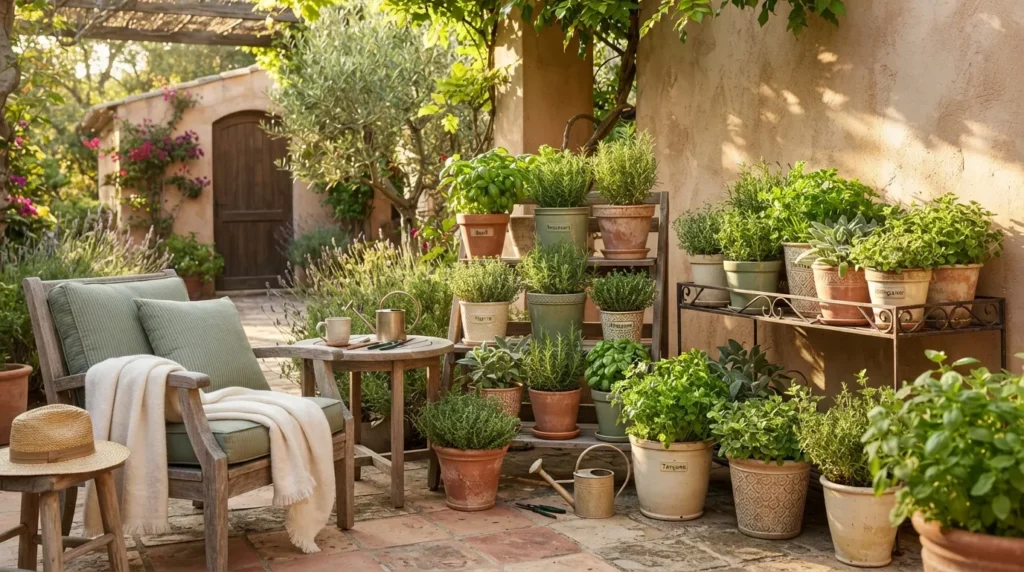
A collection of pots can turn an unused patio corner into a productive growing space.
Individual containers also make it easier to give different herbs the conditions they need.
For example, you can move a pot if a particular area receives too much or too little sun.
How To Style It
Use a collection of coordinated containers for a polished look.
Terracotta pots are classic and work particularly well with Mediterranean-style herbs.
Use larger containers for herbs that can become substantial plants.
Place the pots where they receive the amount of sunlight recommended for the herbs you’re growing.
Keep drainage in mind.
Containers should have appropriate drainage holes, and potting media should be suitable for container gardening.
Group pots of different heights to create a layered appearance.
3. Kitchen Door Garden
Quick Benefits
- Makes harvesting easy
- Encourages regular use
- Keeps fresh herbs close
- Works in small spaces
- Connects the kitchen with the garden
Why It Works
Convenience can make the difference between growing herbs and actually using them.
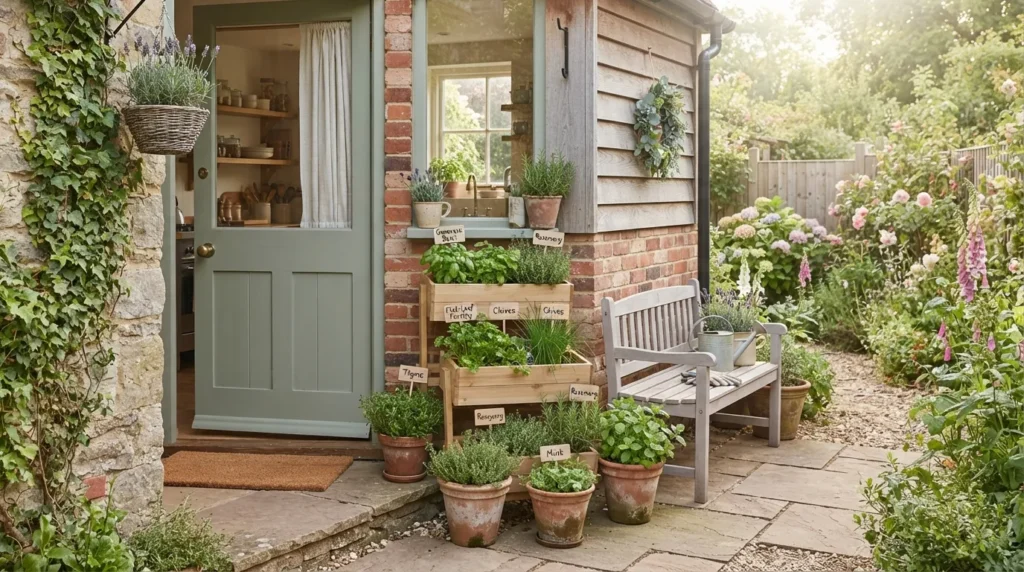
A small planting area near the kitchen door means you don’t have to walk across the backyard every time you need a handful of parsley or basil.
This approach works especially well for herbs you use frequently.
It also creates a lovely transition between indoor and outdoor spaces.
How To Style It
Use containers or a compact raised bed near the kitchen entrance where appropriate.
Place frequently harvested herbs within easy reach.
Basil, parsley, chives, thyme, and mint are examples of useful culinary herbs, although growing conditions vary.
Be careful with mint because it can spread aggressively in garden beds. Growing it in a container can help keep it contained.
Add a small bench or narrow plant stand if space allows.
Keep the area uncluttered so the entrance remains practical.
4. Vertical Herb Wall
Quick Benefits
- Saves ground space
- Adds height
- Works on patios
- Creates a garden focal point
- Makes small spaces productive
Why It Works
When floor space is limited, look upward.
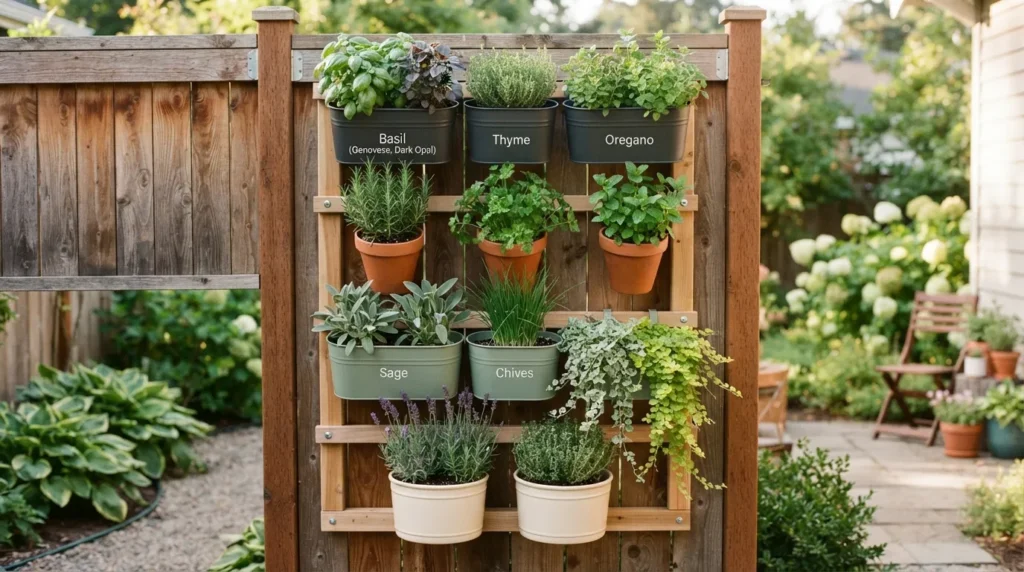
A vertical herb garden can turn a wall, fence, or suitable freestanding structure into a growing area.
This is particularly useful for patios, balconies, courtyards, and small backyards.
Vertical systems can range from simple wall-mounted containers to purpose-built planters.
The important thing is to make sure the structure is appropriate for outdoor use and securely installed.
How To Style It
Choose containers that allow adequate drainage.
Arrange herbs according to their light and watering requirements.
Use a consistent container style for a clean appearance.
Wooden planters can create a natural look.
Metal or dark containers can work with modern gardens.
Leave enough space between plants for airflow and growth.
Remember that vertical gardens may dry out more quickly than plants growing in the ground, so monitor moisture regularly.
5. Rustic Herb Planters
Quick Benefits
- Adds character
- Works with farmhouse gardens
- Uses natural textures
- Can fit small spaces
- Makes herbs decorative
Why It Works
Herbs can be both productive and ornamental.
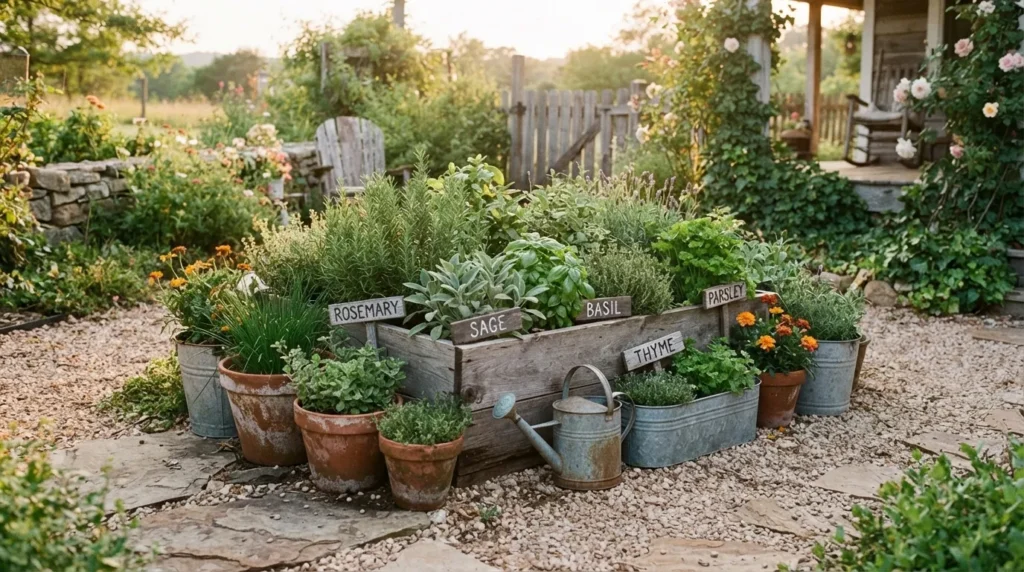
Rustic containers can make a simple collection of plants feel like a deliberate part of the landscape.
Wooden crates, aged terracotta, galvanized-style planters, and other suitable garden containers can complement cottage and farmhouse-inspired spaces.
However, don’t use containers that may contain harmful residues or aren’t suitable for growing food.
How To Style It
Create a small grouping rather than scattering containers randomly.
Use terracotta, weathered wood, or neutral finishes.
Mix herbs with different leaf shapes and heights.
Silver-green sage and rosemary can contrast beautifully with bright green parsley and basil.
Add a simple garden marker to identify each herb.
Keep the arrangement slightly informal to preserve the relaxed rustic character.
6. Mediterranean Herb Garden
Quick Benefits
- Creates a distinctive garden style
- Works beautifully in sunny areas
- Uses aromatic plants
- Can complement stone landscaping
- Adds texture and fragrance
Why It Works
Many familiar culinary herbs naturally fit Mediterranean-inspired garden designs.
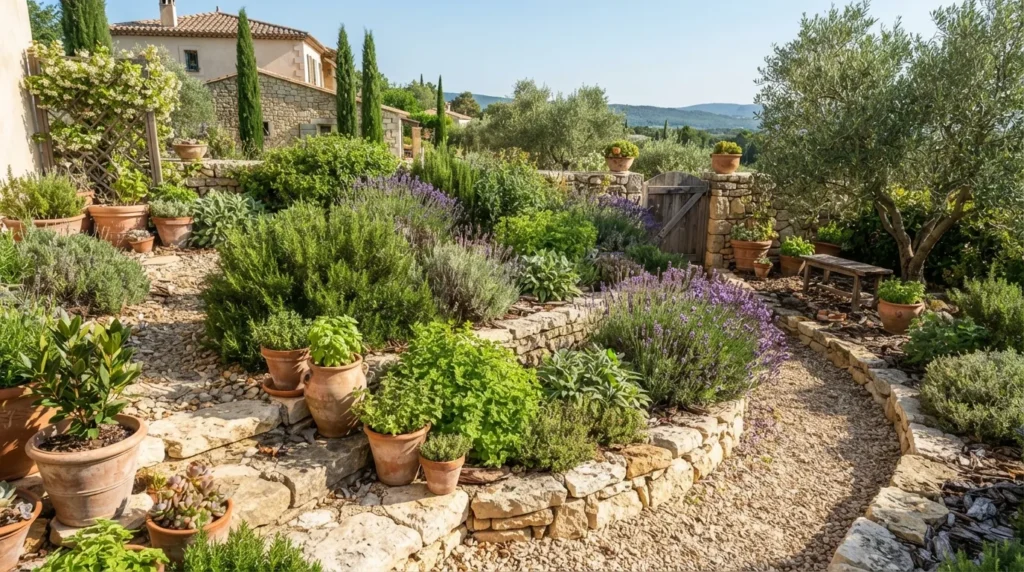
Rosemary, thyme, sage, oregano, and lavender can create a visually cohesive planting scheme when their growing requirements are compatible.
These plants often appreciate sunny conditions and well-draining soil, although individual needs vary.
The result can be both practical and ornamental.
How To Style It
Use terracotta containers, gravel, natural stone, and warm-toned materials.
Group plants according to their growing requirements rather than appearance alone.
Use low-growing thyme near pathways and taller rosemary toward the back.
Add lavender for color and fragrance where it grows well.
Avoid overwatering plants that prefer drier conditions.
A sunny location with excellent drainage is particularly important for many Mediterranean herbs.
7. Tiered Herb Garden
Quick Benefits
- Maximizes compact spaces
- Adds visual height
- Makes herbs easier to see
- Creates organized planting levels
- Works on patios and decks
Why It Works
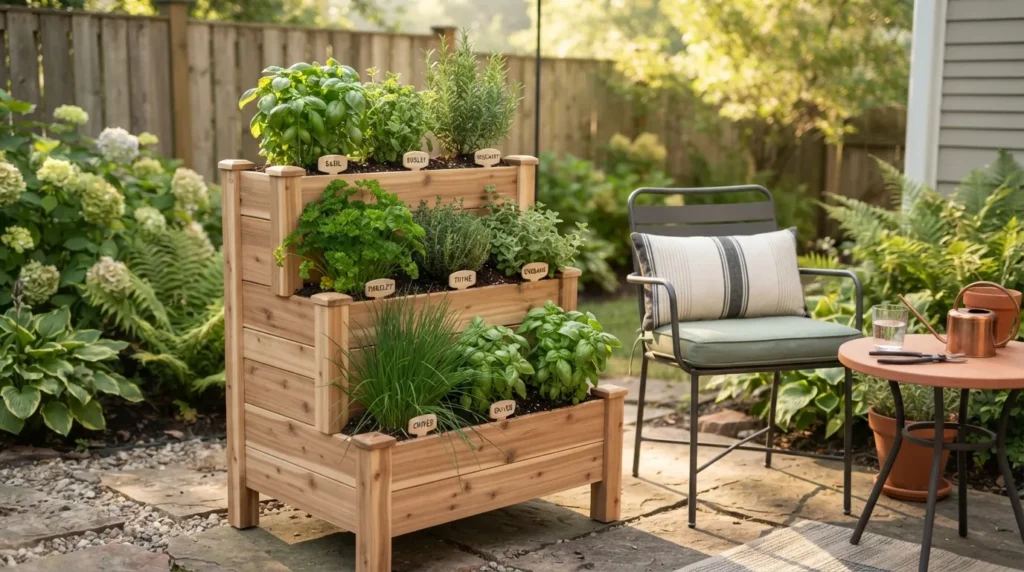
A tiered planter allows you to grow several herbs in a relatively small footprint.
The different levels also make the garden more visually interesting.
This can be especially useful when you want a productive garden but don’t have enough room for a traditional raised bed.
Tiered planters are available in many materials and styles, or can be built as a custom garden feature.
How To Style It
Place the tallest plants toward the highest or rear portions where appropriate.
Use smaller herbs around the lower levels.
Check that each level receives adequate sunlight.
Don’t let upper tiers shade lower plants unless those plants tolerate it.
Choose a planter with enough soil volume for the herbs you want to grow.
Place it somewhere convenient for watering and harvesting.
8. Hanging Herb Garden
Quick Benefits
- Saves floor space
- Adds vertical interest
- Works on patios
- Creates a decorative feature
- Can be moved when needed
Why It Works
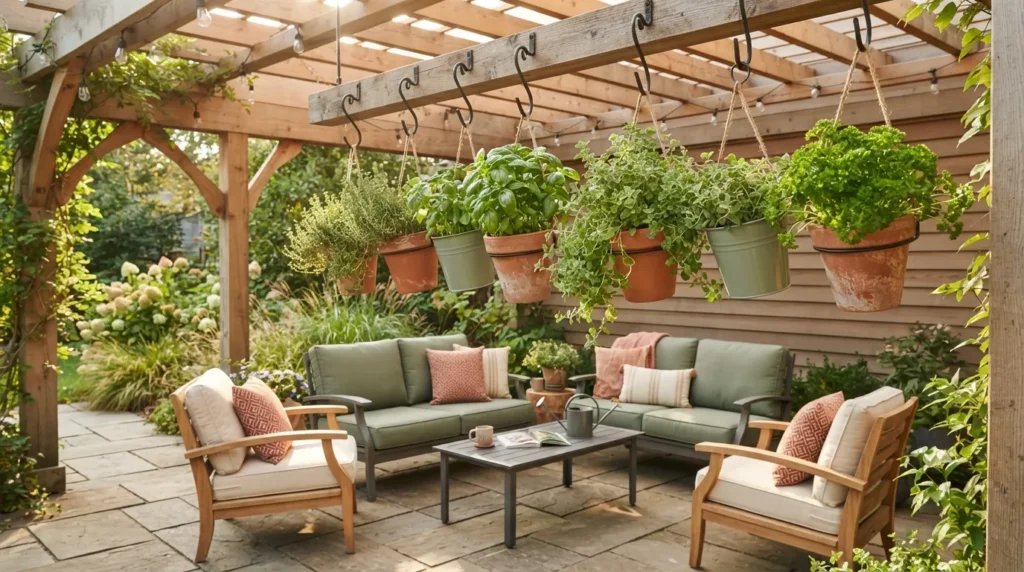
Hanging containers offer another way to grow herbs without taking up valuable ground space.
They’re especially useful for small patios, balconies, and compact outdoor areas.
A hanging arrangement can also become a decorative focal point.
However, weight matters.
Wet soil and mature plants can make containers considerably heavier, so the hanging structure must be suitable for the load.
How To Style It
Use several matching containers for a cohesive appearance.
Choose herbs that remain manageable in containers.
Hang the garden where plants receive appropriate sunlight.
Keep watering access convenient.
Avoid placing hanging planters where they obstruct walkways or doors.
A combination of trailing herbs and upright varieties can create an attractive layered effect.
9. Herb Garden Border
Quick Benefits
- Blends herbs with landscaping
- Defines garden edges
- Adds fragrance near pathways
- Maximizes usable space
- Makes herbs part of the design
Why It Works
An herb garden doesn’t have to look like a separate vegetable plot.
Many herbs can become part of the landscape itself.
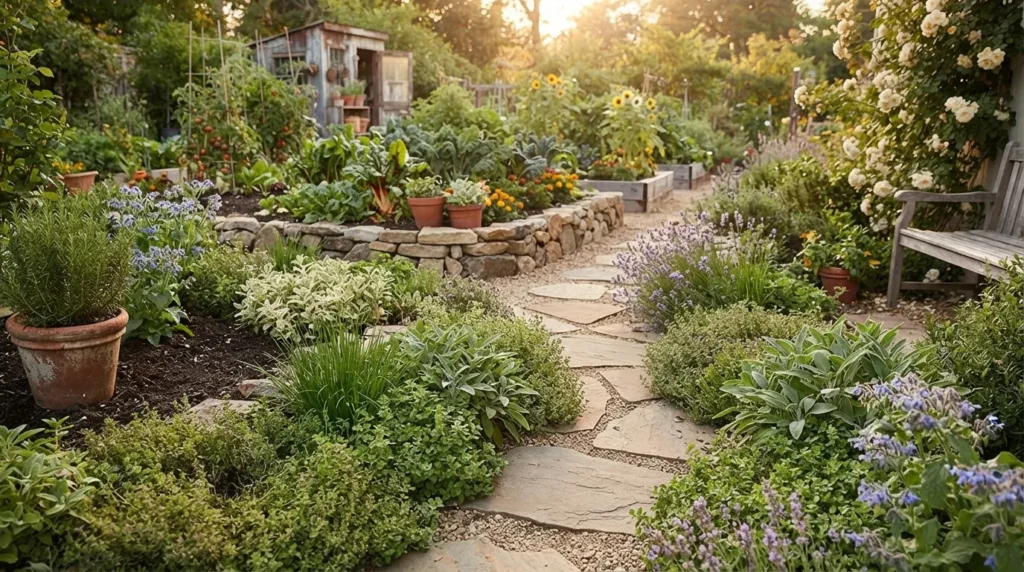
Low-growing thyme, compact oregano, chives, sage, and other suitable herbs can create attractive transitions around vegetable beds, paths, patios, or garden structures.
This approach makes the garden feel more integrated.
How To Style It
Choose plants according to mature size.
Place low-growing varieties near the front.
Use taller herbs farther back.
Create repeating groups rather than planting every herb once.
For example, several groups of thyme can look more intentional than a single isolated plant.
Leave enough room for harvesting and maintenance.
Avoid placing plants where they will eventually block paths.
10. Indoor-Outdoor Herb Garden
Quick Benefits
- Provides flexibility
- Extends the growing season in some climates
- Keeps herbs close to cooking areas
- Works for small homes
- Creates a continuous gardening routine
Why It Works
Some gardeners prefer having herbs available both indoors and outdoors.
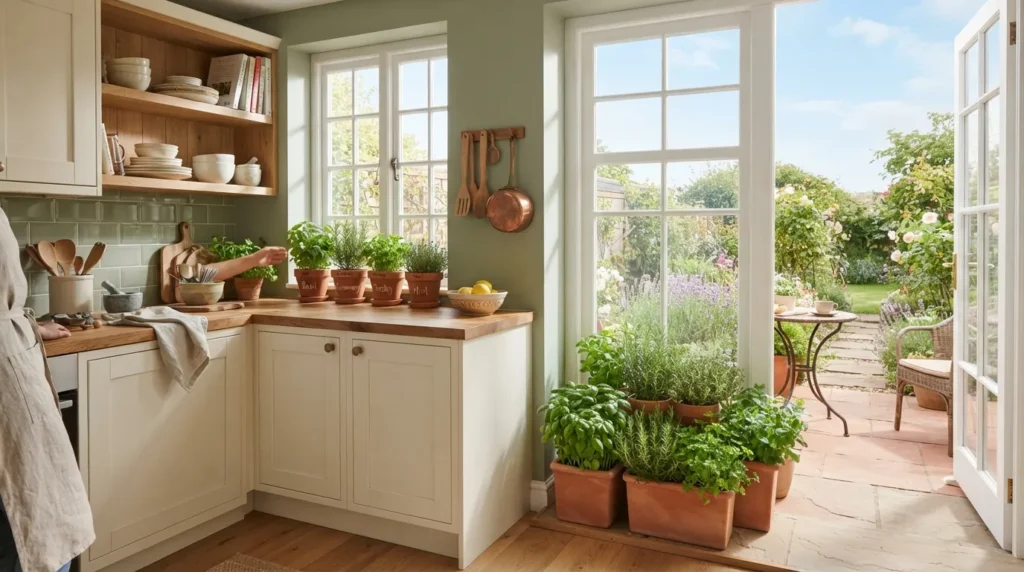
An indoor windowsill can provide a convenient location for a few small plants, while larger containers remain outside during suitable weather.
This approach can also help gardeners adapt to seasonal changes.
However, herbs have different temperature, light, and humidity requirements, so moving plants indoors isn’t automatically suitable for every variety.
How To Style It
Use matching containers indoors and outdoors to create visual continuity.
Keep indoor herbs near an appropriately sunny window or use suitable supplemental lighting when necessary.
Outdoor containers can be grouped near the kitchen.
Choose herbs that fit your cooking habits rather than growing dozens of varieties simply because they’re available.
A small collection that gets used regularly is often more rewarding than an oversized garden.
How To Choose the Best Herbs for Your Garden
Start with the herbs you actually use.
If you cook Italian-inspired meals frequently, basil, oregano, parsley, rosemary, and thyme may be useful.
For fresh summer dishes, basil, mint, parsley, dill, and chives can be practical choices.
For tea or drinks, mint and lemon balm may be appealing.
Then consider your growing conditions.
Sunlight
Many culinary herbs prefer several hours of sunlight, but requirements vary.
Soil
Drainage is especially important for many Mediterranean herbs.
Water
Some herbs prefer consistently moist conditions, while others prefer to dry somewhat between watering.
Space
Check the mature size before planting.
A small seedling can become a surprisingly large plant.
Climate
Choose varieties that are suitable for your USDA hardiness zone and local conditions.
How To Design a Small Herb Garden
You don’t need a large yard.
For a compact space, choose one vertical or container-based approach.
A three-tier planter can hold several herbs.
A sunny windowsill can accommodate a few small pots.
A narrow raised bed can work beside a fence.
A wall-mounted system can use vertical space.
The most important thing is sunlight and accessibility.
Place the herbs where you can easily see them and remember to harvest them.
How To Keep an Herb Garden Organized
Group plants according to their growing requirements.
Keep herbs with similar watering preferences together when possible.
Label unfamiliar varieties.
Trim plants regularly according to their needs.
Remove damaged or declining foliage.
Keep pathways clear.
If growing in containers, periodically check drainage and root growth.
Good organization doesn’t mean everything needs to be perfectly symmetrical.
It simply means the garden should be easy to understand and maintain.
Common Herb Garden Mistakes
Planting without checking sunlight: A beautiful container won’t compensate for an unsuitable location.
Overwatering: Some herbs, especially Mediterranean types, dislike consistently wet soil.
Ignoring mature size: Give plants enough room to grow.
Using poor drainage: Containers should have appropriate drainage.
Growing everything together: Different herbs can have very different watering and soil preferences.
Forgetting harvesting: Regular harvesting can be part of maintaining many culinary herbs, but follow the specific needs of each plant.
Choosing herbs you don’t use: Start with varieties that fit your cooking habits.
FAQ
What are the easiest herbs to grow at home?
Basil, chives, parsley, thyme, oregano, rosemary, and mint are popular choices, although ease of growth depends on climate and growing conditions. Mint can spread aggressively when planted in the ground, so containers are often a practical option. Start with herbs suited to your available sunlight and watering routine.
What herbs grow well together?
Herbs with similar sunlight, soil, and watering requirements are generally easier to grow together. Mediterranean herbs such as rosemary, thyme, sage, and oregano often prefer sunny, well-drained conditions. Herbs that need more consistent moisture may be better grouped separately.
How much sunlight does an herb garden need?
Many culinary herbs prefer several hours of direct sunlight each day, but the exact requirement varies by plant. Check the growing instructions for each herb before choosing a location. If you’re combining several varieties, make sure the garden receives enough light for the plants with the highest requirements.
Can I grow herbs in containers?
Yes. Containers are an excellent option for patios, balconies, decks, small yards, and rental properties. Choose containers with adequate drainage and enough space for the mature plants. Use an appropriate potting mix and monitor moisture because containers can dry out faster than garden soil.
What herbs should I plant near my kitchen?
Choose herbs you use frequently. Basil, parsley, chives, thyme, rosemary, oregano, and mint can all be convenient near the kitchen when their growing conditions are suitable. Keeping frequently harvested herbs nearby makes it easier to pick small amounts while cooking.
How do I prevent mint from spreading?
Growing mint in a container is one of the simplest ways to keep it contained. Mint can spread aggressively when planted directly in garden soil. Use a container with adequate drainage and monitor the plant regularly. If growing it outdoors, avoid placing the container where stems can easily root into surrounding soil.
What is the best container for growing herbs?
There isn’t one universal best container. Choose a pot with adequate drainage, sufficient depth and width for the mature plant, and a material suitable for your climate. Terracotta is popular for herbs that prefer drier conditions because it can dry more quickly, while other containers may retain moisture longer.
Conclusion
A good herb garden can be beautiful, productive, and surprisingly easy to fit into everyday life.
You don’t need a large backyard or elaborate landscaping. A few well-chosen containers beside the kitchen can provide fresh ingredients. A raised bed can become a productive garden feature. A vertical planter can turn an empty wall into a growing space.
The most important step is choosing an approach that matches your available space, sunlight, climate, and gardening routine.
Start with herbs you actually use.
Then build around them.
Add attractive containers, raised beds, pathways, or natural materials if you want the garden to become part of your outdoor decor. Group plants according to their growing requirements, keep harvesting convenient, and give each herb enough room to thrive.
Whether you prefer a rustic collection of terracotta pots, a modern vertical garden, or a traditional raised bed, your herb garden can become more than a source of fresh ingredients.
It can become one of the most useful and enjoyable corners of your outdoor space.
Related Articles
- 10 Patio Garden Ideas for Small Outdoor Spaces
- 10 Backyard Landscaping Ideas for a Beautiful Garden
- 10 Garden and Outdoor Ambience Ideas
- 10 DIY Garden Projects Anyone Can Complete
- 10 Small Patio Ideas for Comfortable Outdoor Living