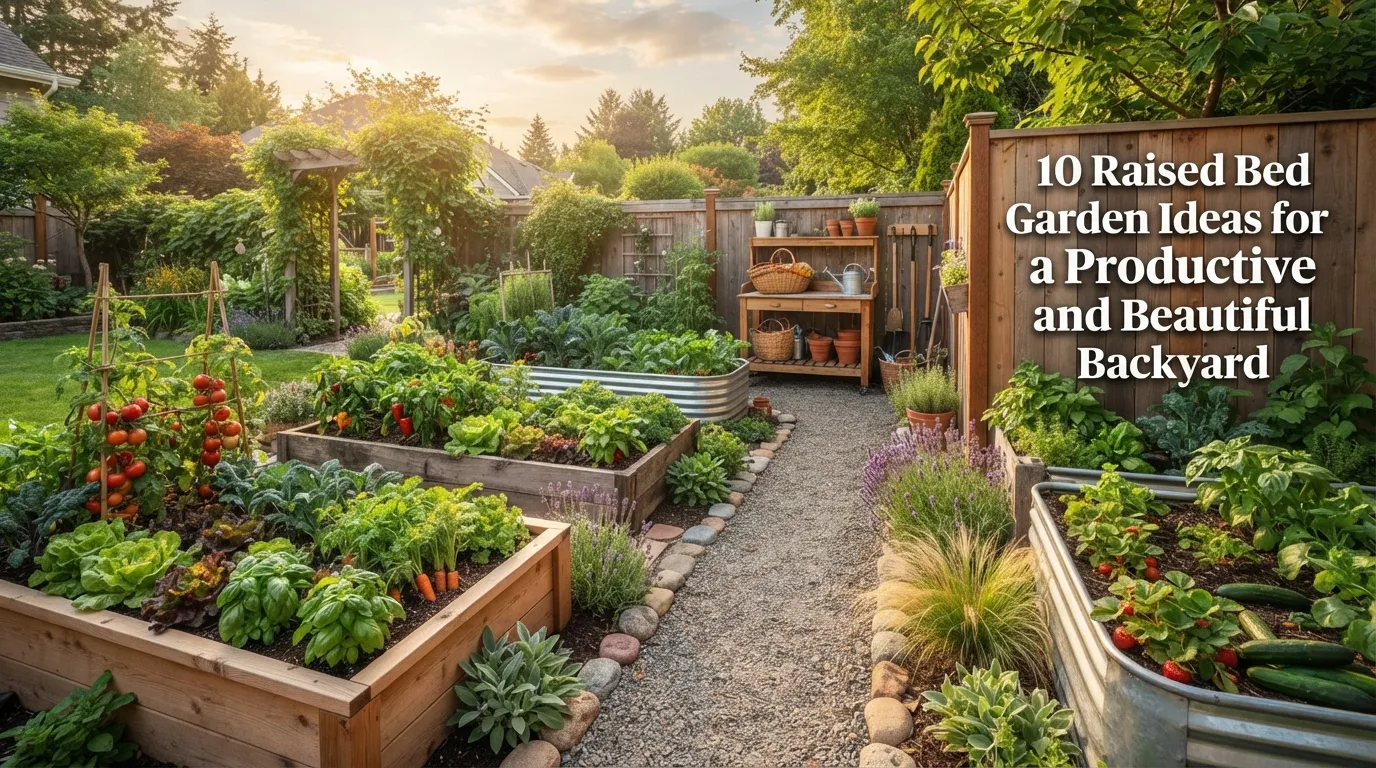
10 Raised Bed Garden Ideas for a Productive and Beautiful Backyard
Raised beds can completely change the way a garden looks and functions. They give vegetables, herbs, flowers, and other plants a defined growing space while making the garden feel more organized and intentional.
One of the biggest advantages is flexibility. A raised garden bed can be built from wood, stone, metal, composite materials, or other suitable products, and it can be designed to fit everything from a large backyard to a compact patio.
But the best raised beds aren’t simply boxes filled with soil. Their placement, proportions, pathways, planting arrangement, and surrounding materials all influence how enjoyable the garden will be to use.
If you’re planning your first raised bed, start by thinking about what you want to grow. Vegetables such as tomatoes, peppers, lettuce, carrots, and cucumbers can work well in raised beds when their individual growing requirements are met. Herbs and flowers can also be incorporated to make the garden more attractive and useful.
I’ve found that organization matters just as much as appearance. When beds are easy to reach from all sides, plants are simpler to maintain and harvest. A clear pathway also prevents the garden from becoming a muddy maze after rain.
Raised beds are especially helpful when you want to separate different types of plants. One bed might be dedicated to vegetables, another to herbs, and another to flowers that attract pollinators.
Whether you’re working with a spacious backyard or a small outdoor area, these raised bed garden ideas can help you create a productive growing space that feels like a natural part of your landscape.
Table of Contents
1. Classic Wood Beds
Create timeless raised beds using natural wood and simple geometric layouts.
2. Tiered Raised Beds
Use multiple planting levels to maximize space and add visual dimension.
3. Stone Raised Beds
Build a permanent-looking garden feature with natural or masonry materials.
4. Metal Garden Beds
Add a clean, contemporary look with appropriately designed metal beds.
5. U-Shaped Garden
Create an efficient layout with planting areas surrounding a central walkway.
6. Raised Herb Beds
Dedicate raised beds to culinary herbs for convenient harvesting.
7. Vegetable Garden Grid
Organize vegetables into clearly defined sections for easier maintenance.
8. Flower-Filled Beds
Combine productive gardening with colorful ornamental planting.
9. Small Space Beds
Fit raised growing areas into patios, courtyards, and compact backyards.
10. Cottage Garden Beds
Create a relaxed, layered garden with vegetables, herbs, flowers, and natural textures.
1. Classic Wood Beds
Quick Benefits
- Timeless appearance
- Easy to organize
- Works in many backyard styles
- Available in different sizes
- Suitable for beginners
Why It Works
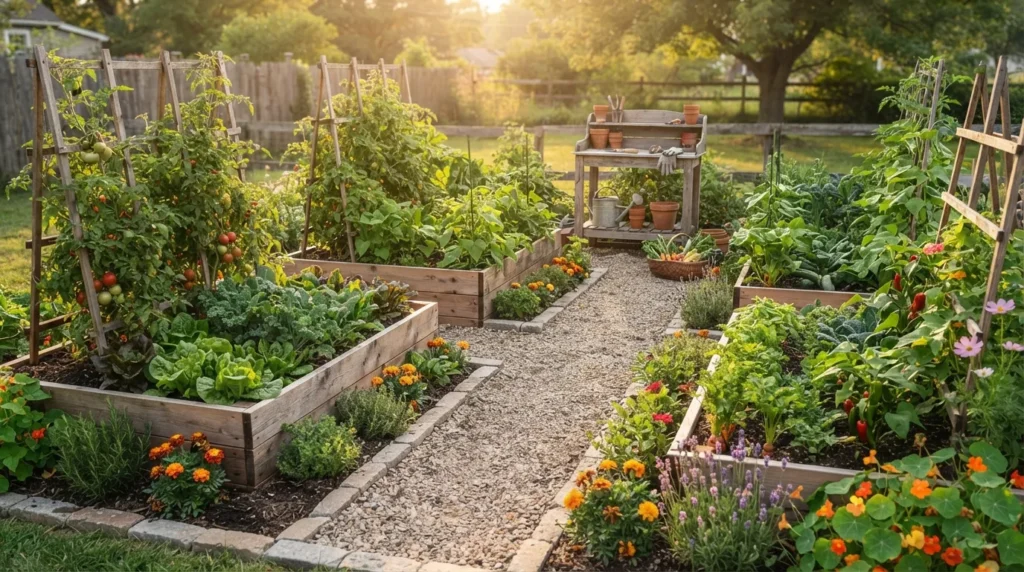
Wooden raised beds are popular because they provide a simple structure without making the garden feel overly formal.
The natural material works particularly well with greenery, gravel pathways, and traditional landscaping.
Rectangular beds are especially practical because they provide straightforward planting rows while making it easier to estimate how much soil and compost you’ll need.
The dimensions should allow you to reach the center without stepping into the bed. This is important because compacted soil can make plant roots and drainage problems more difficult to manage.
How To Style It
Choose untreated or appropriately rated materials suitable for garden construction.
Arrange two or three rectangular beds parallel to one another for a clean layout.
Leave comfortable pathways between them.
Use gravel, mulch, pavers, or another suitable pathway material.
Plant taller crops toward the back or north side when appropriate so they don’t unnecessarily shade shorter plants.
Finish the look with simple plant markers and a few flowering plants around the perimeter.
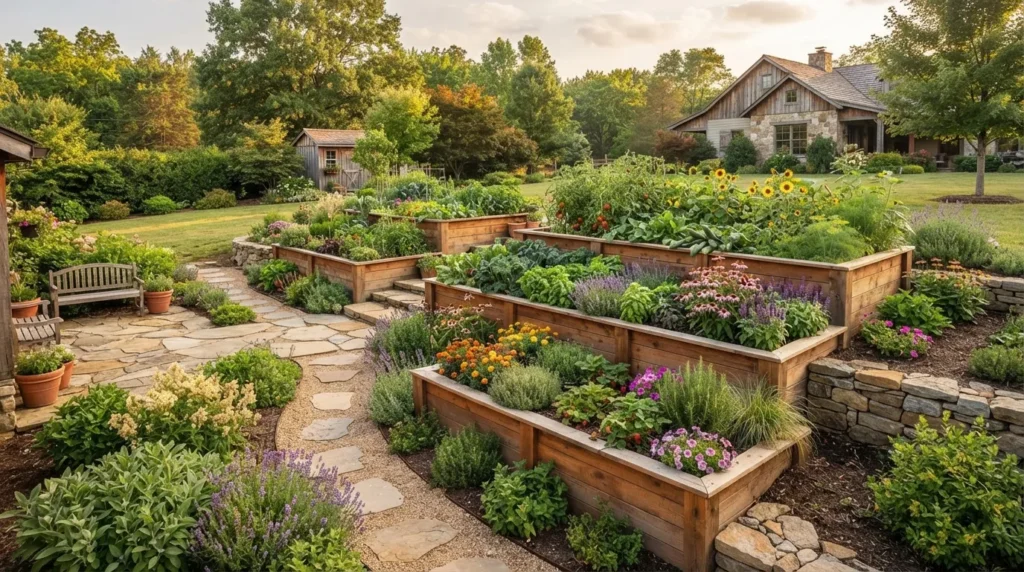
2. Tiered Raised Beds
Quick Benefits
- Maximizes vertical space
- Works on sloped areas
- Adds visual interest
- Creates separate planting zones
- Makes compact gardens more productive
Why It Works
Tiered beds are particularly useful when a garden has a slope or when you want to create several growing levels in a limited footprint.
Instead of spreading outward, the garden grows upward through a series of connected beds.
The different levels can also create a beautiful landscape feature.
However, each tier needs proper structural support, drainage, and appropriate construction.
How To Style It
Use the highest level for plants that can tolerate more exposure.
Place lower-growing crops toward the front.
Use herbs and flowers along the edges to soften the structure.
Natural wood creates a warm appearance, while stone can make the tiers feel more permanent.
If building on a slope, make sure the retaining structure is designed appropriately for soil pressure and drainage.
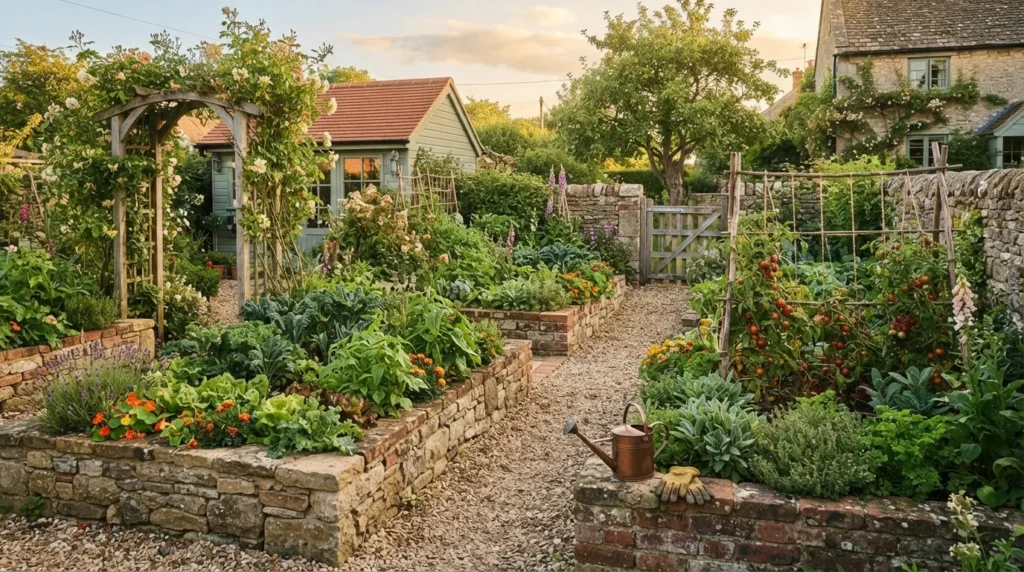
3. Stone Raised Beds
Quick Benefits
- Creates a permanent appearance
- Complements traditional landscapes
- Adds natural texture
- Can last for many years
- Works well with ornamental gardens
Why It Works
Stone raised beds can make a vegetable garden feel like part of the home’s landscaping rather than a separate production area.
Natural stone, brick, concrete block, or other appropriate masonry materials can create strong boundaries around planting areas.
This approach is particularly attractive when the same material appears elsewhere in the yard.
How To Style It
Choose a material that complements the home’s exterior.
Use natural stone for a relaxed garden appearance.
Brick can suit traditional or cottage-style landscapes.
Keep the planting relatively informal if you want a softer look.
Combine vegetables with herbs and flowers.
Use gravel or stone pathways between the beds to create a cohesive design.
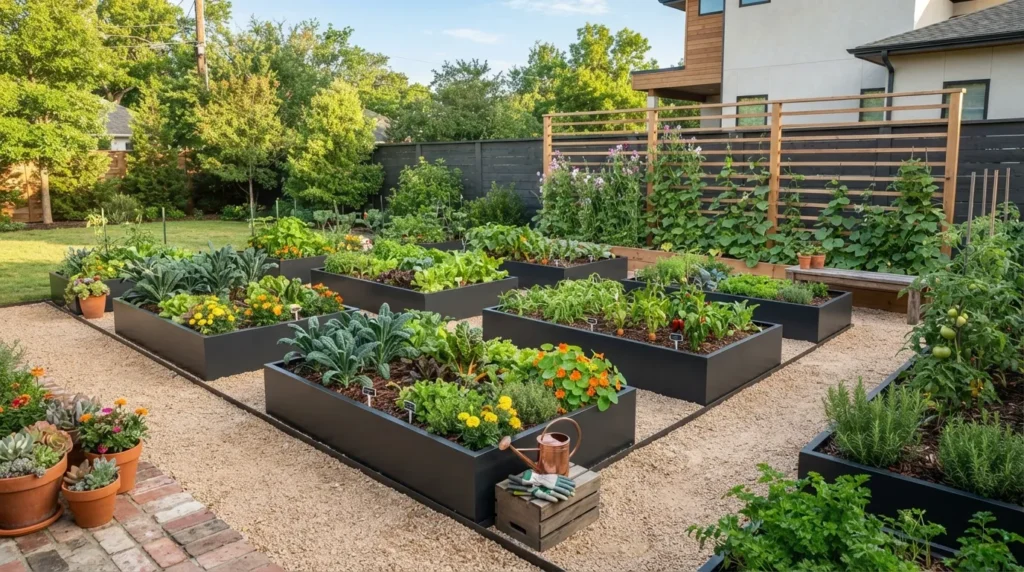
4. Metal Garden Beds
Quick Benefits
- Modern appearance
- Strong visual definition
- Works well in contemporary yards
- Available in many sizes
- Creates clean planting boundaries
Why It Works
Metal raised beds offer a different aesthetic from traditional wood.
Their clean lines can make a garden feel modern and structured.
They can work particularly well when paired with gravel, concrete, dark fencing, or minimalist landscaping.
Choose products specifically designed for garden use and follow manufacturer guidance regarding installation and materials.
How To Style It
Use simple geometric layouts.
Pair dark or neutral metal with lush green foliage for contrast.
Keep pathways uncluttered.
Mix vegetables with ornamental herbs and flowers.
For a polished appearance, repeat the same bed material throughout the garden.
Add wooden trellises or natural plant supports to soften the harder material.
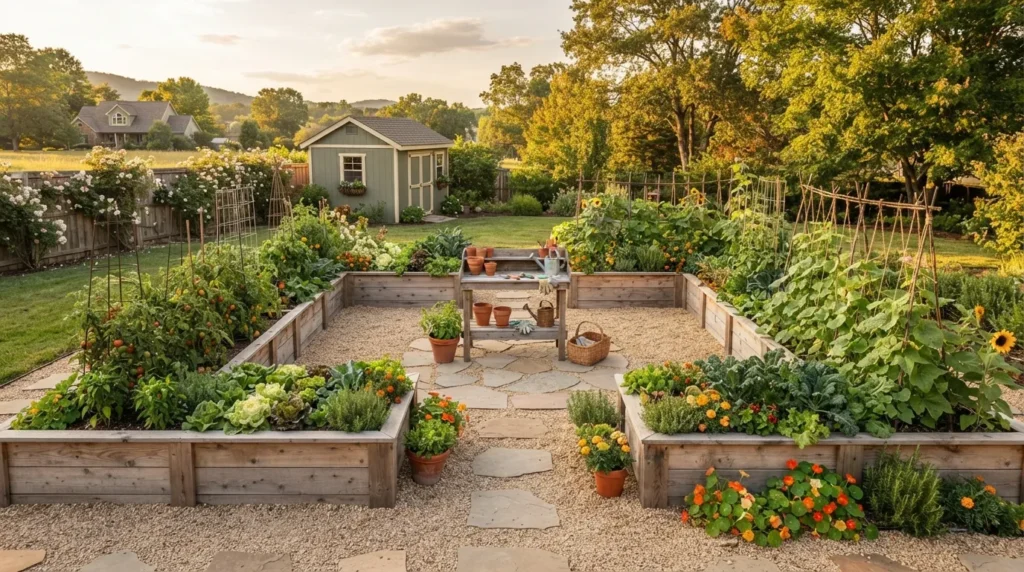
5. U-Shaped Garden
Quick Benefits
- Maximizes planting space
- Provides easy access
- Creates a central working area
- Works well for larger gardens
- Makes harvesting convenient
Why It Works
A U-shaped raised garden surrounds a central open area with planting beds.
This layout provides plenty of growing space while keeping the plants within easy reach.
The central opening can become a small working area where you can stand, place tools, or temporarily set harvested vegetables.
It’s particularly useful for gardeners who spend significant time maintaining their plants.
How To Style It
Keep the beds narrow enough to reach comfortably from the pathways.
Use the back section for taller crops or trellised plants.
Place frequently harvested herbs and greens closer to the central opening.
Add a small potting bench nearby if space allows.
Use gravel, mulch, or pavers for the central walkway.
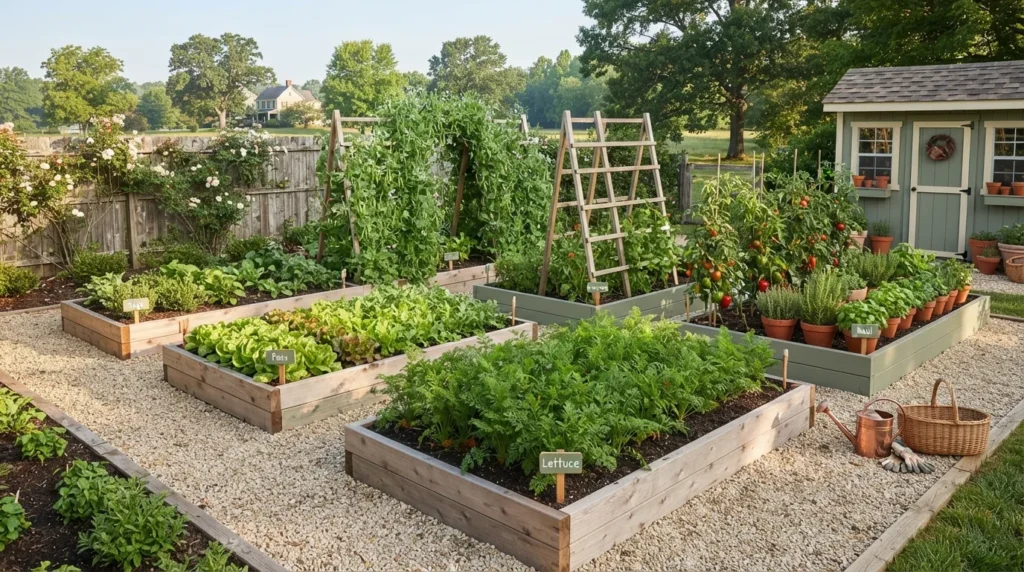
6. Raised Herb Beds
Quick Benefits
- Keeps herbs organized
- Makes harvesting convenient
- Separates herbs from vegetables
- Adds fragrance and texture
- Creates an attractive garden feature
Why It Works
A dedicated raised herb bed can be both practical and decorative.
Instead of putting every herb into separate containers, you can create a cohesive planting area.
Group herbs according to their growing requirements.
Many Mediterranean herbs prefer sunny locations and well-draining soil, while other herbs may have different moisture preferences.
How To Style It
Plant rosemary, thyme, sage, oregano, chives, basil, and parsley according to their individual requirements.
Place taller herbs toward the back where appropriate.
Use low-growing thyme near edges.
Add small labels for easy identification.
Surround the bed with gravel or stone.
For a Mediterranean-inspired appearance, combine terracotta accents with natural stone and warm-toned materials.
7. Vegetable Garden Grid
Quick Benefits
- Makes planting organized
- Simplifies crop planning
- Creates visual structure
- Makes harvesting easier
- Works well for multiple vegetables
Why It Works
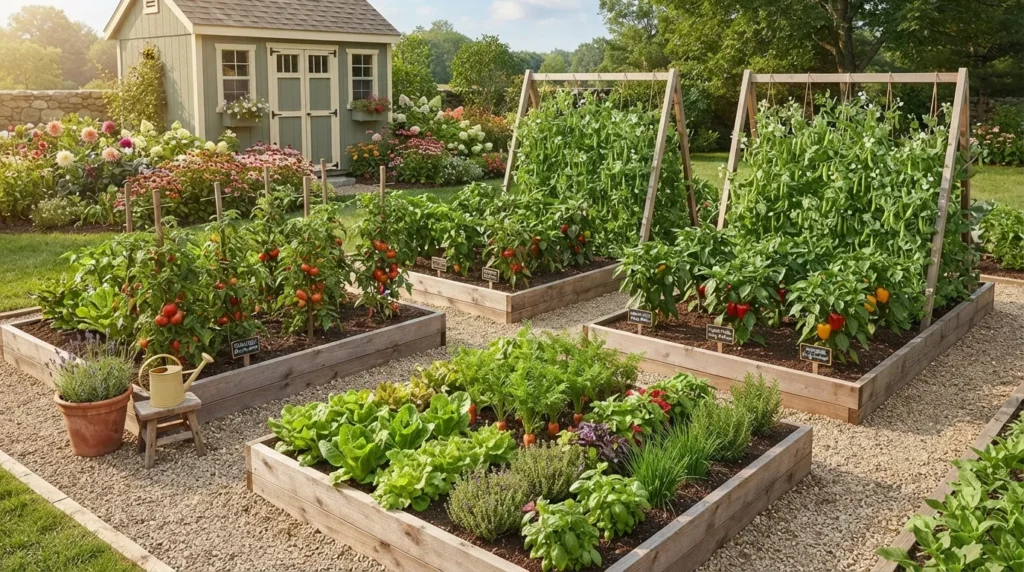
A grid-style raised garden divides the growing area into smaller sections.
This can make it easier to organize different vegetables and plan succession planting.
You can dedicate individual sections to leafy greens, root vegetables, herbs, or seasonal crops.
The layout also gives a traditional vegetable garden a more intentional appearance.
How To Style It
Use several raised beds separated by clear paths.
Create repeated planting patterns rather than mixing every crop together.
Add trellises for suitable climbing plants such as cucumbers or peas.
Place larger crops where they won’t shade smaller plants unnecessarily.
Use flowers along the edges to soften the vegetable-focused appearance.
8. Flower-Filled Beds
Quick Benefits
- Adds color
- Supports pollinators
- Makes vegetable gardens decorative
- Extends seasonal interest
- Creates a softer landscape
Why It Works
Raised beds don’t have to be exclusively for vegetables.
Flowers can make productive gardens much more attractive.
Depending on the plants selected, flowering species can also provide resources for pollinators and beneficial insects.
The key is choosing plants that are suitable for your climate and garden conditions.
How To Style It
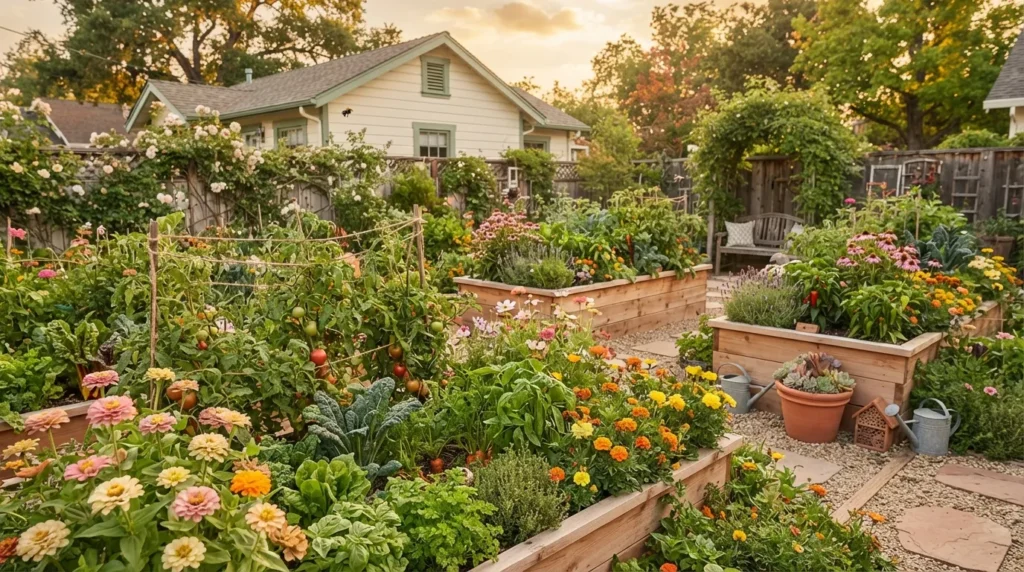
Combine edible plants with ornamental flowers.
Use taller flowers toward the back.
Place compact flowers around the edges.
Marigolds, nasturtiums, zinnias, calendula, and other suitable flowers can add color, although planting compatibility varies.
Use repeated colors throughout the beds for a cohesive appearance.
Keep enough space around vegetables for harvesting and maintenance.
9. Small Space Beds
Quick Benefits
- Fits compact yards
- Works on patios
- Maximizes growing space
- Easy to maintain
- Can be adapted to different layouts
Why It Works
You don’t need a huge yard to use raised beds.
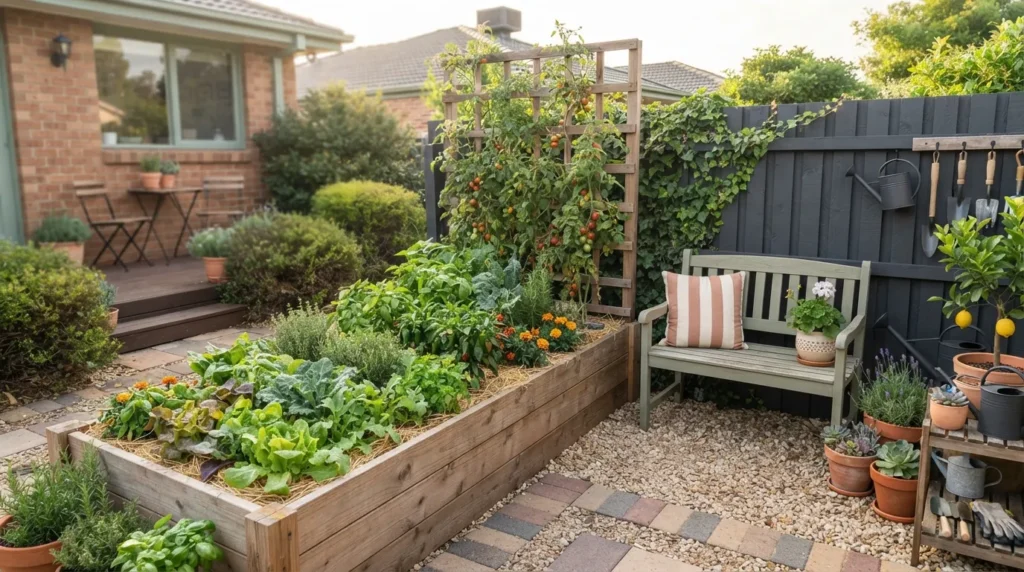
A narrow rectangular bed can fit along a fence.
A compact square bed can occupy a small corner.
A raised planter can work on a suitable patio or deck when its weight and drainage requirements are properly considered.
The trick is to focus on the plants you actually want to grow.
How To Style It
Choose a compact bed that leaves enough room for walking.
Grow vertical crops on a suitable trellis.
Use compact vegetable varieties where appropriate.
Combine herbs and vegetables to make the most of limited space.
Surround the bed with gravel or pavers to keep the area clean.
A small bench nearby can turn the garden into a pleasant outdoor feature.
10. Cottage Garden Beds
Quick Benefits
- Creates a relaxed appearance
- Combines edible and ornamental plants
- Adds seasonal color
- Works with traditional homes
- Feels less formal
Why It Works
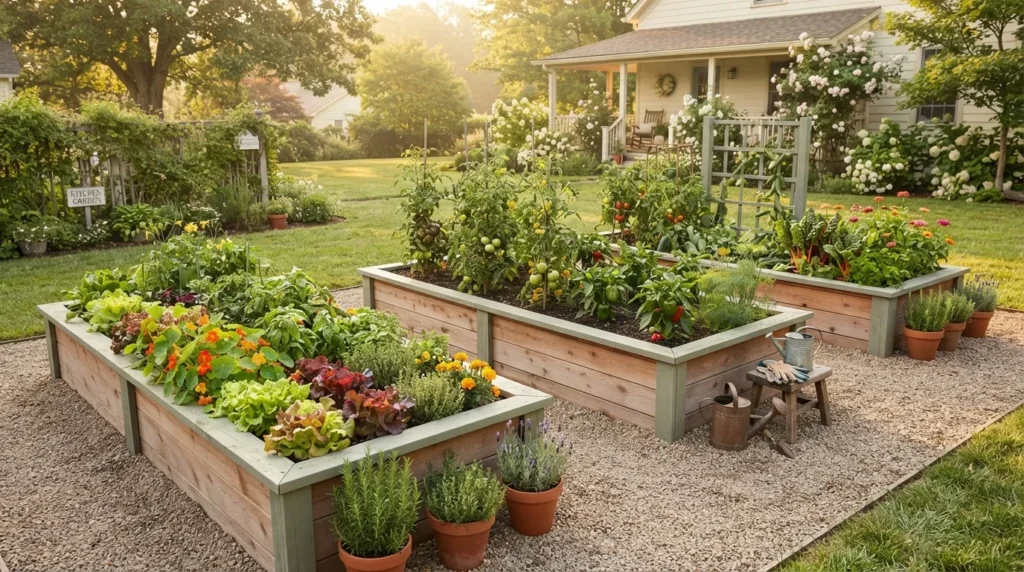
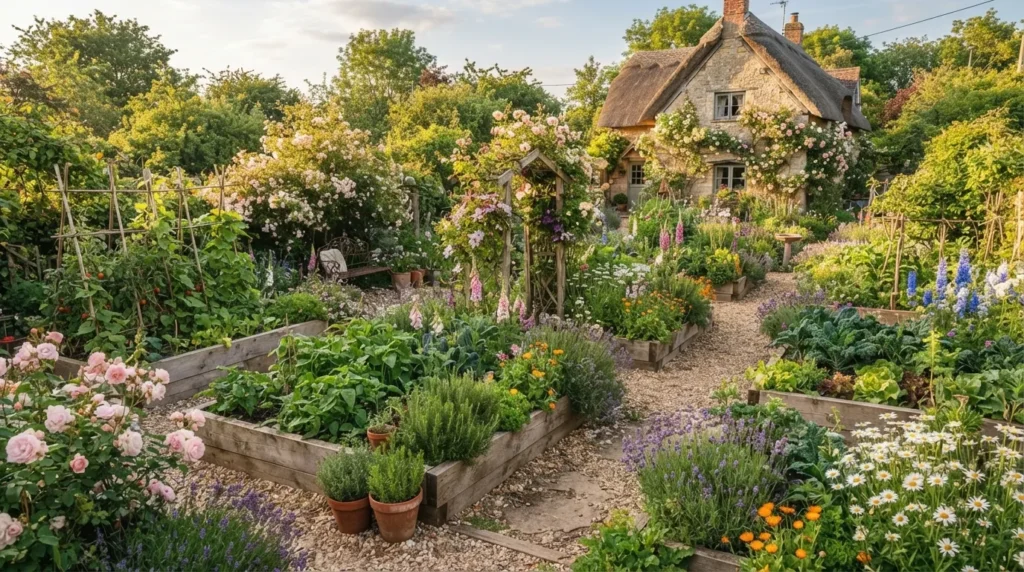
Cottage-style raised beds combine productivity with abundant planting.
Instead of creating perfectly uniform rows, you can mix vegetables, herbs, flowers, and foliage.
The result feels more relaxed and integrated into the landscape.
This style works particularly well when you want your raised garden to look decorative rather than purely functional.
How To Style It
Use natural wood or stone beds.
Mix herbs, vegetables, and flowering plants.
Allow suitable plants to spill slightly over edges without blocking pathways.
Add climbing plants to trellises.
Use soft colors such as cream, lavender, pink, blue, and green.
A gravel pathway can complete the informal cottage-garden appearance.
How To Choose the Best Raised Bed Material
The material you choose affects appearance, durability, maintenance, and cost.
Wood
Wood creates a natural appearance and is easy to integrate into most gardens. Choose appropriate materials for outdoor garden construction and consider their expected lifespan.
Stone
Stone provides a substantial, permanent appearance and can work beautifully with existing masonry landscaping.
Metal
Metal offers clean lines and a contemporary aesthetic. Choose garden-specific products and follow the manufacturer’s guidance.
Composite
Composite materials can provide a consistent appearance and may require less maintenance than some traditional materials.
The best option depends on your budget, climate, design preferences, and how permanent you want the garden to be.
How Deep Should a Raised Garden Bed Be?
The ideal depth depends on what you’re growing and the existing ground conditions.
Many common vegetables can grow successfully in beds with adequate soil depth, but crops have different root requirements.
Root vegetables such as carrots and parsnips need sufficient depth for their roots.
Shallow-rooted greens can require less.
If the raised bed sits over compacted ground, poor soil, or a hard surface, you’ll need to account for the plants’ full root requirements.
Rather than choosing a depth based solely on appearance, select the dimensions based on the crops you plan to grow.
How To Arrange Plants in a Raised Bed
Think vertically.
Place taller plants where they won’t unnecessarily shade shorter plants.
Keep frequently harvested crops within easy reach.
Group plants with similar watering and soil requirements.
Avoid overcrowding.
A garden may look sparse when seedlings are small, but plants can expand dramatically as they mature.
Always check the mature size and spacing recommendations for the varieties you’re growing.
Best Raised Bed Ideas for Beginners
If you’re new to raised-bed gardening, start simple.
A single rectangular wooden bed is often easier to manage than a large multi-level system.
Choose a handful of vegetables or herbs you regularly eat.
Create a convenient pathway around the bed.
Use quality soil and compost appropriate for your plants.
Then observe the garden throughout the season.
You’ll learn more from maintaining one successful bed than from building a complicated garden that becomes difficult to manage.
How To Make Raised Beds Look Beautiful
Productivity doesn’t have to come at the expense of design.
Use consistent materials.
Create clear pathways.
Repeat colors and textures.
Add flowers around vegetables.
Use attractive trellises.
Choose simple garden markers.
Surround the beds with gravel, mulch, stone, or another suitable landscape material.
The goal is to make the raised beds feel connected to the rest of the backyard.
Common Raised Bed Gardening Mistakes
Making beds too wide: If you can’t comfortably reach the center, maintenance becomes difficult.
Skipping pathways: Leave enough space to move around the beds.
Overcrowding plants: Follow spacing recommendations.
Ignoring drainage: Raised beds still need appropriate drainage.
Choosing plants without considering sunlight: Place sun-loving crops in suitable locations.
Forgetting mature size: Plan for the plant rather than the seedling.
Using unsuitable materials: Select construction materials appropriate for food-growing areas and outdoor conditions.
Making the garden too complicated: Start with a manageable design.
FAQ
What is the best material for raised garden beds?
There isn’t one universally best material. Wood provides a natural, traditional appearance, while stone creates a permanent landscape feature and metal offers a modern look. Composite materials can provide another low-maintenance option. Consider durability, local climate, appearance, cost, and whether the material is appropriate for your intended use.
How deep should a raised garden bed be?
Depth depends on what you’re growing and what is underneath the bed. Many vegetables need adequate soil depth for their roots, while shallow-rooted crops require less. Root vegetables generally need more depth. Check the requirements of the specific crops you plan to grow before building.
What vegetables grow well in raised beds?
Many common garden vegetables can grow well in raised beds, including lettuce, spinach, carrots, radishes, peppers, tomatoes, beans, and other suitable crops. The best choices depend on your climate, sunlight, soil, available space, and growing season.
Do raised garden beds need a bottom?
Not always. Beds placed directly on healthy ground can often remain open underneath, allowing roots and beneficial organisms to interact with the existing soil. Beds placed on patios, concrete, or other hard surfaces require a different design and appropriate drainage. Consider the location and crop requirements before adding a bottom.
How do I fill a raised garden bed?
Use a quality growing medium appropriate for the plants you’re growing. Many gardeners combine suitable topsoil or garden soil with compost and other organic material. The exact mixture depends on the bed location, crops, drainage, and local recommendations. Avoid using contaminated soil or materials not intended for food gardening.
How far apart should raised garden beds be?
Leave enough space to walk, kneel, move tools, and access the plants comfortably. The ideal distance depends on the bed height, pathway material, and gardening equipment you use. Wider pathways are particularly useful if you need to move a wheelbarrow through the garden.
Are raised garden beds good for beginners?
Yes. A simple raised bed can make gardening easier to organize because you have a defined growing area. Beginners should start with a manageable size, choose plants suited to their climate, provide adequate sunlight and drainage, and avoid overcrowding.
Conclusion
Raised beds can make a garden feel more organized without making it feel overly formal.
Whether you choose simple wooden boxes, stone borders, modern metal beds, or a relaxed cottage-style arrangement, the most important thing is to design the garden around how you actually plan to use it.
Start by choosing your crops.
Then consider sunlight, soil depth, drainage, access, and mature plant size.
Keep the beds narrow enough to reach comfortably and leave practical pathways between them. If you’re working with limited space, use vertical supports, tiered planters, or compact beds to make better use of the area.
And don’t be afraid to mix productivity with beauty.
Flowers can bring color to vegetable beds. Herbs can add fragrance. Natural stone and gravel can create attractive pathways. Trellises can provide vertical interest while supporting climbing plants.
You don’t need to build an elaborate garden all at once.
One well-designed raised bed can be enough to get started.
As you learn what grows well in your space and what you enjoy maintaining, you can add another bed or expand the layout.
The result can be a garden that produces useful plants while also becoming one of the most attractive and enjoyable parts of your backyard.
Related Articles
- 10 Herb Garden Ideas for a Beautiful and Useful Garden
- 10 Backyard Landscaping Ideas for a Beautiful Outdoor Space
- 10 DIY Garden Projects Anyone Can Complete
- 10 Patio Garden Ideas for Small Outdoor Spaces
- 10 Garden and Outdoor Ambience Ideas