

How to Place Knobs and Pulls on French Style Kitchen Cabinets
French style kitchen cabinets typically feature knobs centered 2.5 to 3 inches from the corner on doors, while drawers use pulls centered horizontally and vertically. Achieving this look requires adhering to strict geometric standards to maintain the classic, balanced aesthetic inherent in Provencal or Parisian design. Professional cabinet hardware placement relies on consistent offsets that respect the frame of your cabinetry.
Proper installation transforms the room by highlighting the architectural details of your doors rather than distracting from them. Precision in these measurements ensures that hardware feels intentional and functions smoothly for daily use.
Understanding French Cabinet Aesthetics
French provincial and classic French kitchens prioritize symmetry, elegance, and a sense of timelessness. Unlike modern slab cabinets that might use edge-mounted hardware, French style often incorporates recessed panels or raised moldings.
You must account for these decorative borders when choosing your placement strategy. The hardware should never interfere with the “stile and rail” construction of the door.
Hardware selection usually leans toward antique brass, polished nickel, or wrought iron finishes. These materials carry a weight that requires stable mounting points.
Because French cabinets often feature ornate detailing, the hardware acts as a piece of jewelry for the furniture-grade cabinetry. Keep the scale of your knobs in proportion to the height of your doors to ensure visual harmony.
Measuring Door Knobs for Classic Appeal
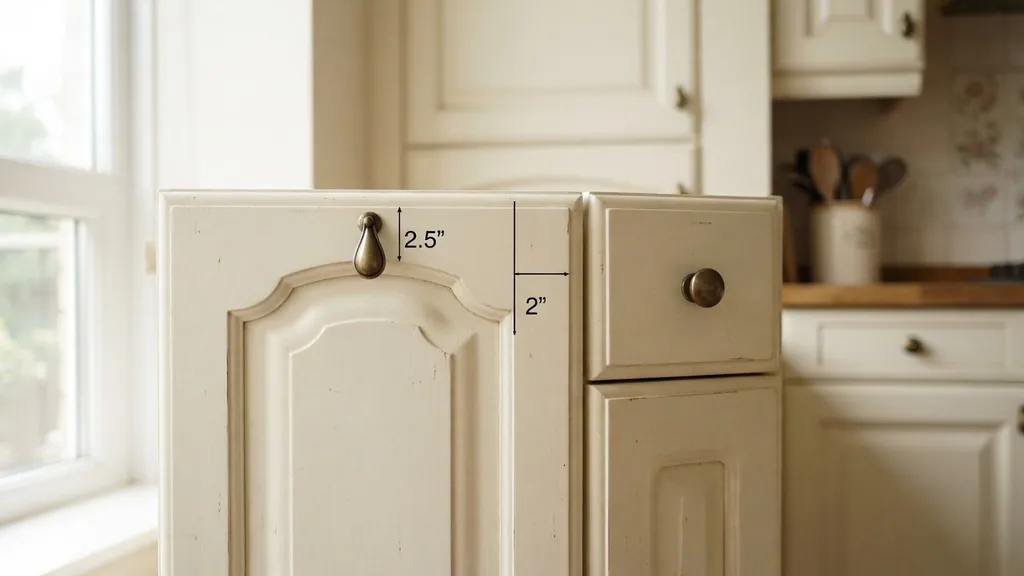
For standard shaker-style doors with a perimeter frame, the knob belongs on the stile, opposite the hinges. Measure from the bottom corner of the door upward, typically aiming for 2.5 to 3 inches from the bottom edge.
This placement keeps the knob within reach while maintaining a clean visual line. If your cabinets have exceptionally tall doors, you might shift the knob up to 4 inches to maintain better ergonomics.
Always align the knob with the horizontal rail of the door frame. If the rail is narrow, ensure the knob sits exactly in the center of the vertical stile.
This placement creates a balanced look that doesn’t feel crowded against the cabinet edge. Use a high-quality masking tape to mark your drilling points before committing to a hole.
Drawer Hardware Placement Techniques
Drawers in French kitchens often use a single pull or a pair of knobs depending on the width. For drawers under 24 inches wide, a single center-mounted pull is the standard approach.
Center the pull by measuring the total width of the drawer front and dividing by two. Vertical centering is equally important; find the midpoint of the drawer face to ensure the pull doesn’t sit too high or low.
For wider drawers exceeding 24 inches, consider using two knobs or pulls. Divide the drawer width into thirds and place the hardware at the one-third and two-thirds marks.
This prevents the drawer front from racking or twisting when pulled open from one side. Consistency across all drawers is the hallmark of a professional installation.
| Application | Standard Offset (Inches) | Placement Logic |
|---|---|---|
| Standard Door Knob | 2.5 – 3.0 | Aligned with the bottom rail |
| Small Drawer Pull | Center | Midpoint of width and height |
| Wide Drawer (>24″) | 1/3 and 2/3 | Balanced weight distribution |
| Tall Pantry Door | 4.0 – 6.0 | Ergonomic reach point |
Accounting for Decorative Moldings
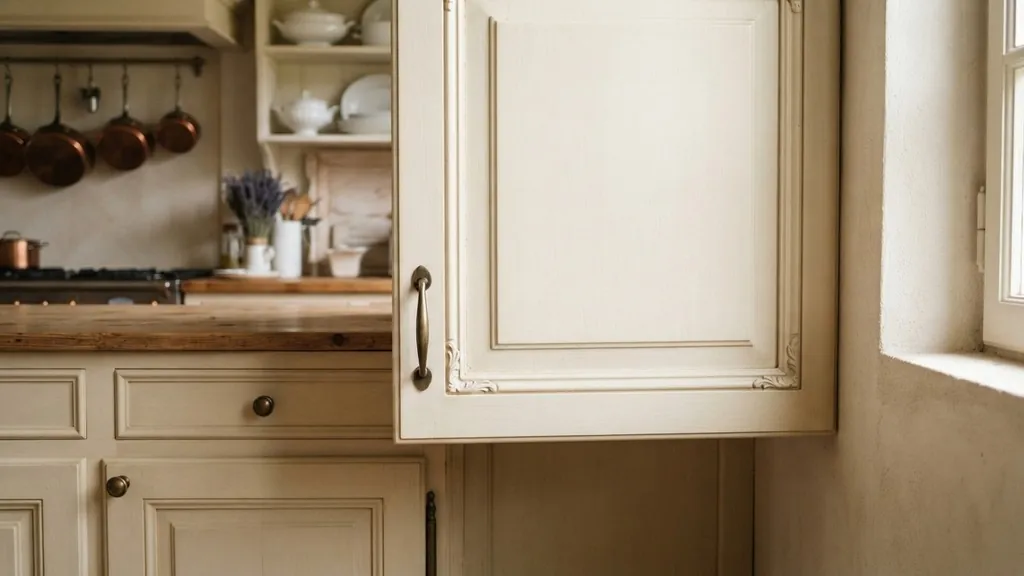
French cabinets frequently feature intricate crown molding or decorative edge profiles. You must avoid drilling into these profiles, as it risks cracking the wood or creating an uneven surface for the hardware base.
If your cabinet door has a raised panel, keep the hardware on the flat portion of the stile. Drilling through a curved profile will result in hardware that sits at an angle.
Use a hardware jig to ensure every hole is perfectly level across the entire kitchen. A jig allows you to replicate the same offset on every door, which is critical for a high-end finish.
If you encounter a decorative bead near the edge, move the knob slightly inward rather than drilling into the bead itself. Professional results depend on treating the cabinet face as a flat plane for the hardware base.
Ergonomics and Daily Functionality
While the visual impact of your hardware is vital, the functional aspect determines long-term satisfaction. The National Kitchen and Bath Association provides extensive resources on kitchen design standards that emphasize reachable, safe hardware placement.
You should test the hardware grip before installing it on every door. Ensure there is enough clearance behind the pull so your knuckles don’t hit the cabinet frame.
Consider the physical reach of all household members when setting heights for lower cabinets. If you have a busy family, avoid hardware with sharp edges or protruding points that could catch on clothing.
Smooth, rounded knobs are often preferred for high-traffic zones. Evaluate the weight of your doors; heavier doors benefit from larger knobs that provide a better grip.
Tools Required for Precision Installation
Invest in a professional-grade cabinet hardware template tool. These tools feature adjustable stops that allow you to lock in your 2.5-inch or 3-inch measurements.
Without a template, you rely on manual measurements which often lead to cumulative errors. A sharp drill bit specifically designed for wood will prevent splintering around the hole.
Always drill from the front of the door to the back to ensure the cleanest finish on the visible side. Place a scrap piece of wood behind the door where the bit exits to prevent blowout on the inside panel.
Use a power drill on a low-speed setting for maximum control. Taking your time during this phase prevents irreversible damage to your cabinetry.
Handling Large Pantry and Appliance Doors
Tall pantry doors require a different approach than standard base cabinets. Placing a knob at the 3-inch mark on a 7-foot door looks disproportionate and feels unnatural.
Instead, place the knob at approximately 36 to 40 inches from the floor. This position aligns with the natural reach of the average adult.
If you have integrated appliances like a refrigerator or dishwasher with custom fronts, verify the manufacturer’s installation manual first. These units often require specific hardware mounting plates that differ from standard wood screws.
Never assume standard placement applies to heavy appliance panels. Always prioritize the mechanical requirements of the appliance over the aesthetic preference of the room.
Troubleshooting Common Installation Errors
Misaligned holes are the most common issue homeowners face during installation. If you drill a hole in the wrong spot, use a wood filler that matches the finish of your cabinets.
Once dry, sand it smooth and touch it up with a matching paint or stain pen. For major errors, you may need to use a decorative backplate to cover the misaligned hole.
Backplates are a common feature in French style kitchens and can save a project from a minor mistake. They also add an extra layer of protection to the cabinet finish against fingernails and rings.
If the screw length is too long, use a hacksaw to trim the excess before tightening. A loose knob will eventually damage the cabinet face, so ensure all connections are tight and secure.
FAQ: Common Hardware Questions
Should I use knobs or pulls on French style cabinets?
Knobs are traditionally used on doors, while pulls are preferred for drawers to provide better leverage. You can mix them, but keep the finish and metal type consistent across the entire kitchen for a cohesive look.
How do I center a pull on a drawer front?
Measure the total width of the drawer face and mark the exact center point. Use a center-finding ruler or a hardware template to ensure the holes are spaced evenly from that center line.
Can I install hardware on a curved cabinet door?
Avoid installing hardware directly onto a curved surface, as the base of the knob will not sit flush. If you must use hardware on a curved door, choose a knob with a small, flexible base or mount it on the flat frame nearby.
What if my drill bit creates a splintered hole?
Use a sharp brad-point drill bit and apply a piece of masking tape over the area before drilling to prevent splintering. If splintering occurs, use a fine-grit sandpaper to smooth the edges before installing the hardware.
How deep should the screws be for my hardware?
The screws should extend through the cabinet face and into the knob/pull by at least 1/4 inch to ensure a secure hold. If the screws are too long, use a bolt cutter or hacksaw to trim them to the appropriate length.
Achieving Professional Results
Consistency is the secret to a high-end kitchen finish. By applying the same measurements to every door and drawer, you create a sense of order that defines French design. Remember that the hardware serves both a functional role and a decorative one, so take care to select pieces that feel comfortable in your hand.
Always double-check your measurements before drilling, as even a quarter-inch difference can be noticeable to the eye. Following these guidelines ensures that your kitchen will maintain its beauty and functionality for years. Take your time with the layout, use the right tools, and enjoy the transformation of your space.