
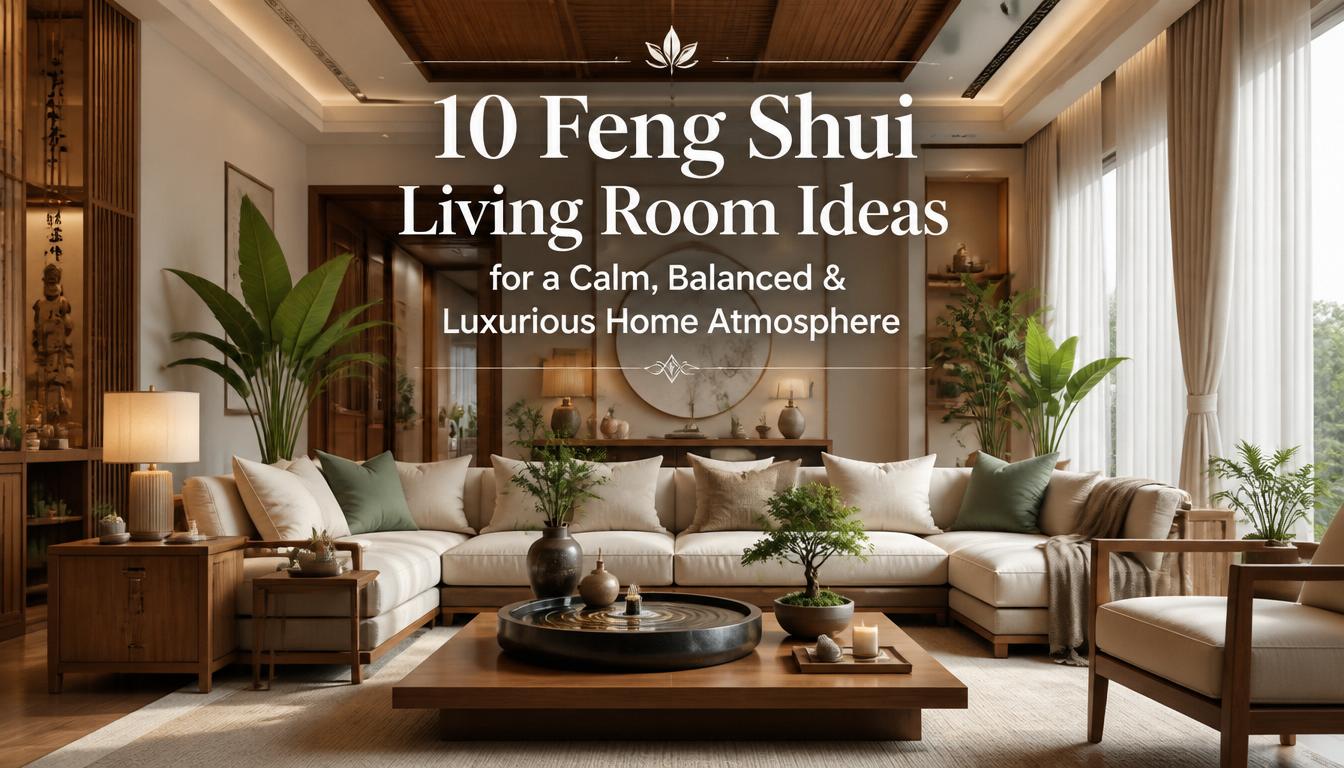
10 Feng Shui Living Room Ideas for Balance & Serenity
Feng Shui Living Room
Your living room is more than just a place to sit and watch television. It is often the heart of the home, where conversations happen, guests gather, and family members unwind after busy days. Because this space plays such an important role in everyday life, its layout, colors, furniture arrangement, and overall atmosphere can significantly influence how comfortable and relaxed everyone feels. A thoughtfully designed room can encourage connection, improve functionality, and create a sense of calm that extends throughout the home.
Many homeowners today are looking for ways to make their interiors feel more peaceful without sacrificing style. That’s where intentional decorating principles become especially valuable. Rather than focusing only on trends, these ideas emphasize balance, flow, comfort, and harmony. Small changes such as improving natural light, choosing soothing colors, reducing clutter, or arranging furniture more thoughtfully can dramatically transform the way a room feels.
In my experience, the most inviting spaces are those that feel effortless. They are organized without being sterile, stylish without being overwhelming, and comfortable without feeling crowded. That’s why many designers recommend focusing on layouts and decor choices that encourage both visual balance and practical living.
The following ideas offer simple yet impactful ways to create a more harmonious home environment. Whether you’re updating a large family room, a cozy apartment lounge, or a formal sitting area, these concepts can help you create a space that feels welcoming, serene, and beautifully balanced every day.
Table of Contents
1. Natural Light Flow
Learn how maximizing sunlight can make your space feel brighter, larger, and more uplifting.
2. Balanced Seating
Discover furniture arrangements that encourage comfort, conversation, and visual harmony.
3. Earth Tone Palette
Explore calming colors that create warmth, stability, and timeless style.
4. Round Accent Tables
See how curved furniture softens layouts and improves movement throughout the room.
5. Clutter-Free Corners
Transform overlooked spaces into organized areas that support peace and relaxation.
6. Indoor Greenery
Bring natural freshness indoors with plants that add life and texture.
7. Layered Textures
Combine materials and fabrics to create depth and comfort.
8. Meaningful Artwork
Choose decor that inspires positive emotions and personal connection.
9. Symmetrical Styling
Use balanced design elements to establish visual order and calm.
10. Calm Energy Zones
Create dedicated spaces designed specifically for relaxation and mindfulness.
1. Natural Light Flow
Bullet Points
- Makes the room feel larger and more open
- Enhances mood throughout the day
- Highlights furniture and decor naturally
- Reduces reliance on artificial lighting
- Creates a welcoming atmosphere
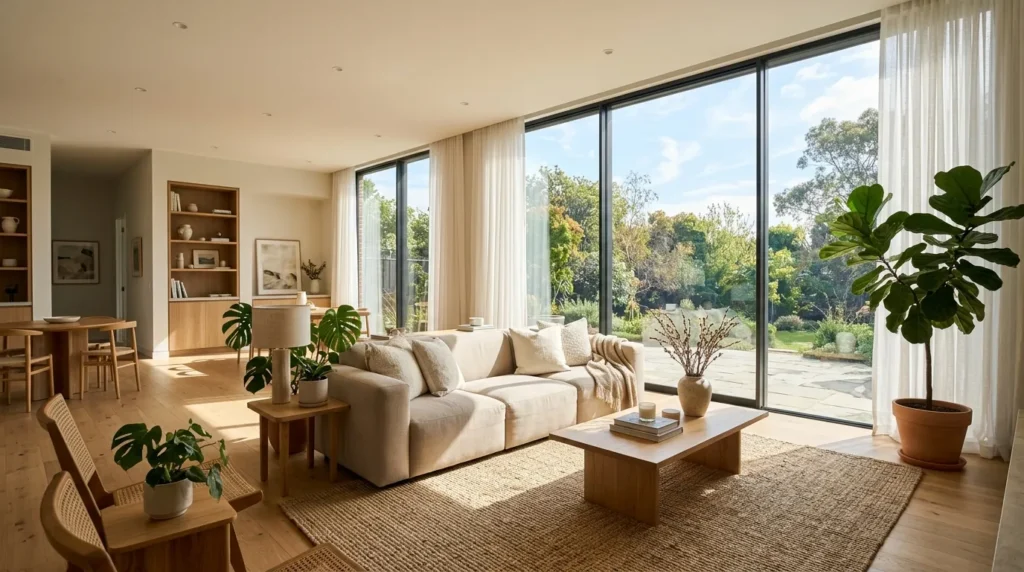
Few design elements have a greater impact than natural sunlight. When daylight flows freely through a room, it instantly creates a sense of openness and vitality that artificial lighting often struggles to replicate. Large windows, sheer curtains, and unobstructed sightlines allow sunlight to travel throughout the space, making it feel brighter and more inviting. A room filled with daylight often appears cleaner, larger, and more comfortable. This simple design choice not only improves aesthetics but also contributes to a more pleasant daily living experience by connecting indoor spaces with the natural rhythms of the outside world.
I’ve noticed that rooms with excellent natural light require fewer decorative enhancements because the sunlight itself becomes part of the design. Positioning seating near windows encourages relaxation while allowing occupants to enjoy outdoor views. Light-colored walls can help reflect brightness deeper into the room, increasing its overall impact. Mirrors strategically placed across from windows further amplify illumination. These thoughtful adjustments help create a balanced environment where every area feels energized yet calm, making the room more enjoyable from morning through evening.
2. Balanced Seating
Bullet Points
- Encourages better conversation
- Improves traffic flow
- Creates visual harmony
- Makes gatherings more comfortable
- Enhances overall functionality
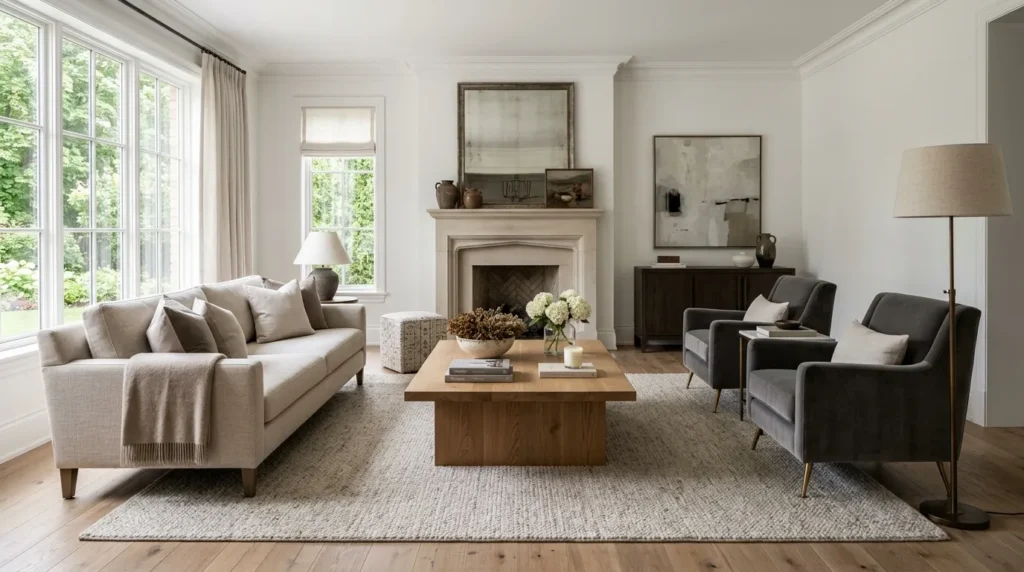
A well-arranged seating layout can completely transform the atmosphere of a living room. Instead of placing furniture randomly, thoughtful positioning helps create a natural flow that supports both conversation and relaxation. Sofas, chairs, and accent seating should feel connected while maintaining comfortable personal space. When furniture pieces are balanced throughout the room, the environment feels organized and welcoming. Guests naturally gravitate toward spaces where seating arrangements feel intuitive and comfortable. Creating these connections makes the room function better while contributing to a more polished and visually appealing design.
That’s why many designers recommend establishing a central focal point before arranging furniture. Whether it is a fireplace, large window, coffee table, or entertainment center, a focal point provides structure for the entire layout. Matching chairs or complementary side tables can reinforce visual balance without making the room appear overly formal. I’ve seen this approach work well in many homes because it creates a sense of order while maintaining flexibility. The result is a gathering space that feels inviting, practical, and perfectly suited for both everyday living and special occasions.
3. Earth Tone Palette
Bullet Points
- Creates a grounded feeling
- Adds warmth and comfort
- Supports timeless decorating
- Pairs well with natural materials
- Makes spaces feel more relaxing
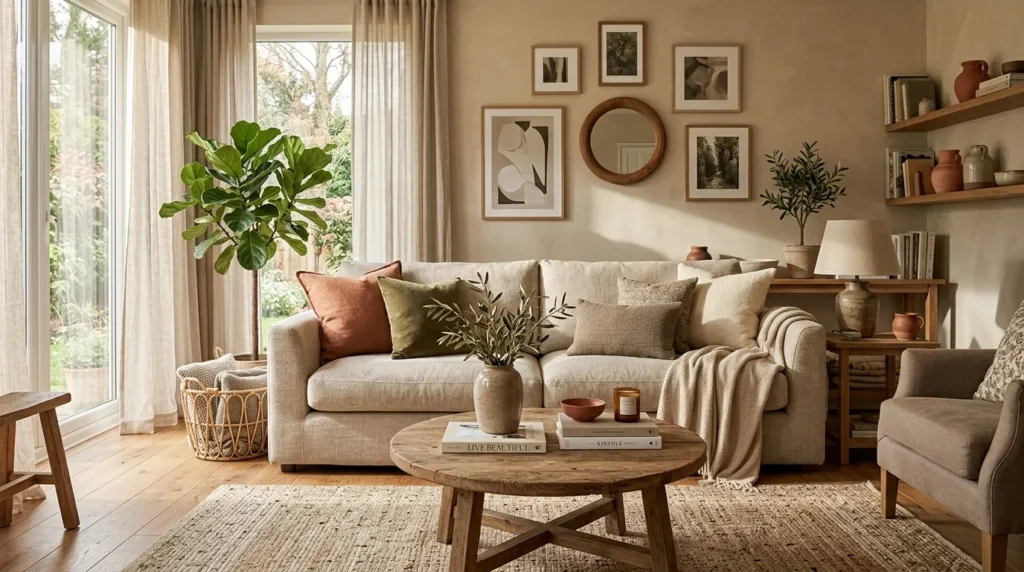
Color has an incredible ability to influence the mood of a room. Earth-inspired shades such as warm beige, soft taupe, muted olive, sandy cream, and gentle terracotta create an atmosphere that feels stable and comforting. These colors mimic natural landscapes, helping interiors feel connected to the outdoors. Unlike overly bold palettes that may become overwhelming over time, earthy tones offer lasting appeal and flexibility. They provide a calm backdrop that allows furniture, artwork, and decorative accents to stand out naturally while maintaining a cohesive and harmonious appearance.
One of the greatest advantages of these colors is their versatility. Earthy shades complement wood furniture, woven textures, stone surfaces, and greenery with remarkable ease. Layering multiple neutral tones creates visual interest without introducing unnecessary complexity. Linen curtains, textured rugs, and soft throw blankets further enhance the cozy atmosphere. In my experience, homeowners often find these palettes easier to update because seasonal accessories can be added without disrupting the room’s overall balance. The result is a living space that feels timeless, welcoming, and effortlessly sophisticated.
4. Round Accent Tables
Bullet Points
- Softens angular layouts
- Improves room flow
- Adds visual interest
- Works in smaller spaces
- Enhances overall balance
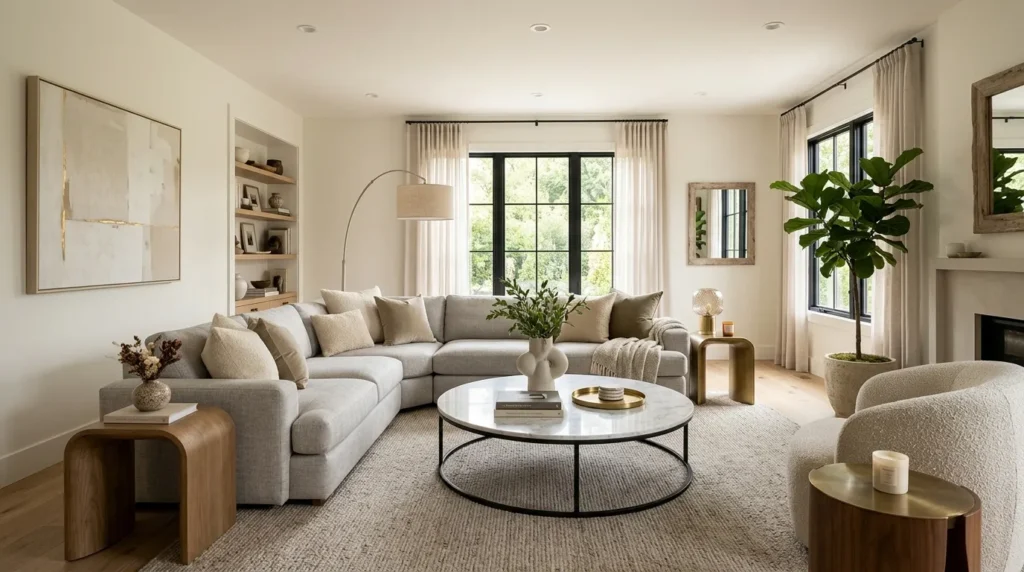
Straight lines dominate many living rooms through sofas, media consoles, shelving units, and area rugs. Introducing circular furniture elements helps soften these strong geometric shapes and creates a more balanced visual experience. Round accent tables provide an elegant contrast while maintaining practical functionality. Their smooth edges naturally encourage movement throughout the room and reduce the feeling of rigidity that sometimes occurs in heavily structured layouts. Whether crafted from wood, marble, glass, or metal, these tables introduce a subtle sense of fluidity that contributes to a more relaxed environment.
Beyond their visual appeal, round tables are highly practical. Their shape makes navigation easier, especially in compact spaces where sharp corners may interrupt traffic flow. Small side tables beside chairs offer convenient surfaces without making the room feel crowded. Circular coffee tables can serve as attractive focal points while helping unify surrounding furniture arrangements. I’ve noticed that even a single curved piece can significantly soften a room’s appearance. This simple addition creates a more welcoming atmosphere that feels both stylish and comfortable for everyday living.
5. Clutter-Free Corners
Bullet Points
- Reduces visual distractions
- Improves organization
- Creates a calmer environment
- Maximizes usable space
- Enhances overall room balance
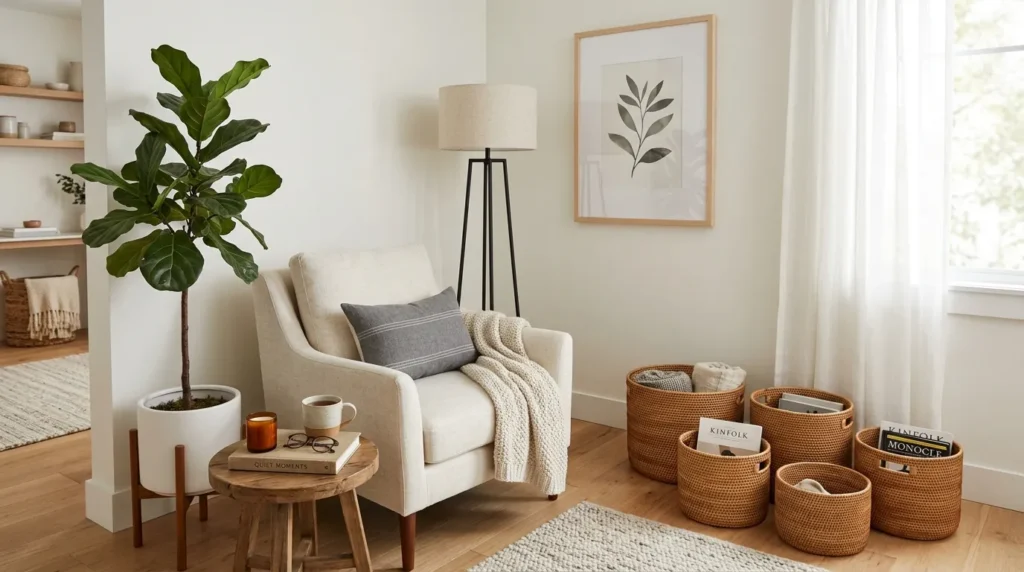
Corners are often overlooked during decorating projects, yet they can dramatically influence how organized a room feels. Empty corners sometimes become storage spots for miscellaneous items, creating visual clutter that disrupts the overall design. Transforming these areas into intentional spaces helps improve both appearance and functionality. A reading chair, decorative floor lamp, tall plant, or attractive storage basket can give purpose to previously unused areas. When every section of the room contributes to the overall design, the entire space feels more cohesive and thoughtfully arranged.
I’ve seen this work especially well in family homes where everyday items tend to accumulate quickly. Creating designated storage solutions helps maintain order without sacrificing style. Decorative baskets can conceal blankets, books, or toys while preserving a clean aesthetic. Vertical plants introduce texture and height while reinforcing a connection to nature. Removing unnecessary items from corners instantly creates a greater sense of openness and calm. These simple adjustments make the room feel more spacious, balanced, and inviting while supporting a peaceful atmosphere throughout the home.
6. Indoor Greenery
Bullet Points
- Adds natural beauty and texture
- Creates a fresh atmosphere
- Softens hard surfaces
- Enhances visual balance
- Complements most decor styles
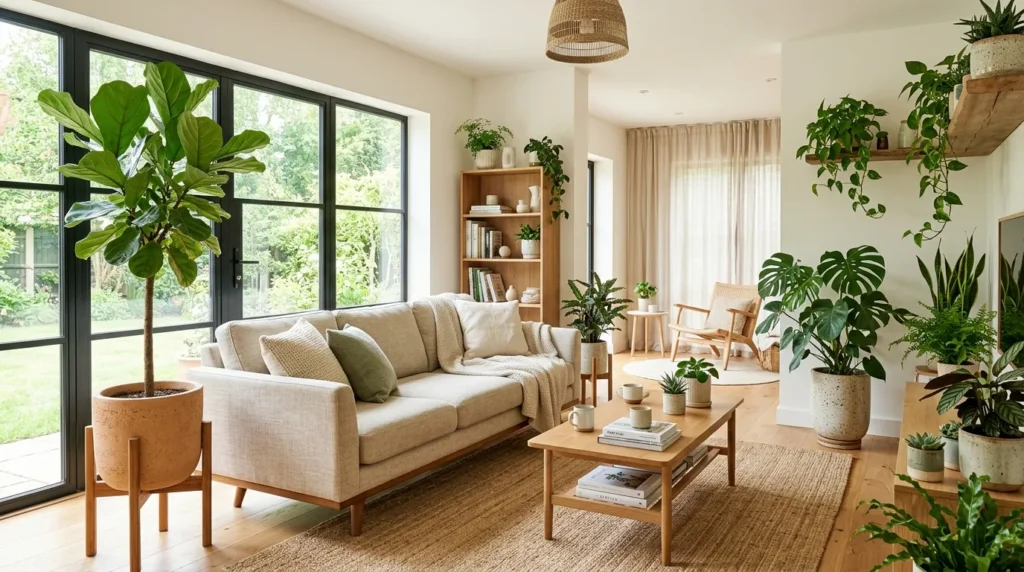
Nothing refreshes a living room quite like the presence of healthy greenery. Plants introduce color, texture, and natural movement that instantly make a space feel more alive and welcoming. Whether you choose a tall fiddle leaf fig, a collection of smaller potted plants, or a statement olive tree, greenery helps soften furniture arrangements and architectural lines. The organic shapes of leaves create visual contrast against structured furnishings while adding an element of nature that many modern homes often lack. This simple addition can dramatically improve the overall atmosphere without requiring a major redesign.
In my experience, selecting plants that match the room’s size creates the best results. Larger plants work beautifully in empty corners, while smaller varieties add charm to shelves and side tables. Decorative planters made from woven materials, ceramic, or natural stone further enhance the design. I’ve noticed that greenery often becomes a focal point because it introduces life and movement into the space. Combined with natural light and complementary textures, indoor plants help create a living room that feels calm, balanced, and effortlessly inviting throughout every season.
7. Layered Textures
Bullet Points
- Creates warmth and depth
- Makes spaces feel more inviting
- Prevents flat-looking interiors
- Adds visual interest
- Supports cozy everyday living
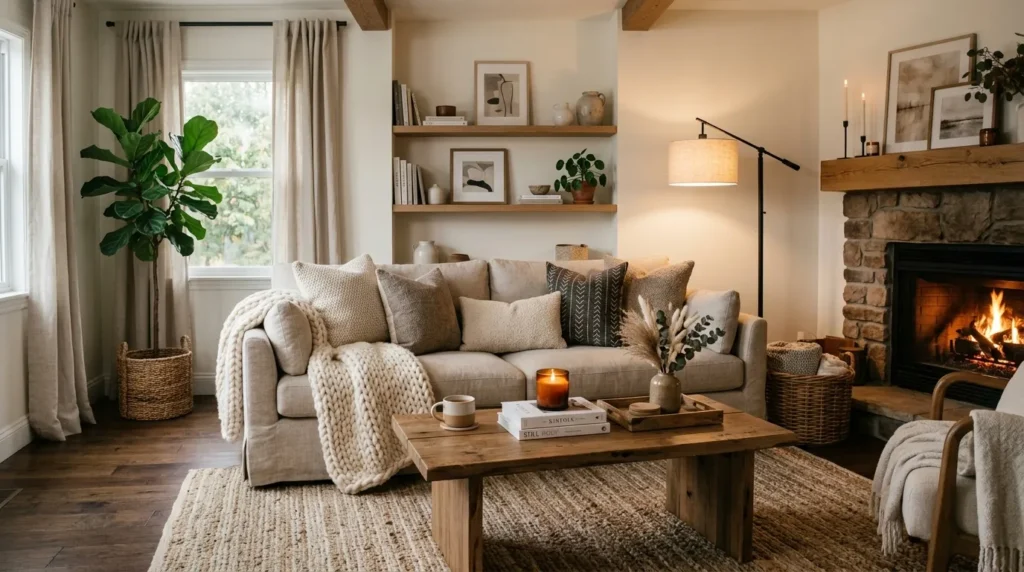
A beautifully designed room rarely relies on color alone. Texture plays an equally important role in creating depth, warmth, and personality. Combining materials such as linen, cotton, wool, wood, leather, and woven fibers introduces subtle variations that make a room feel more dynamic. Layering textures allows neutral color palettes to remain visually engaging while maintaining a calm and sophisticated appearance. Instead of overwhelming the space with bold patterns, texture creates interest through touchable surfaces and natural material contrasts that feel timeless and welcoming.
That’s why many designers recommend building rooms with a mix of soft and structured elements. A woven area rug paired with a linen sofa and wooden coffee table immediately creates balance and richness. Throw blankets, decorative pillows, and textured curtains add comfort while helping the room feel complete. I’ve seen this approach transform even the simplest spaces into cozy retreats. The result is an environment that feels thoughtfully curated, highly livable, and visually appealing without appearing overly decorated or cluttered.
8. Meaningful Artwork
Bullet Points
- Personalizes the room
- Creates emotional connection
- Adds visual character
- Supports cohesive design
- Encourages positive feelings
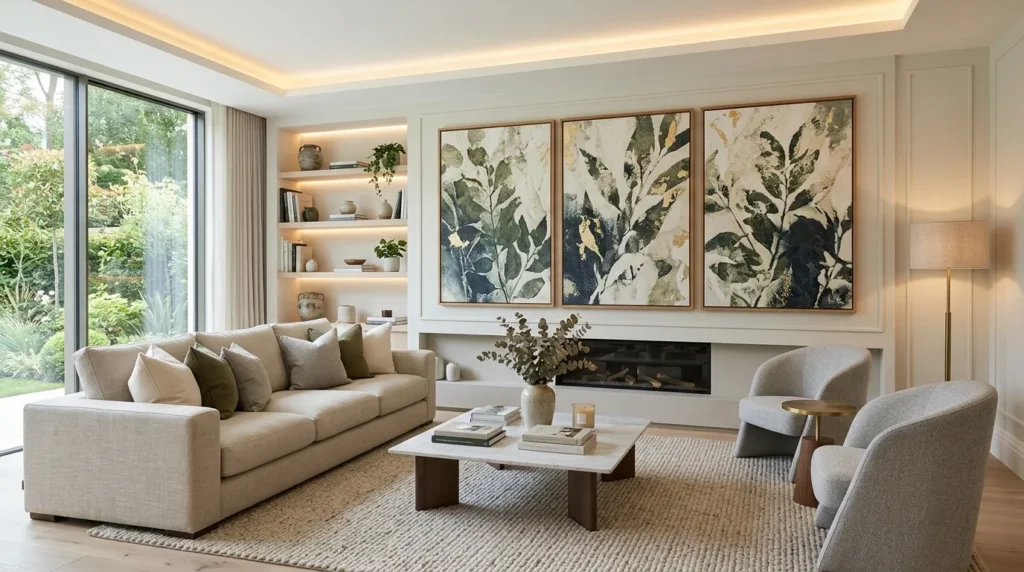
Artwork has the unique ability to influence how a room feels while reflecting the personality of the people who live there. Choosing pieces with meaningful themes, calming imagery, or personal significance helps create a stronger emotional connection to the space. Landscapes, abstract works, botanical prints, and nature-inspired photography often contribute to a more peaceful environment. Rather than selecting decor solely to fill empty wall space, thoughtful artwork can reinforce the overall mood and purpose of the room while enhancing its visual appeal.
I’ve noticed that living rooms feel more authentic when the artwork tells a story or reflects personal interests. A carefully curated gallery wall or a single oversized statement piece can anchor the room without overwhelming it. Natural wood frames, neutral tones, and balanced placement help artwork integrate seamlessly into the overall design. When selected intentionally, decorative pieces contribute to a sense of comfort and belonging. This creates an environment where family members and guests feel connected, relaxed, and inspired by their surroundings.
9. Symmetrical Styling
Bullet Points
- Creates visual order
- Makes rooms feel balanced
- Enhances elegance
- Improves furniture arrangement
- Supports timeless design
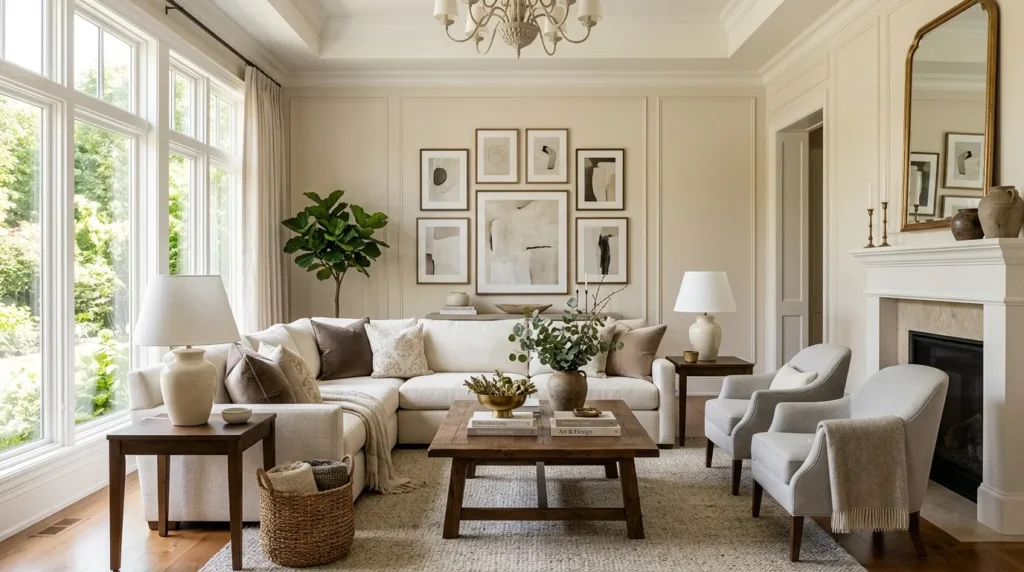
Symmetry remains one of the most effective design techniques for creating a calm and organized appearance. Matching lamps, paired chairs, identical side tables, and balanced decorative arrangements establish visual consistency throughout the room. This sense of order helps the space feel intentional rather than random. While symmetry does not require everything to be perfectly identical, it does encourage thoughtful distribution of visual weight. Even subtle symmetrical arrangements can create a stronger sense of stability and comfort within the overall design.
Many designers rely on symmetry because it provides structure without sacrificing style. For example, placing matching table lamps on either side of a sofa instantly creates a balanced focal point. Coordinated decor elements help unify the room while maintaining flexibility for personal expression. I’ve seen this technique work particularly well in both traditional and modern interiors because it creates a polished appearance that never feels outdated. The result is a living room that feels harmonious, welcoming, and naturally relaxing to spend time in.
10. Calm Energy Zones
Bullet Points
- Encourages relaxation
- Supports mindfulness
- Creates functional spaces
- Improves everyday comfort
- Enhances room purpose
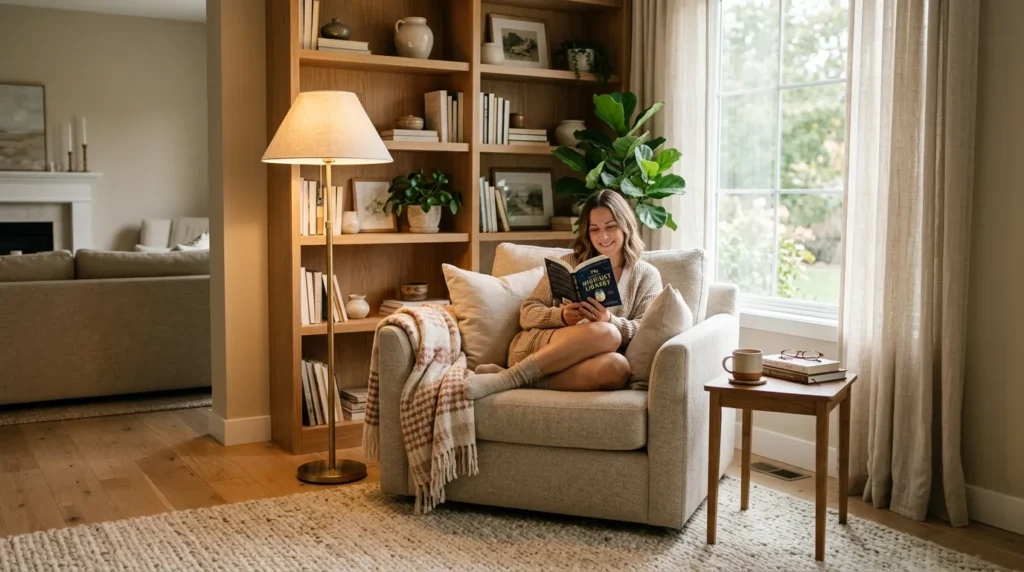
One of the most effective ways to improve a living room is by creating dedicated areas designed for specific activities. A comfortable reading corner, meditation nook, conversation area, or quiet retreat can help the room serve multiple purposes without feeling cluttered. Defining these zones creates structure while encouraging intentional use of the space. Rather than treating the room as one large area, dividing it into functional sections makes it feel more organized and adaptable to daily life.
I’ve noticed that even small homes benefit from this approach. A cozy chair paired with a floor lamp and side table can instantly establish a relaxing reading area. Soft rugs, comfortable seating, and carefully selected accessories reinforce the purpose of each zone. These designated spaces encourage moments of rest and reflection while making the room feel more purposeful overall. The result is an environment that supports both activity and relaxation, helping create a home that feels balanced, comfortable, and genuinely restorative.
Frequently Asked Questions
What colors work best for a peaceful living room?
Neutral shades such as beige, cream, soft gray, taupe, and muted earth tones often create the most calming atmosphere while remaining versatile and timeless.
How can I make my living room feel more balanced?
Focus on furniture placement, symmetry, natural light, and reducing clutter. Even small adjustments can dramatically improve the room’s overall harmony.
Are plants important in a relaxing living room?
Yes. Indoor plants add texture, freshness, and a connection to nature that helps make spaces feel more inviting and comfortable.
How do I reduce visual clutter?
Use decorative storage solutions, remove unnecessary items, and create designated places for everyday belongings to maintain a cleaner appearance.
What is the easiest update to make?
Improving natural light and rearranging furniture are often the simplest changes that produce the most noticeable results.
Conclusion
Creating a peaceful and welcoming living room does not require a complete renovation. Often, the most impactful improvements come from thoughtful adjustments that enhance comfort, balance, and functionality. Maximizing natural light, arranging furniture with intention, incorporating soothing colors, introducing greenery, and reducing clutter can significantly transform the atmosphere of a space. These changes work together to create an environment that feels calm, organized, and inviting.
In my experience, the most successful interiors focus on how a room feels rather than simply how it looks. A balanced layout, comfortable seating, layered textures, and meaningful decor choices help create a space that supports relaxation and connection. Small updates made with intention often produce results that feel both immediate and lasting.
Whether you choose to implement one idea or several, these design principles can help turn your living room into a sanctuary that supports everyday well-being. By focusing on comfort, harmony, and thoughtful design, you can create a home environment that feels beautiful, functional, and deeply restorative for years to come.