10 Patio Garden Ideas for a Lush Outdoor Retreat
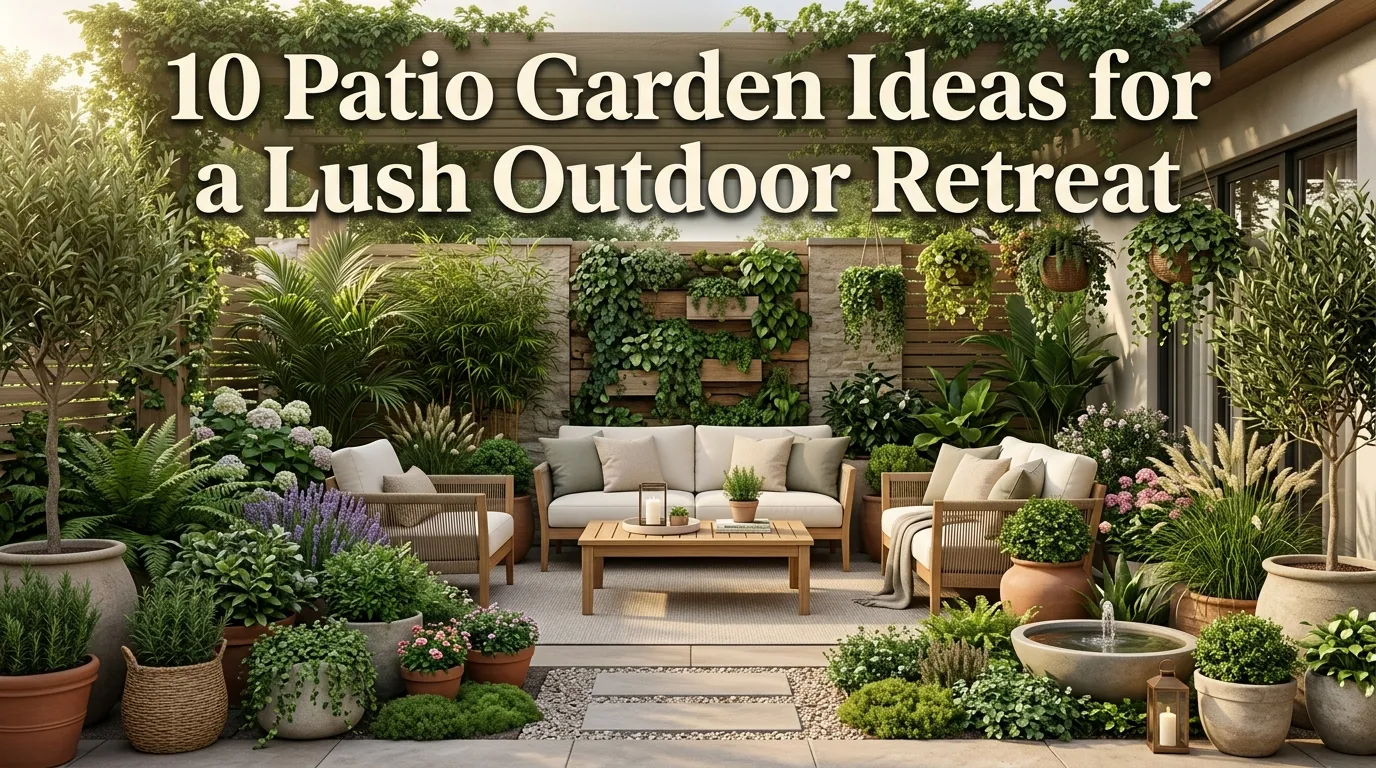
A patio without any greenery tends to feel more like a slab of concrete than an actual outdoor room, and in my experience, that’s the single biggest thing separating a patio that gets used every day from one that mostly sits empty. Plants do more than just add color — they soften hard edges, create privacy, and give a patio the same sense of enclosure and comfort that furniture and decor alone can’t quite achieve.
If you’re anything like me, you’ve probably looked at a plain concrete or paver patio and felt unsure where to even begin. The good news is that a patio garden doesn’t require a yard’s worth of in-ground planting space — some of the most impressive patio gardens are built entirely from containers, vertical structures, and a handful of well-chosen plants arranged with intention rather than scattered around the edges.
A mistake many homeowners make is buying plants one at a time based on what looks good at the nursery that week, without a clear plan for height, placement, or how the space will function once everything is planted. That’s why many garden designers recommend planning a patio garden the way you’d plan a room — deciding on a color palette and a few key plant “furniture” pieces first, then filling in around them.
I’ve noticed that the patio gardens people save most often on Pinterest share a few consistent traits: layered plant heights, a mix of containers and in-ground beds where possible, and enough structure — a trellis, an arbor, a defined planting bed — to keep the space from feeling like an afterthought tacked onto the edges of the patio.
In this guide, I’m sharing ten patio garden ideas that work across different patio sizes, climates, and budgets — from simple container groupings to more involved vertical garden structures. Each idea includes practical planting and styling advice so you can picture exactly how it would work in your own space.
Table of Contents
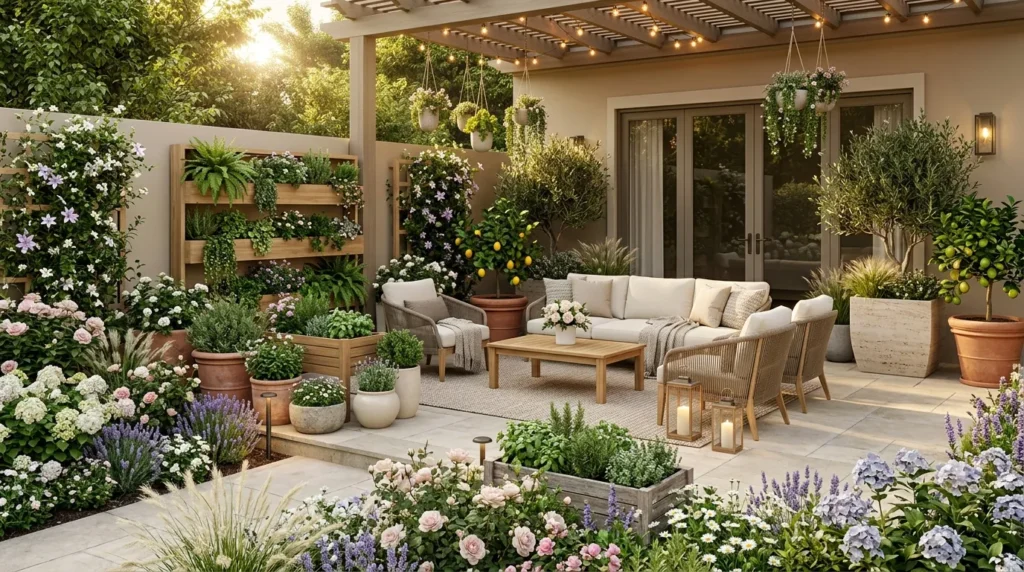
- Layered Container Garden A mixed-height arrangement built for depth and texture.
- Vertical Herb Wall A space-efficient garden for cooking and styling at once.
- Perimeter Planting Bed A grounded, permanent garden framing the patio edge.
- Potted Fruit Tree Feature A striking focal point with edible payoff.
- Trellis and Climbing Vine Corner A vertical green wall for shade and privacy.
- Raised Bed Vegetable Garden A productive, structured addition near the patio.
- Shade-Loving Fern Grouping A lush option for covered or shaded patios.
- Succulent and Cactus Container Display A low-maintenance option for sunny, dry patios.
- Cottage-Style Flower Border A romantic, abundant planting style along the edges.
- Zen Garden Corner A minimalist, meditative planting feature.
1. Layered Container Garden
Quick Benefits
- Adds depth and visual interest
- Works on patios without in-ground planting space
- Flexible to rearrange as plants grow
- Extends bloom season across varieties
- Highly photogenic for Pinterest
Why It Works
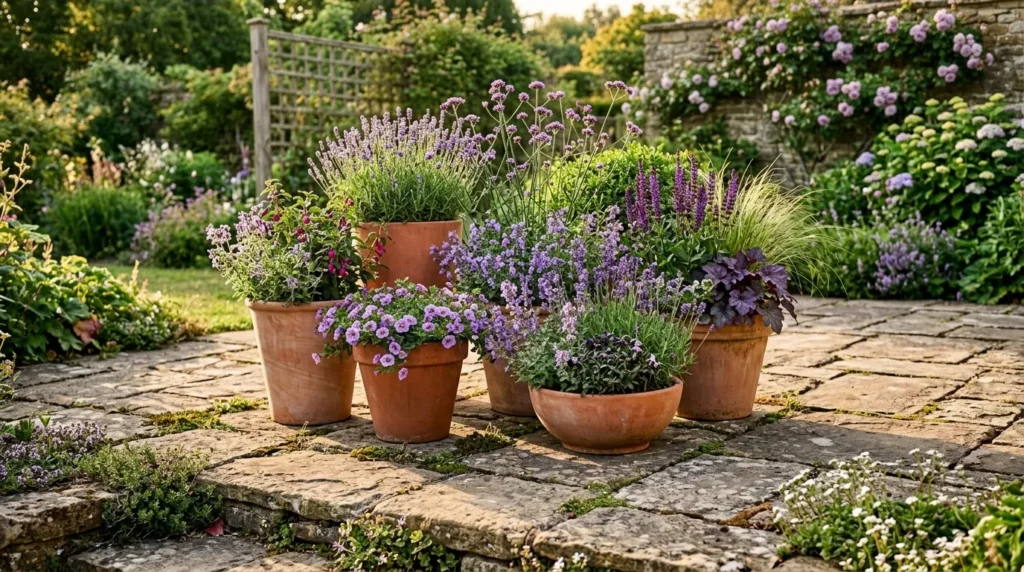
A layered container garden takes the classic “thriller, filler, spiller” planting approach and applies it across multiple pots of varying heights, creating a fuller, more dimensional look than a single row of matching planters ever could. In my experience, this is the single most versatile idea on this entire list, since it works on any patio regardless of size, material, or whether in-ground planting is even an option. That’s why many garden designers recommend starting here for anyone new to patio gardening — it’s forgiving, flexible, and easy to adjust as you learn what works in your specific light and climate conditions.
How To Style It
Group three to five containers of varying heights along one section of the patio, using a tall upright plant in the back or center pot, medium mounding plants in the middle-height containers, and trailing varieties in the shortest pots. Stick to a cohesive color palette across the grouping rather than mixing too many competing plant colors, which can start to look cluttered rather than curated. One simple trick I always suggest is grouping containers in odd numbers, since asymmetrical groupings tend to read as more natural and intentional than perfectly even ones.
2. Vertical Herb Wall
Quick Benefits
- Maximizes limited patio space
- Combines beauty with everyday usefulness
- Easy to harvest right off the patio
- Works well mounted on an existing wall or fence
- Fragrant, sensory addition to outdoor dining
Why It Works
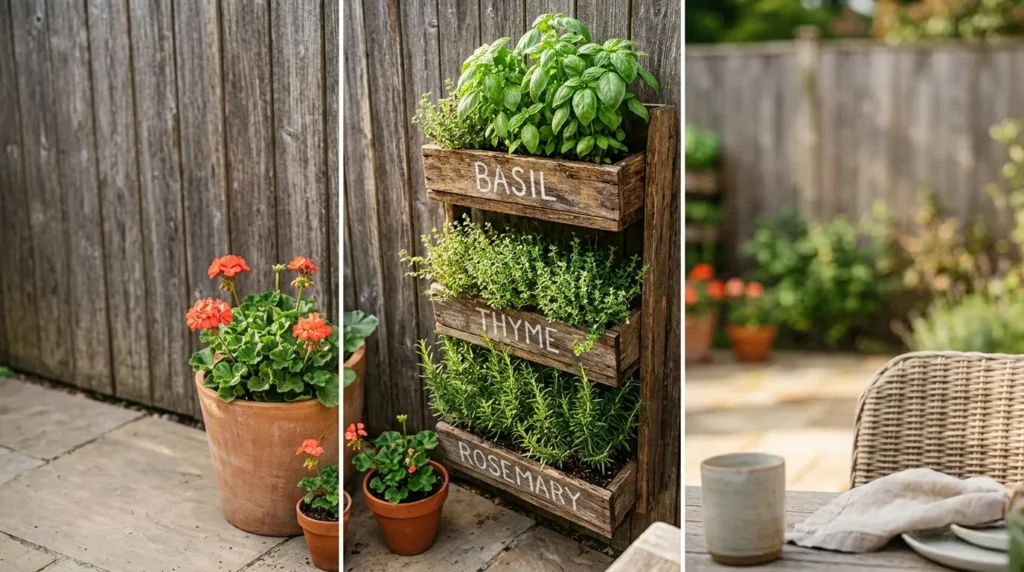
A vertical herb wall solves the classic small-patio problem of wanting a full garden without the floor space a traditional layout would require, while also giving the space genuine everyday function beyond just looking nice. I’ve seen this idea transform small, underused patio corners into the most-used part of an outdoor dining setup, since fresh herbs right at hand tend to actually get used in cooking far more than a garden bed tucked somewhere less visible. It’s also one of the more sensory additions to a patio, since brushing past rosemary or basil releases fragrance in a way that purely ornamental plants don’t.
How To Style It
Mount a wall-hung planter system, a series of small pots on a ladder-style shelf, or repurposed wooden crates against an existing patio wall or fence, positioning it somewhere that gets at least six hours of sunlight for most culinary herbs to thrive. Group herbs with similar water needs together — rosemary and thyme prefer drier soil, while basil and mint need more consistent moisture — to make maintenance simpler. Position the wall near the outdoor dining or cooking area specifically, so the herbs are genuinely convenient to reach for while grilling or entertaining.
3. Perimeter Planting Bed
Quick Benefits
- Creates a permanent, grounded garden edge
- Softens hard patio lines
- Works well combined with container plants
- Adds long-term structure to the space
- Increases overall property value
Why It Works
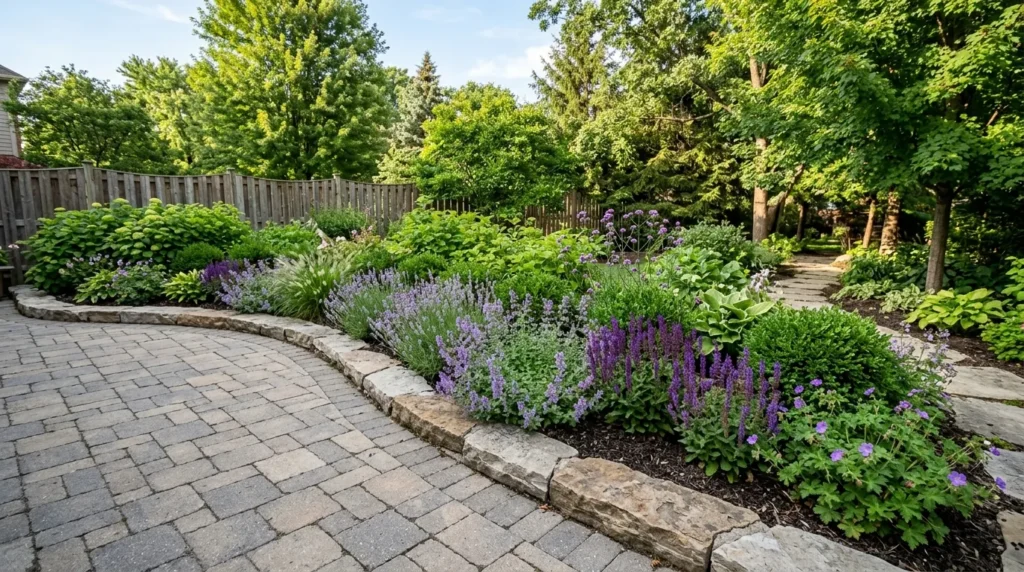
A planting bed built directly along the edge of the patio softens the hard transition between hardscape and lawn, giving the whole space a more finished, intentional look than a patio that simply ends abruptly at bare grass or mulch. That’s why many garden designers recommend this as one of the higher-impact, longer-term investments on this list — unlike containers, which can be moved or swapped, a perimeter bed becomes a permanent structural element of the patio that improves and fills in more each year.
How To Style It
Dig or edge a planting bed along one or more sides of the patio, at least twelve to eighteen inches wide for meaningful planting depth, and layer in a mix of low border plants, mid-height perennials, and a few taller shrubs toward the back for structure. Mulch the bed to help retain moisture and suppress weeds, and consider a simple stone or brick edging to keep the bed distinct from the patio surface itself. This idea pairs particularly well with container gardens placed just inside the patio’s edge, creating a layered transition from the in-ground bed to the hardscape itself.
4. Potted Fruit Tree Feature
Quick Benefits
- Striking, high-impact focal point
- Adds edible fruit alongside ornamental value
- Works in containers even without yard space
- Provides seasonal shade in warmer months
- Long-term investment that matures beautifully
Why It Works
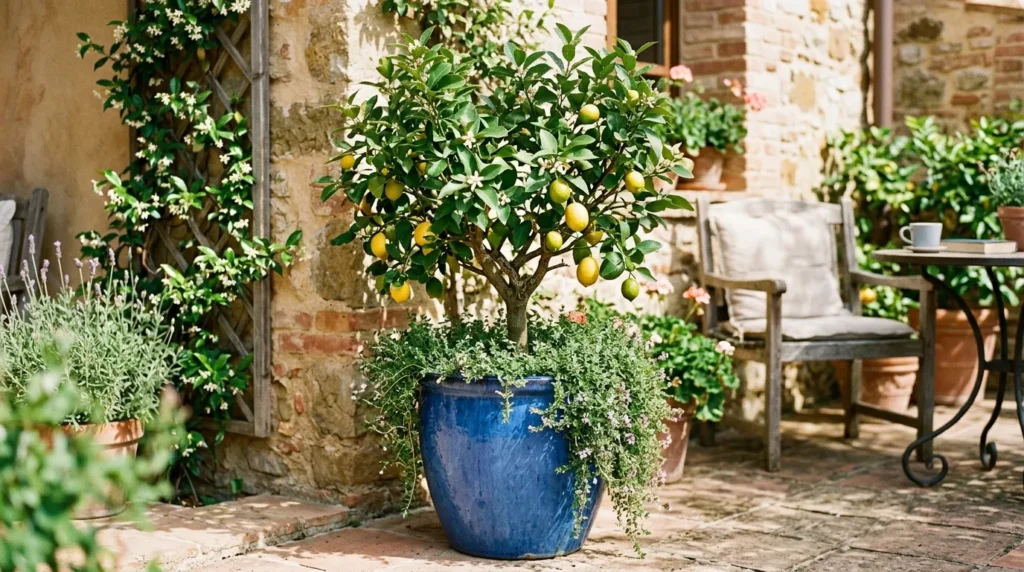
A dwarf fruit tree in a large container brings genuine height and drama to a patio garden that smaller plants simply can’t achieve, while also offering the practical bonus of homegrown fruit — figs, citrus, and dwarf apple varieties are all popular choices for container growing. I’ve noticed this idea works particularly well as the singular anchor piece of an entire patio garden, since one well-placed tree can define the whole space in a way that several smaller plants working together sometimes struggle to accomplish.
How To Style It
Choose a dwarf variety suited to container growing and appropriate for your climate zone, planting in a large, sturdy container with excellent drainage — at least eighteen to twenty-four inches in diameter for most dwarf varieties. Position the tree where it will get adequate sunlight for fruiting, typically six or more hours daily, and somewhere it can also provide a bit of natural shade to a seating area as it matures. Underplant the base of the container with low, trailing plants like sweet alyssum or creeping thyme to soften the visual transition between the tree trunk and the container’s rim.
5. Trellis and Climbing Vine Corner
Quick Benefits
- Adds vertical greenery and privacy
- Creates natural shade over time
- Works well in narrow or corner spaces
- Softens fences or bare walls
- High visual impact with a relatively small footprint
Why It Works
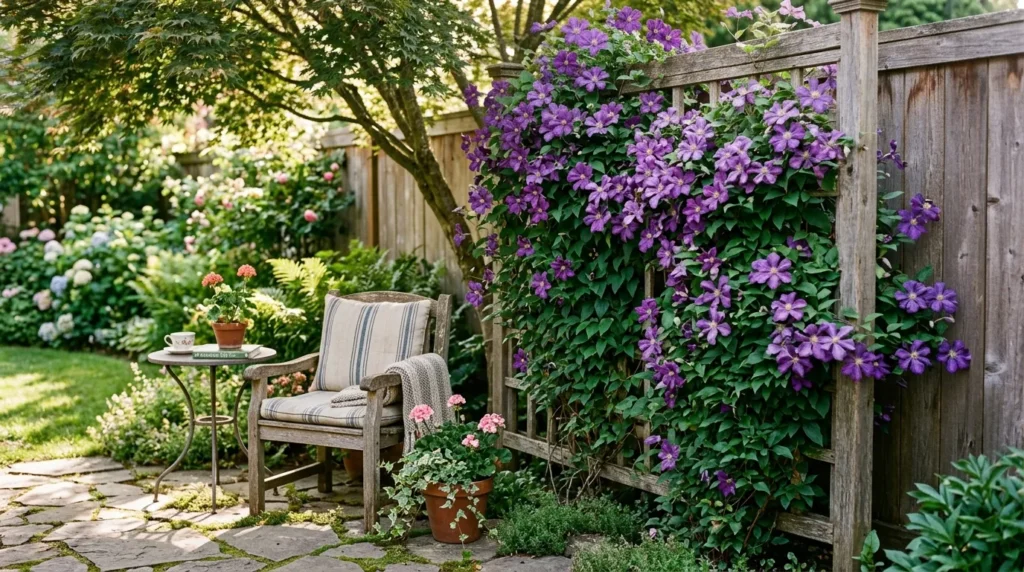
A trellis planted with climbing vines turns an unused vertical surface — a bare fence, a blank wall, or an empty corner — into a genuine green feature, adding privacy and shade without requiring any additional floor space on the patio itself. That’s why many garden designers recommend this idea specifically for smaller patios, where floor space for planting beds or large containers is limited but vertical surfaces often go completely unused. Over a season or two, a well-chosen climbing vine can transform a plain corner into the most lush, established-looking part of the entire garden.
How To Style It
Install a wood or metal trellis against a fence, wall, or freestanding post, and plant a fast-growing climber suited to your climate — clematis, jasmine, or climbing hydrangea are all popular choices depending on region and desired bloom. Give the vine a season or two to fill in before expecting full coverage, and train new growth along the trellis structure periodically to encourage even, full coverage rather than growth concentrated in one area. This idea pairs particularly well with a seating nook positioned nearby, taking advantage of the shade and privacy the mature vine eventually provides.
6. Raised Bed Vegetable Garden
Quick Benefits
- Productive, functional addition to the patio
- Easier to maintain than in-ground vegetable beds
- Better drainage and soil control
- Works well positioned just off the patio edge
- Appeals to gardeners who want to grow their own food
Why It Works
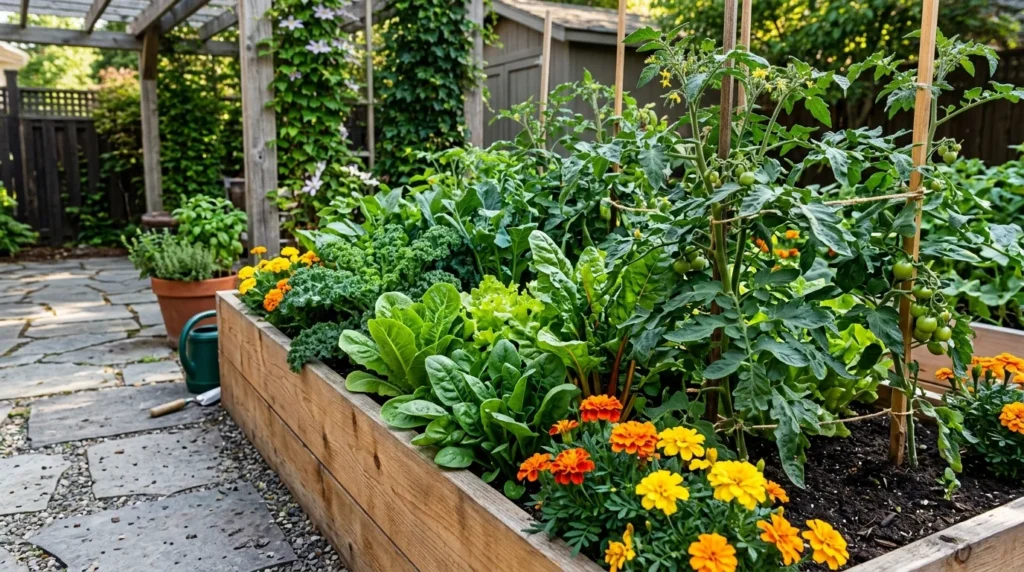
A raised bed positioned near the patio brings genuine food production into the outdoor living space, and the elevated structure makes maintenance noticeably easier than a traditional in-ground vegetable garden, since there’s less bending and the soil quality is fully within your control from the start. In my experience, this idea appeals especially to homeowners who want their outdoor space to be productive as well as beautiful, and having the vegetable garden close to the patio means it’s far more likely to actually get tended regularly, rather than being tucked away somewhere less visible in the yard.
How To Style It
Position one or two raised beds just off the edge of the patio, using cedar or composite bed kits that resist rot better than untreated lumber. Fill with a quality raised bed soil mix, and plant a combination of vegetables and companion flowers — marigolds and nasturtiums both help deter pests while adding color alongside the vegetables themselves. This idea pairs particularly well with the vertical herb wall, creating a fully functional cooking garden within easy reach of the patio’s dining or grilling area.
7. Shade-Loving Fern Grouping
Quick Benefits
- Ideal for covered or shaded patios
- Lush, tropical texture
- Low direct sun requirement
- Works well in hanging baskets or containers
- Cooling, calming visual effect
Why It Works
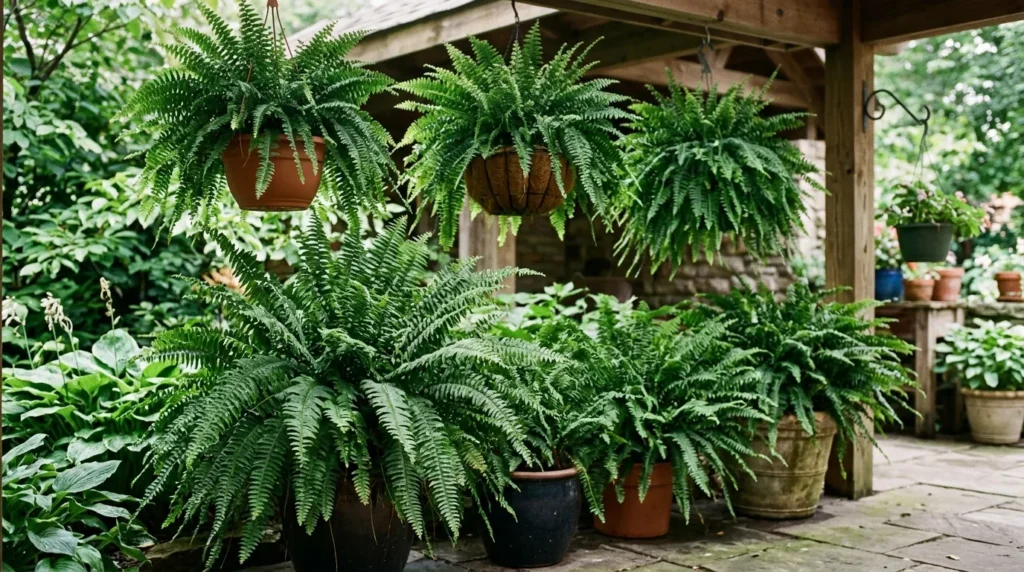
Covered patios and shaded corners are often treated as a limitation for gardening, but ferns and other shade-loving plants actually thrive in exactly those conditions, turning what might otherwise be an underused dim corner into one of the lushest parts of the entire patio. I’ve seen this idea transform patios with heavy shade — spaces that struggle to support the sun-loving plants used elsewhere in a yard — into genuinely green, tropical-feeling retreats using plants specifically suited to those lower light conditions.
How To Style It
Group Boston ferns, maidenhair ferns, or other shade-tolerant varieties in a mix of hanging baskets and floor containers throughout a covered or shaded patio area, layering different fern textures and sizes for visual depth. Keep soil consistently moist, since ferns generally require more regular watering than sun-loving container plants, especially in warmer climates. This grouping works especially well combined with a water feature or a simple seating area, since the cooling, lush quality of ferns pairs naturally with a relaxed, restful patio mood.
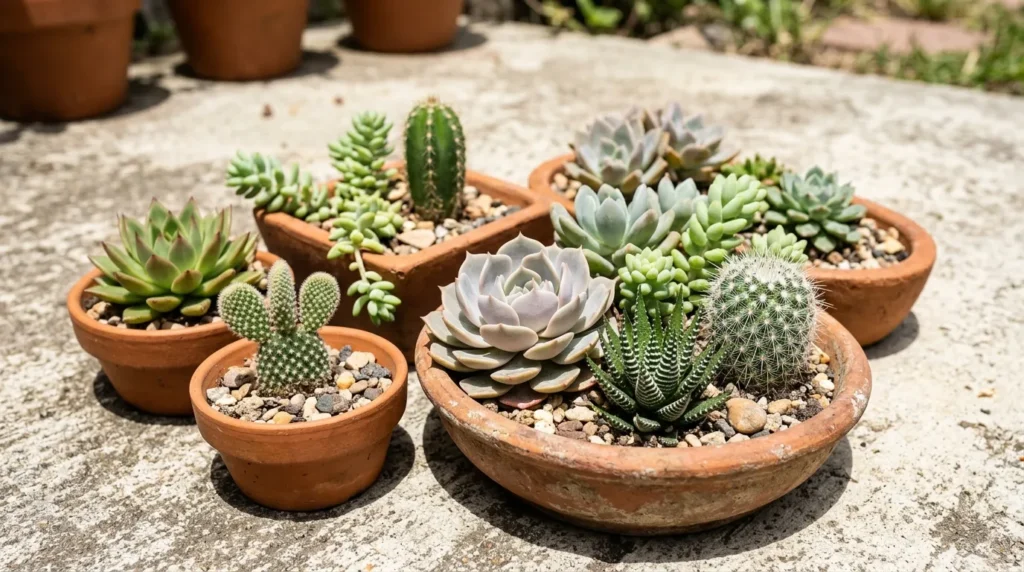
8. Succulent and Cactus Container Display
Quick Benefits
- Extremely low-maintenance
- Ideal for sunny, hot patios
- Drought-tolerant once established
- Modern, sculptural aesthetic
- Wide variety of shapes and textures
Why It Works
For patios that get intense, direct sun for much of the day, succulents and cacti offer a genuinely low-maintenance planting option that thrives in exactly the conditions that stress out many other patio plants. That’s why many garden designers recommend this approach specifically for hot, dry climates or south-facing patios, where sun-loving succulents actually perform better with less water and attention than most flowering annuals would require in the same spot. The sculptural, varied shapes of different succulent and cactus varieties also bring a distinctly modern aesthetic to a patio garden.
How To Style It
Group a variety of succulent and cactus shapes and sizes in shallow, well-draining containers, mixing upright architectural varieties with low, spreading ones for visual contrast. Terracotta or concrete containers suit this style particularly well, echoing the plants’ natural desert aesthetic. Water sparingly, allowing soil to dry out fully between waterings, since overwatering is the most common issue with this type of planting. This display works especially well on a sunny patio corner that receives more direct light than the rest of the space can comfortably handle for other plant types.
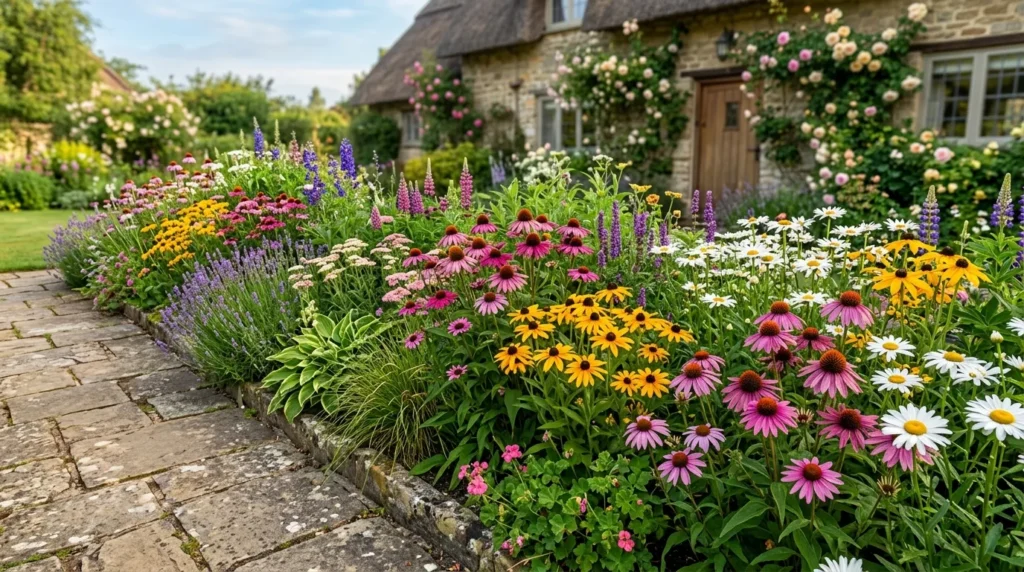
9. Cottage-Style Flower Border
Quick Benefits
- Warm, romantic, abundant look
- Long bloom season with the right plant mix
- Attracts pollinators to the patio
- Highly personalized and Pinterest-friendly
- Works beautifully along patio edges
Why It Works
A cottage-style flower border leans into abundance rather than restraint, layering different bloom types, heights, and colors along the edge of the patio for a lush, romantic look that feels like it’s been growing for years. I’ve seen this idea transform plain, builder-grade patios into spaces that feel like they belong to a much more established garden, even when the border was planted in a single season. One thing that works especially well is embracing a slightly imperfect, overflowing look rather than a tightly controlled one, since the charm of this style comes specifically from its relaxed abundance.
How To Style It
Plant a mix of cottage garden favorites along the patio’s edge — coneflowers, black-eyed Susans, salvia, and daisies all bloom generously and attract pollinators throughout the warmer months. Vary bloom heights, placing taller varieties toward the back of the border and shorter ones near the front, and don’t worry about strict color coordination the way you might with a more formal planting scheme. This idea pairs particularly well with the perimeter planting bed concept above, using the cottage-style mix as the actual planting content within that structural bed.
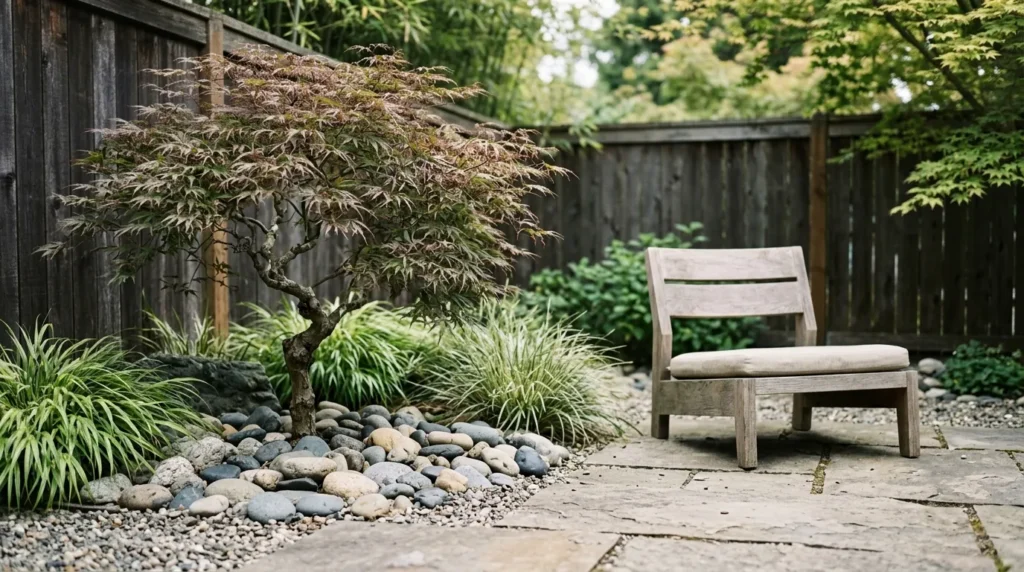
10. Zen Garden Corner
Quick Benefits
- Calm, meditative aesthetic
- Extremely low maintenance
- Works well in a small patio corner
- Distinct from typical lush, colorful gardens
- Pairs beautifully with minimalist furniture
Why It Works
A zen-inspired garden corner takes the opposite approach from a cottage-style border, using restraint, texture, and negative space rather than abundance and color to create a calming visual effect. That’s why many garden designers recommend this approach specifically for homeowners who want a low-maintenance patio garden with a distinctly different mood — one built around structure and simplicity rather than color and bloom. I’ve noticed this style pairs particularly well with modern outdoor furniture, since both share the same clean, uncluttered design philosophy.
How To Style It
Use a small collection of structural plants — dwarf Japanese maple, ornamental grasses, or a single sculptural bonsai — arranged with generous negative space around each element rather than clustered together. Incorporate natural materials like smooth river rock, a small gravel bed, or a simple stone element to reinforce the calm, restrained aesthetic. Keep the color palette limited to greens and natural stone tones, avoiding bright blooms that would disrupt the quiet mood this style is going for. This corner works especially well positioned near a single chair or small meditation nook, giving it a clear, intentional purpose within the larger patio.
Frequently Asked Questions
What plants work best for a small patio garden? Compact, container-friendly plants like herbs, dwarf shrubs, trailing vines, and succulents all work well in limited space, since they don’t require the root room that larger in-ground plants need. Vertical structures like trellises and wall-mounted planters also help maximize a small footprint.
How do I start a patio garden with no in-ground planting space? A layered container garden is the easiest starting point for a patio without any in-ground beds, since it requires no digging or permanent changes to the space. Vertical options like trellises or wall-mounted herb gardens are also excellent no-dig solutions.
What’s the easiest low-maintenance patio garden idea? Succulent and cactus container displays require the least ongoing care, since they’re drought-tolerant and don’t need frequent watering or deadheading. A zen garden corner built around structural plants and stone elements is similarly low-maintenance once established.
How much sunlight does a patio garden need? Sunlight needs vary significantly by plant type — most vegetables and flowering plants need at least six hours of direct sun, while ferns and other shade-loving plants thrive with indirect or filtered light. Assessing your patio’s actual sun exposure before choosing plants helps avoid struggling with the wrong varieties.
Can I grow vegetables on a patio without a yard? Yes, raised beds or large containers positioned on or near the patio can support a productive vegetable garden without requiring traditional in-ground yard space. Compact and dwarf vegetable varieties are often bred specifically for container growing in smaller spaces.
How do I keep container plants from drying out too quickly? Larger containers hold moisture longer than small pots, and adding a layer of mulch on top of the soil helps slow evaporation between waterings. Grouping containers together also creates a slightly more humid microclimate that reduces how quickly individual pots dry out.
What’s a good patio garden layout for entertaining? Positioning taller plants or a trellis along the edges of the seating area creates a sense of enclosure without blocking conversation, while a vertical herb wall near the dining or grilling area adds function to the space. Leaving the center of the patio open for furniture and movement while layering plants around the perimeter tends to work best for entertaining.
Final Thoughts
A patio garden doesn’t need to be complicated or require a large budget to genuinely transform how a space feels — often it just takes a thoughtful mix of plant heights, a bit of structure, and a clear sense of how you actually want to use the space. Whether you’re drawn to the lush abundance of a cottage-style border or the quiet restraint of a zen corner, the same underlying principle applies: greenery is what turns a patio from a hard surface into an actual outdoor room.
Start with one or two ideas and gradually build a garden that reflects your style and supports the way you use your patio, whether that’s quiet mornings with coffee or regular evenings entertaining guests. A well-planted patio has a way of becoming the most-used part of the whole house, once the greenery finally catches up to the vision.
Related Articles
- Front Porch Planter Ideas
- Backyard Privacy Ideas
- Backyard Fire Pit Ideas
- Small Backyard Layout Ideas
- Cozy Patio Decorating Tips