10 Backyard Fire Pit Ideas for a Cozy Outdoor Space
A fire pit can turn an ordinary backyard into one of those outdoor spaces everyone naturally gravitates toward. Once the sun goes down, a warm fire gives people a reason to stay outside a little longer, gather around with drinks, tell stories, or simply enjoy a quiet evening.
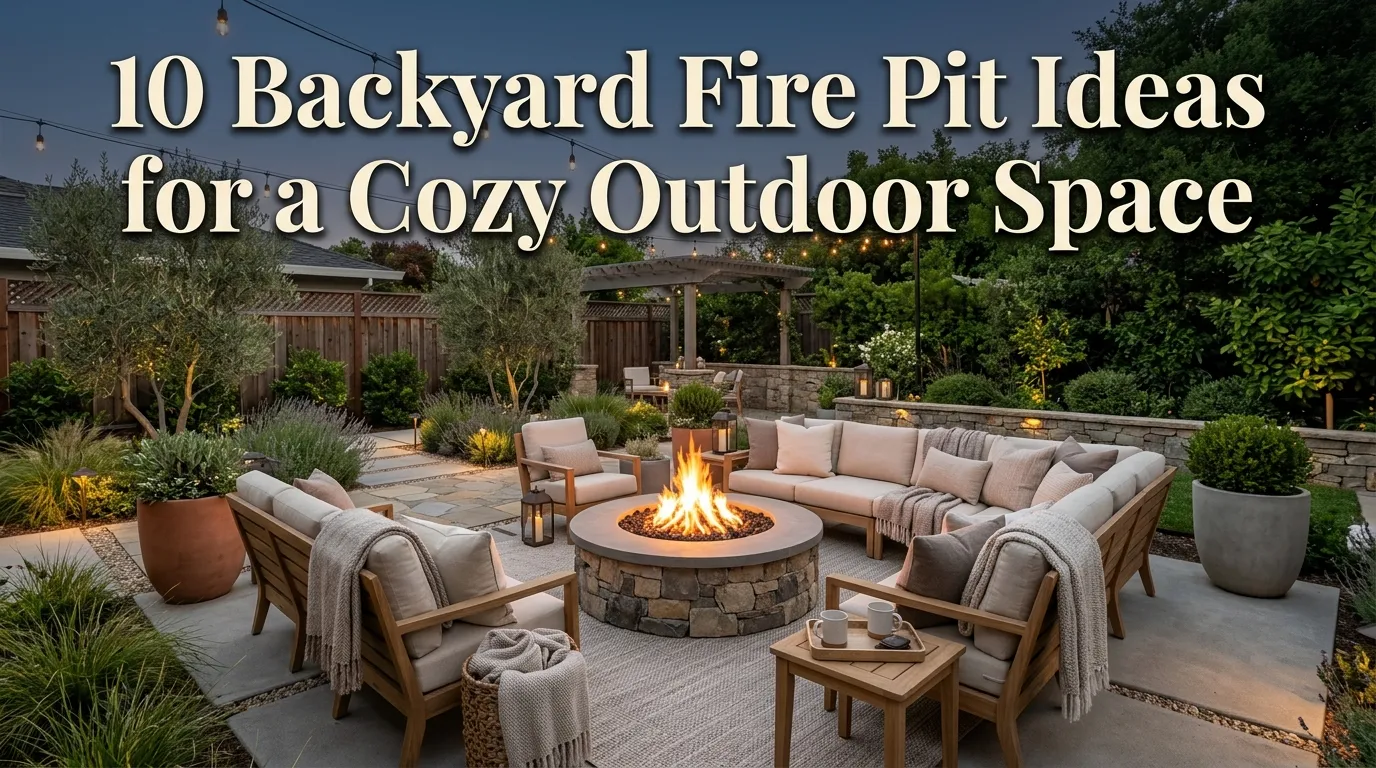
But choosing a fire pit isn’t only about the fire itself. The surrounding seating, surface material, landscaping, lighting, and overall layout all influence how comfortable and useful the space becomes. I’ve noticed that the most successful fire pit areas feel like they were designed as a complete outdoor room rather than having a fire feature dropped into an empty section of the yard.
You also don’t need a huge backyard to create a beautiful setup. A compact patio can accommodate a small fire feature with two chairs, while a larger yard might support a generous circular gathering area with built-in seating. The style can range from rustic stone and gravel to clean-lined concrete and contemporary landscaping.
Safety should always come first. Fire pits need appropriate clearance from structures and combustible materials, a stable installation surface, and proper operation according to the manufacturer’s instructions and applicable local rules. Some communities also have restrictions on open burning or wood-burning fire pits, so check local requirements before installing one.
Whether you’re planning a permanent feature or looking for a simpler setup, these backyard fire pit ideas can help you create a comfortable, attractive place to enjoy your outdoor space after sunset.
Table of Contents
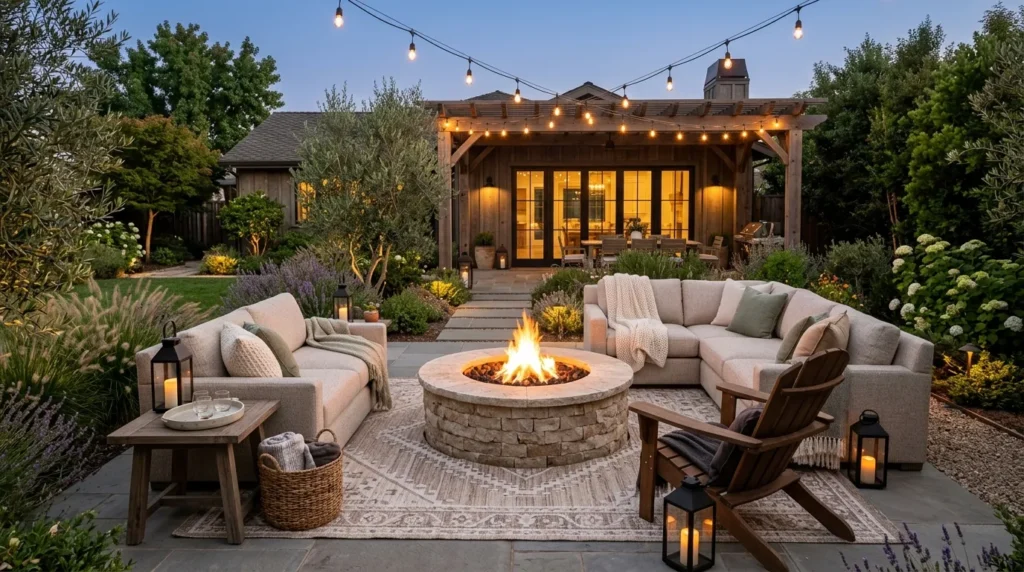
1. Stone Fire Pit
A timeless natural-stone design that blends easily with gardens, patios, and traditional landscapes.
2. Gravel Fire Pit
Create a relaxed gathering area with a fire pit surrounded by a low-maintenance gravel surface.
3. Built-In Seating
Combine a permanent fire feature with comfortable seating for a polished outdoor-room effect.
4. Modern Concrete Pit
Use clean lines and simple materials for a contemporary backyard focal point.
5. Fire Pit Patio
Build an intentional outdoor zone around the fire with coordinated paving and comfortable furniture.
6. Rustic Wood Setting
Pair natural materials and relaxed seating for a warm, rustic backyard atmosphere.
7. Sunken Fire Pit
Create a dramatic gathering area by placing the fire feature within a thoughtfully designed lower-level space.
8. Small Fire Pit
Use a compact fire feature to make a small patio or backyard corner more functional.
9. Fire Pit With Pergola
Combine a fire feature with an outdoor structure to create a defined entertaining zone.
10. Layered Fire Pit Garden
Surround the fire pit with landscaping, lighting, seating, and pathways for a complete backyard retreat.
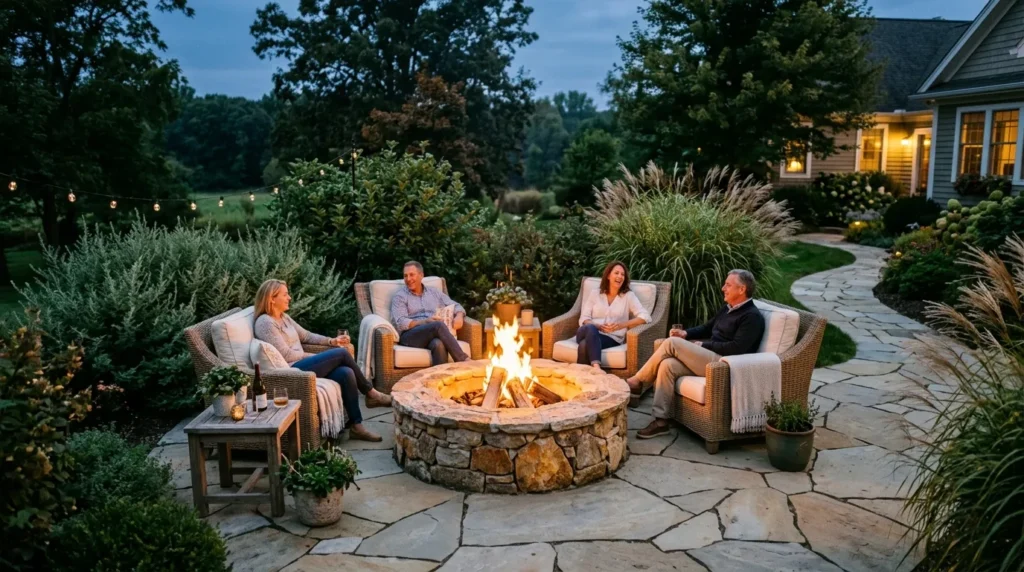
1. Stone Fire Pit
Quick Benefits
- Timeless appearance
- Works with many landscape styles
- Creates a natural focal point
- Pairs well with greenery
- Suitable for larger gathering areas
Why It Works
Stone is one of the easiest materials to incorporate into a backyard because it naturally connects the fire feature with the surrounding landscape. A stone fire pit can look equally comfortable in a traditional garden, rustic backyard, or relaxed farmhouse-inspired outdoor space.
Natural stone also introduces texture, which becomes especially noticeable when the fire is glowing after dark. The combination of warm flames, rough stone, greenery, and darker surroundings creates plenty of visual interest without requiring excessive decoration.
The scale matters. A very large stone structure can overwhelm a small yard, while a tiny fire pit may look lost in a spacious landscape.
How To Style It
Surround the fire pit with a suitable noncombustible surface such as properly installed pavers or another appropriate material.
Choose seating based on how many people you expect to host. Individual lounge chairs create flexibility, while built-in benches provide a more permanent appearance.
Keep the surrounding landscape relatively simple. Ornamental grasses, low shrubs, and mature trees can frame the area without competing with the fire.
For a traditional look, choose natural irregular stone. For a more contemporary appearance, use clean-cut stone or masonry with simple geometric lines.
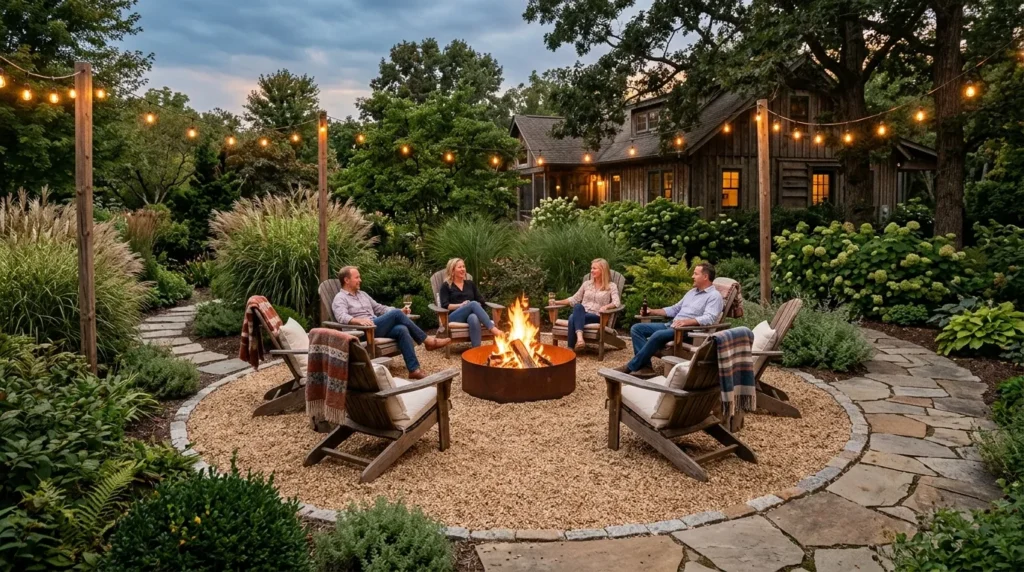
2. Gravel Fire Pit
Quick Benefits
- Casual and relaxed
- Visually separates the seating zone
- Works well in larger yards
- Complements natural landscaping
- Can create a budget-conscious look
Why It Works
A gravel fire pit area has an intentionally relaxed quality that works especially well in informal backyards.
Instead of placing the fire feature directly on a lawn, a defined gravel zone establishes a dedicated destination. The contrast between gravel, greenery, and seating makes the area feel designed without requiring elaborate construction.
Gravel can also help visually distinguish the fire pit from other backyard functions such as dining or gardening.
The exact surface and installation should be appropriate for the fire pit type and local conditions. Some fire pit manufacturers specify particular base materials or clearances, so follow those requirements rather than assuming any gravel arrangement is suitable.
How To Style It
Use a generous circular or geometric gravel area with enough room for comfortable seating and movement.
Add Adirondack-style chairs or simple outdoor lounge chairs around the perimeter.
Large planters can soften the transition between gravel and lawn, but keep plants and other combustible materials at appropriate distances from the fire.
For a cohesive look, repeat the gravel or stone elsewhere in the landscape, such as along a pathway or garden border.
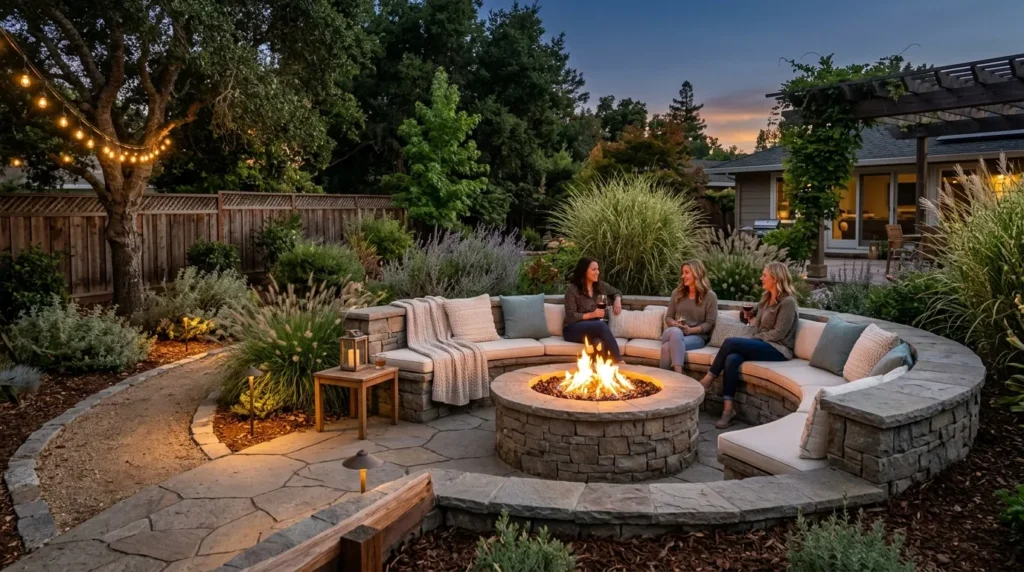
3. Built-In Seating
Quick Benefits
- Creates a polished appearance
- Provides permanent seating
- Works well for entertaining
- Maximizes larger gathering areas
- Can integrate with landscaping
Why It Works
Built-in seating can make a fire pit area feel like a permanent part of the backyard rather than a collection of movable furniture.
A curved bench around the fire can create a natural social arrangement because everyone faces toward the center. Straight benches can work particularly well with rectangular or contemporary fire features.
This approach is also useful when you regularly entertain because there is no need to move multiple chairs into position each time.
The construction needs to account for appropriate fire clearances, materials, drainage, and local requirements. Use materials suitable for exterior conditions and appropriate for their distance from the fire feature.
How To Style It
Keep the seating comfortable with outdoor cushions where appropriate.
A stone or masonry bench can be softened with neutral cushions and nearby planting.
For a contemporary look, use clean concrete lines with simple outdoor upholstery.
For a rustic setting, natural stone walls and wood seating can create a warmer appearance.
Add small side tables or nearby surfaces so guests have convenient places to set drinks.
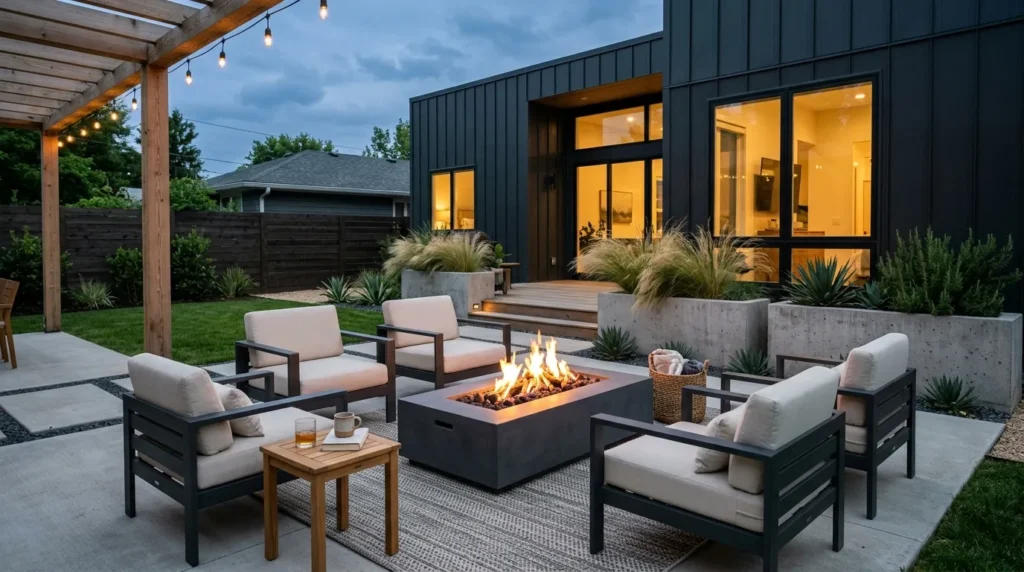
4. Modern Concrete Pit
Quick Benefits
- Clean architectural appearance
- Works with contemporary homes
- Creates a strong focal point
- Pairs well with minimalist landscaping
- Easy to coordinate with modern furniture
Why It Works
A concrete fire feature can provide a strong visual anchor without relying on elaborate decorative details.
Its simple geometry works particularly well with contemporary homes, modern patios, and minimalist landscapes. The clean surface creates contrast against plants and natural materials.
A rectangular fire feature can define a long seating arrangement, while a square or circular design can create a more centralized gathering point.
The most important consideration is choosing a fire feature designed for outdoor use and installed according to its specifications.
How To Style It
Keep the surrounding furniture simple.
Choose neutral outdoor seating in cream, charcoal, beige, or muted gray. Add natural wood through side tables or decking to soften the concrete.
Use ornamental grasses or architectural plants around the perimeter.
Avoid adding too many decorative objects. The clean lines of the fire feature should remain the focal point.
At night, subtle landscape lighting can illuminate surrounding plants while allowing the fire to remain the main attraction.
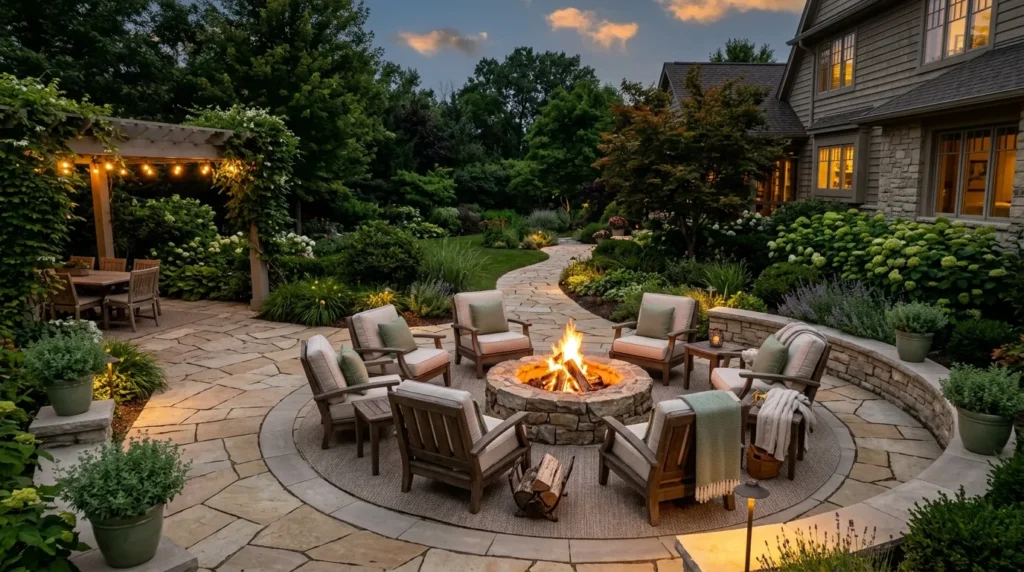
5. Fire Pit Patio
Quick Benefits
- Creates a defined outdoor room
- Provides a stable seating surface
- Works for entertaining
- Integrates with existing patios
- Makes furniture placement easier
Why It Works
A dedicated patio can make a fire pit area feel significantly more intentional.
Instead of placing the fire pit somewhere in the yard, the patio establishes clear boundaries around the gathering space. This can be particularly useful in larger backyards where different zones serve different purposes.
The patio might connect to the house, sit beside a pool, or occupy a separate corner of the garden.
Good circulation is important. Guests should be able to approach and leave the seating area without having to squeeze between chairs.
How To Style It
Use pavers, stone, concrete, or another appropriate outdoor surface that complements the house.
Arrange seating around the fire pit with enough space between the feature and furniture.
If the patio is large enough, create two related zones: a fire pit conversation area and a nearby dining or lounging area.
Use planters and low landscaping to visually frame the patio without placing combustible materials too close to the fire.
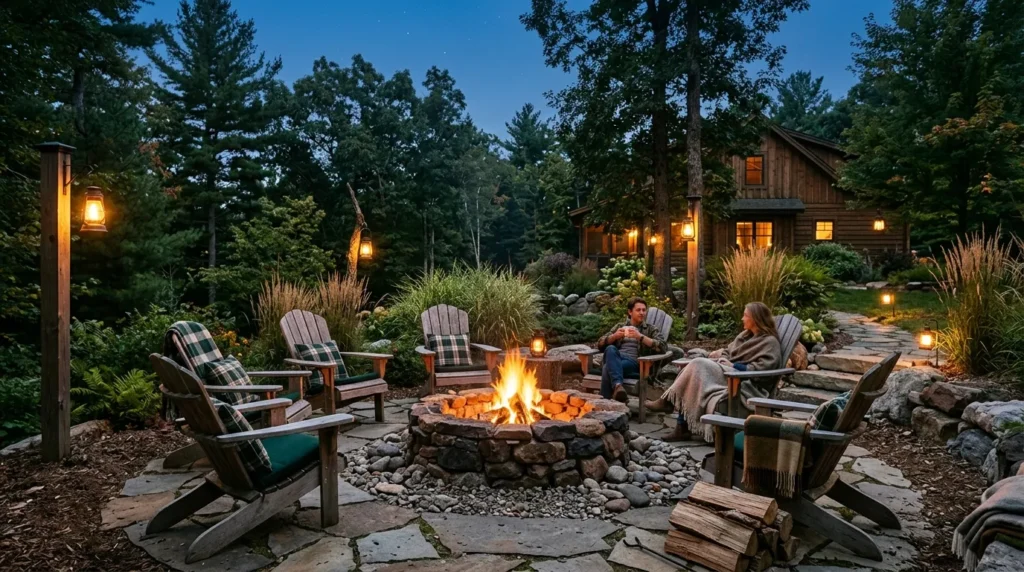
6. Rustic Wood Setting
Quick Benefits
- Warm and welcoming
- Works with natural landscapes
- Creates a cabin-inspired feel
- Pairs well with stone
- Ideal for casual entertaining
Why It Works
Natural wood can give a fire pit area an especially warm character. The combination of wood furniture, stone, greenery, and fire creates a classic outdoor atmosphere.
This style works particularly well when the backyard already contains mature trees, wood fencing, decks, or natural landscaping.
The key is using wood appropriately. Furniture and structures should be kept at safe distances from the fire and maintained according to their intended outdoor use.
How To Style It
Choose sturdy outdoor wood chairs or benches with comfortable weather-appropriate cushions.
Pair wood with natural stone around the fire pit for contrast.
Keep the color palette simple: warm brown, charcoal, cream, and muted green.
Add a few lantern-style lights around the seating area for evening atmosphere, while keeping all lighting and decorative elements safely positioned away from the fire.
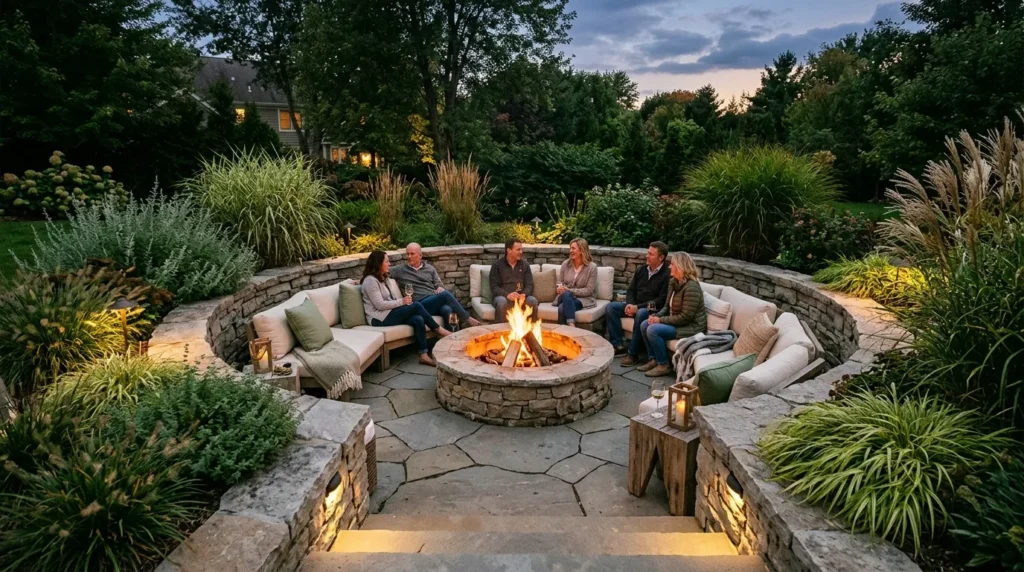
7. Sunken Fire Pit
Quick Benefits
- Creates a dramatic focal point
- Defines the seating area
- Feels architectural
- Works well in larger landscapes
- Provides a strong sense of enclosure
Why It Works
A sunken fire pit can create the feeling of a dedicated outdoor room by lowering the gathering area relative to the surrounding landscape.
The change in elevation naturally separates the fire pit from the rest of the yard, making the space feel intimate and intentional.
However, this idea requires more planning than simply purchasing a fire pit. Drainage, retaining walls, access, surface stability, and local building requirements all need to be considered.
Water management is particularly important. A lower-level area can collect rainwater if drainage isn’t properly designed.
How To Style It
Use broad steps and comfortable seating to make the area easy to access.
Stone retaining walls can double as visual boundaries and seating surfaces when properly designed.
Keep surrounding landscaping low enough that the fire pit remains visible from the main yard.
For a sophisticated look, combine natural stone with neutral outdoor furniture and carefully placed landscape lighting.
8. Small Fire Pit
Quick Benefits
- Works in compact backyards
- Requires less space
- Creates a cozy atmosphere
- Suitable for small gatherings
- Easy to integrate into patios
Why It Works
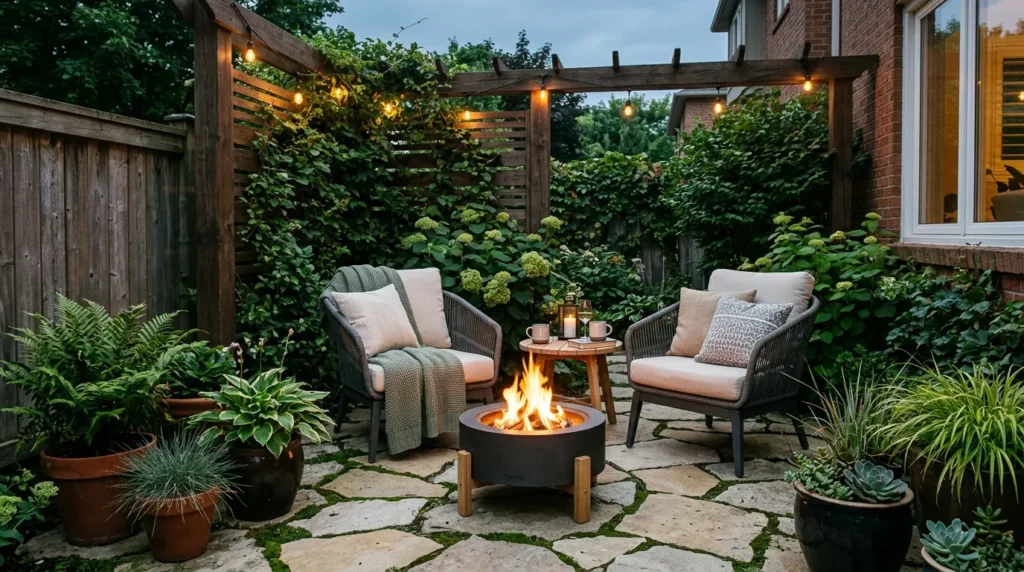
You don’t need a large backyard to enjoy a fire feature.
A compact fire pit can turn a small patio corner into a comfortable evening retreat. The important thing is choosing a size appropriate for the available space and following the manufacturer’s clearance requirements.
Smaller fire features also make it easier to keep the seating arrangement intimate. Two lounge chairs and a small side table may be enough.
This approach works particularly well for homeowners who want atmosphere without dedicating a major portion of their yard to a single feature.
How To Style It
Keep the furniture compact.
Two comfortable chairs positioned across from one another can create an intimate setup.
Use a small outdoor rug only when appropriate for the fire pit arrangement and manufacturer requirements; never place combustible materials where they could be exposed to unsafe heat or sparks.
A few potted plants can frame the space, provided they are kept at suitable distances.
Use a simple color palette to prevent the small area from feeling cluttered.
9. Fire Pit With Pergola
Quick Benefits
- Defines a backyard zone
- Adds architectural interest
- Creates an outdoor-room feeling
- Supports lighting
- Works well for entertaining
Why It Works
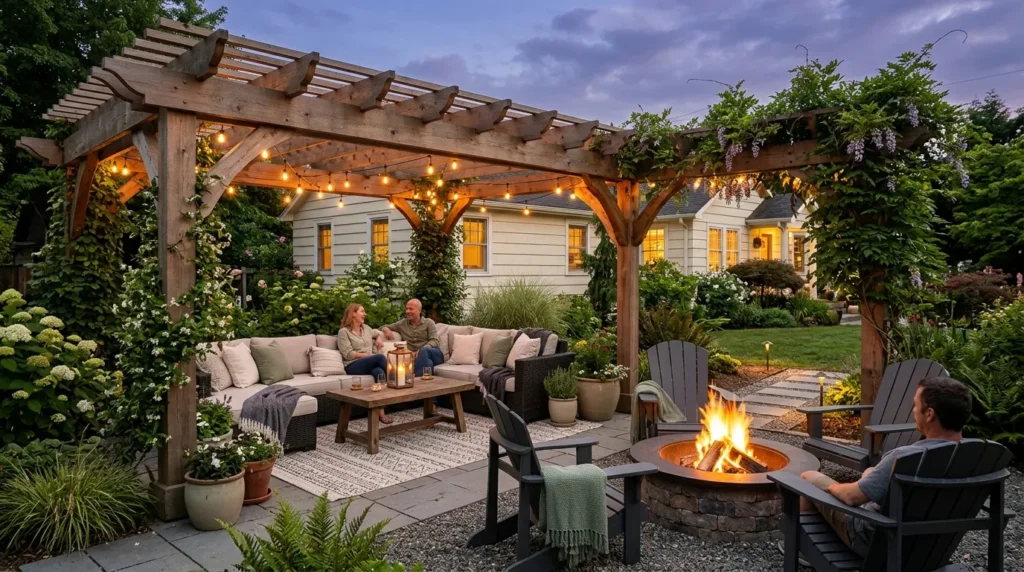
A pergola can visually define a fire pit seating area and make a large backyard feel more organized.
The overhead structure creates a sense of enclosure, while the fire becomes the central focal point below.
However, fire and overhead structures require careful planning. The exact fire feature, fuel type, structure, clearances, ventilation, and local requirements all matter. Never assume a pergola can safely be built directly over a fire pit.
In many cases, the safer design is to position the pergola adjacent to or around a properly designed outdoor seating area while keeping the fire feature within the required clearances.
How To Style It
Use a pergola style that complements the house.
Natural wood works beautifully in traditional and rustic landscapes, while painted or metal structures can suit contemporary homes.
Add suitable outdoor lighting along the structure to create evening ambiance.
Keep furniture arranged toward the fire while leaving clear paths through the area.
Climbing plants can soften a pergola, but they must be positioned appropriately away from heat sources.
10. Layered Fire Pit Garden
Quick Benefits
- Creates a complete outdoor retreat
- Combines seating and landscaping
- Adds nighttime depth
- Works in larger backyards
- Feels highly personalized
Why It Works
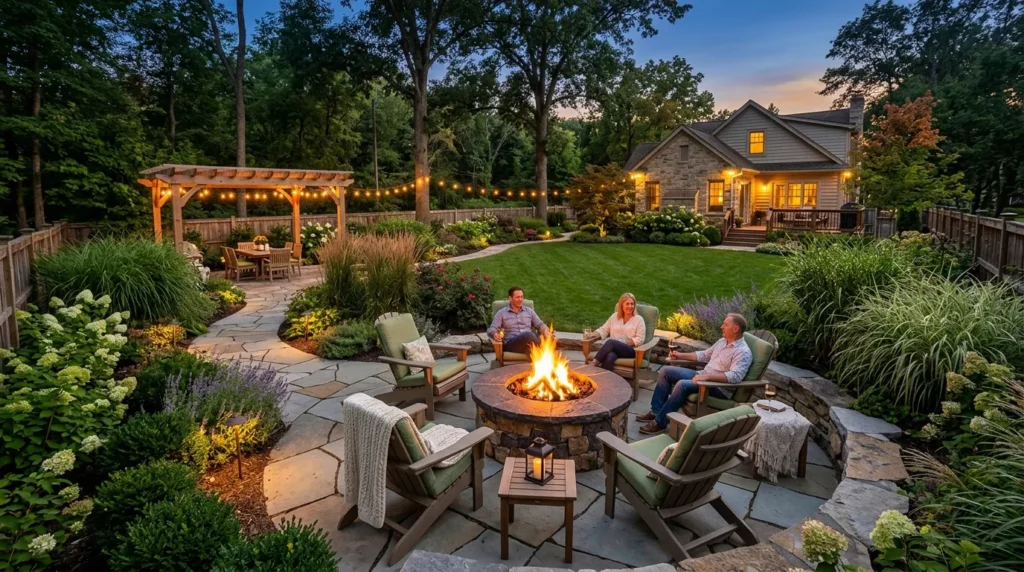
Sometimes the most beautiful fire pit area isn’t defined by the fire feature alone. It’s the combination of fire, furniture, plants, pathways, lighting, and surrounding textures that makes the space feel finished.
Layering these elements creates visual depth.
The fire provides the central focal point. Seating surrounds it. Plants frame the area. Pathways connect it to the rest of the yard. Lighting provides visibility and highlights selected landscape features.
This approach works particularly well in larger yards because it helps transform a broad outdoor area into a series of connected destinations.
How To Style It
Begin with the fire pit and seating.
Then establish a clear path connecting the fire pit to the house or main patio.
Add layers of landscaping around the outside of the gathering area, using shrubs, ornamental grasses, trees, or planters appropriate for your climate.
Finish with subtle lighting that highlights pathways and landscape features without competing with the fire.
The result should feel natural rather than overly decorated.
How To Choose the Right Fire Pit
The first decision is the fuel type.
Wood-burning fire pits provide the traditional fire experience but produce smoke, ash, and sparks. Gas-burning options can offer more predictable operation but require appropriate fuel connections or tanks and proper installation.
The second consideration is size.
Measure the available space before purchasing anything. Account not only for the fire pit itself but also for seating, walking paths, heat clearances, and surrounding structures.
Finally, check local regulations.
Fire pit rules vary by location, and restrictions can apply to fuel type, placement, burning conditions, or seasonal use. Your local fire department, municipality, homeowners association, or applicable code authority can provide the most relevant requirements.
Best Surfaces Around a Fire Pit
The area immediately surrounding a fire pit should be planned with heat, sparks, and the manufacturer’s installation requirements in mind.
Common landscape materials include:
- Pavers
- Natural stone
- Concrete
- Gravel
- Masonry
- Other manufacturer-approved noncombustible surfaces
Grass can be attractive around the outside of a fire pit area, but it isn’t always appropriate directly beneath or immediately around every type of fire feature.
Follow the fire pit manufacturer’s instructions rather than choosing a surface based only on appearance.
How To Arrange Seating Around a Fire Pit
Circular fire pits naturally lend themselves to circular or semicircular seating.
A square or rectangular fire feature may work better with a more structured furniture arrangement.
The most important consideration is comfortable conversation.
Guests should be able to see one another without constantly turning away from the fire.
Leave enough space between the fire feature and seating for safe movement and according to the manufacturer’s clearance requirements.
Don’t forget access. Someone should be able to leave the seating area without stepping over furniture or walking directly through the main gathering space.
How To Make a Fire Pit Area Feel Cozy
Comfort comes from more than the fire.
Add supportive outdoor seating, soft weather-appropriate cushions, nearby side tables, and subtle lighting.
A privacy fence or strategically planted trees can provide a sense of enclosure.
Outdoor rugs can help define the seating zone when they are appropriate for the fire feature and positioned safely.
Choose a restrained color palette. Warm wood, cream, charcoal, stone, and greenery naturally complement the glow of a fire.
Budget-Friendly Fire Pit Ideas
Creating a beautiful fire pit area doesn’t necessarily require a large renovation.
Start with the fire feature and build the surroundings gradually.
A compact manufactured fire pit can become the centerpiece of a simple gravel seating area. Add two comfortable chairs first, then introduce additional seating, plants, and lighting over time.
Another budget-conscious strategy is to improve the surroundings rather than buying more furniture. A well-defined pathway, a few large planters, and simple landscape lighting can dramatically change how the area feels.
Always prioritize a properly rated fire feature and safe installation over decorative extras.
Common Fire Pit Mistakes
One of the biggest mistakes is choosing the fire pit before measuring the area.
Another is placing it too close to a house, fence, trees, furniture, or overhead structure.
Ignoring wind conditions can also create problems with smoke and sparks.
Some homeowners also forget about drainage. A fire pit area that collects water after rain will quickly become inconvenient.
Finally, don’t treat safety as an afterthought. Follow the manufacturer’s instructions, maintain required clearances, use appropriate fuel, and check local rules before operating a fire pit.
FAQ
What is the best material for a backyard fire pit area?
Pavers, natural stone, concrete, gravel, and other suitable noncombustible materials can work depending on the fire pit design and manufacturer requirements. The most important factor is not simply appearance but whether the surface is appropriate for the specific fire feature and installed safely.
How far should a fire pit be from a house?
There isn’t one universal distance for every fire pit. Required clearances vary according to the fire pit, fuel type, local regulations, and surrounding construction. Always follow the manufacturer’s specified clearances and applicable local fire or building requirements rather than relying on a generic measurement.
Are wood-burning or gas fire pits better?
Each has advantages. Wood-burning fire pits provide a traditional experience but produce smoke, ash, and sparks. Gas fire pits can offer cleaner, more controlled operation but require an appropriate fuel source and installation. Your local regulations, lifestyle, and preferred experience should guide the decision.
What can I put around a fire pit?
Suitable options can include properly installed pavers, natural stone, concrete, gravel, and other materials appropriate for the fire pit. Furniture, plants, rugs, and decorative objects should be positioned according to the required clearances and manufacturer’s instructions.
Can I put a fire pit under a pergola?
This depends on the fire pit, pergola design, fuel type, ventilation, clearance requirements, and local regulations. A fire feature should never be placed under a structure simply because there appears to be enough room. Follow the manufacturer’s requirements and consult a qualified professional when necessary.
How do I make a small backyard fire pit area?
Choose a compact fire feature and create a clearly defined seating zone. Two comfortable chairs and a small table may be enough. Use a suitable hardscape or gravel surface and keep surrounding furniture, plants, fences, and structures at the required safe distances.
Can I build my own backyard fire pit?
Some homeowners choose DIY fire pit projects, but the design still needs to comply with applicable safety requirements. Fuel type, construction materials, clearances, drainage, and local regulations all matter. A professionally designed or manufactured system can be a better option when you’re uncertain about installation requirements.
Conclusion
A backyard fire pit can become much more than a source of warmth. With the right placement and surrounding design, it can create a natural gathering point where family and friends want to spend time together.
The most important step is to think about the entire area rather than focusing only on the fire feature. Consider where people will sit, how they’ll move through the space, what materials surround the fire, and how the area will look after dark.
A simple gravel circle can work beautifully in a casual yard. A stone fire pit can complement a traditional landscape, while a modern concrete feature can give a contemporary patio a strong focal point. If space is limited, a compact fire feature with two comfortable chairs may be all you need.
Start with safety and function, then add the decorative details.
Once the essentials are in place, introduce landscaping, lighting, comfortable seating, and personal touches gradually. The result can be a backyard that feels warm, inviting, and useful long after the sun goes down.
Related Articles
- 10 Outdoor Lighting Ideas for a Beautiful Backyard
- 10 Backyard Seating Ideas for a Cozy Outdoor Retreat
- 11 Backyard Privacy Ideas for a More Secluded Yard
- 11 Backyard Landscaping Ideas to Transform Your Yard
- 12 Backyard Decor Ideas for Comfortable Outdoor Living