
10 Moroccan Home Interior Living Room Ideas
Moroccan Home Interior
Few decorating styles feel as warm, inviting, and visually captivating as Moroccan-inspired interiors. Rich textures, handcrafted details, layered textiles, and earthy color palettes create living spaces that feel both luxurious and welcoming. While traditional Moroccan homes are known for their intricate craftsmanship and bold personality, modern homeowners are increasingly adapting these elements in ways that feel practical and comfortable for contemporary living.
What makes this style so appealing is its ability to create an atmosphere that feels collected, traveled, and deeply personal. Every detail contributes to the overall experience, from patterned rugs and carved wood furniture to lantern lighting and textured fabrics. Yet despite its decorative richness, a well-designed Moroccan-inspired living room can still feel calm and balanced when the right elements are thoughtfully combined.
In my experience, many homeowners admire Moroccan decor but worry that it might feel overwhelming or difficult to incorporate into everyday living. The truth is that you don’t need an entire house filled with ornate details to achieve the look. A few carefully chosen pieces can introduce warmth, texture, and character while maintaining a comfortable and livable atmosphere.
Whether you’re decorating a modern apartment, a cozy family home, or a spacious open-concept living room, Moroccan-inspired design offers countless opportunities to create a space that feels unique and inviting. The following ideas combine traditional influences with practical styling solutions to help you build a beautiful living room that feels both exotic and effortlessly comfortable.
Table of Contents
1. Earthy Color Layers
Create warmth and depth through rich natural tones inspired by desert landscapes.
2. Arched Design Details
Introduce elegant architectural shapes that instantly add Moroccan character.
3. Patterned Area Rugs
Anchor the room with bold textiles that bring color and personality.
4. Carved Wood Accents
Add handcrafted texture and timeless charm through decorative wood elements.
5. Low Lounge Seating
Create a relaxed atmosphere with comfortable seating arrangements.
6. Lantern Lighting Glow
Use decorative lighting to create warmth and ambiance.
7. Textured Textile Layers
Combine fabrics and materials for a cozy, collected appearance.
8. Brass Decor Touches
Add warmth and subtle luxury with metallic accents.
9. Indoor Oasis Corners
Bring nature indoors with greenery and organic styling.
10. Artisan Decorative Pieces
Finish the space with handcrafted accessories and meaningful details.
1. Earthy Color Layers
Quick Benefits
- Creates warmth
- Adds visual depth
- Feels inviting
- Supports timeless design
- Complements natural materials
Why It Works
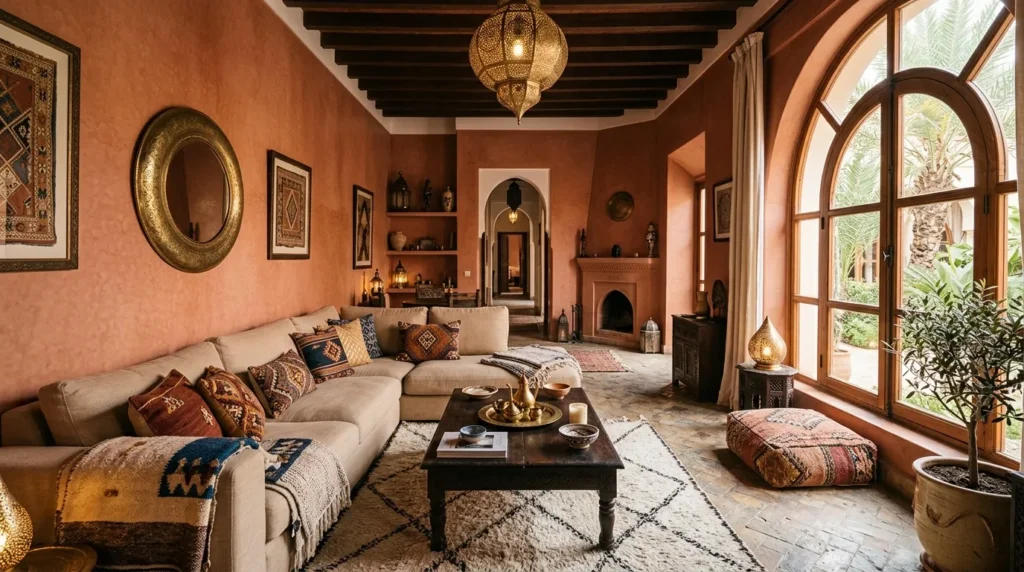
Moroccan-inspired interiors often draw inspiration from the natural landscape, including desert sands, terracotta earth, clay walls, and sunlit stone architecture. These warm tones create a welcoming environment that feels grounded and comfortable. Rather than relying on stark contrasts, earthy colors work together to build depth and harmony throughout the room. I’ve noticed that spaces featuring layered natural tones often feel more relaxing because the palette reflects colors commonly found in nature, helping create a sense of balance and comfort.
How To Style It
Combine shades such as terracotta, camel, sand, warm beige, rust, olive, and muted clay throughout the room. Use larger furniture pieces in neutral tones while introducing richer colors through textiles and accessories. Layering several related shades creates visual interest without overwhelming the space. One thing that works especially well is incorporating natural materials such as wood, stone, and woven fibers that complement the color palette and reinforce the organic feel of the design.
2. Arched Design Details
Quick Benefits
- Adds architectural character
- Creates visual softness
- Enhances elegance
- Introduces cultural influence
- Supports timeless styling
Why It Works
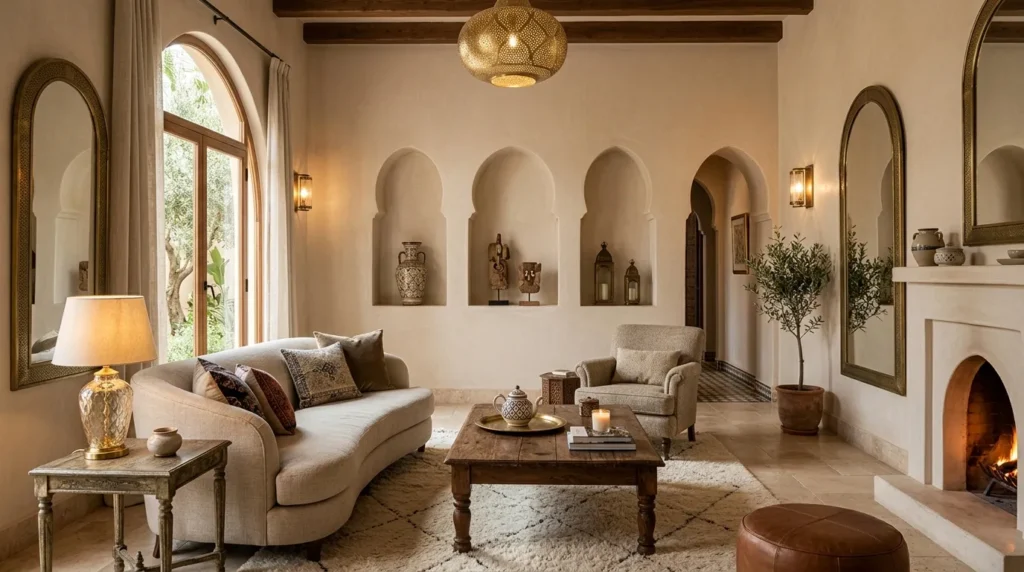
Arched shapes are one of the most recognizable features of Moroccan architecture. These graceful curves soften the room while introducing a sense of sophistication and movement. Even in homes without original arches, decorative versions can create a similar effect. Mirrors, shelving, wall niches, and furniture featuring curved silhouettes help establish the style without requiring major renovations. That’s why many designers recommend incorporating arched elements when creating a Moroccan-inspired space.
How To Style It
Use arched mirrors as focal points above consoles or fireplaces. Decorative shelving with curved tops can display accessories while reinforcing the overall theme. If possible, incorporate rounded furniture silhouettes to complement the shapes. In my experience, repeating arches throughout the room creates cohesion while helping the design feel intentional and authentic rather than themed.
3. Patterned Area Rugs
Quick Benefits
- Anchors furniture layouts
- Adds color and texture
- Introduces cultural character
- Enhances comfort
- Creates visual interest
Why It Works
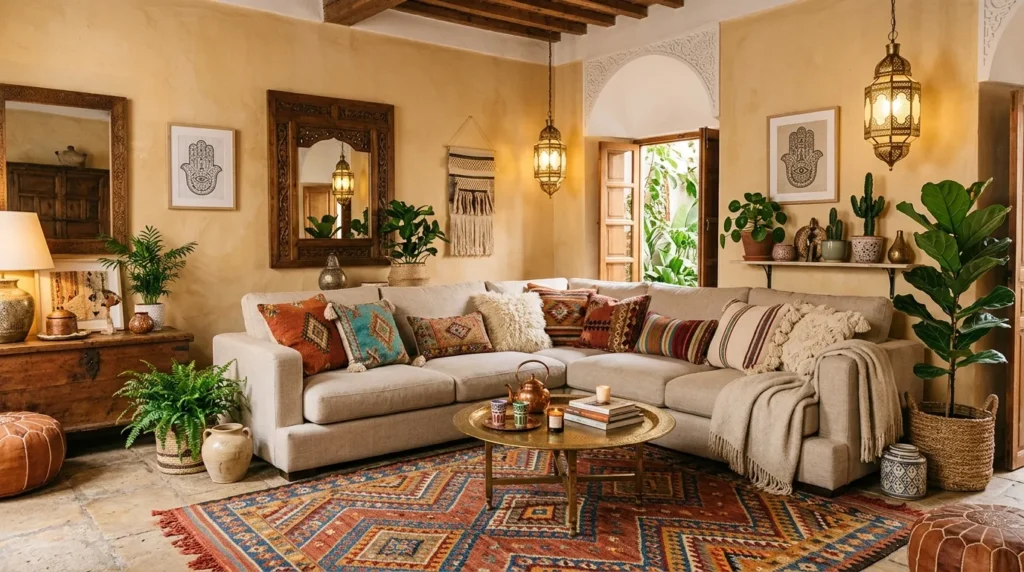
Few elements define Moroccan-inspired interiors more effectively than beautifully patterned rugs. These textiles bring warmth, texture, and personality while helping establish the room’s overall design direction. Traditional patterns often feature geometric motifs, tribal influences, and intricate detailing that instantly add visual richness. I’ve seen this idea transform spaces because a single statement rug can provide enough character to inspire the rest of the room’s design.
How To Style It
Choose a large rug that grounds the primary seating area while allowing the pattern to remain visible. Layering smaller rugs can also create a collected and traveled appearance. Balance bold designs with neutral furniture to avoid visual overload. Pair patterned textiles with simple accessories so the rug remains the focal point while contributing warmth and authenticity to the overall space.
4. Carved Wood Accents
Quick Benefits
- Adds handcrafted charm
- Creates texture
- Enhances authenticity
- Introduces warmth
- Supports timeless design
Why It Works
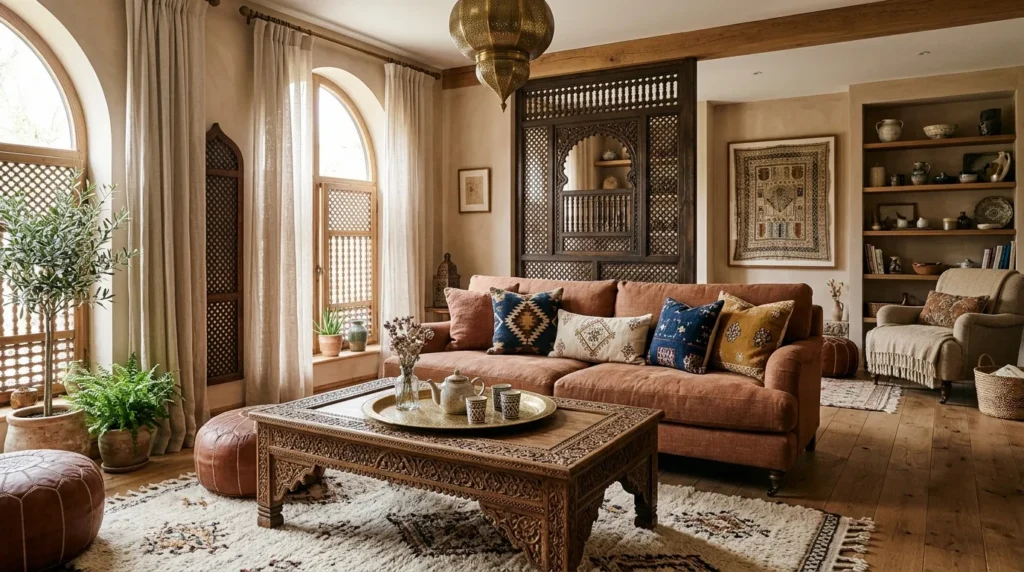
Handcrafted woodwork plays an important role in traditional Moroccan interiors. Intricately carved furniture, decorative screens, and detailed accessories introduce texture and craftsmanship that mass-produced pieces often lack. The natural grain and warm tones of wood help balance the decorative richness found elsewhere in the design. In my experience, even a few carved accents can dramatically increase the room’s sense of character and individuality.
How To Style It
Incorporate carved side tables, decorative trays, mirrors, or shelving units throughout the room. Pair detailed woodwork with softer fabrics and simpler furniture to maintain balance. One simple trick I always suggest is repeating similar wood tones across multiple elements so the design feels cohesive. This helps create a collected look while avoiding visual clutter.
5. Low Lounge Seating
Quick Benefits
- Encourages relaxation
- Creates a cozy atmosphere
- Supports conversation
- Feels inviting
- Adds cultural authenticity
Why It Works
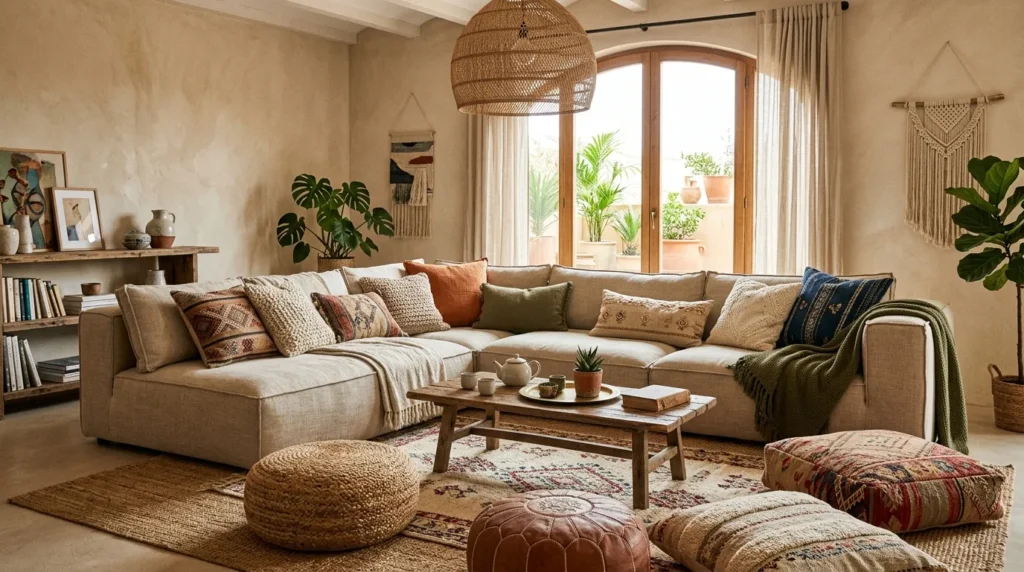
Moroccan-inspired living rooms often emphasize comfort through low-profile seating arrangements that encourage gathering and conversation. Lower furniture creates a more intimate atmosphere while making the room feel approachable and welcoming. Soft cushions, poufs, and relaxed seating arrangements invite people to settle in and enjoy the space. I’ve noticed that lower seating often helps create a stronger sense of connection because it naturally encourages interaction.
How To Style It
Use low sofas, floor cushions, poufs, and upholstered benches to create a comfortable arrangement. Layer textiles generously and incorporate warm colors through pillows and throws. Position seating around a central coffee table to encourage conversation. The goal is creating a relaxed environment that feels both stylish and highly livable.
6. Lantern Lighting Glow
Quick Benefits
- Creates a warm atmosphere
- Adds visual interest
- Enhances evening comfort
- Introduces authentic character
- Becomes a decorative focal point
Why It Works
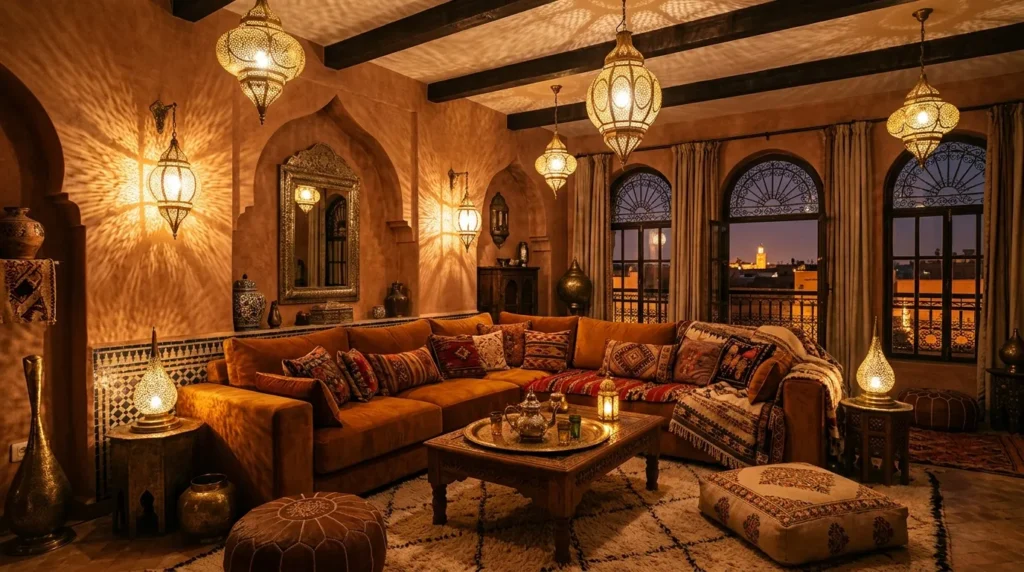
Lighting plays a major role in Moroccan-inspired interiors because it influences both mood and atmosphere. Decorative lanterns create beautiful patterns of light and shadow that instantly make a room feel warmer and more inviting. Unlike standard lighting fixtures, lanterns introduce artistry while serving a practical purpose. The intricate metalwork and soft glow help create an environment that feels intimate and relaxing. I’ve seen this idea transform spaces because lighting often becomes one of the most memorable design elements in the room.
How To Style It
Choose lanterns in brass, black metal, or antique finishes with decorative cutout patterns. Hang a statement lantern from the ceiling or use smaller versions on side tables and shelves. Pair warm lighting with textured fabrics and earthy colors for maximum impact. One thing that works especially well is using dimmable bulbs that allow you to adjust the ambiance throughout the day. The result feels cozy, sophisticated, and beautifully layered.
7. Textured Textile Layers
Quick Benefits
- Adds comfort and warmth
- Creates visual depth
- Enhances luxury
- Softens hard surfaces
- Makes rooms feel inviting
Why It Works
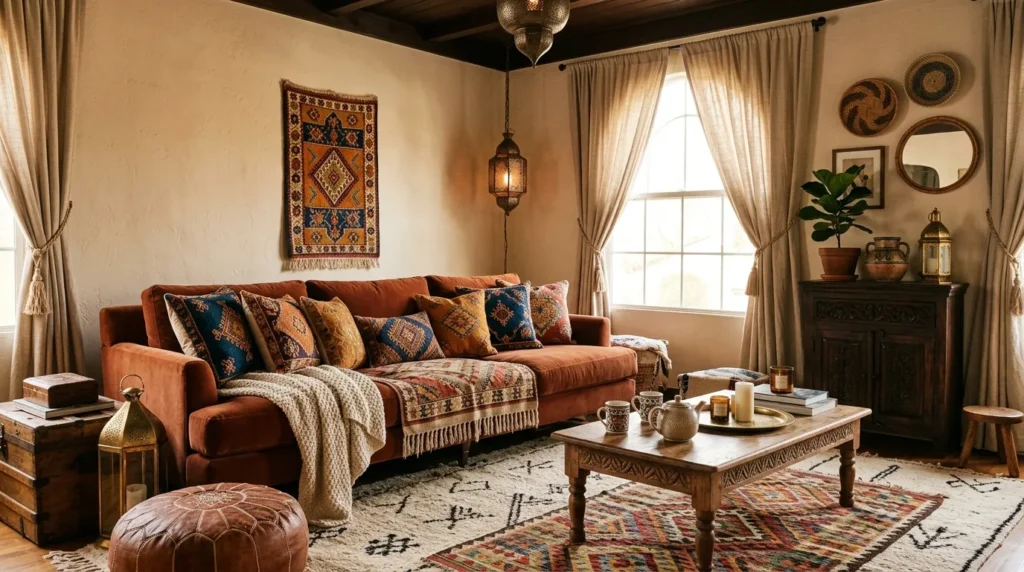
Moroccan-inspired spaces are known for their rich combination of textures. Layering fabrics introduces depth while creating an atmosphere that feels comfortable and lived-in. Textiles soften furniture and architectural features while helping the room feel more welcoming. That’s why many designers recommend focusing on texture rather than adding excessive decorative objects. A carefully layered room often feels richer and more sophisticated while remaining visually balanced.
How To Style It
Combine woven throws, embroidered cushions, textured rugs, linen drapes, and soft upholstery throughout the room. Stick to a cohesive color palette so the variety of materials feels intentional rather than chaotic. In my experience, mixing natural fabrics with handcrafted details creates the most authentic and comfortable result. Layering textures also allows the room to feel luxurious without relying on expensive furniture or elaborate accessories.
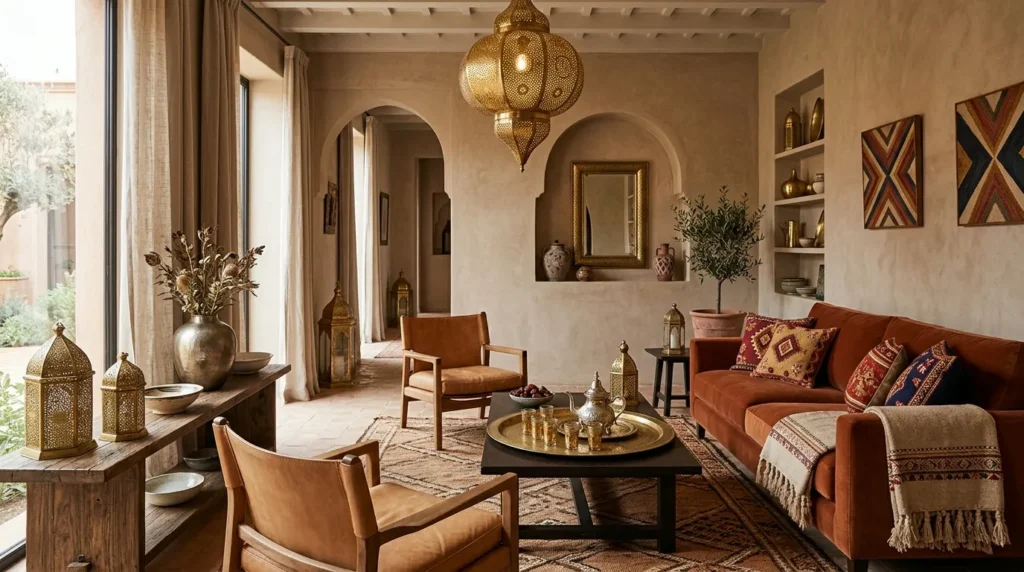
8. Brass Decor Touches
Quick Benefits
- Adds warmth
- Reflects light beautifully
- Creates sophistication
- Enhances traditional character
- Complements earthy palettes
Why It Works
Brass accents have long been associated with Moroccan decor because they introduce warmth and subtle elegance. Unlike cooler metallic finishes, brass works beautifully alongside earthy tones, natural wood, and rich textiles. Small metallic details can elevate the entire room while helping connect different design elements together. One simple trick I always suggest is using metallic finishes sparingly so they feel special rather than overwhelming.
How To Style It
Incorporate brass through trays, candle holders, mirrors, lanterns, decorative bowls, or coffee table accessories. Pair metallic accents with natural textures and soft fabrics to maintain balance. A few carefully chosen pieces often create more impact than filling the room with decorative objects. This approach helps preserve the relaxed atmosphere while adding a touch of luxury and refinement.
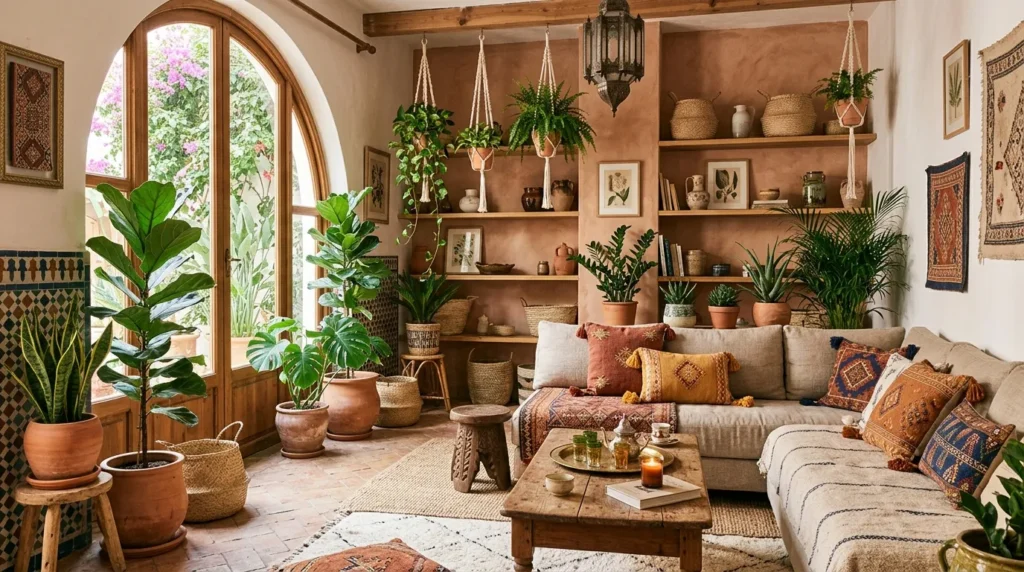
9. Indoor Oasis Corners
Quick Benefits
- Brings nature indoors
- Adds freshness
- Softens the room
- Improves visual balance
- Enhances relaxation
Why It Works
Plants play an important role in Moroccan-inspired interiors because they help create a connection between indoor and outdoor living. Greenery softens furniture arrangements while adding life and movement to the space. Large plants can become sculptural elements, while smaller varieties introduce texture and color. I’ve noticed that incorporating plants often makes a room feel more complete because they provide a natural contrast to decorative materials and furnishings.
How To Style It
Use a combination of floor plants, tabletop greenery, and decorative planters. Terracotta pots, woven baskets, and ceramic containers work particularly well with this design style. Position plants near windows whenever possible to maximize natural light. One thing that works especially well is grouping plants together to create a lush, garden-inspired corner that feels peaceful and visually striking.
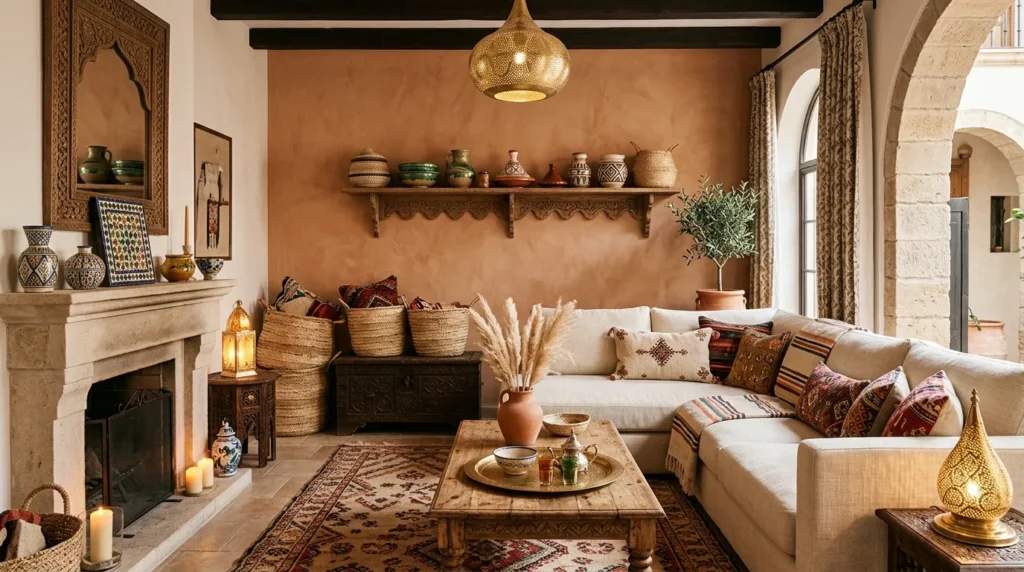
10. Artisan Decorative Pieces
Quick Benefits
- Adds personality
- Creates authenticity
- Supports handcrafted design
- Enhances visual interest
- Reflects individual style
Why It Works
Handcrafted accessories help distinguish Moroccan-inspired interiors from generic decorating styles. Artisan pieces often feature unique details, textures, and imperfections that add character and charm. Decorative pottery, woven baskets, handcrafted ceramics, and traditional artwork introduce cultural influence while making the space feel more personal. In my experience, meaningful decorative objects contribute far more character than mass-produced accessories because they tell a story and create visual interest.
How To Style It
Select a few standout pieces rather than displaying too many accessories at once. Arrange handcrafted items on shelves, coffee tables, or consoles where they can be appreciated without creating clutter. Mix materials such as clay, woven fibers, wood, and metal for added depth. This curated approach creates a collected look that feels intentional, sophisticated, and welcoming.
Frequently Asked Questions
What defines Moroccan-inspired living room design?
Moroccan-inspired design combines rich textures, handcrafted details, warm colors, decorative lighting, patterned textiles, and natural materials. The style focuses on creating comfortable and visually layered spaces.
Can Moroccan decor work in modern homes?
Yes. Many homeowners successfully blend Moroccan influences with modern furniture and neutral color palettes. This creates a balanced look that feels both current and timeless.
What colors are commonly used in Moroccan interiors?
Warm earth tones such as terracotta, rust, sand, camel, olive green, cream, and deep blue are commonly used. These colors create warmth and depth while reflecting natural landscapes.
How do I avoid making the room feel too busy?
Focus on a limited color palette and select a few statement pieces rather than incorporating every decorative element at once. Balance patterns with neutral furnishings and open space.
What materials work best for Moroccan-inspired decor?
Wood, brass, ceramic, woven fibers, natural stone, linen, cotton, and leather all work beautifully. These materials create texture and authenticity throughout the room.
Are Moroccan-inspired spaces comfortable for everyday living?
Absolutely. While visually rich, these interiors prioritize comfort through layered textiles, relaxed seating, warm lighting, and inviting furniture arrangements.
Conclusion
Moroccan-inspired living rooms offer a beautiful combination of comfort, texture, and timeless character. By incorporating warm colors, layered fabrics, handcrafted details, and natural materials, you can create a space that feels welcoming and visually captivating. The beauty of this design style lies in its ability to feel both luxurious and relaxed at the same time.
From patterned rugs and carved wood accents to lantern lighting and artisan decor, every element contributes to an atmosphere that feels collected and meaningful. The key is balance. Rather than filling the room with decorative objects, focus on a few carefully selected pieces that work together to create warmth and harmony.
Start with one or two ideas that resonate with your personal style and gradually build from there. Small additions such as textured pillows, a statement rug, or decorative lighting can dramatically transform the feeling of a room. Over time, you’ll create a living space that feels inviting, comfortable, and full of personality while capturing the timeless beauty that makes Moroccan-inspired design so beloved.
Related Articles
- 10 Boho Living Room Ideas for Relaxed Spaces
- 12 Earth Tone Living Room Decor Ideas
- 10 Mediterranean Living Room Designs
- 11 Cozy Neutral Home Decor Ideas
- 10 Global-Inspired Interior Design Ideas