

10 Cozy Bedroom Ideas
There is something incredibly comforting about walking into a bedroom that instantly makes you feel relaxed, warm, and at peace. In today’s busy world, creating a personal retreat inside your home is more important than ever. A thoughtfully designed sleeping space can help reduce stress, improve sleep quality, and make everyday life feel more enjoyable. The good news is that you do not need a massive budget or a complete renovation to transform your room into a welcoming sanctuary.
Many homeowners across the United States are moving away from cold, overly minimal interiors and embracing warmth, texture, and personality. From soft bedding and layered lighting to natural materials and calming color palettes, small design choices can completely change the atmosphere of a room. The best spaces combine comfort with style, making them practical for everyday living while still feeling beautiful and inviting.
In this guide, you’ll discover inspiring ideas that can help turn any ordinary room into a relaxing retreat. Whether your space is large or small, modern or traditional, these design concepts offer practical ways to create a more comfortable and visually appealing environment. Each idea focuses on warmth, functionality, and timeless style so you can enjoy a room that feels inviting all year long.
1. Layered Bedding
Bullet Points
- Creates a luxurious hotel-inspired appearance
- Adds warmth during colder seasons
- Makes the room feel visually rich
- Allows easy seasonal updates
- Improves overall comfort and relaxation
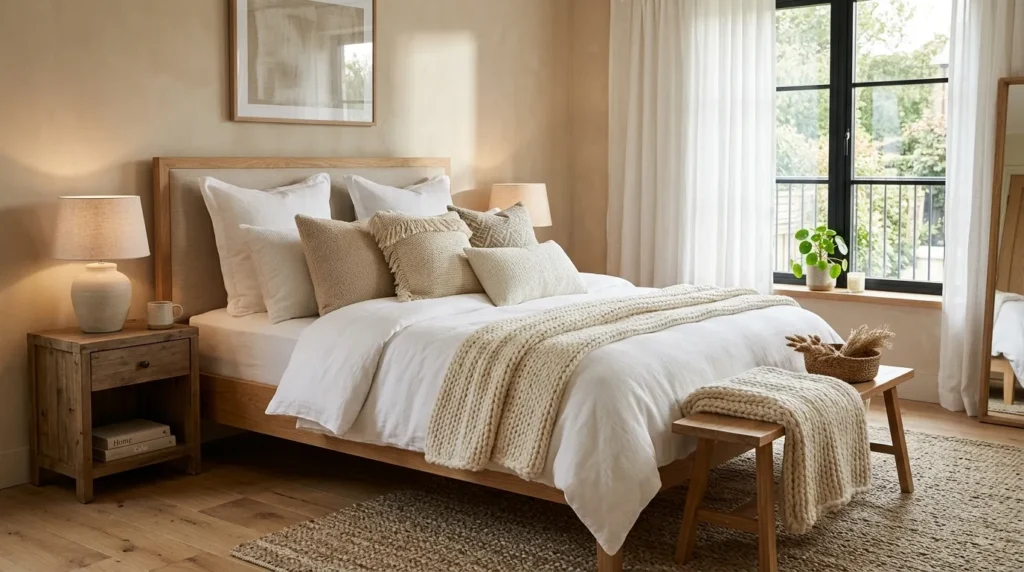
A beautifully layered bed instantly becomes the focal point of the room. Combining soft sheets, plush comforters, textured blankets, and decorative pillows creates depth that makes the entire space feel more welcoming. The secret is mixing materials that look inviting while remaining practical for daily use. Cotton, linen, velvet, and chunky knit fabrics work exceptionally well together. Instead of relying on one bulky blanket, layering different pieces creates a balanced appearance that feels intentional and stylish without looking overly formal or difficult to maintain.
The transformation can be dramatic even without changing furniture or wall colors. A thoughtfully dressed bed introduces softness and visual warmth that naturally encourages relaxation. In my experience, adding multiple textures creates a space that feels professionally designed while remaining highly functional. Seasonal adjustments are simple because individual layers can be added or removed as temperatures change. This flexibility makes the room comfortable throughout the year while helping maintain a polished appearance that feels welcoming every single day.
2. Warm Neutral Palette
Bullet Points
- Creates a calming atmosphere
- Works with many decorating styles
- Makes spaces feel larger
- Provides timeless visual appeal
- Easy to refresh with accessories
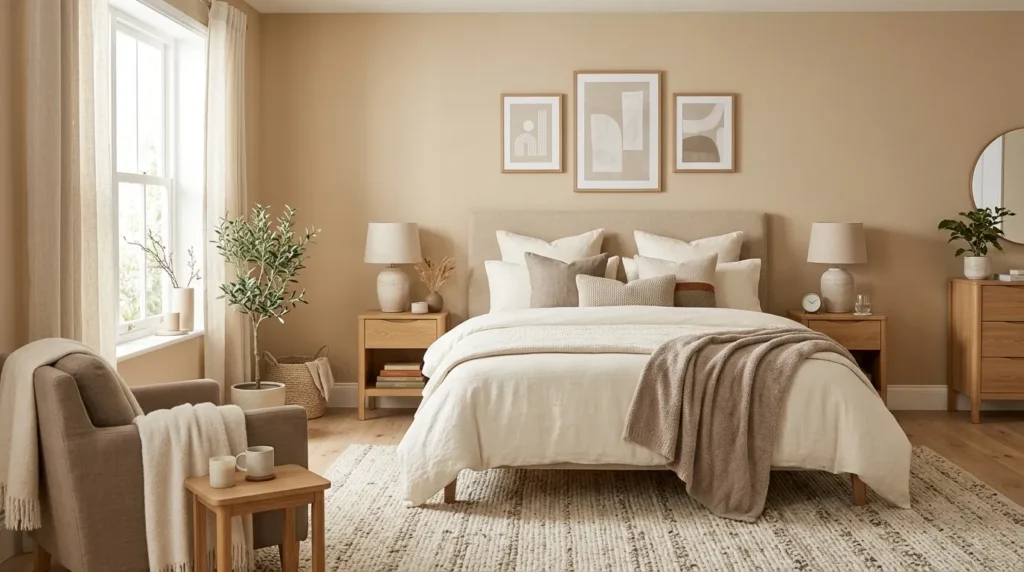
Color has a powerful effect on how a room feels. Warm neutral shades such as cream, beige, taupe, soft brown, and warm white create an environment that immediately feels relaxing and balanced. These colors reflect light gently and help eliminate visual harshness that can make a room feel cold or uninviting. Instead of overwhelming the space, warm tones provide a soothing backdrop that allows furniture, textiles, and decorative accents to stand out naturally without creating visual clutter.
One reason designers consistently recommend warm neutrals is their versatility. They complement wood furniture, metal accents, woven textures, and nearly every decorative style imaginable. I’ve noticed that rooms decorated with soft neutral palettes tend to feel welcoming regardless of changing trends. Homeowners can easily update the look through pillows, artwork, or seasonal accessories without repainting walls. The result is a timeless environment that remains stylish while providing the comfort and tranquility many people seek in their personal retreat.
3. Soft Lighting
Bullet Points
- Enhances relaxation before sleep
- Reduces harsh shadows
- Creates visual warmth
- Improves evening ambiance
- Adds depth throughout the room
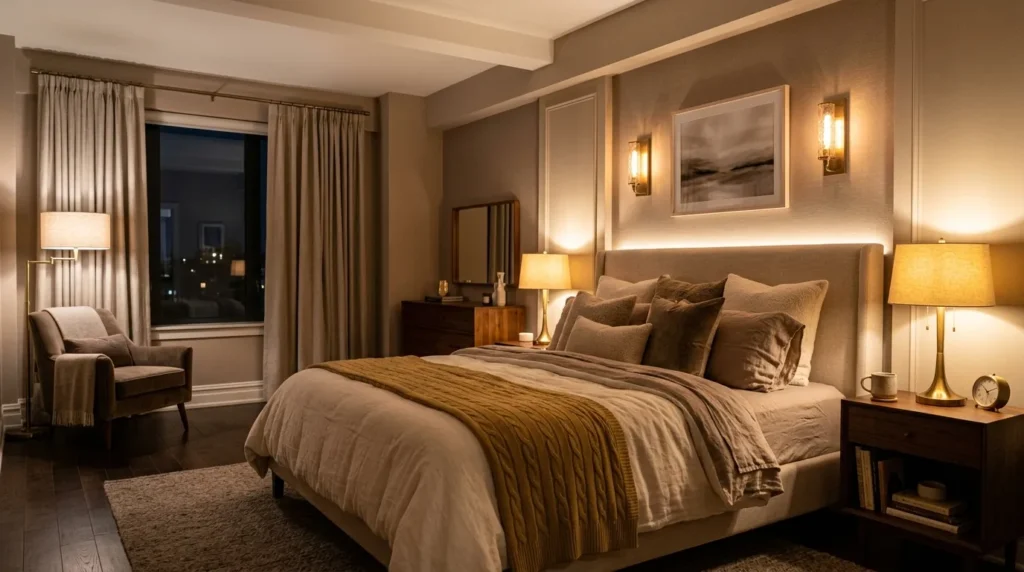
Lighting often determines whether a room feels comfortable or sterile. Bright overhead fixtures alone rarely create a relaxing atmosphere. Instead, combining bedside lamps, wall sconces, table lamps, and warm-toned bulbs helps establish a softer environment. Multiple light sources allow you to control brightness levels throughout the day while creating gentle layers of illumination. Warm white bulbs are particularly effective because they produce a golden glow that feels inviting rather than clinical, helping transform ordinary evenings into a more peaceful experience.
The difference becomes especially noticeable after sunset. Soft lighting creates pockets of warmth that make the room feel intimate and restful. That’s why many designers recommend using several smaller light sources instead of relying on one central fixture. This approach reduces glare while highlighting textures and decorative elements throughout the space. Practical benefits are equally important because adjustable lighting improves functionality for reading, relaxing, and preparing for sleep. The result is a room that feels both beautiful and highly livable every day.
4. Natural Wood Accents
Bullet Points
- Adds warmth and texture
- Brings nature indoors
- Complements neutral palettes
- Creates timeless character
- Works in many design styles
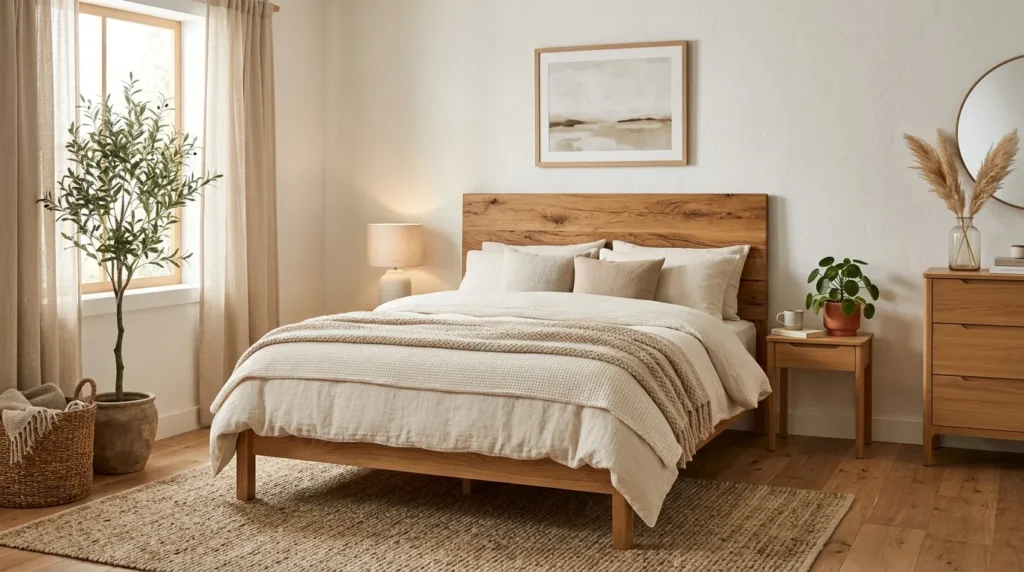
Natural wood introduces an organic quality that instantly makes interiors feel more welcoming. Whether incorporated through bed frames, nightstands, benches, shelving, or decorative accessories, wood provides visual warmth that manufactured materials often cannot replicate. The unique grain patterns and natural color variations add authenticity and character. Lighter woods create an airy appearance while darker finishes contribute depth and richness. Both options can help balance soft textiles and painted surfaces, resulting in a more layered and visually appealing environment.
I’ve seen this approach work beautifully in both modern and traditional homes. Wood elements help prevent rooms from feeling flat by introducing texture and natural variation. They also pair exceptionally well with soft fabrics, woven baskets, greenery, and neutral color schemes. Beyond aesthetics, quality wood furniture often remains stylish for decades, making it a worthwhile investment. The combination of durability, beauty, and warmth explains why natural materials continue to be a favorite choice among interior designers seeking comfortable, timeless spaces.
5. Plush Area Rugs
Bullet Points
- Adds softness underfoot
- Improves room comfort
- Reduces noise levels
- Defines furniture arrangements
- Introduces texture and warmth
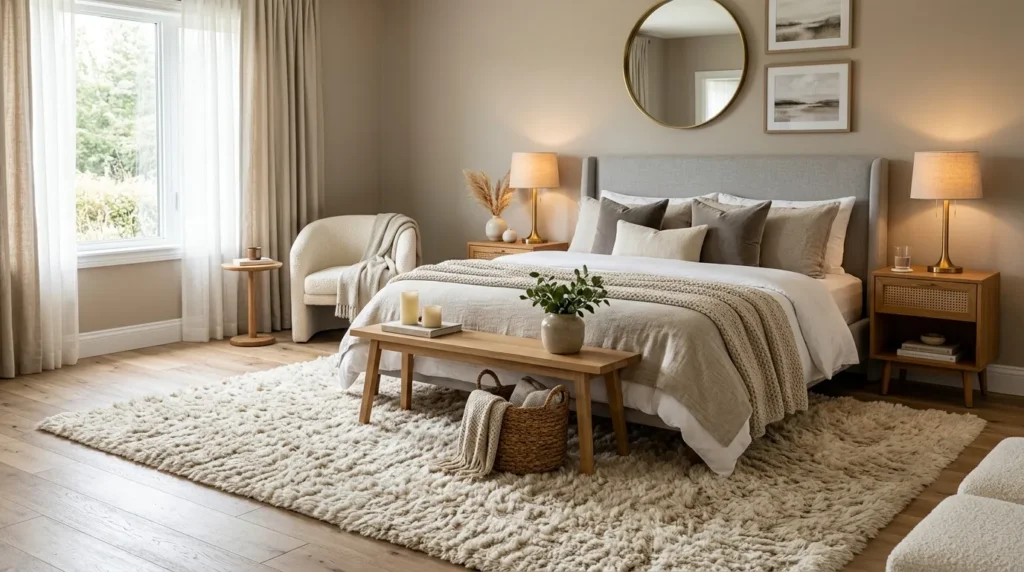
Few things feel as comforting as stepping onto a soft rug first thing in the morning. Area rugs provide an immediate sense of warmth while helping soften hard flooring surfaces. They add texture, absorb sound, and make the room feel more complete. Large rugs positioned beneath the bed create a cohesive appearance while extending softness beyond the sleeping area. Materials such as wool, high-pile synthetics, and textured blends are popular choices because they combine comfort with long-lasting performance.
Beyond comfort, rugs play an important role in defining the visual structure of a room. They help anchor furniture arrangements and create a sense of intentional design. I’ve noticed that even simple rooms often feel significantly more inviting after adding a well-sized rug. Patterns can introduce subtle interest, while solid colors maintain a calm and peaceful atmosphere. Choosing the right rug allows homeowners to enhance comfort without making major changes, creating a more welcoming environment that feels warm and thoughtfully designed.
6. Chunky Knit Textures
Bullet Points
- Adds instant warmth
- Creates visual depth
- Enhances comfort levels
- Works in every season
- Complements modern and rustic styles
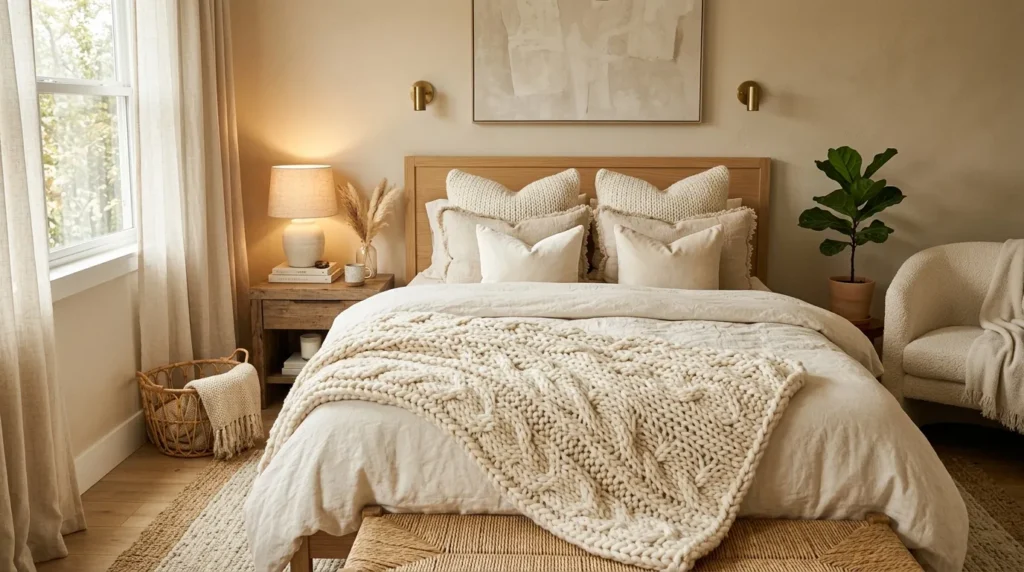
Nothing makes a bedroom feel more inviting than thick, textured fabrics that encourage relaxation. Chunky knit throws, woven blankets, oversized cushions, and textured poufs create a welcoming atmosphere that instantly softens the room. These materials add depth and dimension while making the bed look more luxurious. Layering textured accessories over simple bedding creates contrast without overwhelming the space. The combination feels casual, comfortable, and effortlessly stylish, making it easy to achieve a designer-inspired look without investing in expensive furniture upgrades.
The beauty of chunky knit accents lies in their versatility. They work equally well in modern, farmhouse, Scandinavian, and traditional interiors. I’ve noticed that even simple bedrooms gain a stronger sense of warmth once textured layers are introduced. During colder months, these pieces provide physical comfort, while throughout the year they maintain visual interest. Choosing neutral shades such as cream, oatmeal, or soft gray ensures a timeless appearance that blends easily with changing decor trends and seasonal updates.
7. Reading Corner
Bullet Points
- Creates a relaxing retreat
- Encourages quiet time
- Adds functionality
- Makes use of unused space
- Enhances overall comfort
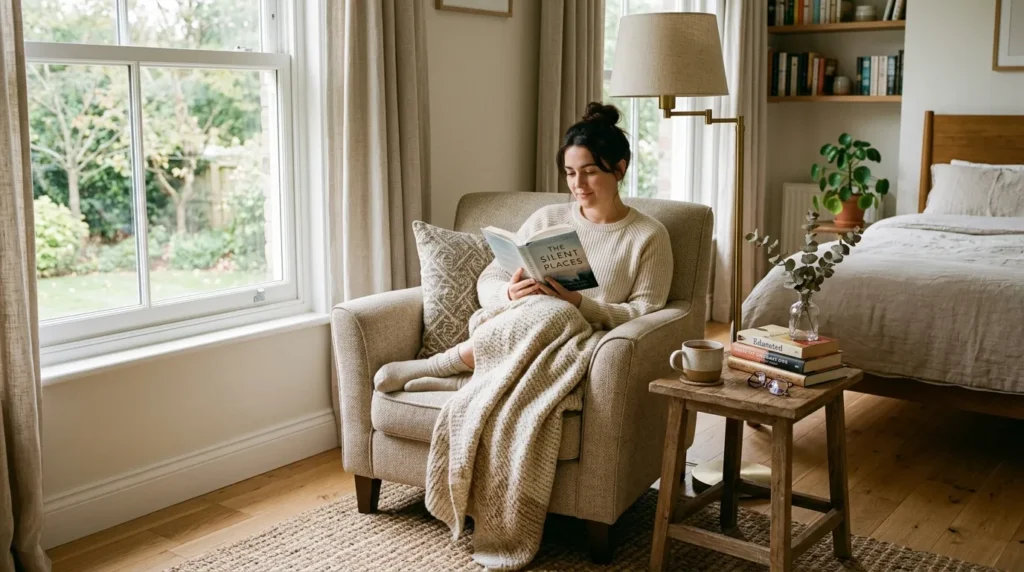
A dedicated reading corner transforms a bedroom into more than just a place to sleep. Even a small area with a comfortable chair, soft blanket, and side table can become a favorite spot for relaxation. Positioning the seating near a window allows natural light to enhance the experience during daytime hours. A floor lamp provides additional illumination in the evening, creating a comfortable environment for reading, journaling, or simply unwinding after a busy day.
I’ve seen this work especially well in larger bedrooms where empty corners often feel disconnected from the rest of the space. A thoughtfully designed reading area adds purpose while enhancing the room’s overall atmosphere. Soft textiles, a small rug, and a few decorative accents help define the zone without requiring major renovations. The result is a personal retreat that encourages slowing down and enjoying quiet moments, making the bedroom feel more functional, balanced, and welcoming.
8. Woven Decor
Bullet Points
- Introduces natural texture
- Adds organic character
- Enhances warmth
- Complements neutral designs
- Creates visual interest
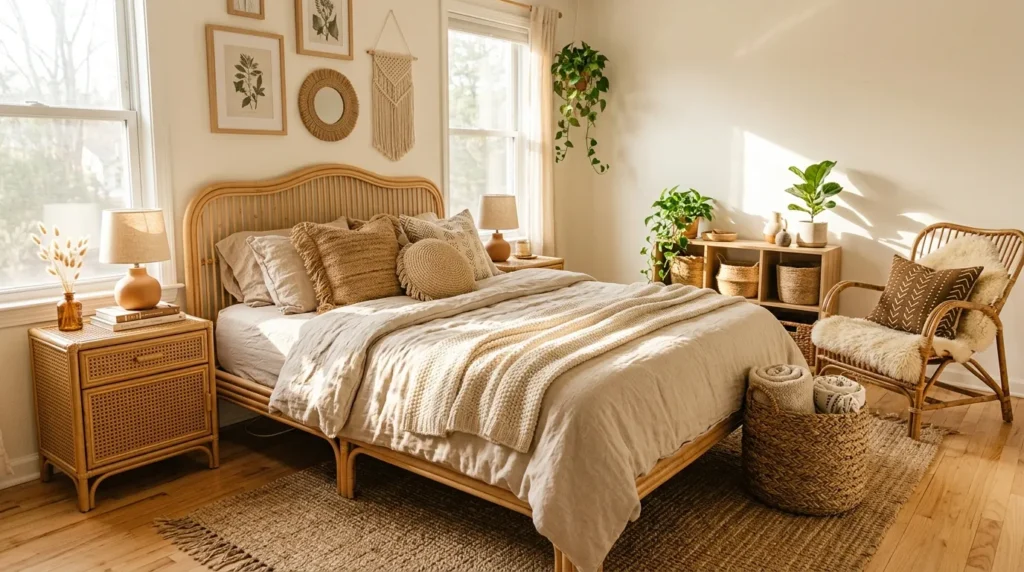
Natural woven materials have become increasingly popular because they bring warmth and authenticity into interiors. Baskets, rattan furniture, wicker lampshades, woven wall decor, and cane accents introduce texture without adding visual heaviness. These elements connect indoor spaces with nature while maintaining a relaxed, comfortable appearance. Their neutral tones blend seamlessly with various color palettes, making them easy to incorporate into existing decor without requiring major changes or expensive redesigns.
In my experience, woven accessories help soften modern interiors that might otherwise feel too sleek or sterile. The handcrafted appearance creates a sense of character that machine-made materials often lack. These decorative pieces are also practical, particularly baskets that provide attractive storage solutions. When combined with soft fabrics and warm lighting, woven accents contribute to a layered design that feels comfortable, stylish, and timeless while helping create a more inviting atmosphere throughout the room.
9. Blackout Curtains
Bullet Points
- Improves sleep quality
- Enhances privacy
- Reduces outside distractions
- Adds softness to walls
- Supports a restful environment
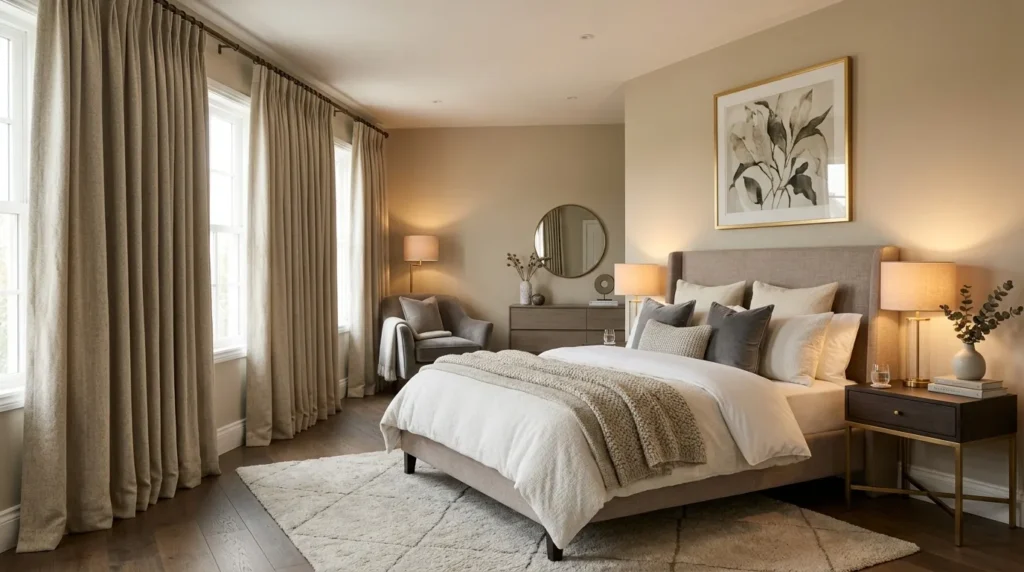
Window treatments play a major role in creating a relaxing sleeping environment. Blackout curtains help block unwanted light from street lamps, neighboring houses, and early morning sunlight. This simple upgrade can significantly improve sleep quality while adding softness and elegance to the room. Choosing floor-length curtains creates a polished appearance that visually increases ceiling height and makes the room feel more refined. Fabrics such as linen blends, velvet, and textured cotton provide both style and functionality.
Beyond their practical benefits, blackout curtains contribute to the overall comfort of the space. I’ve noticed they create a sense of enclosure that makes bedrooms feel more peaceful and secure. Their fabric texture introduces another layer of softness while helping reduce noise levels from outside. Coordinating curtain colors with bedding or wall tones creates visual harmony that ties the room together. This combination of beauty and practicality makes quality window treatments a worthwhile investment.
10. Personal Touches
Bullet Points
- Makes the room unique
- Reflects personality
- Creates emotional connection
- Enhances visual interest
- Adds meaningful character
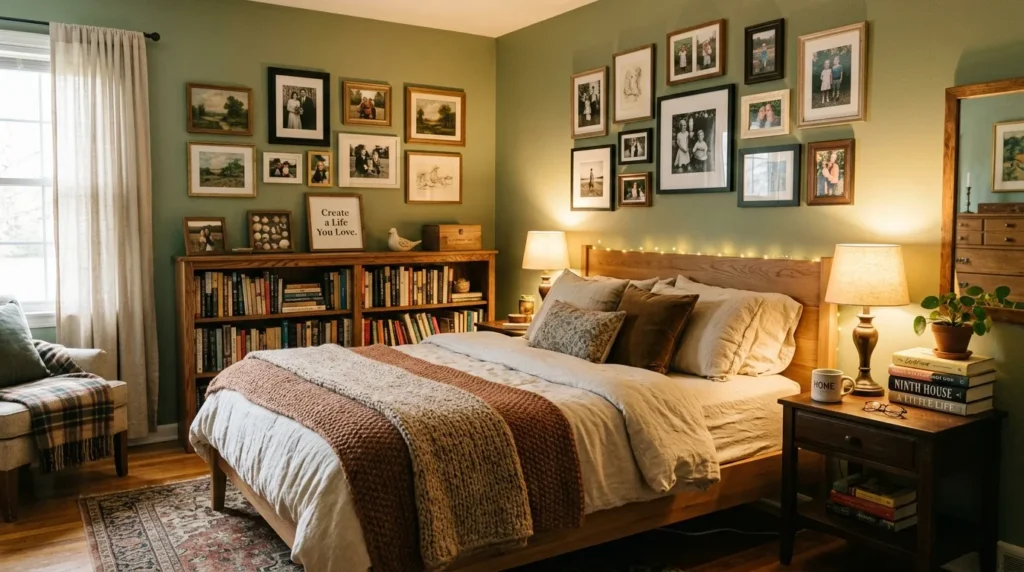
The most memorable bedrooms always include personal details that tell a story. Family photographs, favorite books, travel souvenirs, artwork, heirloom pieces, and meaningful decor help transform a generic room into a deeply personal sanctuary. These elements create emotional warmth while reflecting individual style and experiences. Instead of following trends blindly, incorporating meaningful accessories ensures the space feels authentic and connected to the people who use it every day.
That’s why many designers recommend balancing decorative trends with personal items. I’ve seen this approach work well in many homes because it creates interiors that feel lived-in rather than staged. Personal touches add character and prevent a room from feeling overly formal or impersonal. The goal is not clutter but thoughtful curation. When meaningful pieces are displayed intentionally, they contribute to a comforting atmosphere that supports relaxation while making the space feel uniquely yours.