10 Tiny Living Rooms Ideas for Stylish Small Homes
Tiny Living Rooms Ideas
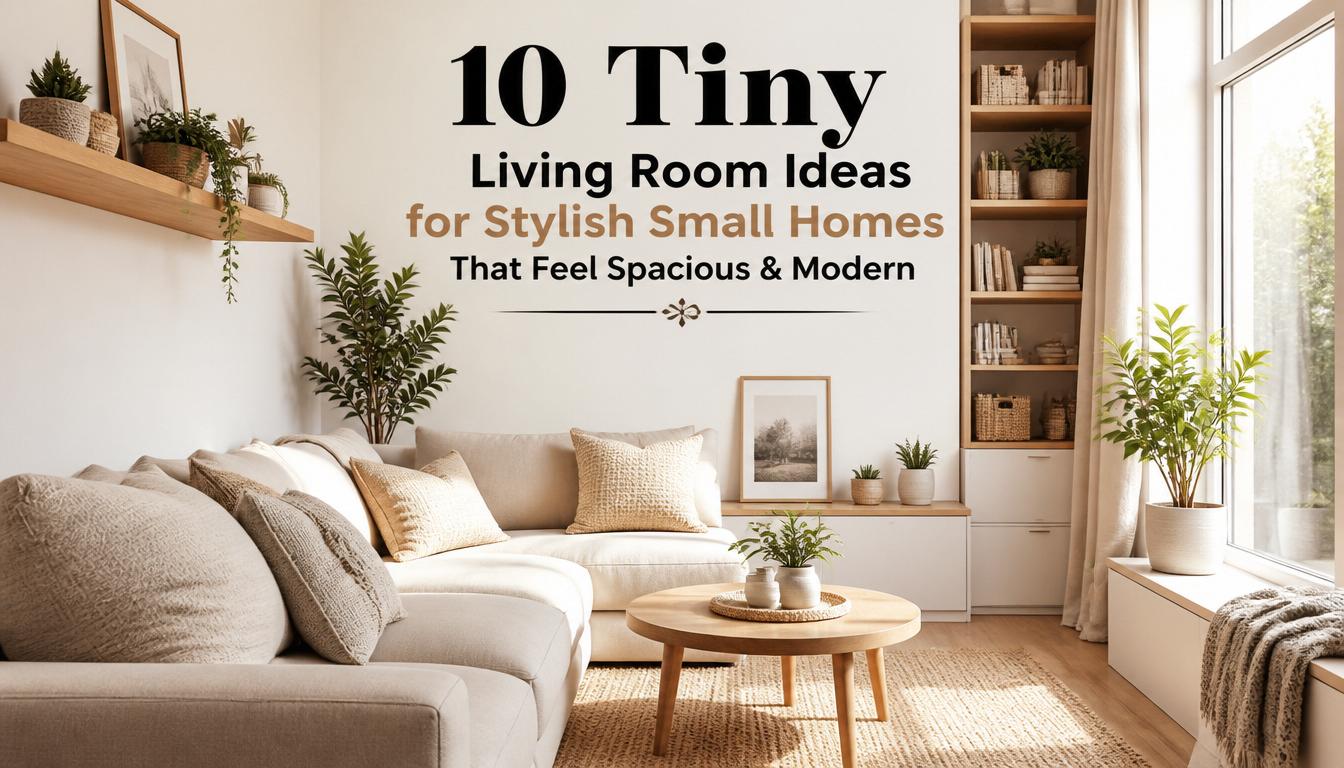
Small living rooms often get a bad reputation. Many homeowners and renters assume limited square footage means sacrificing comfort, style, or functionality. In reality, some of the most beautiful and memorable interiors are found in compact spaces where every design choice is intentional. A smaller room encourages smarter decorating, thoughtful furniture selection, and creative storage solutions that make the space feel both practical and inviting.
If you’re anything like me, you’ve probably looked at your living room and wondered how to make it feel larger without knocking down walls or starting a costly renovation. The good news is that creating a stylish and comfortable space doesn’t require extra square footage. It simply requires the right approach. From choosing furniture that works harder to maximizing natural light and incorporating visual tricks that create openness, there are countless ways to make a small room feel surprisingly spacious.
I’ve noticed that many homeowners focus only on size while overlooking the power of layout, color, texture, and organization. That’s often where the biggest transformations happen. Even a few simple adjustments can dramatically improve how a room looks and functions. Whether you’re decorating a city apartment, a cozy cottage, a townhouse, or a compact family home, thoughtful design choices can help you create a room that feels welcoming, balanced, and effortlessly stylish.
The ideas below combine practicality with beautiful design, helping you make the most of every square foot while creating a space you’ll genuinely enjoy spending time in every day.
Table of Contents
1. Floating Furniture
Learn how strategic furniture placement can make a room feel larger and more open.
2. Light Color Layers
Discover color choices that visually expand compact spaces.
3. Vertical Storage
Maximize wall space while reducing floor clutter.
4. Multiuse Pieces
Choose furniture that delivers style and functionality.
5. Statement Mirrors
Reflect light and create the illusion of additional space.
6. Slim Profile Seating
Select furniture designed specifically for compact rooms.
7. Open Leg Designs
Create visual breathing room with elevated furniture.
8. Cozy Texture Mix
Add warmth without overwhelming the space.
9. Smart Corner Styling
Turn overlooked corners into useful design features.
10. Defined Zones
Create organization and purpose within a small footprint.
1. Floating Furniture
Quick Benefits
- Creates better flow
- Improves visual balance
- Makes rooms feel larger
- Enhances functionality
- Adds designer appeal
Why It Works
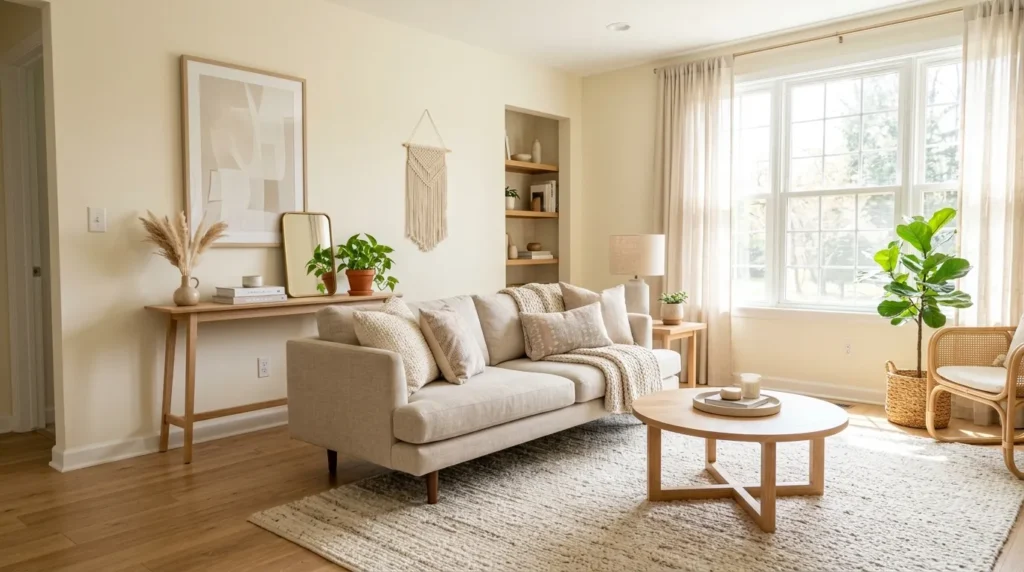
One mistake many homeowners make is pushing every piece of furniture directly against the wall. While this seems like it would create more space, it often makes a room feel flat and disconnected. Floating furniture slightly away from the walls creates depth and allows the room to breathe visually. Even moving a sofa forward by a few inches can create a more intentional layout. This arrangement encourages conversation, improves circulation, and helps the room feel professionally designed rather than crowded around the perimeter.
How To Style It
Start by positioning your main sofa a few inches from the wall if space allows. Add a narrow console table behind it to introduce storage and styling opportunities. Use an area rug large enough to anchor all major furniture pieces together. In small spaces, every layout decision matters, and creating defined seating zones can make the room feel significantly larger. I’ve seen this simple adjustment completely transform compact living rooms by creating a stronger sense of balance and openness.
2. Light Color Layers
Quick Benefits
- Brightens the room
- Expands visual space
- Creates cohesion
- Reflects natural light
- Supports timeless design
Why It Works
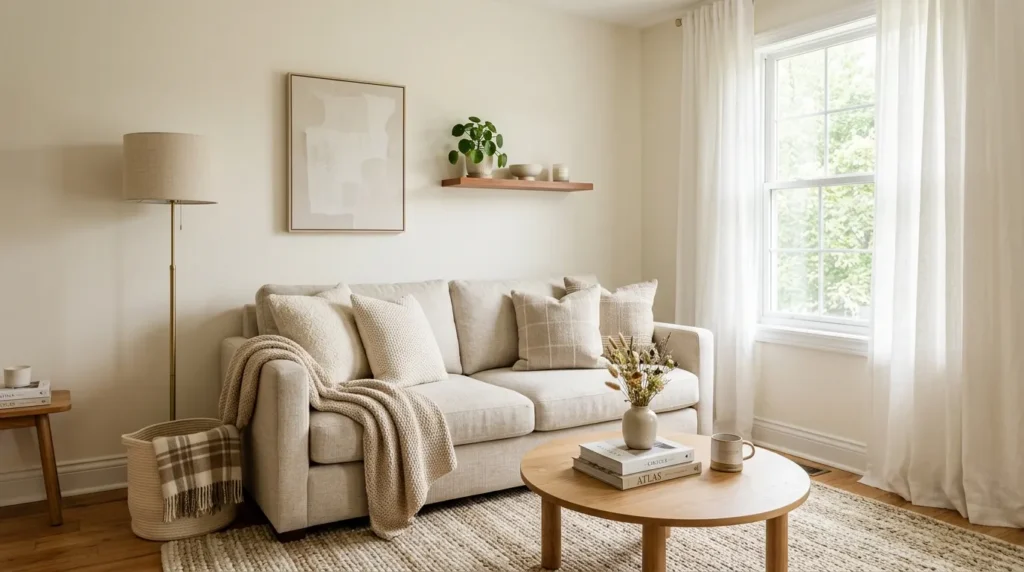
Color plays a major role in how spacious a room feels. Lighter shades reflect more light, helping walls visually recede and creating a greater sense of openness. Soft whites, warm creams, light grays, pale taupes, and gentle beige tones work especially well in compact living areas. Rather than making the room feel boring, these shades create a sophisticated backdrop that allows furniture, artwork, and textures to stand out naturally. The result is a space that feels calm, airy, and inviting throughout the day.
How To Style It
Layer various shades within the same color family to create depth without introducing visual clutter. Pair a cream sofa with ivory pillows, beige curtains, and a soft textured rug. Natural wood accents add warmth while preventing the space from feeling sterile. That’s why many designers recommend tonal decorating for smaller rooms. The subtle variation keeps the design interesting while maintaining a cohesive look that helps maximize the feeling of spaciousness.
3. Vertical Storage
Quick Benefits
- Saves floor space
- Improves organization
- Draws the eye upward
- Adds storage capacity
- Enhances room height
Why It Works
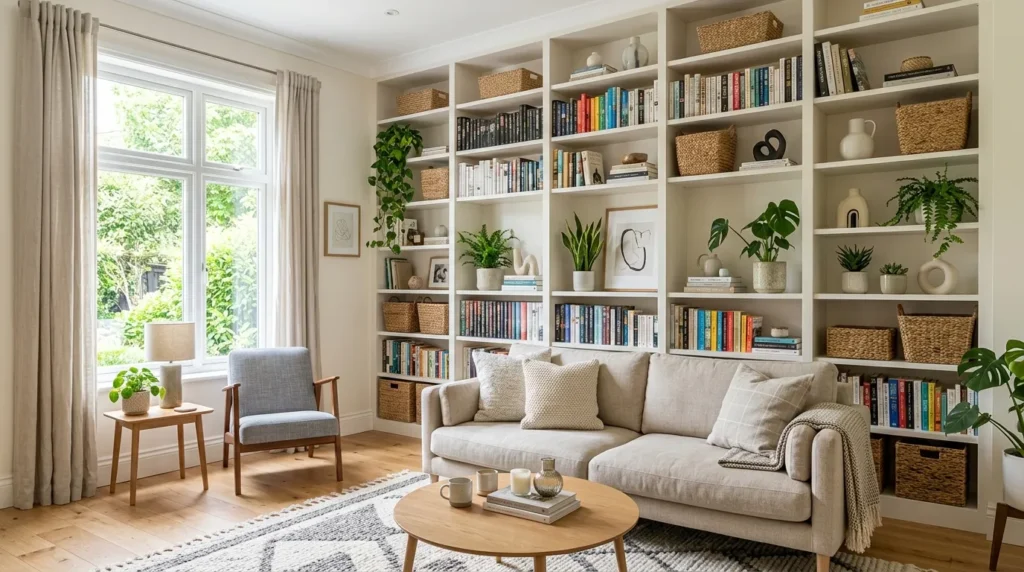
When floor space is limited, walls become one of your greatest design assets. Vertical storage helps maximize every available inch while keeping surfaces clear and organized. Tall bookcases, floating shelves, wall-mounted cabinets, and ladder shelving units provide valuable storage without increasing visual clutter. By drawing attention upward, these features also make ceilings appear higher. This simple visual trick can significantly improve how spacious a room feels while adding practical functionality for everyday living.
How To Style It
Choose shelving that complements the room’s overall design aesthetic. Open shelves work beautifully for displaying books, plants, baskets, and decorative accessories. Use a mix of functional and decorative items to avoid an overcrowded appearance. In my experience, maintaining some empty space on shelves is just as important as the objects themselves. Strategic styling creates a curated look while preserving the sense of openness that small rooms need to feel comfortable.
4. Multiuse Pieces
Quick Benefits
- Maximizes functionality
- Reduces clutter
- Saves valuable space
- Increases flexibility
- Supports modern living
Why It Works
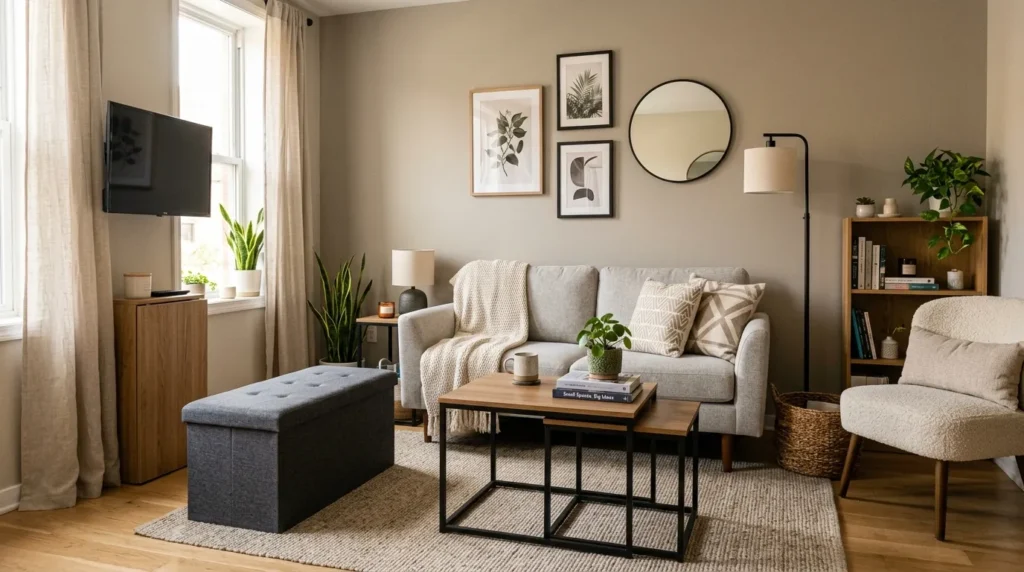
Furniture that serves multiple purposes is one of the smartest investments for compact homes. Instead of filling the room with separate pieces, multi-functional furniture combines storage, seating, and practicality within a smaller footprint. Ottomans with hidden storage, nesting tables, lift-top coffee tables, and sleeper sofas help maximize usability while maintaining a clean and organized appearance. These versatile pieces allow homeowners to enjoy greater functionality without overwhelming the room with excess furniture.
How To Style It
Look for furniture that blends seamlessly into your existing decor rather than appearing purely utilitarian. Storage ottomans can double as coffee tables when topped with a decorative tray. Nesting tables provide flexibility for entertaining while remaining compact when not in use. I’ve noticed that homes with thoughtfully selected multiuse furniture often feel larger because every piece earns its place. This approach supports both style and practicality while helping maintain an uncluttered environment.
5. Statement Mirrors
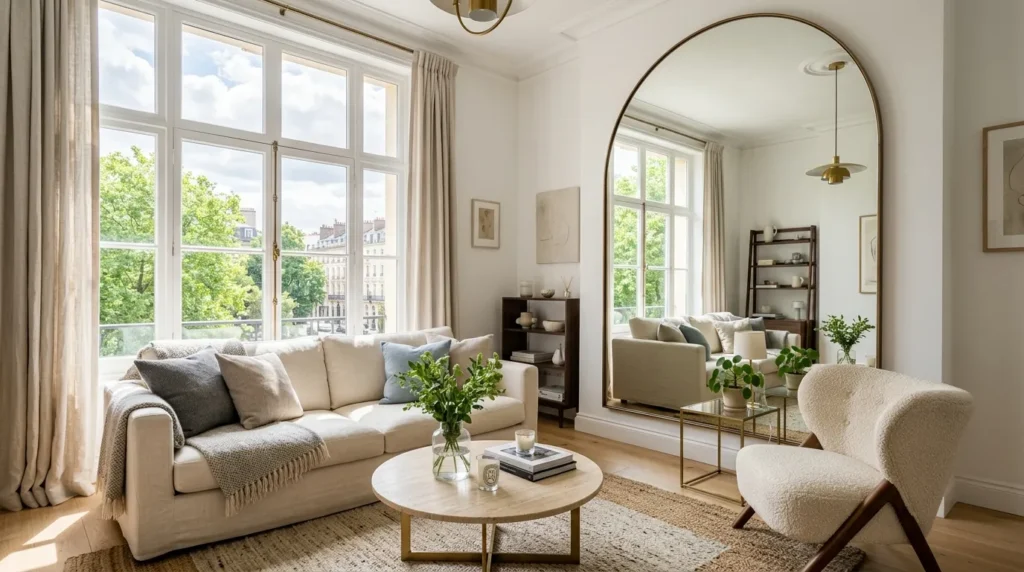
Quick Benefits
- Reflects natural light
- Creates visual depth
- Makes rooms appear larger
- Adds decorative impact
- Enhances brightness
Why It Works
Few decorating tools create the illusion of space as effectively as mirrors. A well-placed mirror reflects light, views, and surrounding decor, making the room feel larger than its actual dimensions. Large mirrors are particularly effective in compact living rooms because they visually double portions of the space. Whether framed in wood, metal, or a modern minimalist design, mirrors contribute both beauty and functionality while helping eliminate the enclosed feeling common in smaller rooms.
How To Style It
Position mirrors opposite windows whenever possible to maximize reflected daylight. Oversized floor mirrors can create dramatic impact, while gallery-style arrangements offer a more decorative approach. Pair mirrors with soft lighting and neutral decor to amplify their effect. One simple trick I always suggest is treating a mirror like artwork rather than an afterthought. When thoughtfully incorporated into the design, it becomes a stylish focal point that contributes significantly to the room’s overall openness.
6. Slim Profile Seating
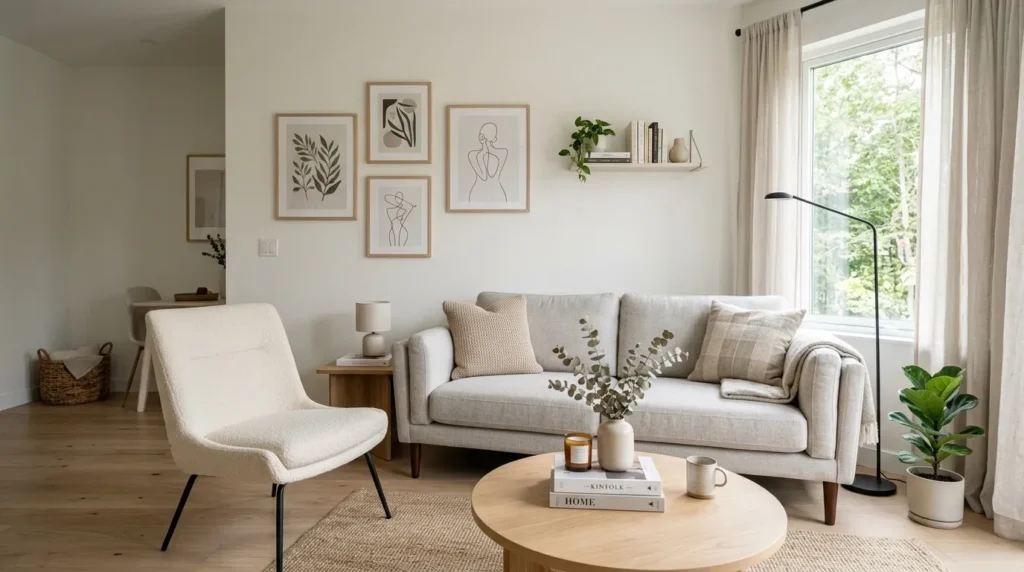
Quick Benefits
- Saves valuable floor space
- Creates a lighter visual look
- Improves room flow
- Supports modern styling
- Makes small rooms feel larger
Why It Works
Bulky furniture is one of the fastest ways to make a small living room feel crowded. Slim-profile seating offers the same comfort while taking up significantly less visual and physical space. Sofas and chairs with narrower arms, streamlined silhouettes, and shallower depths allow more open floor area to remain visible. This helps the room feel airy rather than cramped. I’ve noticed that many homeowners are surprised by how much larger a room appears simply by replacing oversized furniture with more proportionate pieces designed for compact living.
How To Style It
Choose sofas with clean lines and elevated legs to enhance the sense of openness. Neutral upholstery colors help maintain a bright and cohesive appearance, while textured throw pillows add personality without creating clutter. Pair slim seating with lightweight accent tables rather than bulky furniture pieces. In smaller spaces, every inch matters, so selecting furniture scaled to the room’s dimensions creates a balanced layout that feels comfortable, stylish, and highly functional for everyday use.
7. Open Leg Designs
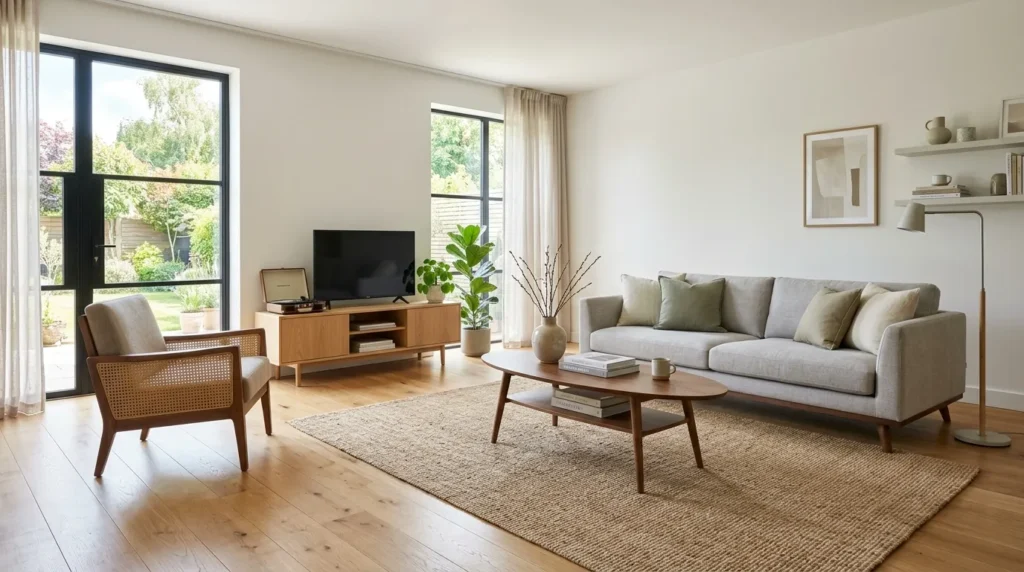
Quick Benefits
- Increases visual space
- Creates a lighter appearance
- Improves room flow
- Enhances modern aesthetics
- Makes cleaning easier
Why It Works
Furniture that sits directly on the floor can sometimes make a room feel heavy and crowded. Pieces with exposed legs allow light and sightlines to travel underneath, creating a greater sense of openness. Sofas, chairs, consoles, and coffee tables with elevated designs reveal more floor space, which visually expands the room. This simple design principle is widely used by interior designers because it helps smaller spaces feel less confined while maintaining functionality and comfort.
How To Style It
Look for furniture with wood, metal, or tapered legs that complement your decor style. Mid-century modern pieces are especially effective because they naturally feature elevated profiles and streamlined shapes. Pair them with an area rug that defines the seating zone while allowing portions of the floor to remain visible. One thing that works especially well is combining open-leg furniture with light flooring and neutral tones. This combination creates a bright, airy environment that feels larger than its actual footprint.
8. Cozy Texture Mix
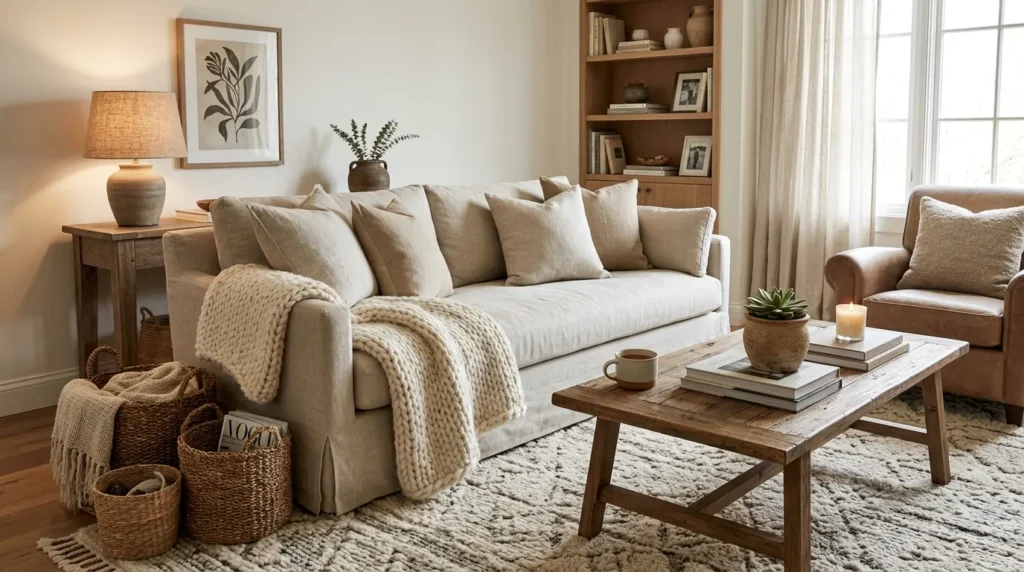
Quick Benefits
- Adds warmth and personality
- Creates visual depth
- Makes rooms feel inviting
- Enhances comfort
- Supports layered design
Why It Works
A small room should feel cozy, not cluttered. Texture is one of the best tools for adding richness and warmth without overwhelming the space. Layering materials such as linen, cotton, wool, wood, rattan, and woven fibers creates depth and visual interest while maintaining a clean aesthetic. Instead of relying on bold colors or excessive decor, texture introduces variety through materials and finishes. This approach helps compact rooms feel thoughtfully designed and welcoming rather than sparse or unfinished.
How To Style It
Start with foundational pieces such as a textured area rug and upholstered seating. Add knitted throws, woven baskets, linen curtains, and natural wood accents to build layers gradually. Stick to a cohesive color palette so the textures become the focus. I’ve seen this idea transform spaces that initially felt flat and uninspiring. The mix of soft and natural materials creates a comfortable atmosphere that encourages relaxation while maintaining a polished and sophisticated appearance.
9. Smart Corner Styling
Quick Benefits
- Maximizes unused space
- Adds functionality
- Improves organization
- Creates visual balance
- Enhances room character
Why It Works
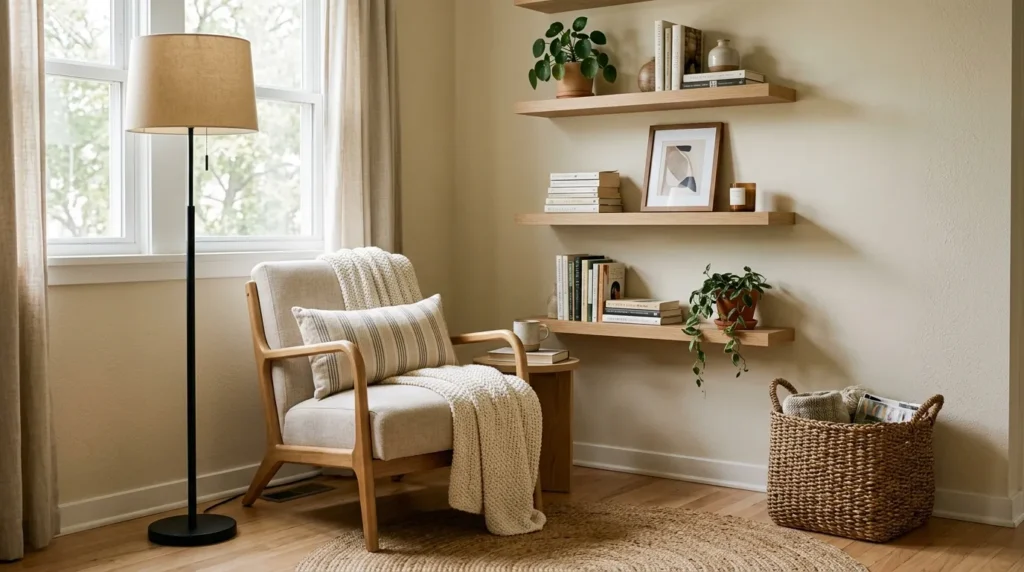
Corners are often underutilized, yet they hold tremendous potential in small living rooms. Rather than leaving these areas empty or allowing them to become clutter collection zones, thoughtful corner styling can increase both beauty and functionality. A compact reading nook, decorative shelving unit, plant display, or storage basket arrangement can transform an awkward corner into one of the most useful areas in the room. This helps maximize every square foot while contributing to a more intentional overall design.
How To Style It
Consider the room’s needs before styling a corner. A comfortable accent chair paired with a floor lamp creates a cozy reading retreat. Floating corner shelves provide display and storage opportunities without consuming floor space. Tall plants can add height and texture while softening architectural lines. One simple trick I always suggest is treating corners as design opportunities rather than leftover space. This mindset often leads to creative solutions that improve both aesthetics and everyday usability.
10. Defined Zones
Quick Benefits
- Improves organization
- Creates purpose
- Enhances functionality
- Supports daily routines
- Makes spaces feel larger
Why It Works
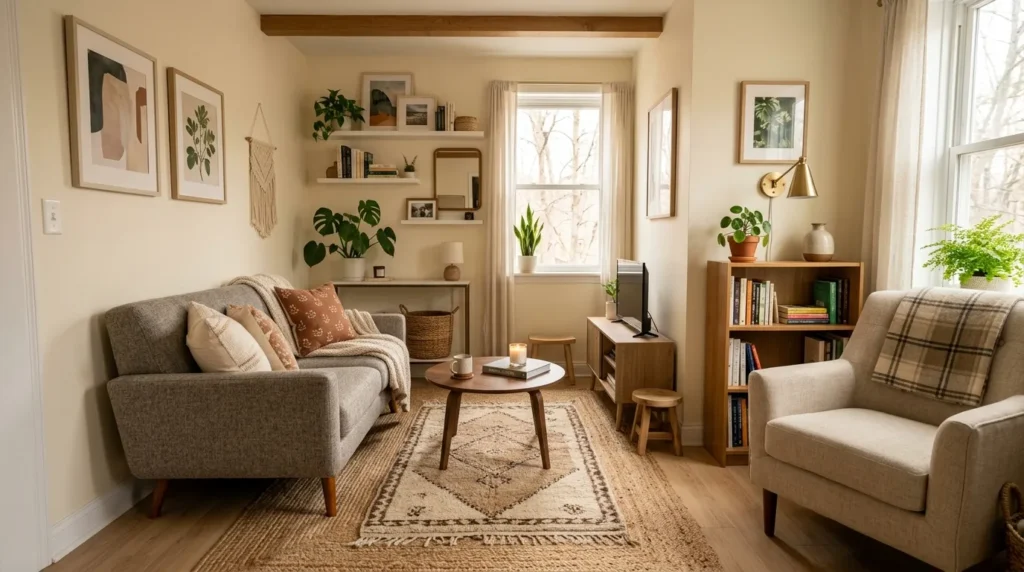
Even the smallest living room benefits from having clearly defined zones. Creating designated areas for relaxing, reading, working, or entertaining helps establish order and prevents the room from feeling chaotic. Visual boundaries give each section a purpose while maintaining an open layout. Area rugs, furniture placement, lighting, and decor can all help distinguish different functions without requiring physical dividers. This approach creates structure and makes the room feel more thoughtfully planned.
How To Style It
Use an area rug to anchor the primary seating arrangement while keeping other functional zones visually distinct. A small side table and lamp can define a reading corner, while a compact desk may create a subtle workspace. The goal is not to divide the room completely but to establish purpose within the available space. In my experience, even modest zoning strategies improve both organization and comfort, helping compact rooms function more efficiently while appearing larger and more cohesive.
Frequently Asked Questions
How do you make a tiny living room look bigger?
Using light colors, mirrors, open-leg furniture, and thoughtful furniture placement can visually expand a room. Keeping clutter to a minimum and maximizing natural light also helps create a more spacious appearance.
What furniture works best in a small living room?
Furniture with slim profiles, elevated legs, and multiple functions works particularly well. Storage ottomans, nesting tables, and compact sofas help maximize both comfort and efficiency.
Should small living rooms use dark colors?
Dark colors can work in moderation, but lighter shades generally help reflect light and create a more open feeling. Many designers recommend using darker tones as accents rather than dominant wall colors.
Are large rugs good for small spaces?
Yes. A properly sized rug can actually make a room feel larger by visually connecting furniture and defining a cohesive seating area.
How can I add storage without making the room feel crowded?
Use vertical storage solutions, floating shelves, hidden storage furniture, and decorative baskets. These options increase organization while preserving valuable floor space.
What is the biggest decorating mistake in small living rooms?
Overfilling the room with furniture is one of the most common mistakes. Choosing appropriately scaled pieces and maintaining clear pathways creates a more comfortable and functional layout.
Conclusion
Designing a beautiful small living room is less about square footage and more about making intentional choices. By focusing on layout, furniture scale, storage, lighting, and texture, even the most compact space can feel comfortable, functional, and stylish. Small rooms often encourage greater creativity because every design element serves a purpose. The result is a home that feels thoughtfully curated rather than crowded.
From floating furniture and vertical storage to statement mirrors and multi-functional pieces, these ideas demonstrate how strategic design can dramatically improve both appearance and usability. Many of these updates require minimal investment while delivering significant visual impact. The key is creating balance between practicality and style so the room supports everyday living without sacrificing personality.
Start with one or two ideas that fit your space and lifestyle. Small improvements often create the biggest transformations. As you gradually refine the room, you’ll discover that limited square footage doesn’t have to limit comfort, beauty, or functionality. With thoughtful design, your living room can become one of the most inviting spaces in your home.
Related Articles
- 12 Cozy Small Apartment Living Room Ideas
- 10 Modern Farmhouse Living Room Designs
- 11 Neutral Home Decor Ideas for Every Room
- 10 Small Bedroom Layout Ideas That Feel Bigger
- 12 Clever Storage Solutions for Tiny Homes