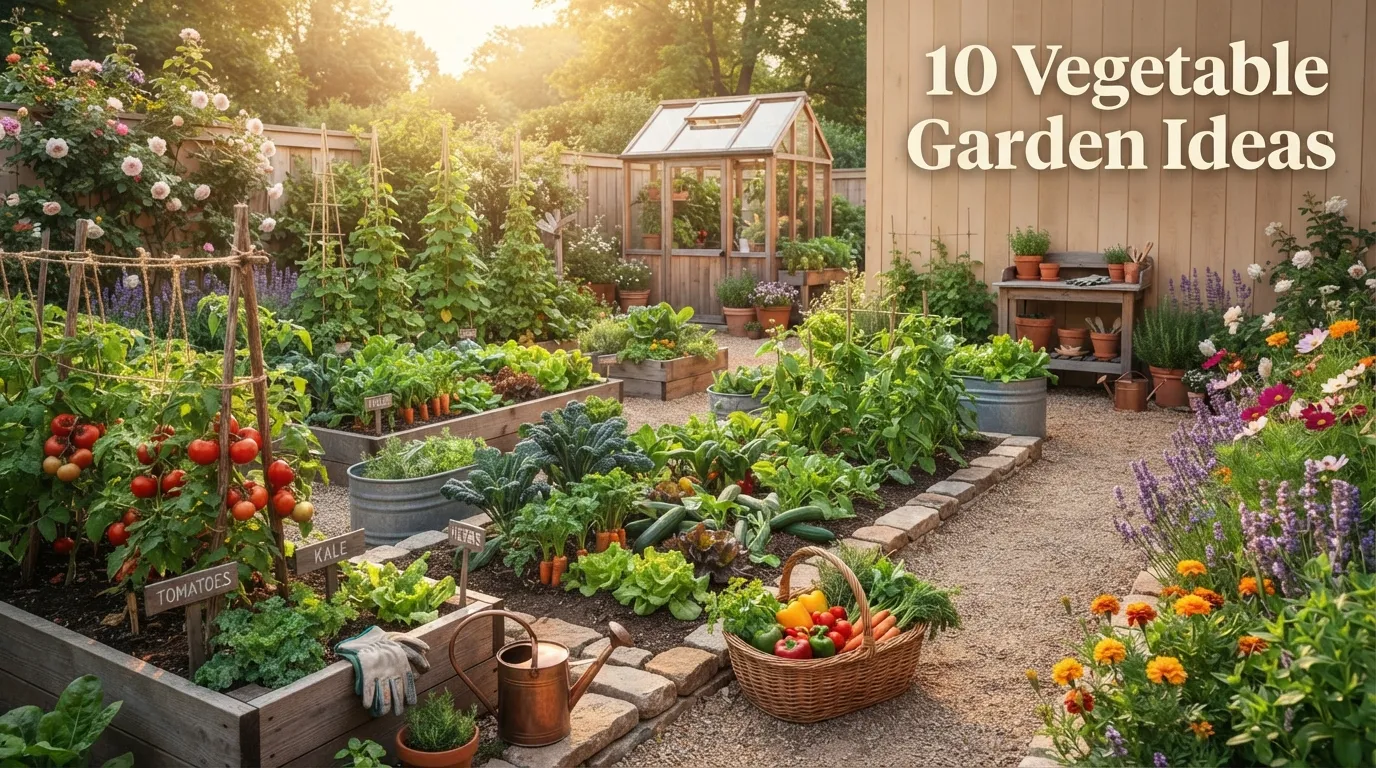
10 Vegetable Garden Ideas
Growing your own vegetables can turn even an ordinary backyard into a productive little retreat. There is something especially satisfying about stepping outside to pick fresh tomatoes for dinner, snipping herbs for a salad, or harvesting a handful of greens that you grew yourself. And you don’t need a huge property to enjoy that experience.
A vegetable garden can be as simple as a few containers on a patio or as structured as several raised beds arranged along a backyard fence. The key is choosing a setup that matches your available space, sunlight, time, and gardening experience. When the layout is practical, caring for your plants becomes much easier—and you’re more likely to keep gardening throughout the season.
One thing I’ve noticed with vegetable gardens is that the most successful-looking spaces aren’t necessarily the biggest ones. They usually have a clear layout, good access to the plants, and a thoughtful combination of crops. A little planning before planting can make a surprisingly big difference.
Whether you’re a first-time gardener, a renter with a sunny patio, or a homeowner ready to create a more productive backyard, these vegetable garden ideas can help you make the most of your growing space. You’ll find practical layouts, container solutions, raised beds, vertical options, and attractive ways to combine food production with everyday outdoor living.
Table of Contents
1. Classic Raised Beds
Create organized growing zones with elevated beds that make planting and harvesting easier.
2. Container Vegetable Garden
Grow fresh vegetables in pots when you have limited ground space.
3. Vertical Veggie Garden
Use trellises and vertical supports to grow upward and save valuable floor space.
4. Cottage Vegetable Garden
Blend edible crops with flowers and herbs for a relaxed, colorful garden.
5. Backyard Kitchen Garden
Place productive crops conveniently near the house for easy harvesting.
6. Small Corner Garden
Transform an unused backyard corner into a compact vegetable-growing area.
7. Wooden Crate Garden
Repurpose sturdy containers into flexible growing spaces for smaller crops.
8. Greenhouse Vegetable Garden
Extend the growing season and protect plants with a compact greenhouse setup.
9. Companion Planting Garden
Combine compatible vegetables, herbs, and flowers to create a diverse growing space.
10. Patio Harvest Garden
Combine containers and compact vegetables to create a productive outdoor retreat.
1. Classic Raised Beds
Quick Benefits
- Creates an organized garden layout
- Makes planting and harvesting easier
- Defines individual growing areas
- Works well for vegetables and herbs
- Gives the garden a polished appearance
Why It Works
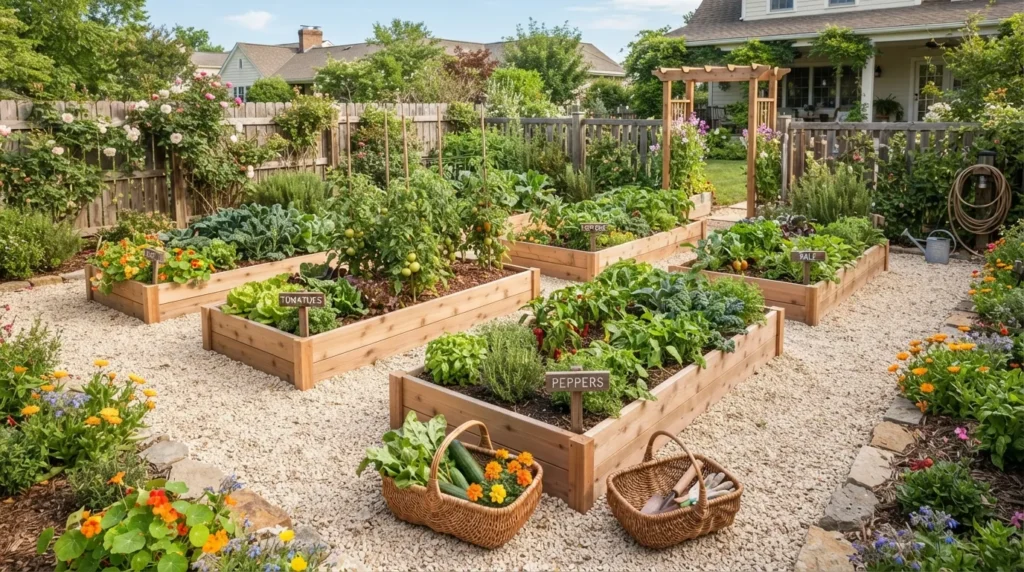
Raised beds are popular for good reason. They create clearly defined growing spaces while making the vegetable garden easier to organize and access. Instead of scattering vegetables throughout the yard, you can group crops into dedicated beds and plan the garden around how you actually use it.
They can also make a backyard vegetable garden feel more intentional. Simple wooden frames surrounded by pathways can look attractive enough to become part of the landscape rather than something hidden away.
Another advantage is flexibility. You can dedicate one bed to leafy greens, another to tomatoes and peppers, and another to root vegetables or herbs. That organization makes seasonal planning easier.
How To Style It
Use untreated or appropriately garden-safe materials designed for outdoor use, and choose a layout that leaves comfortable walking space between beds. Straight rows create a traditional appearance, while a square or U-shaped arrangement can work well when space allows.
Keep taller crops toward the back or north side where appropriate so they don’t unnecessarily shade shorter plants. Add gravel, mulch, or stepping stones around the beds to create clean pathways.
For a more decorative appearance, mix vegetables with a few edible flowers or herbs. Wooden plant markers can also add charm while helping you remember what you’ve planted.
2. Container Vegetable Garden
Quick Benefits
- Ideal for patios and balconies
- Works without traditional garden beds
- Easy to rearrange
- Suitable for renters
- Allows vegetables to grow close to the kitchen
Why It Works
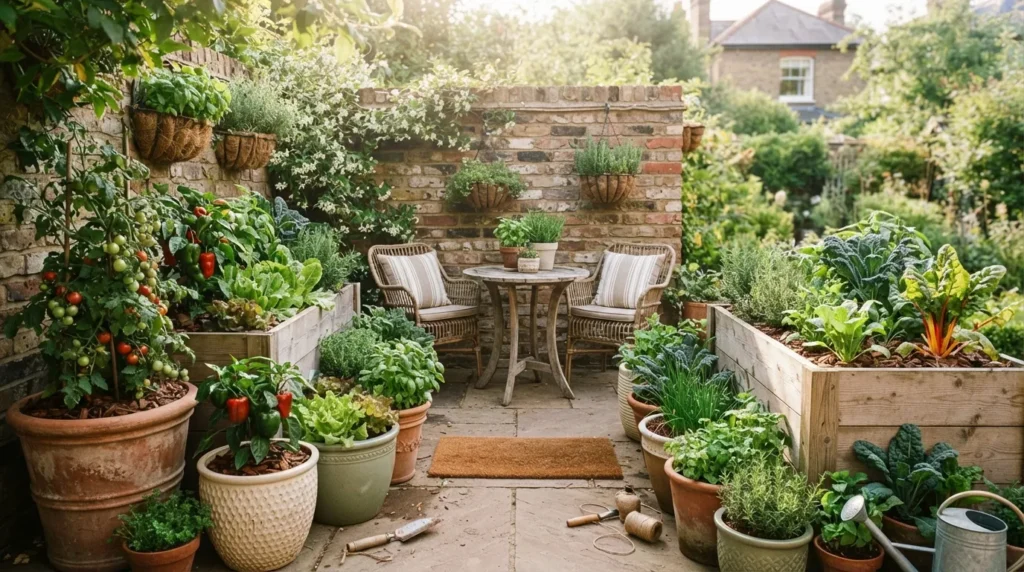
You don’t need a backyard lawn to grow vegetables. Containers make gardening accessible to people with patios, balconies, decks, small courtyards, and other limited spaces.
The flexibility is one of the biggest advantages. If a plant needs more sunlight, you can often move the container. If you want to refresh the arrangement, you can rearrange the pots without rebuilding an entire garden.
Containers also allow you to experiment with a small number of crops before committing to a larger garden. A few tomato plants, peppers, lettuce, herbs, or compact varieties can provide a surprisingly productive harvest when cared for properly.
How To Style It
Choose containers large enough for the mature plants you intend to grow and make sure they have adequate drainage. Large pots generally provide more room for roots and can be easier to manage than numerous tiny containers.
Group pots together rather than scattering them across the patio. Use matching or complementary containers for a cohesive look.
Place taller vegetables toward the back and smaller herbs or greens toward the front. A narrow plant stand or tiered shelving unit can add vertical layers while keeping the arrangement organized.
3. Vertical Veggie Garden
Quick Benefits
- Maximizes limited garden space
- Supports climbing crops
- Keeps some produce off the ground
- Adds visual height
- Works well in narrow gardens
Why It Works
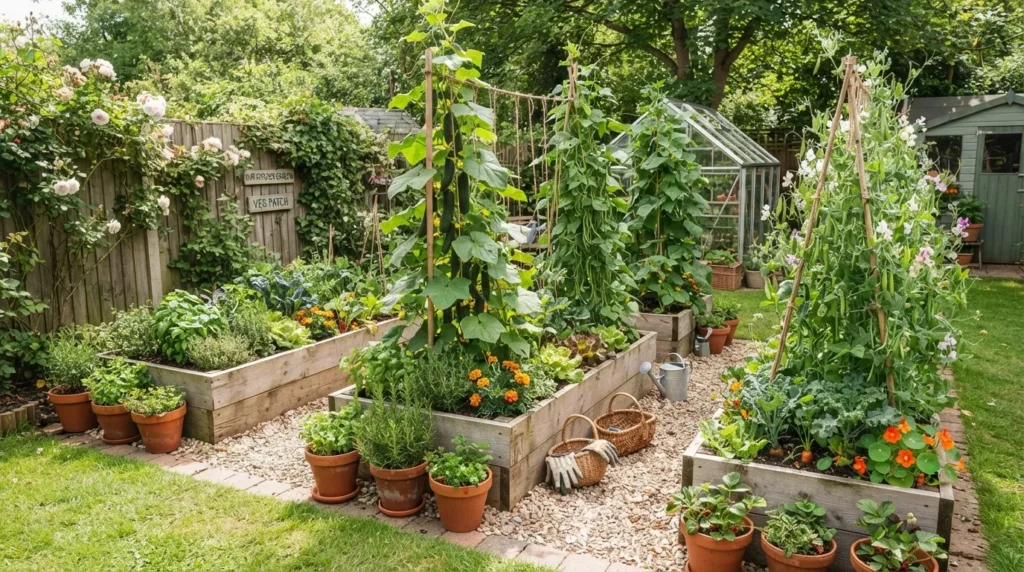
When horizontal space is limited, growing upward can make a vegetable garden significantly more productive. Trellises, cages, arches, and other supports can give climbing vegetables somewhere to grow while keeping the ground available for additional crops.
Cucumbers, pole beans, peas, and certain varieties of tomatoes can benefit from vertical support. Beyond saving space, vertical growth can make plants easier to see and harvest.
It also adds architectural interest to the garden. A simple trellis covered with vines can become a beautiful focal point, especially when paired with raised beds or containers.
How To Style It
Install sturdy supports before climbing plants become large and heavy. Choose a trellis, arch, or cage appropriate for the crop and expected mature growth.
Place vertical structures where they won’t block important sunlight from shorter plants. If you’re growing beside a wall or fence, consider how the structure will affect airflow and access.
Repeat the same support material throughout the garden for a cohesive look. Natural wood, dark metal, or simple wire can all work well depending on the style of your outdoor space.
4. Cottage Vegetable Garden
Quick Benefits
- Combines food and ornamental plants
- Creates a relaxed garden atmosphere
- Adds seasonal color
- Makes productive spaces visually appealing
- Encourages diverse planting
Why It Works
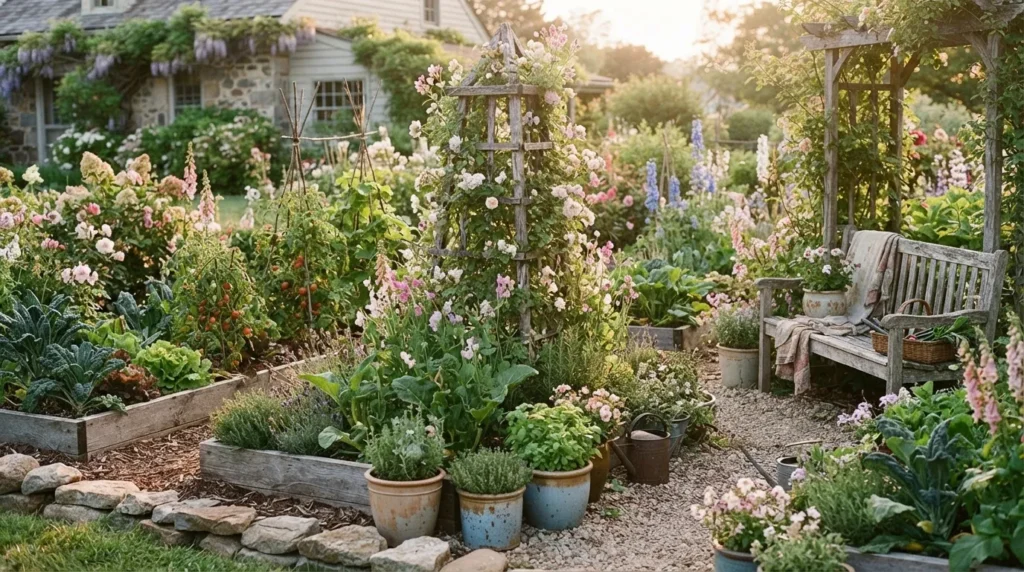
A vegetable garden doesn’t have to look purely functional. Cottage-style planting creates a softer, more informal appearance by combining vegetables with herbs, flowers, and other beneficial plants.
This approach works particularly well if you want the garden to feel integrated into your backyard rather than separated from the rest of your landscaping. Rows don’t have to be perfectly symmetrical, and flowering plants can provide color between edible crops.
The result can be both beautiful and productive. The garden becomes something you enjoy looking at even when you’re not harvesting vegetables.
How To Style It
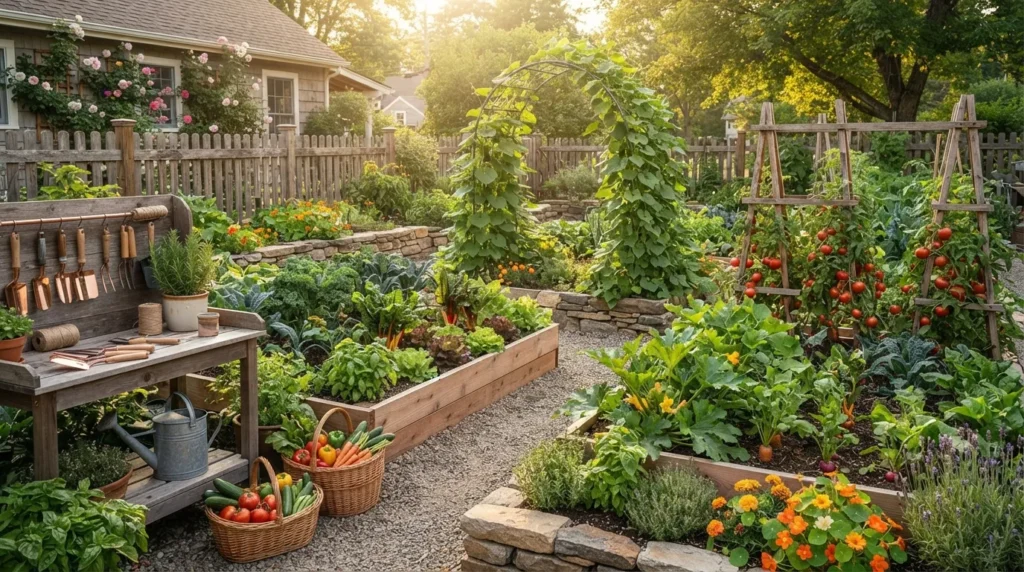
Use natural materials such as wood, stone, brick, or gravel to define planting areas. Mix vegetables with herbs and flowers while keeping enough room for each crop to grow properly.
A few simple garden supports, rustic containers, and weathered wooden signs can reinforce the cottage character.
Choose a repeating color palette rather than allowing every plant to compete visually. Soft whites, purples, pinks, yellows, and greens can create a relaxed seasonal display alongside the vegetables.
5. Backyard Kitchen Garden
Quick Benefits
- Keeps vegetables close to the house
- Makes harvesting convenient
- Encourages frequent use
- Works well with herbs
- Can become part of the home’s landscaping
Why It Works
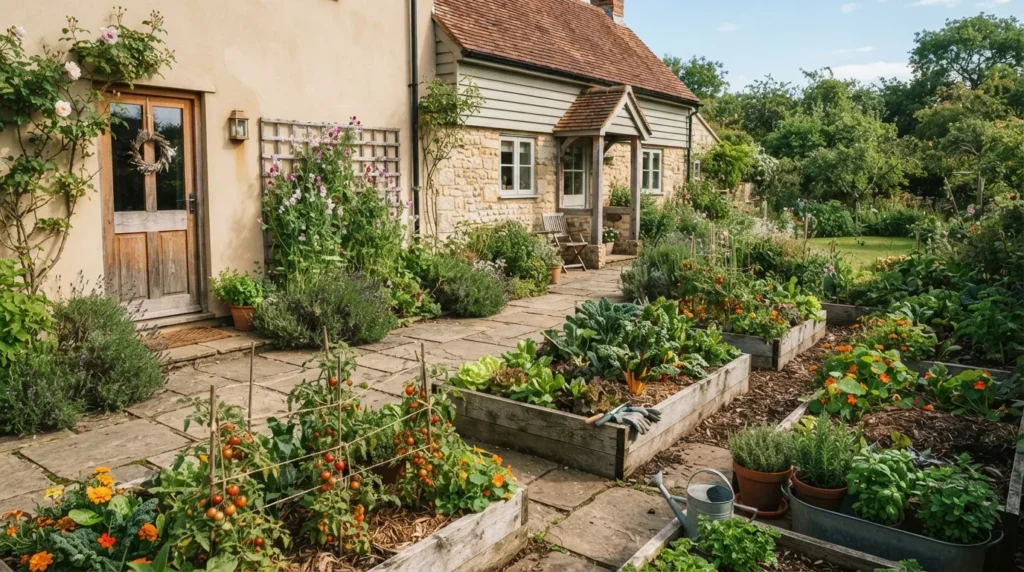
One of the best vegetable gardens is the one you actually use. Placing edible plants near the kitchen or a frequently used outdoor area makes harvesting much more convenient.
You don’t have to walk across the entire backyard just to pick a few herbs for dinner. A nearby kitchen garden can make fresh produce part of your daily routine.
This layout is especially helpful for crops you harvest frequently, such as herbs, lettuce, cherry tomatoes, and other quick-to-pick vegetables. It can also become an attractive transition between your home and the rest of the yard.
How To Style It
Choose a sunny location that is easy to reach and provides convenient access to water. Use raised beds, containers, or narrow planting strips depending on your available space.
Place frequently harvested herbs and vegetables closest to the house. Taller plants can be positioned farther away where they are less likely to obstruct windows or pathways.
Add a simple paved path, stepping stones, or gravel around the garden. A small potting bench or collection of attractive containers can make the area feel like a deliberate extension of the home’s outdoor space.
6. Small Corner Garden
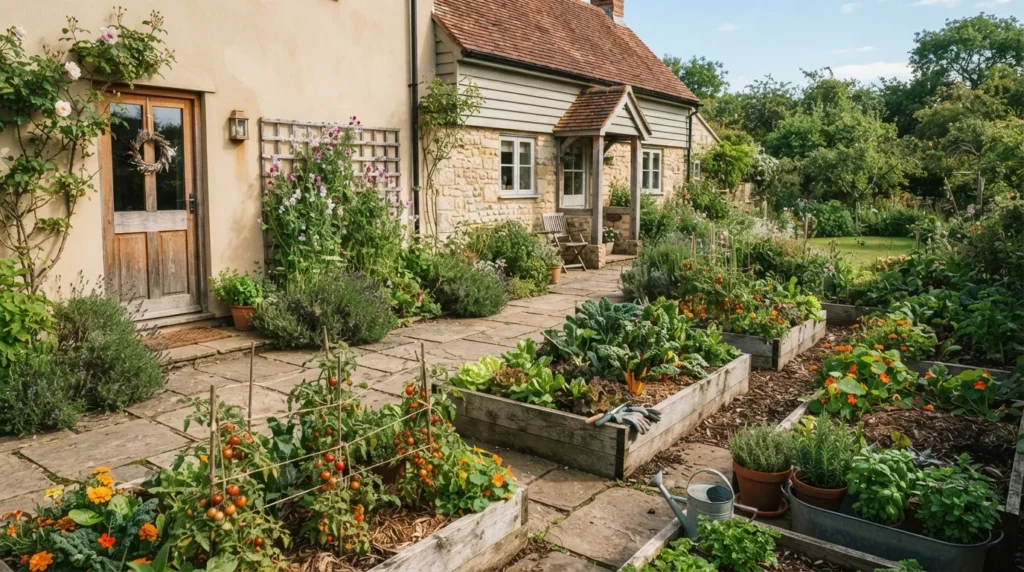
Quick Benefits
- Uses overlooked space
- Ideal for small backyards
- Easy to maintain
- Can be highly productive
- Creates a defined garden zone
Why It Works
Sometimes the perfect vegetable garden location is simply an unused corner. Rather than trying to redesign the entire backyard, you can turn a small section into a productive growing area.
Corners can actually provide a natural sense of enclosure, especially when bordered by fences or walls. With a little organization, this can become a surprisingly efficient place for vegetables.
The most important consideration is sunlight. Before building anything, observe the area throughout the day to make sure it receives enough light for the crops you want to grow.
How To Style It
Use one or two compact raised beds or several large containers instead of filling the entire corner. Keep a narrow access path so you can comfortably water, weed, and harvest.
Add a trellis along the back boundary for climbing crops. This uses vertical space while keeping the main planting area open.
Use matching containers, simple edging, or a defined gravel surface to make the corner feel intentional. A few flowers or herbs around the perimeter can soften the appearance.
7. Wooden Crate Garden
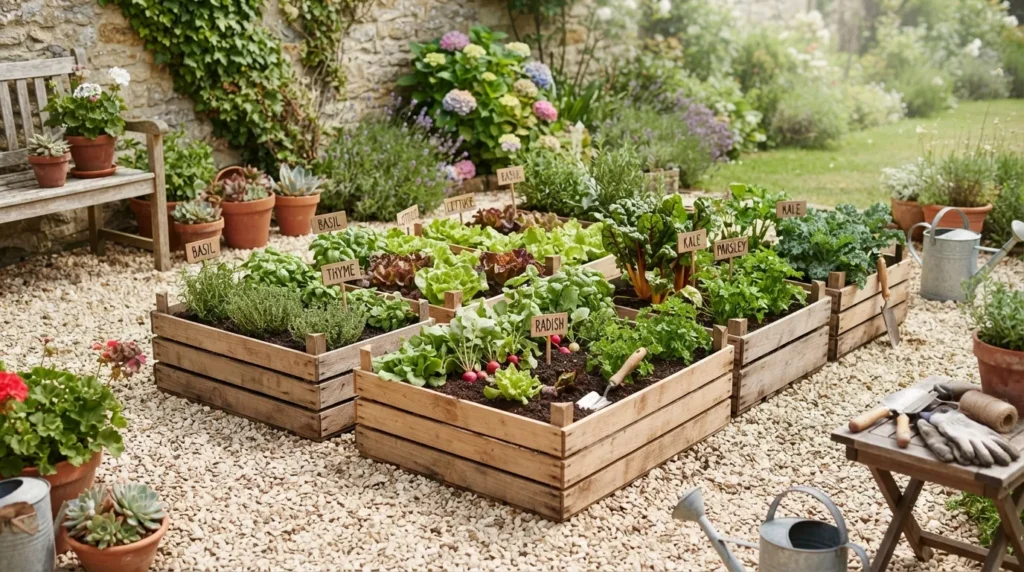
Quick Benefits
- Creates flexible planting areas
- Works well for small crops
- Adds rustic character
- Can be arranged in different layouts
- Useful for compact spaces
Why It Works
Wooden crates can create a charming, informal vegetable garden when they’re suitable for gardening use and properly prepared. Their compact size makes them useful for herbs, leafy greens, radishes, and other crops that don’t require a large growing depth.
The modular nature of crates is particularly helpful in small spaces. You can arrange them side by side, stack them where appropriate, or separate them into individual growing zones.
They also create visual structure. Instead of one large undefined planting area, each crate becomes a little garden compartment.
How To Style It
Use clean, sturdy crates that are appropriate for outdoor gardening and make sure they provide adequate drainage. Line or prepare them appropriately based on the materials and plants you’re using.
Group several crates together on a stable surface such as gravel or pavers. Keep the arrangement accessible from all sides if possible.
Use simple handwritten labels or small plant markers to identify crops. For a more polished look, keep the crates in a consistent natural wood finish rather than mixing too many colors.
8. Greenhouse Vegetable Garden
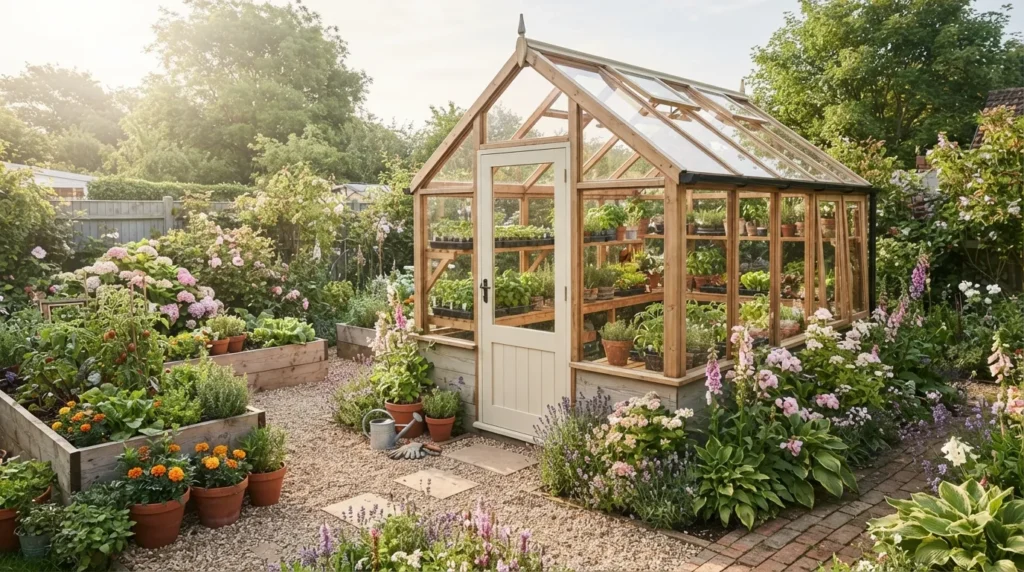
Quick Benefits
- Provides a protected growing environment
- Can extend the growing season
- Shields some plants from challenging weather
- Adds a dedicated gardening structure
- Creates organized growing space
Why It Works
A greenhouse can be an excellent option for gardeners who want more control over growing conditions. Even a compact greenhouse can create a dedicated environment for seedlings, sensitive crops, and plants that benefit from additional protection.
For gardeners with limited outdoor space, a greenhouse also makes the garden feel more purposeful. Shelves and vertical growing areas allow you to use the interior efficiently.
The ideal greenhouse setup depends heavily on your local climate, ventilation needs, sunlight, and the crops you want to grow. It should be treated as a gardening environment rather than simply a decorative structure.
How To Style It
Choose a greenhouse size that fits comfortably within your property while leaving room around it for access and maintenance. Place it where it receives appropriate sunlight for your intended crops.
Inside, use shelving, benches, and containers to create layers. Keep pathways clear enough to reach plants easily.
Outside, surround the greenhouse with gravel, pavers, or a simple planting border. Herbs and flowers around the structure can soften its appearance and help it blend naturally into the backyard.
9. Companion Planting Garden
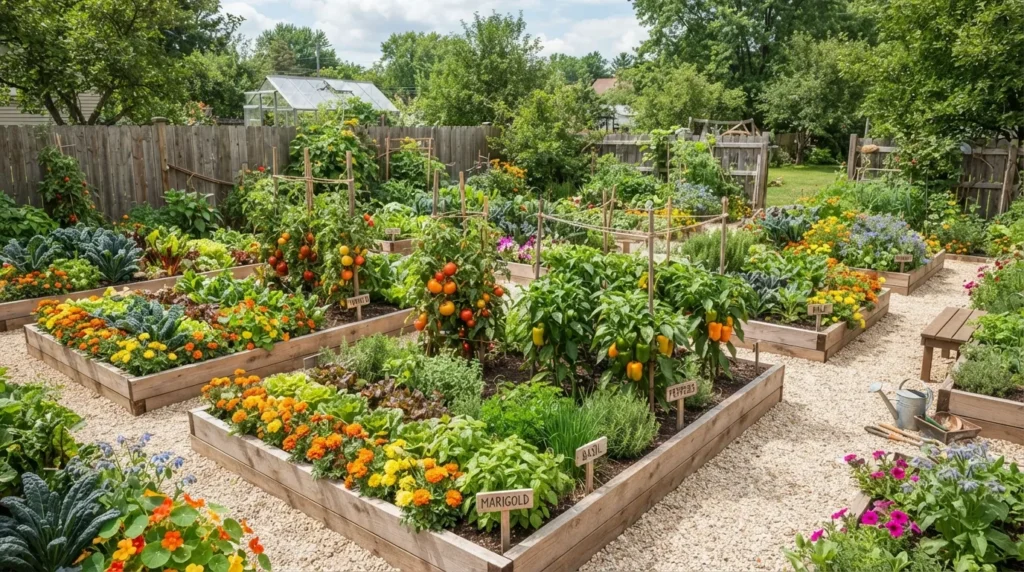
Quick Benefits
- Encourages plant diversity
- Makes efficient use of garden space
- Creates visual variety
- Combines vegetables and herbs
- Can attract beneficial garden visitors
Why It Works
A productive garden doesn’t need to separate every crop into its own isolated section. Combining compatible vegetables, herbs, and flowers can create a diverse and visually interesting planting space.
Companion planting is often discussed in terms of how certain plants may benefit one another, but it’s important not to treat every popular gardening claim as guaranteed. The more dependable advantages are often practical: biodiversity, efficient use of space, and combining plants with different heights and growth habits.
For example, taller crops can provide structure while lower-growing plants fill nearby spaces. Herbs and flowers can add fragrance and color around the vegetable beds.
How To Style It
Plan the garden according to each crop’s mature size, sunlight needs, watering requirements, and growing habit. Avoid placing plants together simply because they are commonly described as “companions.”
Use flowers such as marigolds or other suitable garden varieties as colorful accents where appropriate. Herbs can also create useful low-growing layers.
Repeat a few plants throughout the garden rather than creating too many separate combinations. This keeps the space visually cohesive while still providing variety.
10. Patio Harvest Garden
Quick Benefits
- Works in very limited outdoor spaces
- Combines gardening with outdoor living
- Keeps produce easily accessible
- Suitable for containers
- Can look attractive year-round
Why It Works
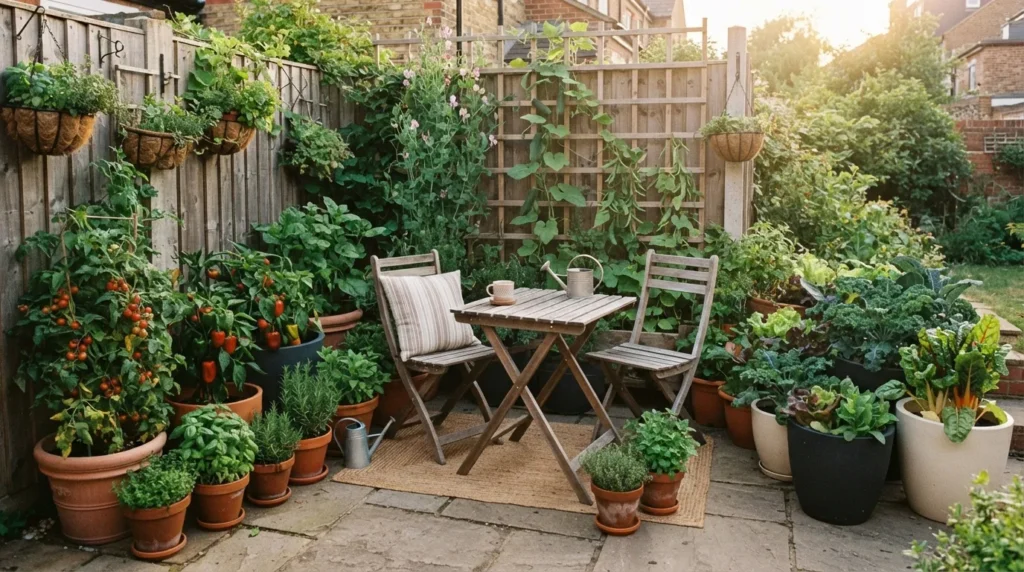
A patio doesn’t have to be purely decorative. With the right containers, it can become a productive little vegetable garden while still functioning as a place to sit, eat, and relax.
This is especially useful for people who don’t have traditional garden beds. Containers can be positioned around the edges of a patio while leaving the center open for furniture and everyday activities.
The result is a garden that feels integrated into your lifestyle. You can step outside, harvest what you need, and continue using the patio without navigating a large planting area.
How To Style It
Use large containers around the patio perimeter and reserve the central area for seating or dining. Choose compact vegetable varieties where appropriate and use trellises for crops that naturally grow upward.
Mix vegetables with herbs and ornamental plants so the patio doesn’t feel like a collection of purely functional pots.
Choose containers in a coordinated palette such as terracotta, charcoal, cream, or natural wood. Add comfortable outdoor furniture and a few decorative elements to make the garden feel like part of the living space.
Related Articles
- Small Garden Ideas for Backyard Spaces
- Easy Herb Garden Ideas
- Raised Garden Bed Ideas
- Small Backyard Landscaping Ideas
- Container Gardening Ideas for Beginners
Frequently Asked Questions
What vegetables are easiest to grow for beginners?
Some beginner-friendly choices include leafy greens, radishes, bush beans, certain herbs, and compact tomato varieties. The best options still depend on your climate, sunlight, soil, and planting season. Start with a few crops rather than trying to grow everything at once, and choose varieties suited to your local growing conditions.
How much space do I need for a vegetable garden?
You can grow vegetables in surprisingly little space. A few containers can provide fresh herbs and compact crops, while a small raised bed can support a larger selection. The most important factors are sunlight, adequate root space, water access, and enough room to reach plants for harvesting and maintenance.
Is a raised bed better than planting directly in the ground?
Neither option is universally better. Raised beds can provide better organization and easier access, while in-ground planting can make excellent use of existing soil and larger spaces. Consider your soil quality, budget, available space, drainage, and the amount of construction you’re willing to do before choosing a setup.
How much sunlight does a vegetable garden need?
Many vegetables grow best with several hours of direct sunlight each day, but exact requirements vary by crop. Before planting, observe your garden throughout the day and identify the brightest areas. Put sun-loving crops in the most suitable locations and choose more shade-tolerant plants for areas with less direct light.
Can I grow vegetables in containers?
Yes. Many vegetables grow well in containers when the pot is large enough, has good drainage, and provides suitable growing conditions. Compact tomatoes, peppers, lettuce, herbs, radishes, and some beans are common choices. Container gardens also make it easier to move plants when conditions change.
How do I organize a vegetable garden?
Start by grouping crops according to sunlight, water needs, mature size, and how frequently you harvest them. Keep regularly harvested herbs and vegetables in convenient locations. Use taller crops and trellises toward the back where appropriate, and leave clear pathways so every plant remains accessible.
What should I grow in a small vegetable garden?
Focus on vegetables and herbs your household actually enjoys eating. Compact tomatoes, peppers, leafy greens, herbs, radishes, and bush beans can be useful choices depending on your growing conditions. Choosing productive crops that you regularly use is usually more rewarding than filling the garden with varieties that rarely make it onto your plate.
Conclusion
A vegetable garden can be practical, beautiful, and completely customized to your home. You don’t need acres of land or years of gardening experience to get started. A few containers on a sunny patio, a compact raised bed, or an organized corner of the backyard can provide a rewarding place to grow fresh food.
The best design is the one that fits your everyday routine. If you cook frequently, keep herbs and easy-to-harvest vegetables close to the kitchen. If space is limited, look upward with trellises and vertical supports. If you want a garden that also feels decorative, combine vegetables with flowers, herbs, and attractive pathways.
Start small enough that caring for the garden feels enjoyable rather than overwhelming. As you learn which crops perform well in your space, you can gradually expand the garden and experiment with new varieties.
Whether you’re growing your first tomato plant or planning a productive backyard kitchen garden, thoughtful organization will make the experience easier and more enjoyable. With the right combination of crops, containers, supports, and planting space, even a modest outdoor area can become a rewarding source of fresh produce.