11 Backyard Landscaping Ideas to Create a Beautiful Outdoor Space A backyard doesn't have to be enormous or professionally designed to feel beautiful. The right landscaping can turn an ordinary patch of grass into a place that feels intentional, comfortable, and connected to the rest of your home. Good backyard landscaping starts with more than choosing attractive plants. Think about how you actually use the space. Do you want a lawn where children can play, a private garden for relaxing, a place for outdoor meals, or a low-maintenance landscape that looks good without demanding hours of work every weekend? I've noticed that the most successful yards usually have a combination of structure and softness. Trees, shrubs, pathways, fences, and retaining edges create the structure, while flowers, grasses, ground covers, and container plants soften those lines. Even a simple landscape becomes more interesting when plants are arranged at different heights and repeated throughout the yard. Another important consideration is your local growing environment. Sun exposure, drainage, soil, rainfall, mature plant size, and seasonal temperatures all affect whether a particular plant will thrive. A beautiful garden plan is much easier to maintain when it works with the conditions you already have. These 11 backyard landscaping ideas focus on practical ways to improve the appearance and function of outdoor spaces. You'll find ideas for layered planting, garden paths, privacy, low-maintenance yards, small spaces, raised beds, outdoor gathering areas, and natural-looking landscapes. You don't need to tackle the entire yard in one weekend. Start with one area, establish a clear purpose, and gradually build a landscape that feels natural to your home and lifestyle. Table of Contents 1. Layered Planting Combine trees, shrubs, flowers, grasses, and ground covers to create depth. 2. Garden Pathways Use pathways to connect different areas and give the backyard a stronger sense of structure. 3. Privacy Landscaping Create a more secluded outdoor space with trees, shrubs, grasses, and screening plants. 4. Native Planting Build a landscape around plants that are well suited to your local growing conditions. 5. Raised Garden Beds Add structure while creating practical areas for vegetables, herbs, flowers, or pollinator plants. 6. Natural Stone Edges Use stone to define planting beds, paths, patios, and changes in elevation. 7. Low-Maintenance Design Reduce ongoing work with thoughtful plant selection, mulch, hardscaping, and simple layouts. 8. Small Backyard Layout Make compact yards feel larger through scale, zoning, vertical planting, and clear pathways. 9. Cottage Garden Create a relaxed landscape filled with flowers, informal planting, and natural textures. 10. Outdoor Gathering Spaces Integrate seating, dining, shade, and planting so the landscape supports everyday outdoor living. 11. Layered Lighting Use landscape lighting to improve nighttime visibility while highlighting trees, paths, and garden features. 1. Layered Planting Quick Benefits Creates depth and visual interest Makes the yard feel more established Works with many landscape styles Helps define different garden areas Provides seasonal texture Why It Works One of the easiest ways to make a backyard landscape look thoughtfully designed is to vary plant height. A yard filled with plants of identical size can appear flat, while a combination of tall trees, medium shrubs, flowering plants, grasses, and low ground covers creates a much richer composition. Think of the planting area in layers. Taller plants form the background, medium-height shrubs create the middle layer, and smaller flowers or ground covers fill the foreground. This approach also allows you to create depth without adding many hardscape elements. How To Style It Start by identifying the tallest plants you want to keep or add. Trees and large shrubs should generally establish the overall framework. Then add medium-height shrubs and ornamental grasses. Finish the front edge with perennials, flowers, herbs, or ground covers. Try combinations such as: Small tree, hydrangea, and ground cover. Evergreen shrubs with ornamental grasses. Tall grasses behind flowering perennials. Shrubs mixed with seasonal flowers. Trees surrounded by woodland-style plants. Lavender with low-growing greenery. Roses layered with companion plants. Native shrubs with flowering perennials. Ornamental grasses surrounding a patio. Mixed foliage borders along a fence. Repeat a few plant varieties throughout the yard instead of using a different species in every location. Repetition creates visual continuity. 2. Garden Pathways Quick Benefits Connects different backyard areas Makes the landscape easier to navigate Adds structure Creates visual movement Can make a small yard feel larger Why It Works A pathway gives the eye somewhere to travel. It can lead from the back door to a garden, seating area, fire pit, shed, or secluded corner. You don't need an elaborate stone walkway. Gravel, stepping stones, brick, pavers, mulch, or natural stone can all create attractive paths. The shape also matters. A gentle curve can make a garden feel more relaxed, while straight lines suit modern and formal landscapes. How To Style It Consider these pathway ideas: Natural stone path through planting beds. Gravel walkway bordered with grasses. Large stepping stones across lawn. Brick path leading to a patio. Curved flagstone garden path. Wood-chip path through a garden. Stepping stones surrounded by ground cover. Paver walkway framed with shrubs. Narrow herb-garden pathway. Path leading toward a backyard bench. For a more natural appearance, soften the edges with plants rather than creating perfectly straight borders everywhere. 3. Privacy Landscaping Quick Benefits Creates a more secluded backyard Softens hard fencing Adds greenery Can reduce visual distractions Makes outdoor seating feel more comfortable Why It Works Privacy landscaping can make a backyard feel like a retreat. Instead of relying entirely on a tall fence, combine different layers of vegetation to create a softer visual barrier. Evergreens can provide year-round structure, while ornamental grasses and deciduous shrubs can add seasonal interest. Trellises with climbing plants are useful where horizontal space is limited. Before planting, check the mature height and spread of every species. A plant that looks appropriately sized at the garden center may eventually become much larger. How To Style It Try: Evergreen hedge along a property boundary. Tall ornamental grasses behind a patio. Layered shrubs around a seating area. Climbing vines on a trellis. Small trees framing a backyard. Mixed evergreen and flowering shrubs. Tall planters near a deck. Living privacy screen behind outdoor furniture. Layered plants along a fence. Small ornamental trees around a patio. Use varied heights instead of one uninterrupted wall of identical plants. This usually creates a softer and more natural effect. 4. Native Planting Quick Benefits Supports a locally appropriate landscape Can simplify plant selection Adds regional character Provides habitat for local wildlife Creates a more natural appearance Why It Works Plants that are naturally suited to your region can be a practical starting point when designing a backyard landscape. Local conditions such as rainfall, temperature, soil, and sunlight influence what will thrive. Native planting can also give a yard a stronger sense of place. A landscape in the Pacific Northwest will naturally look different from one in the Southwest or Southeast. Rather than selecting plants simply because they look attractive in photographs, research which varieties are suitable for your local conditions. How To Style It Build a planting palette around several compatible species rather than filling the yard with unrelated plants. Native flowering border. Pollinator-friendly planting bed. Native grasses around a patio. Regional shrub garden. Native woodland corner. Wildflower-inspired garden. Native plants around mature trees. Local flowering plants beside a pathway. Native ground-cover garden. Mixed native planting along a fence. Repeat native plants in several areas to create a cohesive landscape rather than keeping each variety confined to one isolated bed. 5. Raised Garden Beds Quick Benefits Creates organized planting areas Adds structure to open yards Works for vegetables and flowers Can improve accessibility Makes garden areas visually distinct Why It Works Raised beds can turn an ordinary backyard into a productive garden while also adding architectural structure. They are especially useful when you want to separate vegetables and herbs from ornamental planting. Wood, stone, composite materials, or other suitable construction materials can create the raised edges. The best location depends on what you're growing. Many vegetables and herbs need substantial sunlight, while some ornamental plants tolerate more shade. How To Style It Consider: Cedar raised beds for vegetables. Stone-edged herb beds. Raised flower beds along a fence. Compact raised beds in a small yard. L-shaped garden beds around a patio. Raised pollinator garden. Tiered beds on a sloped yard. Raised herb garden near an outdoor kitchen. Wooden beds surrounding a seating area. Mixed vegetable and flower beds. Keep the paths between beds wide enough for comfortable maintenance. A beautiful garden becomes frustrating if you can't easily reach the plants. 6. Natural Stone Edges Quick Benefits Defines planting areas Adds permanent structure Works with natural landscapes Helps organize irregular spaces Complements patios and pathways Why It Works Stone edging gives planting beds a visual boundary without making the landscape feel overly formal. Natural stone works particularly well when your yard already contains rock, brick, wood, or other earthy materials. You can use stone to separate lawn from planting beds, outline pathways, or create a transition around a patio. The goal isn't necessarily to make every stone identical. Slight variation can create a more organic appearance. How To Style It Try: River-rock garden borders. Large flat stones around flower beds. Natural stone edging around a patio. Stone border along a curved lawn. Gravel garden with larger stone accents. Stone steps through a sloped garden. Rock-edged perennial border. Stone outline around ornamental grasses. Natural rock border around a tree. Flagstone transition between lawn and patio. Choose stone that complements the existing exterior of your home. Matching every material isn't necessary, but the overall palette should feel connected. 7. Low-Maintenance Design Quick Benefits Reduces routine gardening work Makes the landscape easier to manage Can conserve resources Works for busy homeowners Creates a cleaner overall layout Why It Works A low-maintenance backyard doesn't have to look bare. The secret is choosing the right balance of plants, hardscape, mulch, and usable lawn. Grouping plants according to similar growing needs can make watering and maintenance easier. Mulch can also help cover exposed soil and create a finished appearance. Hardscape elements such as patios, pathways, gravel areas, and seating zones can reduce the amount of lawn that needs regular mowing. How To Style It Gravel garden with drought-tolerant plants. Mulched perennial beds. Evergreen foundation planting. Ornamental grasses around a patio. Small lawn surrounded by shrubs. Gravel seating area. Perennial garden with repeated plants. Simple shrub border. Container garden beside a patio. Low-maintenance ground covers. Don't choose plants solely because they're marketed as low-maintenance. Every plant still has specific requirements, so match your selections to your site's conditions. 8. Small Backyard Layout Quick Benefits Maximizes limited space Creates useful outdoor zones Makes the yard feel less crowded Uses vertical space Helps furniture fit more naturally Why It Works Small backyards benefit from clear organization. Instead of trying to fit a full-size patio, dining set, fire pit, garden, and lawn into a limited area, decide which functions matter most. A compact seating area can sit against one edge, while vertical planting adds greenery without using valuable floor space. Scale is particularly important. Oversized furniture can make a small yard feel cramped, while appropriately sized pieces leave room for circulation. How To Style It Try: Compact patio with two chairs. Small round dining table. Corner seating arrangement. Vertical garden along a fence. Narrow planting bed around the perimeter. Built-in bench along a wall. Small gravel courtyard. Compact fire feature with limited seating. Foldable outdoor furniture. Raised planters around a tiny patio. Keep the center of the yard relatively open when possible. A visible stretch of floor or lawn can make the entire space feel larger. 9. Cottage Garden Quick Benefits Creates a relaxed appearance Adds abundant seasonal color Works with informal architecture Encourages varied planting Feels personal and welcoming Why It Works Cottage gardens are appealing because they don't depend on perfect symmetry. Flowers, herbs, shrubs, and grasses can mingle together to create an informal landscape with plenty of texture. The look works particularly well around older homes, natural stone, wood fences, and relaxed outdoor seating. Rather than planting in rigid rows, allow compatible plants to overlap visually. Different bloom times can also help the garden remain interesting throughout the growing season. How To Style It Mixed flower border beside a path. Roses with companion flowers. Lavender-lined walkway. Cottage-style herb garden. Flower-filled fence border. Climbing plants around a garden gate. Informal perennial bed. Wildflower-inspired planting area. Cottage garden around a bench. Mixed flowers surrounding a small tree. Use repeated colors throughout the planting rather than selecting every flower color available. This keeps an abundant garden from looking chaotic. 10. Outdoor Gathering Spaces Quick Benefits Combines landscaping with everyday living Creates a destination in the yard Encourages outdoor entertaining Makes patios feel integrated Provides a reason to use the landscape Why It Works A backyard feels more complete when landscaping supports how you want to use it. A patio surrounded by planting beds feels much more connected to the garden than a bare concrete slab. Plants can frame seating areas, soften hard edges, provide shade, and create visual separation from the rest of the yard. You can also create multiple small zones rather than one large outdoor room. How To Style It Try: Patio surrounded by flowering borders. Dining area framed by planters. Fire pit surrounded by ornamental grasses. Garden bench beneath a tree. Outdoor kitchen beside herb beds. Pergola surrounded by climbing plants. Gravel lounge area with shrubs. Seating area beside a water feature. Patio framed by small trees. Outdoor dining area near a garden. Think about the view from inside the house too. A beautiful seating area or planting bed visible through a window can make the landscape feel connected to your interior. 11. Layered Lighting Quick Benefits Improves nighttime visibility Highlights landscape features Extends backyard use into evening Adds atmosphere Helps define pathways and gathering zones Why It Works Good landscape lighting is about more than placing a bright light in the middle of the yard. Layered lighting allows different areas to serve different purposes. Path lights can guide movement, while subtle uplighting can highlight trees or architectural features. Warm lighting around seating areas creates a more comfortable atmosphere. Avoid making every part of the yard equally bright. Contrast can make the landscape feel more natural and visually interesting. How To Style It Low pathway lights along a garden path. Uplighting beneath mature trees. Soft lighting around a patio. Subtle lights along stone edges. Warm lights around a pergola. Small lights near raised beds. Lighting around a water feature. Step lighting on outdoor stairs. Accent lights near ornamental grasses. Warm wall lighting beside a patio. Use outdoor-rated fixtures and follow appropriate installation practices. If you're installing permanent electrical landscape lighting, professional installation may be appropriate depending on the system and local requirements. Frequently Asked Questions What is the easiest way to improve backyard landscaping? Start by defining one clear area, such as a seating zone, planting bed, or pathway. Clean up overgrown areas, establish a simple border, add a few appropriately sized plants, and repeat those plants elsewhere for continuity. You don't need to redesign the entire yard at once to make a noticeable difference. How can I make my backyard look landscaped on a budget? Focus on structure first. Clearly defined planting beds, mulch, simple pathways, grouped containers, and strategically placed plants can create a finished appearance without a major investment. Reusing existing materials and dividing plants when appropriate can also help stretch a landscaping budget. What plants are best for backyard landscaping? There isn't one universally best plant. The right choices depend on your climate, soil, sunlight, drainage, and the amount of maintenance you're comfortable with. Native and regionally appropriate plants are often a useful starting point because they are suited to local growing conditions. How do I make a small backyard look bigger? Use appropriately scaled furniture, keep pathways clear, and avoid dividing the yard into too many small sections. Vertical planting can add greenery without taking floor space, while a consistent material palette can make separate areas feel visually connected. Keeping some open space visible can also create a stronger sense of depth. How can I create backyard privacy naturally? Layer trees, shrubs, ornamental grasses, climbing plants, and trellises rather than relying on one type of plant. Evergreen species can provide year-round structure, while deciduous plants add seasonal variation. Always check mature plant dimensions and local growing conditions before planting. What is a low-maintenance backyard landscape? A low-maintenance landscape generally combines plants suited to the site's conditions with mulch, efficient irrigation where appropriate, and practical hardscape areas. Repeating a smaller selection of compatible plants can simplify maintenance compared with managing many unrelated species. How should I plan a backyard landscape? Begin by measuring the space and observing sunlight, drainage, existing trees, views, and access points. Decide how you want to use the yard, then establish major zones such as seating, dining, lawn, gardens, or pathways. Add larger structural elements first and smaller plants and decorative details afterward. Conclusion A beautiful backyard landscape doesn't happen simply because you add more plants. It comes from creating a thoughtful relationship between planting, pathways, hardscaping, privacy, lighting, and the way you actually use the space. Start with the structure. Define a pathway, create a planting border, establish a seating area, or add privacy where you need it most. Once those elements are in place, layer in shrubs, flowers, grasses, trees, containers, and other details. If you're working with a small backyard, focus on scale and function. If you have a larger yard, use repeated plants and materials to make the space feel connected rather than dividing it into unrelated sections. And remember that landscaping is a gradual process. Trees and shrubs change size, gardens mature, and your preferences may evolve. You don't need to achieve a finished landscape immediately. Choose one idea that solves a real problem in your yard and begin there. With thoughtful planning and a few well-selected elements, even an ordinary backyard can become a beautiful outdoor space that feels natural, useful, and distinctly yours. Related Articles 12 Backyard Decor Ideas for a Cozy Outdoor Space 15 Small Backyard Ideas for Stylish Outdoor Living 21 Low-Maintenance Landscaping Ideas for Busy Homeowners 17 Patio Landscaping Ideas to Transform Your Outdoor Space 20 Easy Garden Projects for Beginners Pinterest Image Prompts 1. Layered Planting Image Description: A beautiful American backyard with layered landscaping featuring a mature small tree in the background, medium evergreen shrubs, ornamental grasses, flowering perennials, and low ground covers. A natural stone pathway curves through the planting beds toward a comfortable seating area. Soft morning sunlight, lush realistic foliage, natural wood and stone textures, sophisticated residential landscape photography, vertical Pinterest composition. 2. Garden Pathways Image Description: A charming backyard garden pathway made from irregular natural flagstones winding through layered greenery, flowering perennials, ornamental grasses, and low ground cover. The path leads toward a small wooden bench beneath a mature tree. Warm afternoon light creates gentle shadows across the stones and foliage. Realistic American garden setting, natural earthy palette, professional landscape photography, vertical Pinterest format. 3. Privacy Landscaping Image Description: A secluded backyard seating area surrounded by layered evergreen shrubs, tall ornamental grasses, flowering plants, climbing vines, and small ornamental trees. A comfortable neutral outdoor sofa sits behind the natural privacy planting. Soft late-afternoon sunlight filters through the foliage, creating a peaceful retreat. Realistic plants and landscape textures, sophisticated residential design, vertical Pinterest-worthy photography. 4. Native Planting Image Description: A natural American backyard landscape filled with regionally appropriate native flowering plants, grasses, shrubs, and small trees arranged in relaxed layers. A simple stone pathway runs through the garden toward a rustic wooden bench. The planting has varied textures and seasonal colors without looking overly formal. Soft natural daylight, realistic botanical detail, environmentally inspired landscape photography, vertical Pinterest composition. 5. Raised Garden Beds Image Description: A productive backyard garden featuring several cedar raised beds filled with vegetables, herbs, flowers, and pollinator-friendly plants. Natural gravel pathways separate the beds, while a wooden fence and mature greenery provide a warm backdrop. Soft morning sunlight illuminates the plants and wood textures. Realistic American backyard garden, organized yet welcoming atmosphere, professional lifestyle photography, vertical Pinterest format. 6. Natural Stone Edges Image Description: A beautifully landscaped backyard with natural stone edging surrounding curved planting beds filled with ornamental grasses, flowering perennials, shrubs, and ground covers. A flagstone patio sits nearby with comfortable outdoor furniture. Warm earthy colors, realistic stone and plant textures, soft golden-hour lighting, sophisticated residential landscaping, professional vertical Pinterest photography. 7. Low-Maintenance Design Image Description: A stylish low-maintenance American backyard featuring a gravel garden, drought-tolerant ornamental grasses, evergreen shrubs, mulch-covered planting beds, and a compact paved seating area. The design uses repeated plant varieties and simple clean lines. Warm afternoon sunlight highlights the natural stone and foliage. Realistic modern landscape photography, understated earthy palette, vertical Pinterest-worthy composition. 8. Small Backyard Layout Image Description: A compact urban backyard designed with a small round dining table, two comfortable chairs, a narrow planting border, vertical greenery along a wooden fence, and a simple stone pathway. The center remains open to make the yard feel spacious. Soft natural daylight, realistic textures, modern American outdoor living, carefully scaled landscaping, professional vertical Pinterest photography. 9. Cottage Garden Image Description: A romantic cottage-style backyard garden filled with roses, lavender, flowering perennials, herbs, ornamental grasses, and climbing plants surrounding a natural stone pathway. A weathered wooden bench sits beneath a mature tree. Soft golden-hour light creates a relaxed and abundant atmosphere. Natural colors, realistic flowers and textures, charming American cottage garden aesthetic, vertical Pinterest composition. 10. Outdoor Gathering Spaces Image Description: A sophisticated backyard patio surrounded by layered flowering borders, ornamental grasses, small trees, and natural stone planting beds. A comfortable outdoor sectional and dining table create distinct gathering areas beneath a simple pergola covered with greenery. Warm evening light, realistic landscaping and furniture textures, inviting American outdoor living space, professional vertical Pinterest photography. 11. Layered Lighting Image Description: A beautiful backyard landscape at dusk featuring subtle pathway lights, warm uplighting beneath mature trees, soft lighting around a stone patio, and gentle illumination near ornamental grasses and garden beds. The lighting creates depth without making the yard overly bright. Cozy evening atmosphere, realistic residential landscaping, warm natural tones, sophisticated professional photography, vertical Pinterest-worthy composition. SEO Elements Slug backyard-landscaping-ideas Meta Description 11 backyard landscaping ideas for beautiful outdoor spaces, including layered planting, garden paths, privacy, native plants, lighting, and small-yard designs. Tags backyard landscaping ideas backyard landscape design backyard landscaping landscaping ideas backyard garden ideas small backyard landscaping backyard garden design low maintenance landscaping backyard privacy ideas native plant landscaping garden pathway ideas backyard planting ideas outdoor living ideas backyard makeover ideas cottage garden ideas raised garden bed ideas backyard patio landscaping landscape lighting ideas garden design ideas residential landscaping

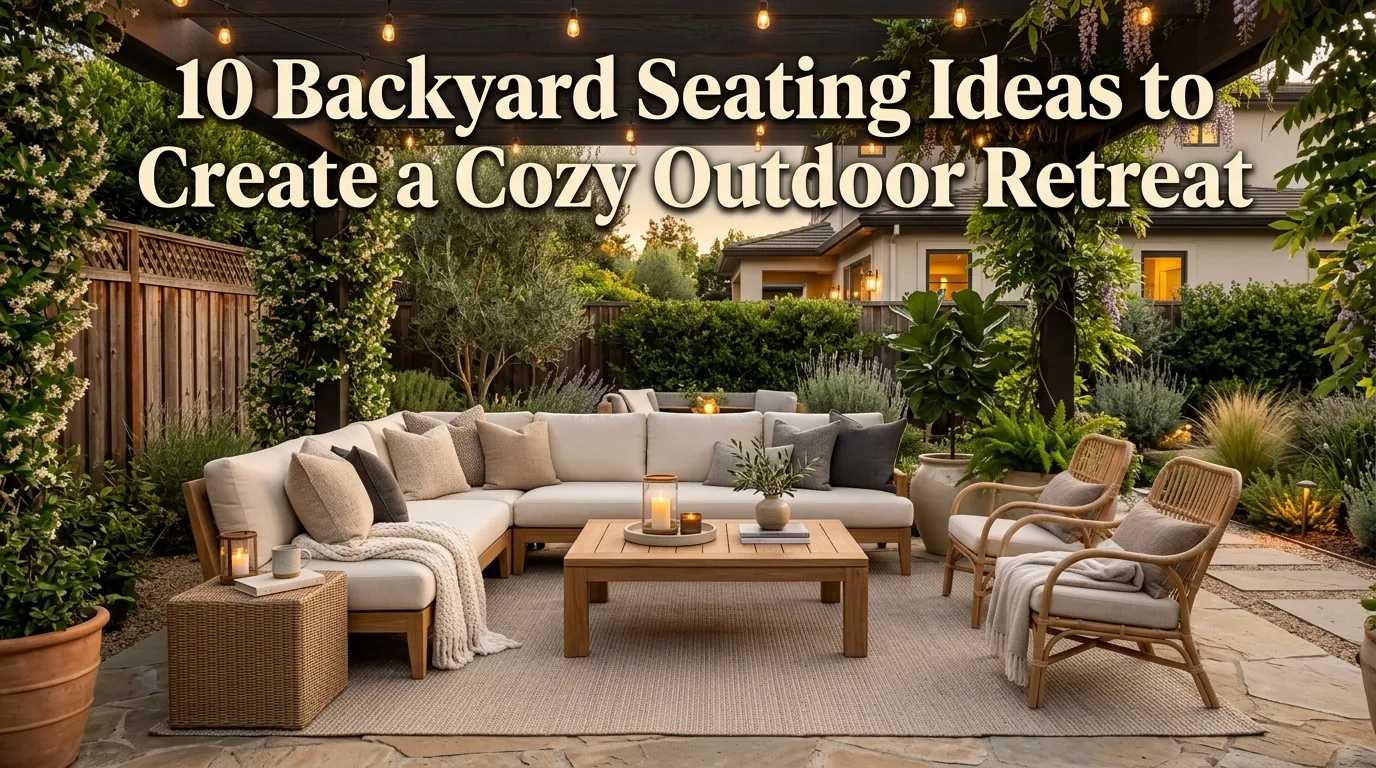
10 Backyard Seating Ideas to Create a Cozy Outdoor Retreat

A backyard can have beautiful landscaping, a well-maintained patio, and plenty of open space, yet still feel unfinished if there isn’t a comfortable place to sit. The right seating arrangement can turn an ordinary outdoor area into somewhere you actually want to spend timeโ€”whether that’s drinking coffee in the morning, reading in the afternoon, or gathering with friends on a summer evening.

Backyard seating doesn’t have to mean buying an entire matching furniture set. Some of the most inviting outdoor spaces combine a few comfortable pieces with plants, shade, lighting, and thoughtful placement. A simple bench beneath a tree can feel more charming than a large patio filled with furniture that doesn’t suit the space.

I’ve noticed that the most successful outdoor seating areas usually begin with one question: How do you want to use the backyard? A dining setup makes sense if you regularly eat outside, while a deep lounge sofa is better for conversation and relaxing. Small yards may benefit from compact bistro furniture, whereas larger spaces can support multiple seating zones.

Comfort matters just as much as appearance. Outdoor furniture needs to handle sun, moisture, dirt, and temperature changes, while cushions and fabrics should be appropriate for exterior use. Good placement matters too. Nobody wants a beautiful chair positioned in full afternoon sun with no shade nearby.

The ideas below cover different backyard sizes, styles, and budgets. From built-in benches and fire pit seating to relaxed lounge corners and dining areas, these options can help you create an outdoor space that feels intentional, comfortable, and easy to enjoy.

Table of Contents
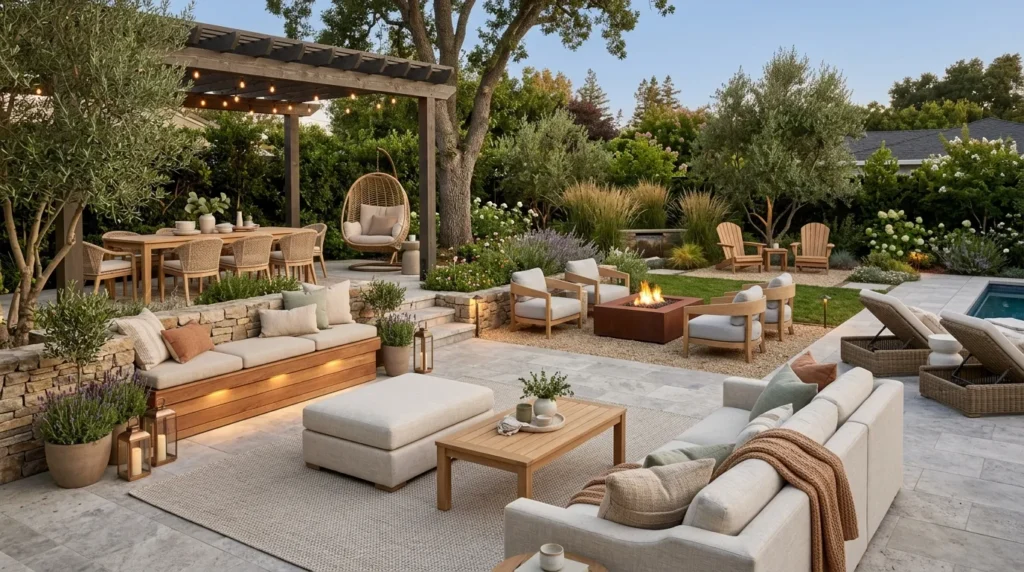
1. Cozy Lounge Sofa

Create a comfortable conversation area with deep outdoor seating and layered cushions.

2. Built-In Garden Bench

Use a permanent bench to create efficient seating along fences, walls, and planting beds.

3. Fire Pit Circle

Arrange comfortable chairs around a fire feature for evenings spent talking outdoors.

4. Outdoor Dining Area

Create a practical place for meals, coffee, and entertaining with a weather-ready table.

5. Pergola Seating Nook

Combine comfortable furniture with overhead structure for a defined outdoor room.

6. Small Bistro Set

Make compact patios and corners useful with a simple two-person seating arrangement.

7. Hanging Chair Corner

Add a relaxed statement seat that creates a dedicated spot for reading and unwinding.

8. Multi-Level Seating

Use different heights and seating styles to make larger backyards feel organized.

9. Tree-Shaded Bench

Take advantage of natural shade by placing a bench beneath a mature tree.

10. Outdoor Sectional Zone

Create a spacious gathering area with a sectional designed for conversation and entertaining.


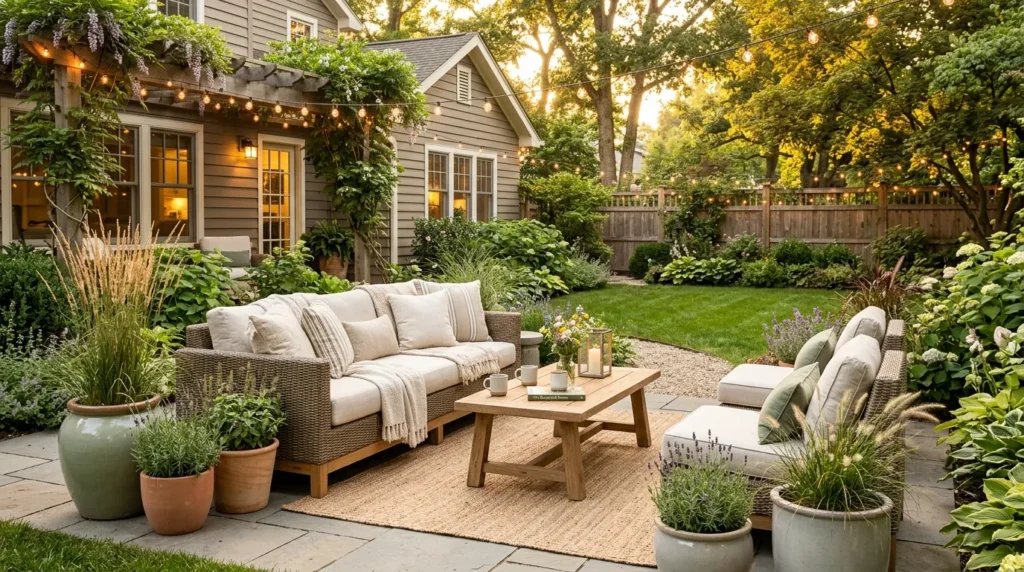
1. Cozy Lounge Sofa
Quick Benefits

  • Comfortable for everyday relaxation
  • Creates a natural conversation area
  • Works on patios and decks
  • Easy to accessorize
  • Suitable for entertaining

Why It Works

An outdoor sofa can immediately make a backyard feel more like an extension of the home. Instead of arranging individual chairs around an open patio, a sofa provides a strong visual anchor and gives several people a comfortable place to sit together.

This setup is especially useful for homeowners who want the backyard to function as an outdoor living room. A sofa can accommodate casual conversations, reading, afternoon lounging, and small gatherings without requiring a large amount of furniture.

The biggest consideration is comfort. Look for outdoor furniture designed for exterior conditions and cushions made from suitable outdoor fabrics. The amount of shade and exposure should also influence your choice.

A sofa doesn’t have to be enormous. In a smaller backyard, a compact loveseat can provide the same visual effect without overwhelming the patio.

How To Style It

Place the sofa against a wall, privacy fence, or pergola when possible so the seating area feels grounded.

Add two complementary lounge chairs opposite or beside it if space allows. Keep enough room for people to walk comfortably around the furniture.

Use neutral cushions as a base and add one or two accent colors through pillows or an outdoor rug.

A small coffee table or outdoor ottoman can complete the arrangement while providing a practical surface for drinks and books.

Add greenery nearby rather than crowding the sofa itself with too many accessories.


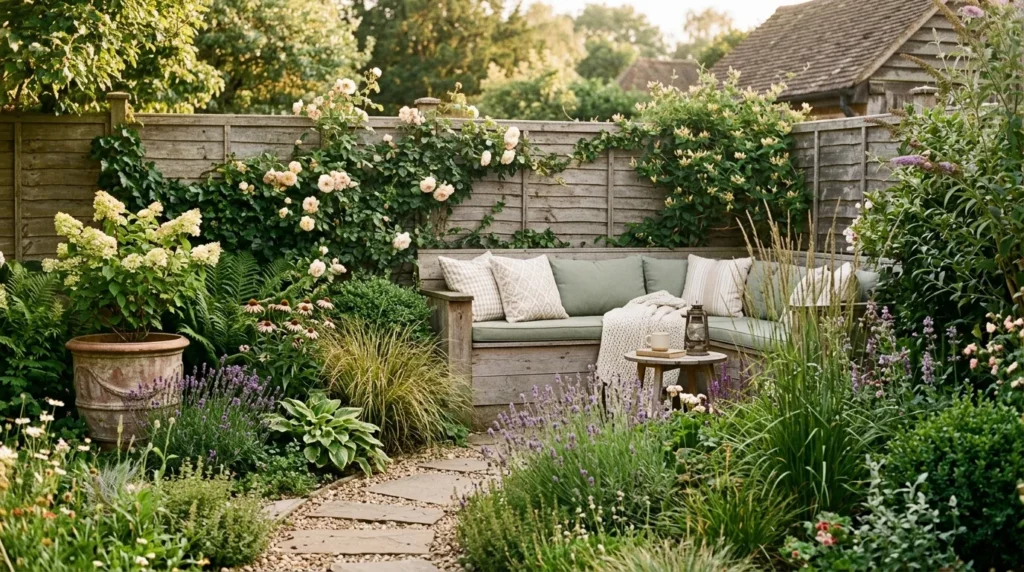
2. Built-In Garden Bench
Quick Benefits

  • Saves floor space
  • Works along fences and walls
  • Creates permanent seating
  • Blends with landscaping
  • Can provide hidden storage

Why It Works

Built-in benches are particularly useful when you want seating without filling the yard with bulky furniture.

A bench can follow the edge of a patio, sit against a privacy fence, or become part of a garden wall. Because it stays in place, it can make an awkward or underused section of the backyard functional.

This type of seating also offers an opportunity to combine furniture and landscaping. A bench surrounded by plants can feel like part of the garden rather than a separate object.

Depending on the design, a bench can include storage beneath the seat for outdoor cushions, gardening tools, or other items. Any storage compartment should be designed to protect contents from weather appropriately.

How To Style It

Use a simple wood or composite bench for a natural appearance, or coordinate the material with an existing deck or fence.

Place large planters or shrubs at either end to frame the seat without making it difficult to access.

Add weather-resistant cushions for comfort. Neutral upholstery works well with greenery, while a muted accent color can bring more personality.

For evening use, install suitable low-level lighting nearby so the bench remains part of the backyard after sunset.


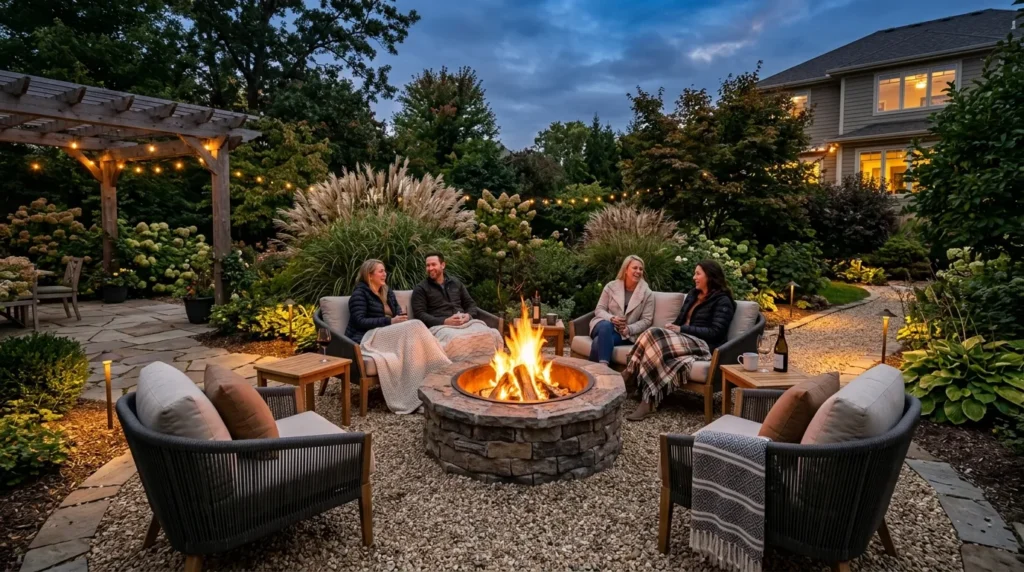
3. Fire Pit Circle
Quick Benefits

  • Encourages conversation
  • Extends outdoor use into cooler evenings
  • Creates a natural focal point
  • Works with several seating styles
  • Adds atmosphere

Why It Works

A fire pit naturally creates a reason for people to gather. When seating is arranged in a loose circle around it, conversation becomes easier and the area feels naturally social.

The seating doesn’t need to be complicated. Adirondack-style chairs, outdoor lounge chairs, benches, or suitable built-in seating can all work depending on the size and design.

Safety should always come first. Fire features need appropriate clearances, stable surfaces, and proper installation. Follow manufacturer instructions and local requirements, particularly for wood-burning or gas-burning units.

The fire pit should also be positioned so there is enough room for people to move comfortably around the seating area.

How To Style It

Keep the furniture facing toward the center rather than arranged in a conventional living-room configuration.

Choose chairs that are comfortable enough for longer conversations. Add outdoor cushions where appropriate.

Surround the seating area with gravel, pavers, or another suitable surface rather than placing furniture directly on delicate lawn areas.

Low landscape lighting can help define the perimeter, but don’t over-light the fire pit itself. The fire naturally becomes the main source of visual interest.


4. Outdoor Dining Area
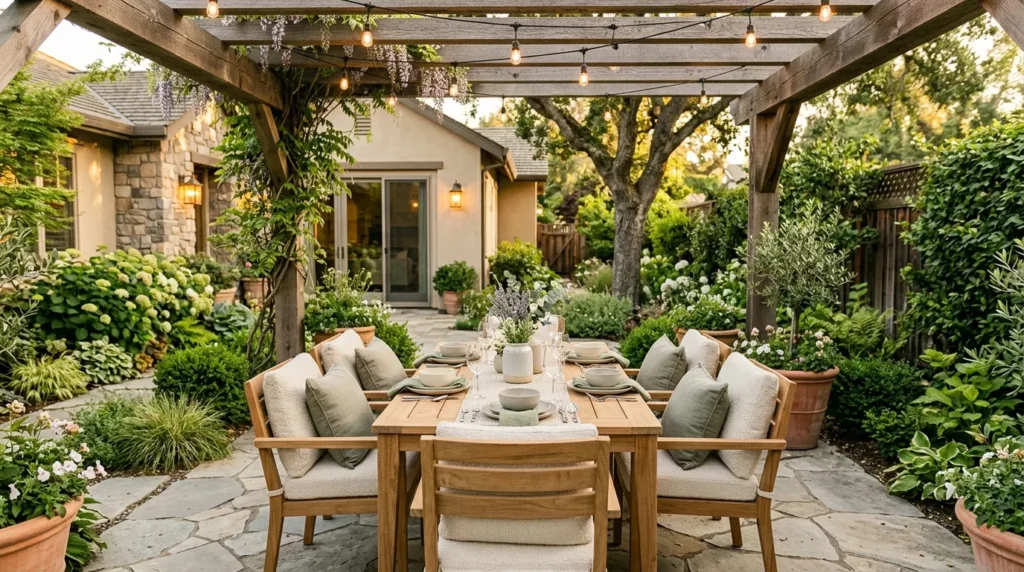
Quick Benefits

  • Makes outdoor meals easier
  • Ideal for entertaining
  • Creates a dedicated zone
  • Works with patios and decks
  • Adds everyday functionality

Why It Works

If your family regularly eats outdoors, a dining area may be more useful than a large lounge setup.

An outdoor table provides a clear destination for meals, morning coffee, games, and casual gatherings. It can also encourage you to use the backyard more often because everything is organized around a practical purpose.

The table size should match the available space. A table that technically fits but leaves no room to walk around it will make the patio feel cramped.

Weather exposure is another consideration. Choose materials and finishes appropriate for your climate, and consider shade if the table receives strong midday or afternoon sun.

How To Style It

Position the table close enough to the kitchen or house that carrying food outside isn’t inconvenient.

A pergola, umbrella, covered patio, or nearby mature tree can provide valuable shade.

Use comfortable chairs rather than treating the dining set purely as decoration. Outdoor cushions can make longer meals much more pleasant.

A centerpiece can be as simple as a low planter, bowl, or collection of outdoor-safe decorative objects. Keep the center low enough that guests can see across the table.


5. Pergola Seating Nook
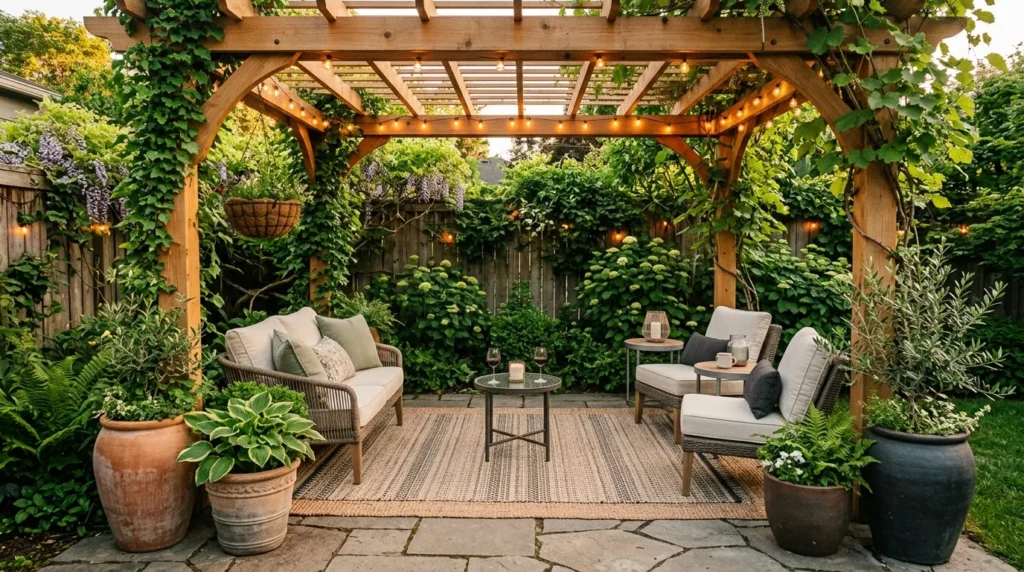
Quick Benefits

  • Creates an outdoor room
  • Adds shade potential
  • Provides architectural structure
  • Defines a seating zone
  • Supports climbing plants and lighting

Why It Works

A pergola can make an open backyard feel more structured by creating a ceiling-like element above a seating area.

When comfortable furniture is placed underneath, the space begins to function like an outdoor room. This is particularly helpful in large yards where furniture can otherwise look scattered.

The pergola doesn’t have to cover the entire patio. A smaller structure can define a reading corner or conversation area.

Depending on its design and local conditions, a pergola may support climbing plants, outdoor curtains, or suitable lighting.

How To Style It

Start with one primary seating function. A loveseat and two chairs work well for conversation, while a lounge chair and side table can create a more personal retreat.

Use an outdoor rug to visually anchor the furniture when appropriate.

Add climbing greenery around selected posts rather than covering the entire structure immediately.

Warm exterior lighting can make the seating nook useful after sunset. Keep fixtures suitable for outdoor use and avoid creating glare.


6. Small Bistro Set
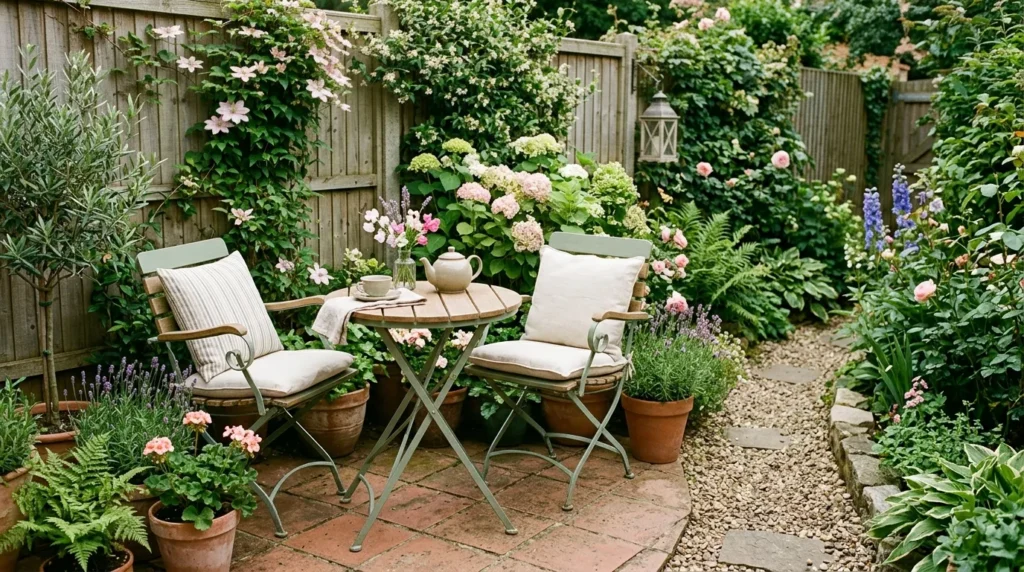
Quick Benefits

  • Ideal for small yards
  • Fits balconies and patios
  • Easy to move
  • Creates an intimate seating area
  • Requires minimal space

Why It Works

Small outdoor spaces don’t need oversized furniture to become useful.

A two-person bistro set can transform a narrow patio, side yard, balcony, or unused garden corner into a practical place for coffee, breakfast, reading, or conversation.

The small scale is the advantage. Because the chairs and table occupy little floor area, you can preserve room for plants, pathways, and other functions.

Bistro furniture also makes a good choice when you want flexibility. Lightweight pieces can often be rearranged when the layout changes.

How To Style It

Place the set near a garden bed, fence, or attractive view.

Add a potted plant or small planter beside the table rather than taking up valuable tabletop space.

For a romantic cottage feel, use curved metal furniture and flowering plants.

For a modern backyard, choose clean-lined chairs with a simple round or square table.

Keep the surrounding area relatively uncluttered so the small seating arrangement feels intentional.


7. Hanging Chair Corner
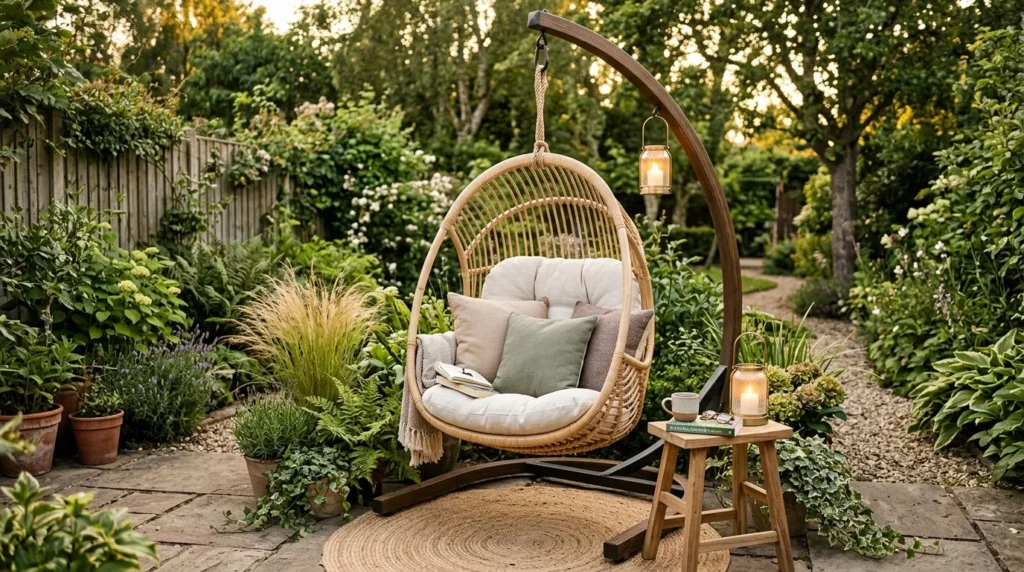
Quick Benefits

  • Creates a personal retreat
  • Adds visual interest
  • Perfect for reading
  • Works in small spaces
  • Provides a relaxed seating option

Why It Works

A hanging chair gives the backyard a different type of seating experience. Unlike a traditional chair or sofa, it introduces gentle movement and creates a dedicated place to relax.

It’s especially appealing for people who want a quiet reading corner rather than a large entertaining area.

The structure supporting the chair is critical. Hanging furniture should only be attached to structures designed and rated for the load, following the manufacturer’s installation requirements. Freestanding options can provide an alternative where structural attachment isn’t appropriate.

How To Style It

Position the chair where you have a pleasant view of the garden.

Add a comfortable outdoor cushion and a small side table for drinks or books.

Surround the area with plants, but leave enough clearance for the chair to move safely.

A nearby lantern or subtle landscape light can make the corner feel inviting in the evening.


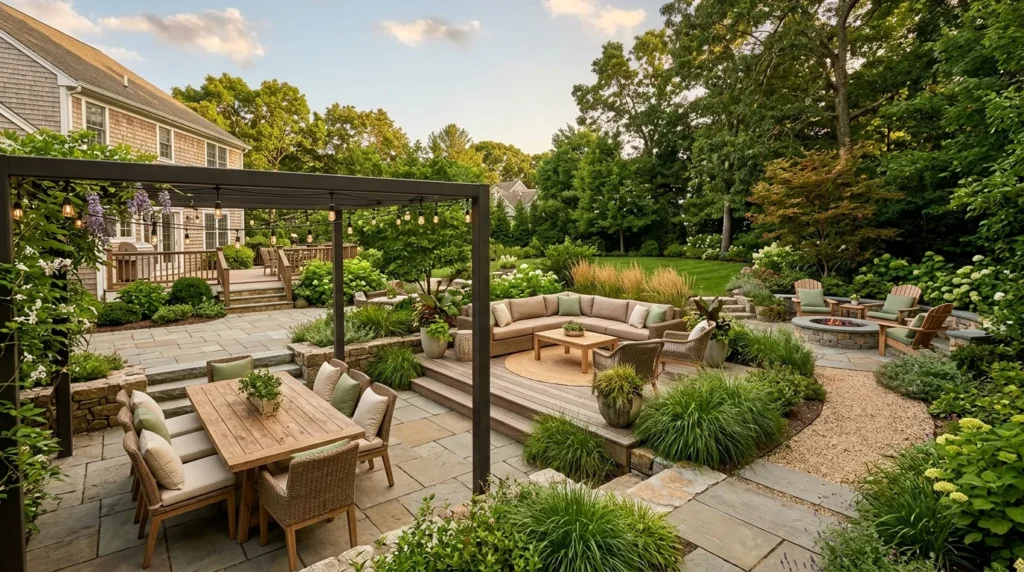
8. Multi-Level Seating
Quick Benefits

  • Works well in large yards
  • Creates visual structure
  • Separates activities
  • Accommodates different furniture
  • Makes open spaces feel intentional

Why It Works

Large backyards can present the opposite problem from small patios: there is so much space that furniture can look disconnected.

Creating different seating levels or zones gives the yard a stronger sense of organization.

One area can be used for dining, another for conversation, and a third for lounging or watching children play.

You don’t necessarily need expensive construction to create this effect. Different surfaces, rugs, planting beds, steps, or furniture arrangements can visually separate zones.

If actual grade changes are involved, construction should be planned carefully to address drainage, retaining structures, accessibility, and local requirements.

How To Style It

Use different furniture styles for different purposes while keeping the color palette consistent.

For example, a dining table can occupy one patio area while a low lounge sofa sits on another.

Use planting beds and pathways to create transitions between zones.

Outdoor rugs can also visually define furniture groupings without permanent construction.


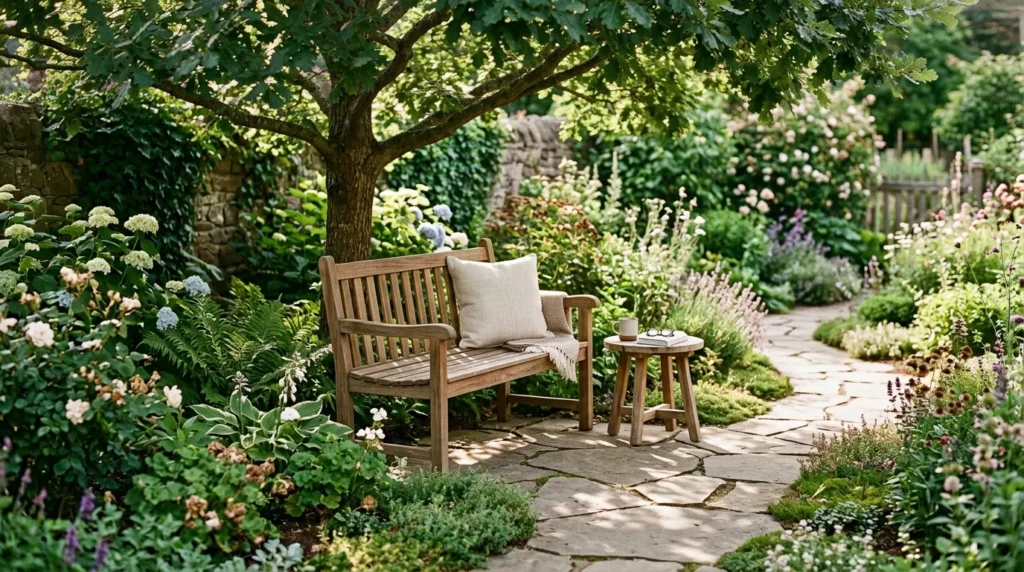
9. Tree-Shaded Bench
Quick Benefits

  • Uses natural shade
  • Creates a peaceful retreat
  • Requires minimal furniture
  • Integrates with landscaping
  • Works in traditional gardens

Why It Works

Sometimes the best seating location is already in your backyard.

A mature tree can provide shade, a sense of enclosure, and a beautiful natural backdrop. Adding a bench beneath or near it can create one of the simplest and most appealing seating areas.

The tree also provides vertical structure, which can make a small seating area feel more established.

However, avoid damaging tree roots or placing structures where they interfere with the tree’s health. The exact location should account for root zones, drainage, and mature canopy behavior.

How To Style It

Choose a bench material that complements the landscape. Natural wood can blend beautifully with mature trees, while painted benches can introduce a subtle accent.

Add a narrow planting bed nearby with shade-tolerant plants suited to your climate.

Keep the area simple. A bench, a small side table, and a few plants may be all you need.

A nearby pathway can turn the bench into a destination rather than a piece of furniture sitting randomly beneath a tree.


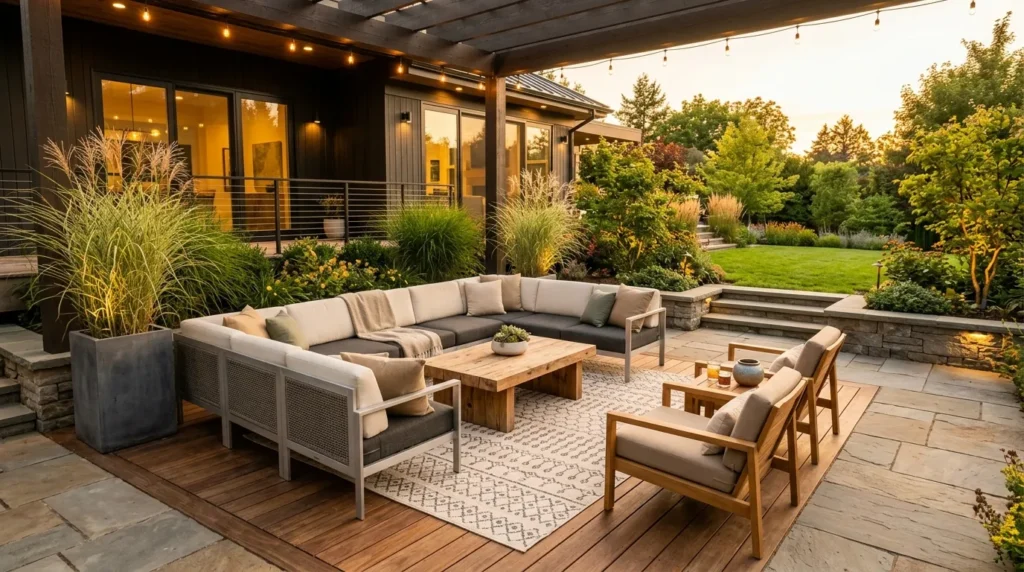
10. Outdoor Sectional Zone
Quick Benefits

  • Seats several people
  • Great for entertaining
  • Creates a strong focal point
  • Encourages conversation
  • Works with larger patios

Why It Works

An outdoor sectional can make a large patio feel much more comfortable because it fills the space with a clear seating structure.

Rather than placing multiple individual chairs around a large open area, a sectional establishes one substantial gathering zone.

This works particularly well for families and homeowners who regularly entertain.

The important thing is scale. A sectional should be large enough to suit the patio without blocking pathways or overwhelming nearby landscaping.

Look for outdoor construction and fabrics appropriate for your climate. Exposure to intense sun and moisture can affect furniture differently depending on the materials.

How To Style It

Place the sectional along two sides of the seating zone, preferably with a table or ottoman within easy reach.

Use a large outdoor rug to visually anchor the arrangement when appropriate.

Add two individual chairs if you need more flexible seating, but don’t overcrowd the area.

A coffee table, fire feature, or low planter can serve as the center point depending on how you use the space.

Complete the area with shade and lighting so the sectional remains useful throughout the day and evening.


How To Choose Backyard Seating

The best seating arrangement starts with how you actually use your backyard.

If you enjoy outdoor meals, prioritize a dining table. If your favorite activity is relaxing with a book, choose a comfortable lounge chair or hanging seat.

For entertaining, consider conversational seating where people can see one another easily.

For families, durable materials and easy-to-clean cushions may matter more than delicate decorative details.

The size of the backyard should also guide the decision.

A small patio may only need two chairs and a compact table. A large yard can support multiple zones without feeling crowded.

Always leave comfortable pathways between furniture pieces. A beautiful seating arrangement becomes frustrating if guests have to squeeze between chairs to move around.

How To Make Backyard Seating More Comfortable

Comfort isn’t just about cushions.

Shade matters. An umbrella, pergola, covered patio, or strategically positioned tree can make seating much more usable during sunny periods.

Support matters. Chairs and sofas should provide adequate back and seat support rather than looking good only in photographs.

Table height matters. Choose tables that match the seating so drinks, food, and books are easy to reach.

Texture matters. Outdoor rugs, cushions, throws, and planters can make the space feel more welcoming when suitable for exterior conditions.

Lighting matters. Soft evening illumination allows you to keep using the seating after sunset.

Backyard Seating For Small Spaces

A small backyard doesn’t need to feel like a compromise.

Use furniture that performs more than one function. A bench can provide seating and storage. An ottoman can serve as a footrest or occasional table. Folding chairs can be stored when they’re not needed.

Choose furniture that fits the scale of the patio.

Avoid placing a large sectional in a space where it leaves only narrow walking paths. Instead, consider a loveseat, bistro set, or two lounge chairs.

Vertical space can also help. A pergola, trellis, or hanging chair uses height without taking up much additional floor area.

Backyard Seating For Entertaining

If you frequently host guests, prioritize conversation.

Arrange seating so people can easily see and speak to one another. Avoid creating one long row of chairs that forces everyone to face the same direction.

A sectional paired with two chairs can provide a flexible arrangement.

For larger gatherings, use a combination of fixed and movable seating. Benches, stools, lightweight chairs, and ottomans can provide additional places to sit when needed.

Keep side tables accessible so guests have somewhere to place drinks.

A nearby outdoor kitchen, dining table, or beverage station can also reduce unnecessary trips inside.

Budget-Friendly Backyard Seating Ideas

You don’t need a designer furniture collection to create a beautiful seating area.

Start with one quality piece that serves your primary purpose.

Then add inexpensive supporting elements such as planters, outdoor cushions, simple side tables, or a secondhand bench.

Repurposed furniture can sometimes work, but make sure materials and finishes are suitable for exterior conditions before leaving them outdoors.

A simple wooden bench surrounded by plants can look more inviting than an expensive patio set without any landscaping.

The biggest improvement often comes from placement rather than price.

Common Backyard Seating Mistakes

One common mistake is buying furniture before measuring the space.

Always measure the patio and consider the full footprint of chairs when they’re pulled away from a table.

Another problem is ignoring the sun.

A beautiful seating area that receives intense afternoon heat may go unused unless shade is provided.

Don’t forget about drainage either. Furniture shouldn’t sit in areas where water regularly collects.

Finally, avoid filling every available space. Some open area is necessary for movement and helps the backyard feel more spacious.

FAQ

What is the best seating for a backyard?

The best seating depends on how you use the space. Outdoor sofas and sectionals work well for relaxing and entertaining, dining sets are useful for outdoor meals, and benches or bistro sets are practical for smaller yards. Choose furniture based on comfort, available space, climate, and the activities you want to support.

How can I make my backyard seating more comfortable?

Add shade, supportive cushions, outdoor rugs, side tables, and appropriate lighting. Position furniture where it benefits from natural shade when possible. Comfortable seating also needs enough space around it so people can move easily without bumping into furniture.

What is the best backyard seating for a small space?

A compact bistro set, loveseat, built-in bench, or two lounge chairs can work well in a small backyard. Choose furniture that fits the scale of the space and avoid blocking walking paths. Folding or movable pieces can provide additional flexibility when you need more room.

How do I arrange backyard furniture for conversation?

Position sofas and chairs so people face one another rather than arranging everything in a straight line. Keep a comfortable distance between seats and place a coffee table or ottoman in the center. The arrangement should allow guests to see and speak to each other without turning awkwardly.

How do I protect outdoor seating from weather?

Choose furniture and fabrics designed for outdoor use, and follow manufacturer care instructions. Covers, shade, proper drainage, and seasonal storage can help extend the life of cushions and furniture. In harsh climates, storing cushions or movable furniture during severe weather can be particularly helpful.

Can I use indoor furniture outside?

Indoor furniture generally isn’t designed to handle prolonged exposure to moisture, sunlight, temperature changes, and outdoor dirt. If you want to use a particular piece outdoors, verify that its materials and finish are appropriate for exterior conditions. Outdoor-rated furniture is usually the safer choice for permanent placement.

How can I create backyard seating without spending much?

Start with one simple seating piece and build around it. A basic bench, two chairs, or a small bistro set can become the foundation. Add plants, cushions, a small table, and lighting gradually. Shopping secondhand can also reduce costs when the furniture is suitable for outdoor use.

Conclusion

The best backyard seating arrangement is one that makes you want to spend more time outside.

You don’t need a huge patio or an expensive collection of furniture to create that feeling. A simple bench beneath a tree can become a peaceful morning retreat, while a small bistro set can turn an unused corner into your favorite coffee spot.

For entertaining, a sectional or fire pit circle can create a natural gathering point. If dining outdoors is important, a properly sized table may be the most useful investment you make.

Think about comfort, shade, movement, weather exposure, and the way your family actually uses the yard before choosing furniture. Then add personality through cushions, planters, outdoor rugs, lighting, and greenery.

Start with one seating zone rather than trying to furnish the entire backyard at once. Once you see how you use that space, it becomes much easier to decide whatโ€”if anythingโ€”you need to add next.

A thoughtfully arranged seating area can make a backyard feel less like an empty patch of outdoor space and more like another room of the home.

Related Articles

  • 12 Backyard Decor Ideas for a Cozy Outdoor Space
  • 11 Backyard Landscaping Ideas to Transform Your Yard
  • 11 Backyard Privacy Ideas for a More Secluded Outdoor Space
  • 10 Outdoor Lighting Ideas for a Beautiful Backyard at Night
  • 12 Backyard Patio Ideas for Comfortable Outdoor Living
Similar Posts

Leave a Reply

Your email address will not be published. Required fields are marked *