

11 Color Psychology in Fall Bedding Ideas
Fall is one of the easiest seasons to make a bedroom feel warmer, but choosing the right bedding colors can be surprisingly difficult. There are countless shades of rust, brown, cream, green, burgundy, mustard, and charcoal, and each one can change the mood of a room in a different way.
Color psychology can be a useful starting point. While individual responses to color are personal and influenced by culture, memories, lighting, and context, certain colors are commonly associated with particular feelings. Warm earthy shades can create a grounded atmosphere, softer neutrals can make a room feel calm, and deeper tones can add richness and visual weight.
That does not mean you need to completely redesign your bedroom every fall. In many cases, changing just the duvet cover, quilt, throw, or a few accent pillows can make the room feel noticeably more seasonal. The goal is to choose colors that work with the natural light, furniture, wall color, and overall style of your bedroom.
I’ve found that the most successful fall bedding combinations rarely rely on a single color. Instead, they use a dominant shade, one supporting neutral, and one smaller accent color. This keeps the bed interesting without making the room feel visually busy.
For example, rust can feel especially inviting when paired with warm cream. Forest green can look sophisticated against oatmeal and natural wood. Burgundy becomes softer when balanced with beige or ivory.
The 11 ideas below explore how different fall colors can influence the atmosphere of a bedroom and how to use them practically in bedding. Whether you prefer farmhouse, modern, traditional, minimalist, or cozy layered interiors, there is a combination you can adapt to your own space.
Table of Contents
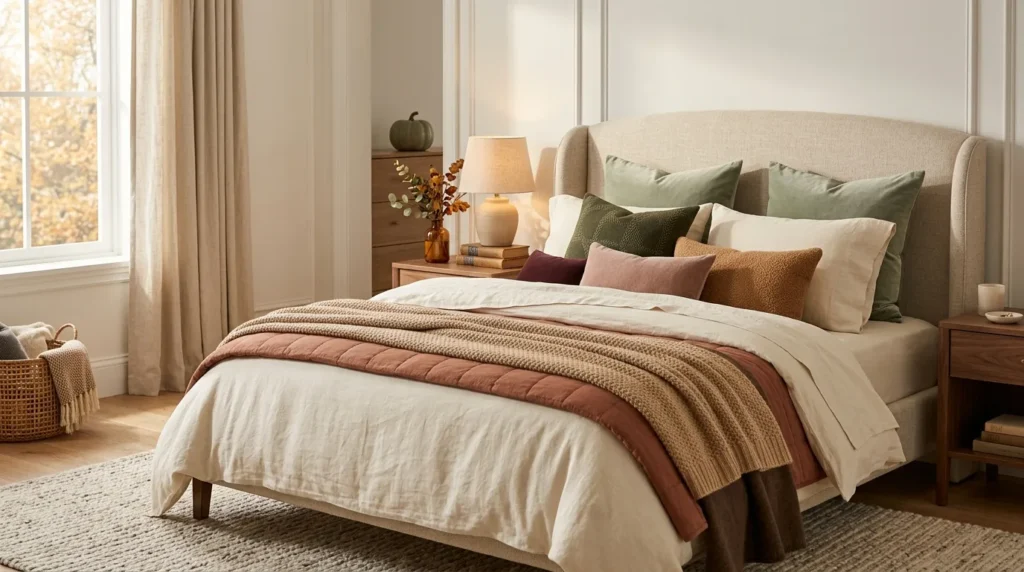
1. Warm Terracotta Layers
Use earthy terracotta to create an inviting and energetic autumn bedroom.
2. Creamy Neutral Bedding
Build a calm fall palette around ivory, cream, and soft beige.
3. Forest Green Comfort
Bring a grounded, natural feeling to the bedroom with deep green bedding.
4. Rich Burgundy Accents
Add depth and warmth with sophisticated wine-inspired tones.
5. Golden Mustard Touches
Use small amounts of mustard to introduce cheerful autumn warmth.
6. Chocolate Brown Layers
Create a grounded, cocoon-like bedroom with rich brown textiles.
7. Dusty Blue Balance
Pair a cool blue with warm autumn shades for a balanced seasonal look.
8. Muted Rust And Beige
Combine two earthy colors for a relaxed, timeless fall palette.
9. Charcoal Contrast
Use deep gray to create sophistication without relying on black.
10. Soft Olive Green
Bring a natural, understated autumn mood into the bedroom.
11. Layered Autumn Palette
Combine several fall colors carefully for a collected, designer-inspired bed.
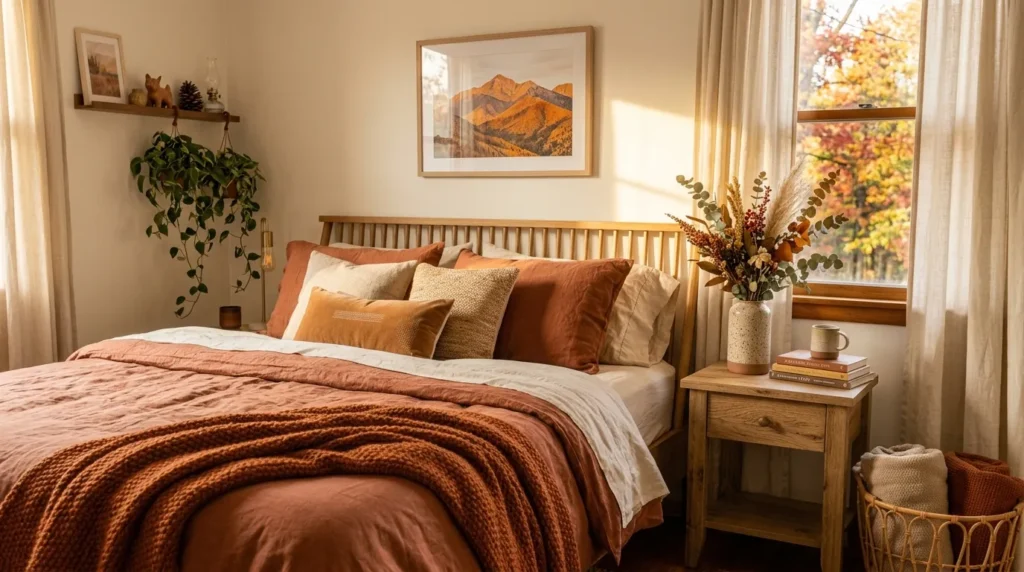
1. Warm Terracotta Layers
Quick Benefits
- Creates an inviting autumn atmosphere
- Adds warmth without looking overly bright
- Works beautifully with cream and beige
- Complements natural wood furniture
- Easy to introduce through throws and pillows
Why It Works
Terracotta sits between orange, red, and brown, giving it a naturally earthy appearance. It is closely associated with clay, autumn leaves, warm sunsets, and natural materials, which makes it an easy color choice for seasonal bedding.
In a bedroom, terracotta can create a sense of warmth and energy without the intensity of bright orange. Its earthy quality also makes it easier to combine with neutrals.
A terracotta duvet can become the main focal point, while cream sheets and beige pillows soften the overall appearance. Natural wood furniture can further reinforce the connection to autumn.
Because terracotta is relatively strong, using it in moderation can create more visual balance.
How To Style It
Start with cream or ivory sheets, then add a terracotta quilt or duvet cover.
Layer in beige pillows and one darker brown accent pillow. A woven throw at the foot of the bed can add another natural texture.
For farmhouse bedrooms, combine terracotta with distressed wood and linen-style fabrics.
For contemporary rooms, keep the rest of the palette simple with cream walls, clean-lined furniture, and minimal accessories.
If a full terracotta duvet feels too bold, begin with a throw blanket or two accent pillows.
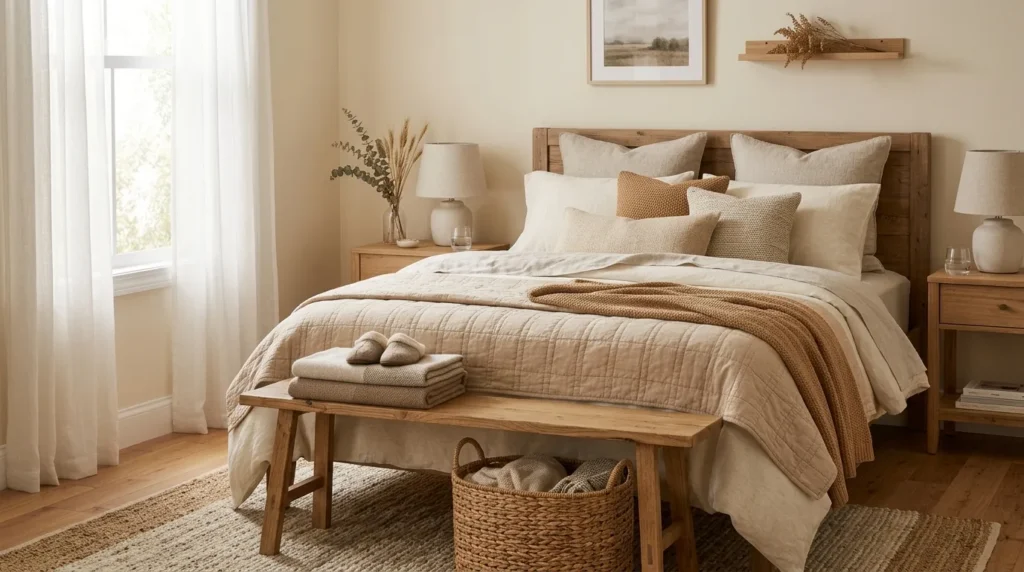
2. Creamy Neutral Bedding
Quick Benefits
- Creates a calm visual foundation
- Works with almost any bedroom style
- Makes seasonal accents stand out
- Keeps small bedrooms feeling open
- Easy to update throughout the year
Why It Works
Cream, ivory, oatmeal, and warm beige are especially useful when you want your fall bedroom to feel peaceful rather than heavily decorated.
Neutral colors tend to recede visually, which can help create a less visually demanding environment. They also provide flexibility because almost any autumn accent can be layered over them.
Instead of choosing stark white, warmer neutrals can give bedding a softer seasonal appearance. This is particularly helpful in rooms with warm wood flooring, brass accents, or beige walls.
A neutral bed also allows texture to become more important. Quilting, linen-look fabric, chunky knits, and woven blankets can create visual interest without adding additional colors.
How To Style It
Build the bed around cream or oatmeal bedding.
Add a warm beige quilt, textured ivory pillows, and a caramel or rust throw.
For contrast, introduce one darker shade such as chocolate brown or forest green.
A wooden bench at the foot of the bed can reinforce the warm autumn feeling.
This is also a practical choice if you decorate seasonally because the neutral bedding can remain in place when you transition from fall to winter.
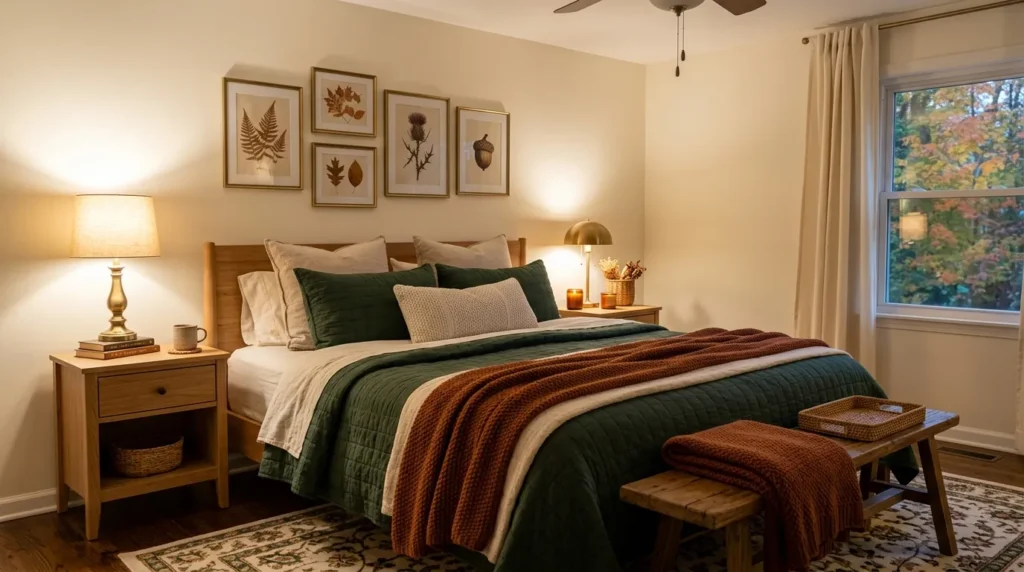
3. Forest Green Comfort
Quick Benefits
- Creates a grounded natural mood
- Pairs well with warm neutrals
- Adds depth without using black
- Works in traditional and modern bedrooms
- Complements natural wood
Why It Works
Deep green is often associated with nature, foliage, forests, and stability. In a bedroom, forest green can feel rich and grounded while still providing a connection to the outdoors.
The shade works particularly well during fall because it contrasts beautifully with rust, brown, cream, and muted orange.
A very dark green can visually dominate a small room, so balancing it with lighter bedding is often helpful.
Forest green is also versatile beyond the fall season. Unlike highly seasonal orange, it can work through winter and even into spring when paired differently.
How To Style It
Try a forest green quilt with cream sheets and oatmeal pillows.
Add a rust-colored throw for a clear autumn connection.
Natural wood nightstands, woven baskets, and botanical artwork can reinforce the organic palette.
For a sophisticated look, combine forest green with cream and antique brass-style accents.
For a farmhouse room, use green in a quilted coverlet rather than a glossy duvet.
4. Rich Burgundy Accents
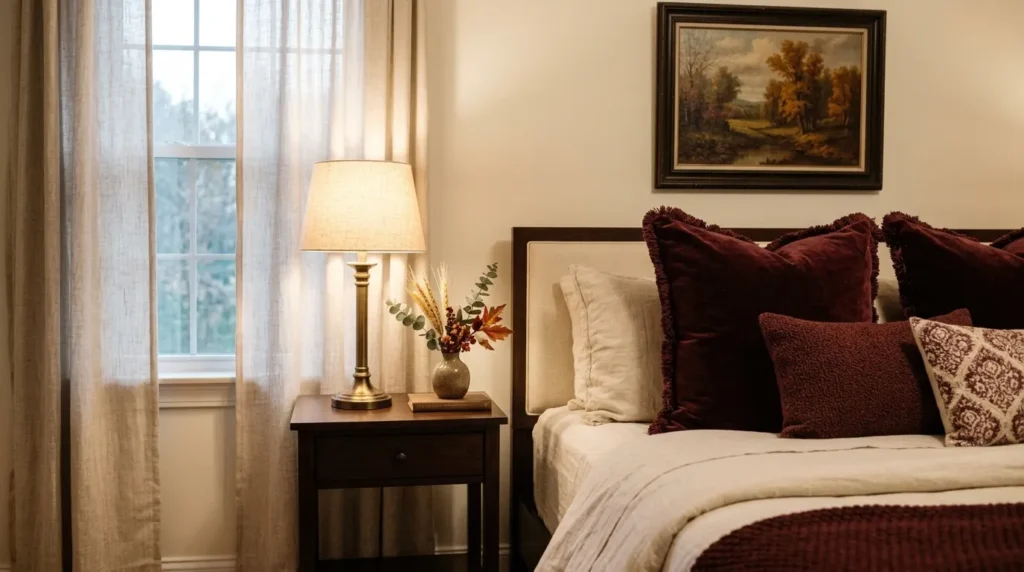
Quick Benefits
- Adds depth and visual richness
- Creates an intimate atmosphere
- Works beautifully with cream
- Fits traditional and romantic interiors
- Can be used in small amounts
Why It Works
Burgundy is a deep red with strong associations with richness, warmth, and sophistication. Because it is darker and less saturated than bright red, it can feel more appropriate for a restful bedroom.
It is particularly effective as an accent color. A burgundy pillow or throw can add depth to neutral bedding without turning the entire room red.
The shade pairs naturally with cream, taupe, brown, charcoal, and warm wood.
For fall, burgundy can also echo the colors of changing leaves and seasonal berries without being too literal.
How To Style It
Keep the main bedding cream or oatmeal, then add two burgundy pillows.
Fold a burgundy throw across the bottom of the bed for a concentrated color moment.
For a richer bedroom, combine burgundy with chocolate brown and antique brass-style details.
If the room is already dark, use burgundy sparingly and balance it with lighter bedding and warm lighting.
Velvet-look cushions can make the color feel especially rich, while linen-style fabrics create a more relaxed effect.
5. Golden Mustard Touches
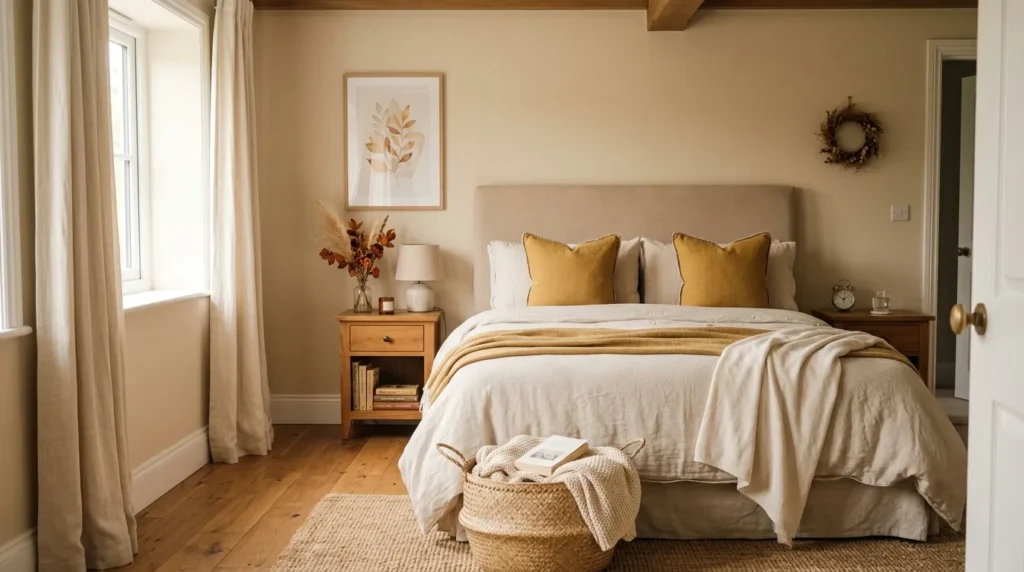
Quick Benefits
- Adds cheerful warmth
- Works well with neutrals
- Creates visual interest
- Connects naturally with fall foliage
- Easy to use as an accent
Why It Works
Mustard is a muted yellow with brown undertones, making it considerably softer than bright yellow. It can bring warmth and optimism to a bedroom while still fitting an autumn palette.
Because yellow is visually energetic, mustard is usually more effective as an accent than as the dominant bedding color.
Against cream or beige, it creates a noticeable but comfortable contrast.
It also pairs well with navy, charcoal, brown, olive, and muted rust.
How To Style It
Use mustard in one throw blanket or a pair of decorative pillows.
Pair it with cream bedding and warm brown accents.
For a more dramatic look, introduce charcoal sheets or a dark upholstered headboard.
Natural wood furniture helps soften the stronger yellow undertone.
If your bedroom receives limited natural light, use mustard carefully and choose a slightly muted shade rather than an intensely saturated yellow.
6. Chocolate Brown Layers
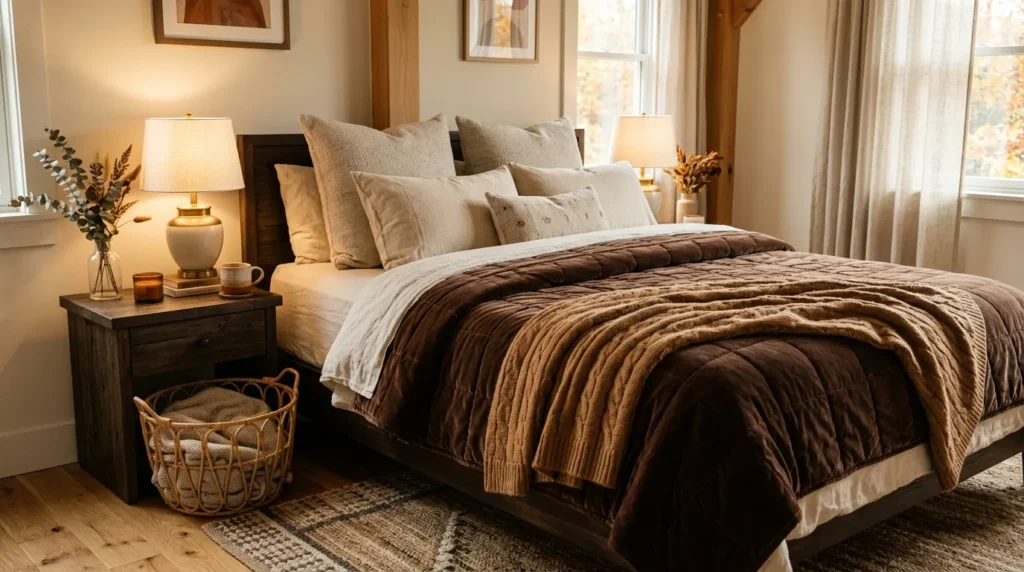
Quick Benefits
- Creates a grounded atmosphere
- Feels warm and cocoon-like
- Works beautifully with cream
- Complements wood furniture
- Fits rustic and modern styles
Why It Works
Brown is strongly connected with natural materials such as wood, soil, leather, and earth. In bedding, chocolate brown can create a grounded feeling and visually warm up a bedroom.
Very dark brown can have a similar visual weight to charcoal but often feels softer and warmer.
The key is contrast. A completely brown bed can look heavy, particularly in a small room. Pairing brown with cream, oatmeal, or warm white keeps the composition balanced.
How To Style It
Try chocolate brown in a quilt or duvet cover with cream sheets.
Add oatmeal pillows and a caramel-colored throw.
For a rustic bedroom, combine the bedding with natural wood and woven textures.
For a modern space, pair dark brown with simple cream bedding and black metal accents.
Avoid using too many similar dark brown shades without a lighter color to break them up.
7. Dusty Blue Balance
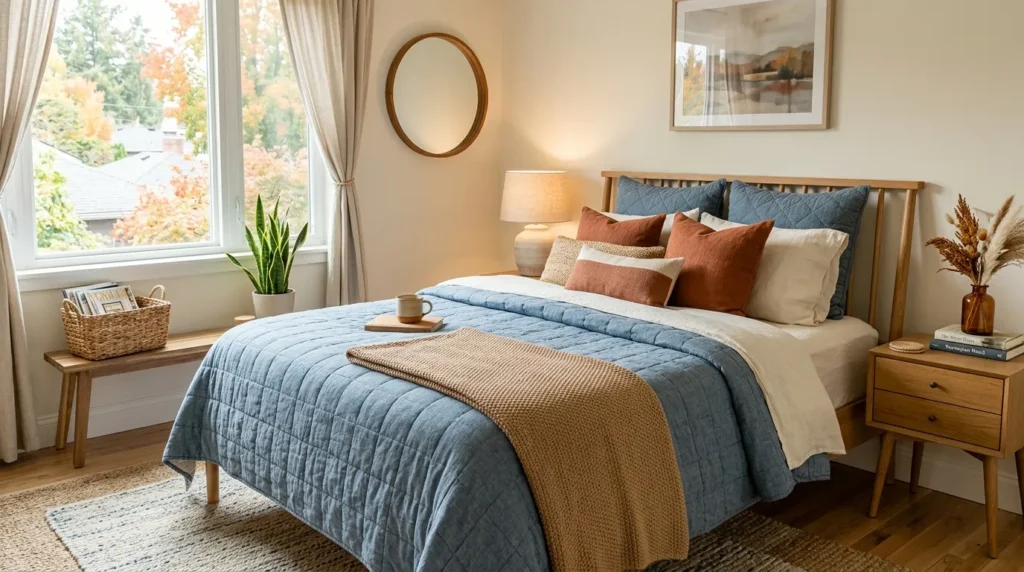
Quick Benefits
- Introduces a cool counterpoint to warm colors
- Creates a relaxed atmosphere
- Works across seasons
- Pairs well with rust and brown
- Useful for bedrooms that already contain blue
Why It Works
Fall decorating does not require every color to be warm. A dusty blue can create a welcome contrast against rust, terracotta, caramel, and brown.
Blue is commonly associated with calmness and spaciousness, while the muted quality of dusty blue prevents the color from feeling overly bright or summery.
This makes it a particularly useful option if your bedroom already has blue walls, curtains, or furniture.
Instead of replacing your existing palette, you can introduce a few warm autumn accents around it.
How To Style It
Start with dusty blue bedding or a quilt.
Add rust-colored pillows and a camel throw.
Cream sheets can bridge the cool and warm colors.
Natural wood nightstands and woven accessories can further connect the palette to fall.
This combination works especially well in bedrooms with plenty of natural light because the blue remains soft while the warm accents add depth.
8. Muted Rust And Beige
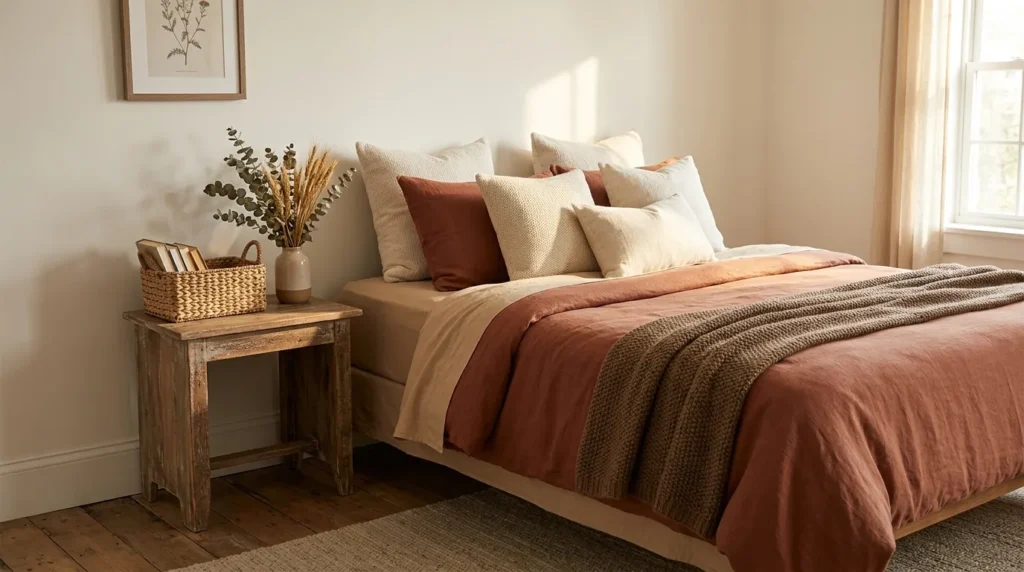
Quick Benefits
- Creates a relaxed autumn palette
- Feels warm without being intense
- Works with farmhouse interiors
- Complements natural textures
- Easy to layer
Why It Works
Rust and beige are close enough in temperature to feel harmonious, but different enough in depth to create contrast.
Rust provides the seasonal color, while beige acts as a visual buffer. This combination is particularly useful if you want a fall bedroom that feels warm but not overly dramatic.
The palette also works beautifully with natural materials. Linen-look bedding, woven baskets, rattan, wood, and ceramic accessories can all fit naturally into the scheme.
How To Style It
Use beige as the dominant bedding color and introduce rust through a quilt or throw.
Add cream pillows and one medium-brown accent.
For a farmhouse look, include a woven bench or basket.
For a modern bedroom, simplify the arrangement and use clean-lined bedding.
A small dried floral arrangement in rust and beige tones can connect the bedding to the rest of the room.
9. Charcoal Contrast
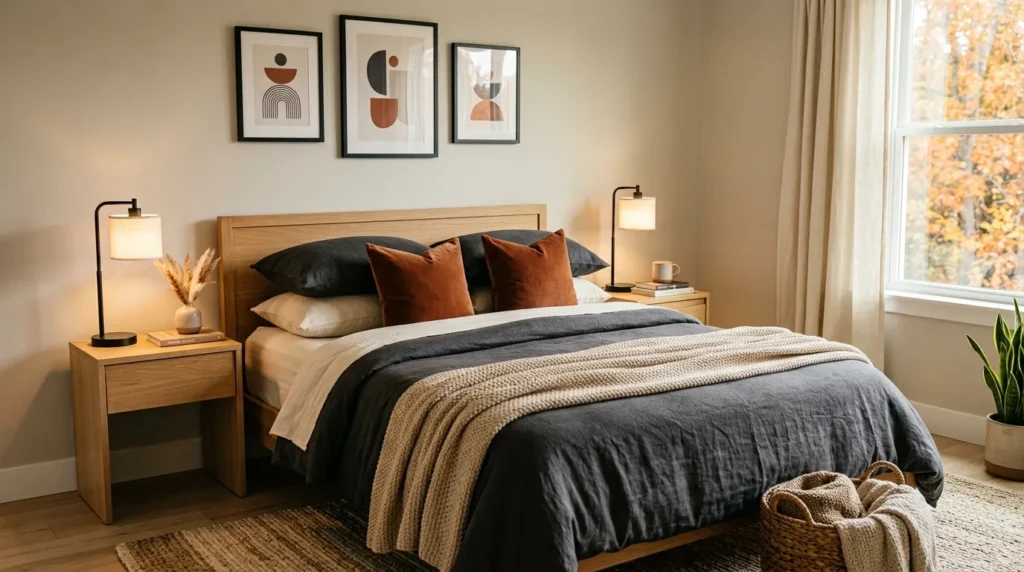
Quick Benefits
- Adds sophistication
- Creates strong contrast
- Works with warm autumn colors
- Easier to soften than pure black
- Fits modern bedrooms
Why It Works
Charcoal can provide the dramatic visual weight of black while feeling slightly softer and more versatile.
It works particularly well when paired with lighter fall colors. Cream bedding with charcoal pillows and a rust throw creates a clear contrast without overwhelming the room.
Charcoal can also help anchor lighter colors. In a room filled with beige and cream, a few dark gray elements can keep the palette from feeling too pale.
How To Style It
Use charcoal in the duvet, quilt, or accent pillows.
Pair it with cream sheets and warm brown or rust accessories.
For a minimalist bedroom, keep the palette limited to charcoal, cream, and one autumn accent.
For a more layered look, add forest green or burgundy in small amounts.
Warm bedside lamps can soften the cooler appearance of gray.
10. Soft Olive Green
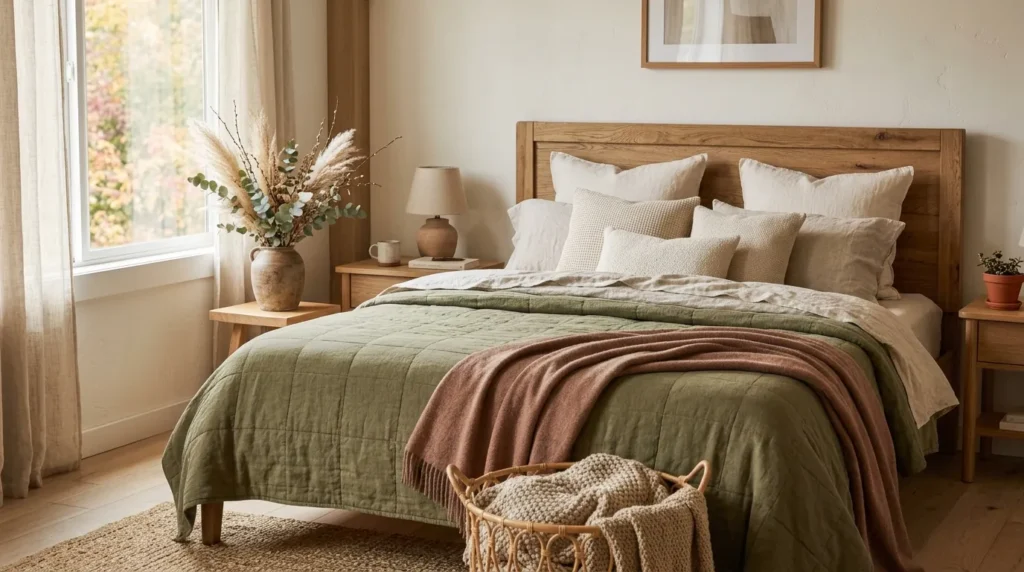
Quick Benefits
- Creates a natural atmosphere
- Softer than deep forest green
- Works with warm neutrals
- Easy to use in small bedrooms
- Complements earthy fall colors
Why It Works
Olive green sits between green, yellow, and brown, which gives it a naturally earthy quality.
It can create a connection to nature without the visual intensity of a deep forest shade. This makes olive particularly useful when you want seasonal color but still prefer a light, relaxed bedroom.
Olive also works beautifully with beige, cream, terracotta, brown, and muted gold.
How To Style It
Use olive in a quilt, coverlet, or pair of pillows.
Combine it with oatmeal bedding and a rust-colored throw.
Natural wood and woven textures can reinforce the earthy palette.
For a modern look, pair olive with cream and black accents.
For a softer farmhouse bedroom, combine olive with beige, distressed wood, and subtle floral patterns.
11. Layered Autumn Palette
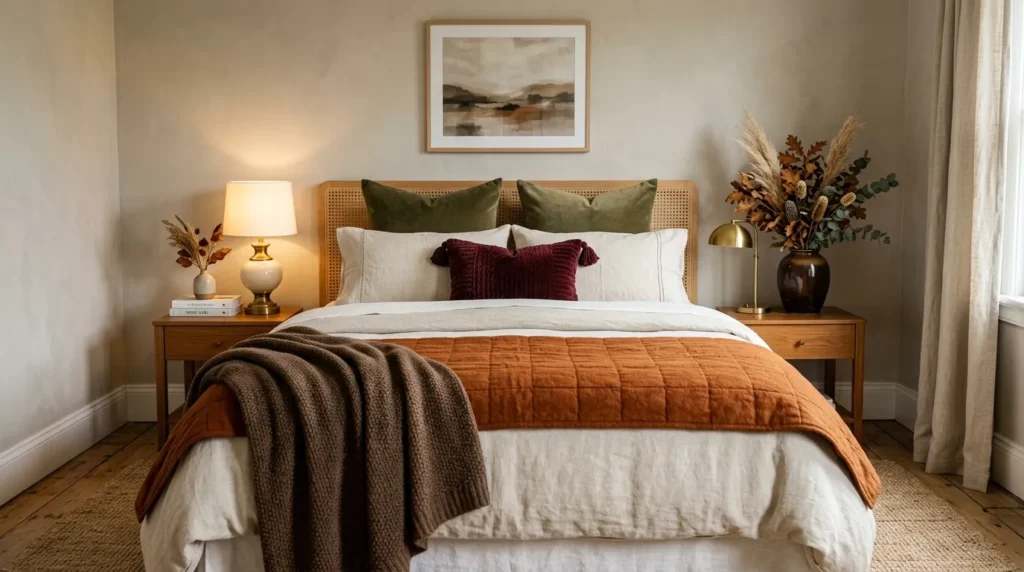
Quick Benefits
- Creates a collected designer-inspired look
- Allows multiple seasonal colors
- Adds visual depth
- Works with neutral bedrooms
- Makes bedding feel more intentional
Why It Works
Some of the most attractive fall beds do not rely on one obvious seasonal color. Instead, they combine several related shades that create a gradual transition from light to dark.
A palette of cream, beige, rust, olive, brown, and burgundy can feel rich without becoming chaotic when each color has a clear role.
The simplest approach is to choose one dominant color, one secondary color, and one small accent. This keeps the bed visually organized.
Texture can then provide additional interest without requiring more colors.
How To Style It
Begin with cream or oatmeal sheets and a neutral duvet.
Add a rust or olive quilt as the primary seasonal layer.
Use two accent pillows in burgundy or chocolate brown.
Finish with a textured throw in a lighter beige or caramel shade.
Keep the surrounding bedroom relatively simple so the bed remains the focal point.
Repeat one or two of the bedding colors in artwork, curtains, or a small decorative object to create cohesion.
Frequently Asked Questions
What are the best fall colors for bedroom bedding?
Popular fall bedding colors include terracotta, rust, cream, beige, forest green, olive, burgundy, chocolate brown, mustard, and charcoal. The best combination depends on your existing bedroom. Warm neutrals provide a flexible foundation, while darker greens, burgundy, and rust can introduce richer seasonal color through quilts, throws, and pillows.
Does color psychology really affect how a bedroom feels?
Color can influence the visual and emotional impression of a room, but individual responses vary. Lighting, room size, personal preferences, cultural associations, and existing furnishings all matter. Instead of treating color psychology as a strict rule, use it as a design tool. Choose colors that create the atmosphere you want while considering how they interact with the rest of your bedroom.
What bedding colors make a bedroom feel cozy in fall?
Warm cream, beige, terracotta, rust, brown, burgundy, olive, and deep green can all contribute to a cozy fall atmosphere. Texture is equally important. Quilts, knitted throws, linen-look fabrics, and layered pillows can make the bed feel more inviting even when the colors are relatively neutral.
What is the best fall bedding color for a small bedroom?
Lighter colors such as cream, oatmeal, warm beige, and soft olive can help a small bedroom feel open while still providing a seasonal look. If you prefer darker colors, use charcoal, brown, or forest green as accents rather than covering the entire bed in a very dark shade. Keeping some lighter layers visible can maintain visual balance.
How many colors should I use when styling fall bedding?
A simple three-color approach works well for most bedrooms. Choose one dominant neutral, one seasonal color, and one smaller accent. For example, cream can be the base, rust can provide the main fall color, and chocolate brown can serve as the accent. This creates variety without making the bed feel visually cluttered.
Can cool colors work in fall bedding?
Absolutely. Dusty blue, muted gray, and soft blue-green can work beautifully with autumn colors. Pairing a cool shade with warm rust, caramel, brown, or terracotta creates contrast and prevents the bedroom from becoming too warm visually. Cool colors are particularly useful when they already appear elsewhere in the room.
How can I make fall bedding look expensive without buying everything new?
Focus on layering and texture rather than purchasing an entire bedding collection. Start with your existing neutral sheets and duvet, then add one seasonal quilt, throw, or pair of accent pillows. Use colors that complement your furniture and repeat them in small accessories. A well-layered bed can look much more intentional than a collection of unrelated seasonal pieces.
Conclusion
Fall bedding is about more than choosing an autumn color. The right combination can change the entire visual mood of a bedroom, especially when color is paired with thoughtful layering and texture.
Warm terracotta and rust can create an inviting atmosphere, while cream and beige provide a calm foundation. Forest and olive greens connect the bedroom with nature, burgundy adds depth, and chocolate brown creates a grounded feeling. If you prefer contrast, dusty blue can balance warmer fall shades beautifully.
You also do not need to commit to a dramatic seasonal makeover. A neutral duvet can remain the foundation while a rust throw, olive quilt, or burgundy pillow introduces just enough color for October and November.
When choosing your palette, look at the bedroom as a whole. Consider natural light, wall color, flooring, furniture, curtains, and existing accessories. A color that looks beautiful in a store may feel completely different under the lighting in your own room.
Most importantly, use color psychology as inspiration rather than a strict formula. Your personal response to color matters just as much as any design guideline.
Start with one shade you genuinely enjoy, build around a neutral, and add texture through quilts, throws, pillows, and woven materials. The result will feel seasonal without becoming temporary or overly themed.
Related Articles
- Cozy Fall Bedroom Ideas for a Warm Seasonal Retreat
- 12 Halloween Bedroom Ideas for a Cozy Spooky Space
- Elegant Neutral Bedroom Ideas for Every Season
- Small Bedroom Decorating Ideas That Maximize Comfort
- Layered Bedding Ideas for a Cozy Bedroom