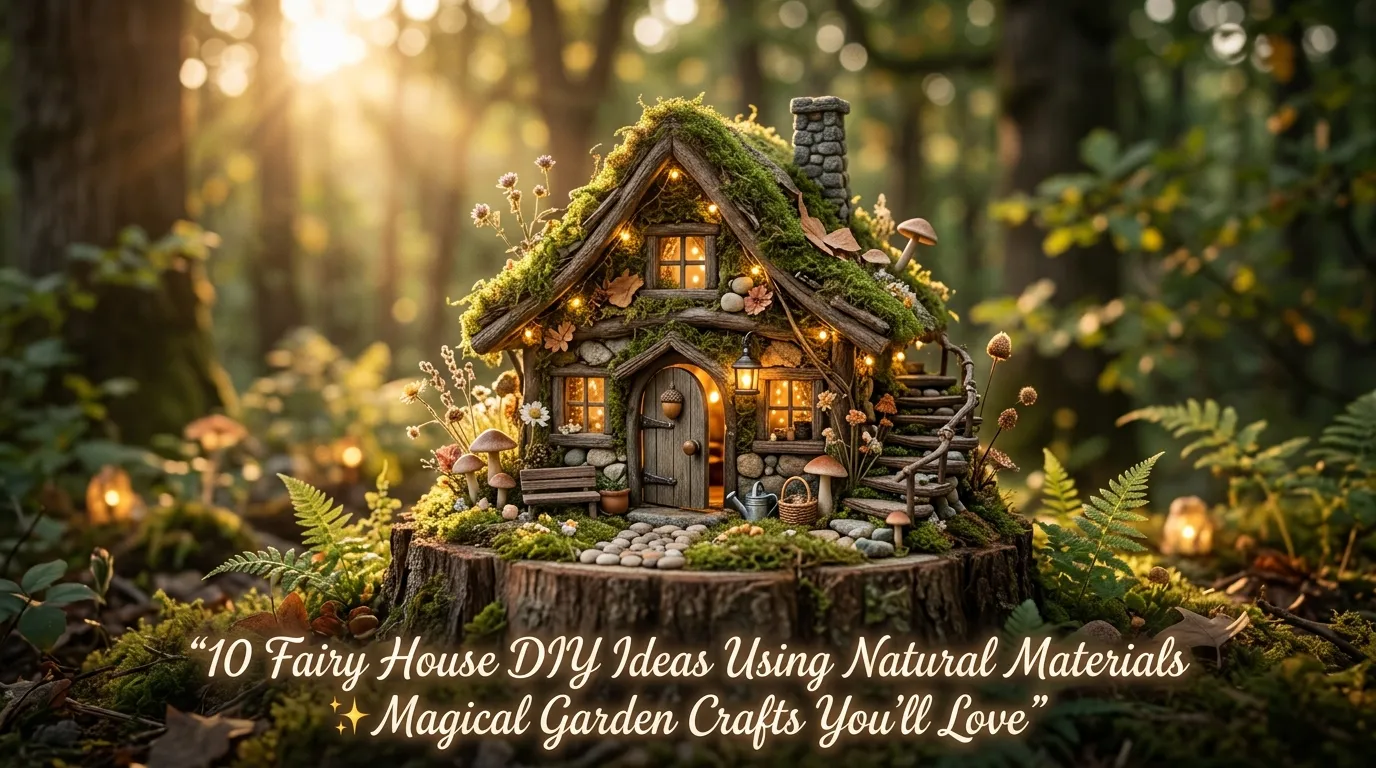
10 Fairy House DIY Natural Materials Magical Craft
There is something magical about creating tiny fairy houses from items found in nature. Whether you’re collecting moss from the garden, gathering pinecones during a woodland walk, or saving interesting stones from a hiking trail, these simple materials can be transformed into enchanting miniature homes. Fairy house crafting has become increasingly popular because it combines creativity, outdoor exploration, and hands-on DIY fun.
Many families enjoy making fairy houses together because the project encourages imagination while helping children connect with nature. Adults love them too, especially when designing whimsical fairy gardens, cottagecore displays, or seasonal outdoor decorations. The beauty of these projects is that every creation becomes completely unique. With a little inspiration and a few carefully chosen supplies, you can build charming fairy homes that look as if they belong in a magical woodland storybook.
1. Mossy Woodland Cottage
Bullet Points
- Uses natural moss for realistic texture
- Creates a classic fairy tale appearance
- Blends beautifully into gardens
- Easy for beginners to build
- Adds magical woodland charm
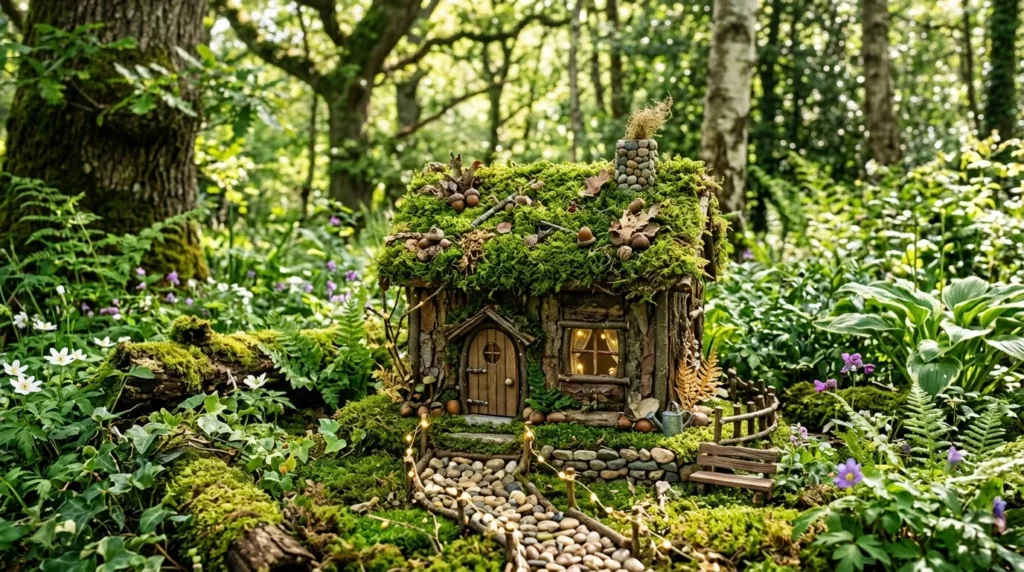
Nothing captures the spirit of a fairy garden quite like a moss-covered woodland cottage. The soft green texture immediately makes the structure feel as though it has existed in the forest for years. By combining bark walls, twig details, and a thick moss roof, crafters can create an authentic miniature home that looks naturally integrated into the landscape. The rich textures provide depth while maintaining a simple and approachable design. This style works particularly well in shaded gardens where greenery already plays a major role in the overall setting.
The charm of a mossy cottage comes from its ability to feel both rustic and magical. Small pebble pathways, tiny wooden doors, and miniature flower arrangements can further enhance the effect. In my experience, this design often becomes the focal point of a fairy garden because it feels so inviting and realistic. The finished project encourages creativity while adding a whimsical element to outdoor spaces. The result is a delightful miniature retreat that appears ready to welcome tiny woodland visitors.
2. Acorn Roof Retreat
Bullet Points
- Features unique acorn roof details
- Uses easily collected materials
- Creates strong visual interest
- Perfect for autumn-themed displays
- Offers charming woodland appeal
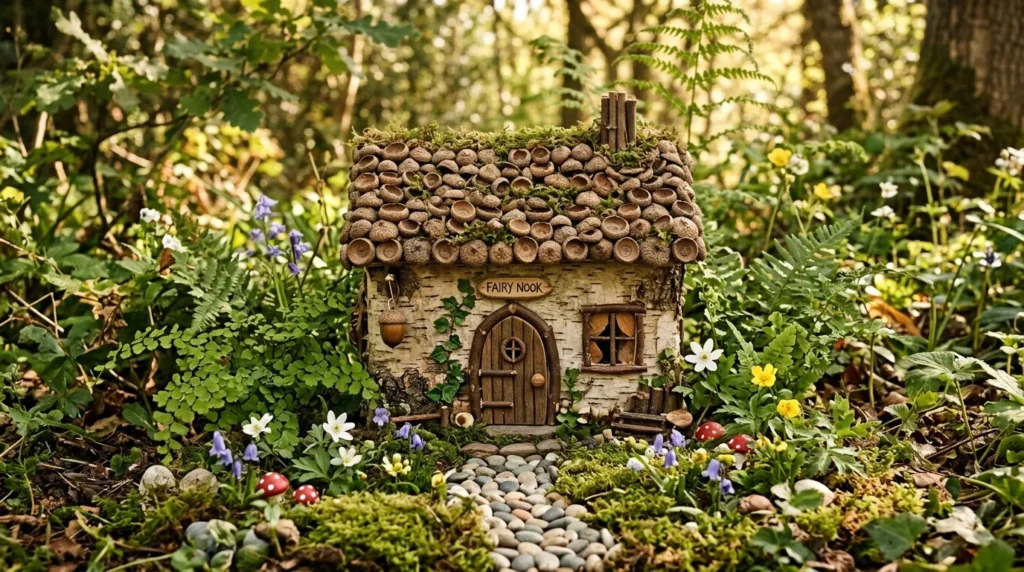
Acorns provide one of the most distinctive materials available for fairy house construction. Their natural shape creates beautiful roof textures that instantly add character and detail. Layering acorn caps carefully across the top of a small structure produces a roof that resembles handcrafted shingles. Combined with bark siding and twig accents, the finished design feels authentic and highly decorative. Homeowners and crafters often appreciate how simple materials can create such impressive visual results with minimal cost.
The beauty of this design lies in its versatility. Acorn roofs complement woodland gardens, seasonal displays, and cottagecore-inspired decorations equally well. I’ve noticed that the natural color variations found in acorns help create depth and realism that manufactured materials often lack. Adding miniature lanterns, pebble walkways, or tiny planters further enhances the overall appearance. The finished retreat becomes a charming addition to any fairy village while celebrating the beauty of nature-inspired craftsmanship.
3. Tree Stump Hideaway
Bullet Points
- Creates a realistic forest look
- Uses reclaimed natural materials
- Fits woodland garden themes
- Adds rustic character
- Encourages creative customization
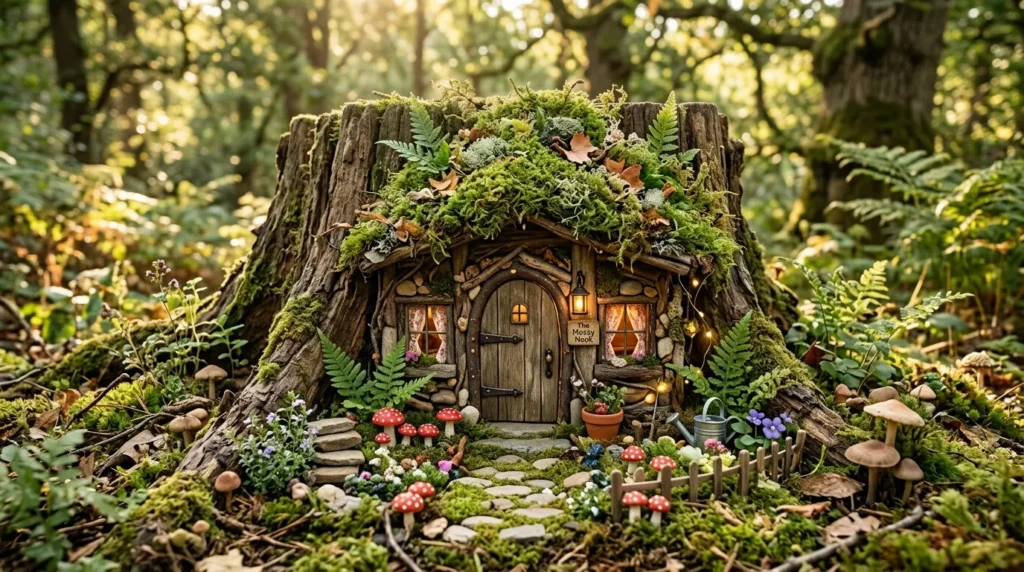
A tree stump provides the perfect foundation for a fairy house because it already feels connected to the natural environment. Whether using an actual stump in the garden or crafting a miniature version, this concept creates an enchanting woodland retreat. Tiny doors carved into the structure, moss-covered roofs, and natural bark textures contribute to the illusion that fairies may truly live inside. The design feels organic and timeless while offering countless opportunities for personalization and creative expression.
One reason this style remains popular is its strong visual impact. The natural form of a stump instantly attracts attention while blending seamlessly into outdoor landscapes. In my experience, adding miniature mushrooms, pebbles, and tiny windows helps bring the design to life. The structure feels less like a craft project and more like a hidden discovery tucked within the forest. The result is a magical centerpiece that adds storytelling potential and whimsical charm to any fairy garden display.
4. Pebble Door Cottage
Bullet Points
- Adds colorful texture
- Uses inexpensive materials
- Creates durable construction
- Enhances visual detail
- Works in many garden styles
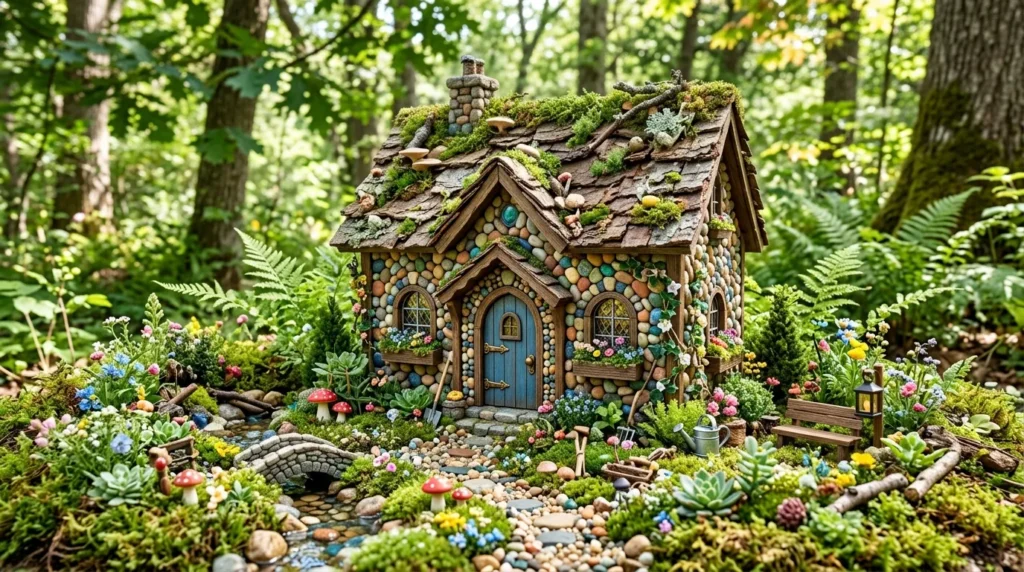
Pebbles can transform a simple fairy house into a miniature masterpiece filled with texture and personality. Carefully arranged around a small structure, stones create decorative walls that mimic traditional masonry. The variation in color and shape provides natural beauty while helping the cottage feel sturdy and realistic. Combined with wooden accents and greenery, pebble details create a balanced design that feels handcrafted yet sophisticated. This approach works particularly well for crafters who enjoy adding intricate details to their projects.
The durability of pebble construction is another advantage. Small stones withstand outdoor conditions well, making them ideal for fairy gardens exposed to weather. I’ve seen this work beautifully in many outdoor displays because the natural materials age gracefully over time. Tiny pathways, miniature gardens, and decorative doors can further enhance the visual appeal. The result is a charming cottage that combines creativity, texture, and lasting beauty in one magical design.
5. Pinecone Castle
Bullet Points
- Creates dramatic fairy architecture
- Uses abundant natural materials
- Offers unique texture variation
- Perfect for fantasy themes
- Adds height to displays
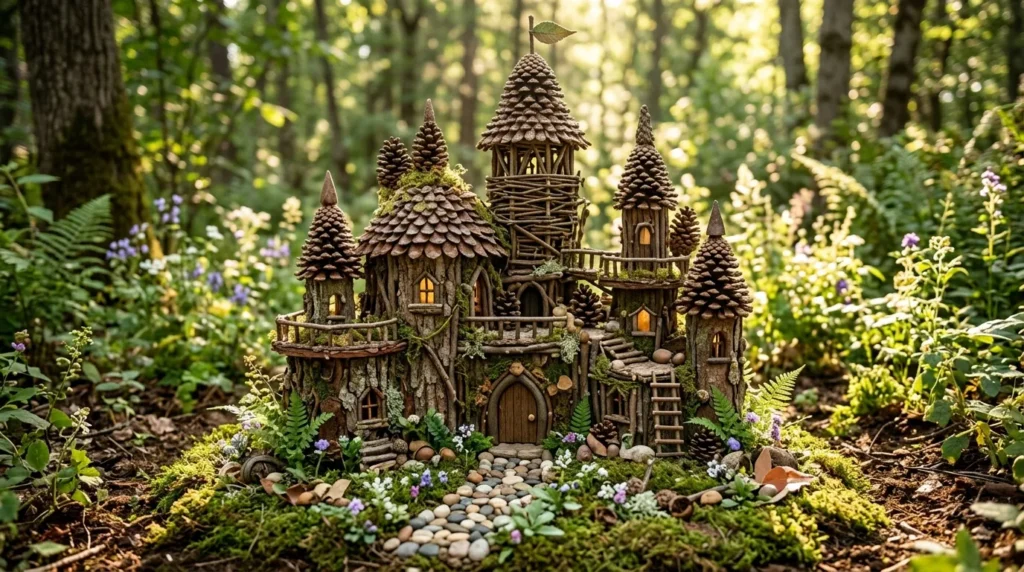
Few materials inspire imagination quite like pinecones. Their layered scales naturally resemble castle towers, rooftops, and decorative architectural elements. By combining multiple pinecones with twigs, bark, and moss, crafters can create elaborate fairy castles that stand out within any miniature village. The structure feels whimsical and grand while remaining firmly rooted in nature-inspired design. Children and adults alike are often drawn to these fantasy-inspired creations because they look as though they belong in a magical storybook kingdom.
The visual impact of a pinecone castle makes it ideal as a centerpiece. Larger pinecones can serve as towers while smaller pieces create supporting structures and decorative details. I’ve noticed that these castles photograph exceptionally well for Pinterest because they offer height, texture, and strong visual interest. Adding pathways, tiny flags, and surrounding greenery enhances the fantasy atmosphere even further. The finished castle becomes a captivating focal point that sparks creativity and transforms any fairy garden into a magical destination.
6. Twig Cabin Haven
Bullet Points
- Uses simple natural supplies
- Creates rustic woodland charm
- Easy to customize
- Works in all fairy gardens
- Adds cozy cottage appeal
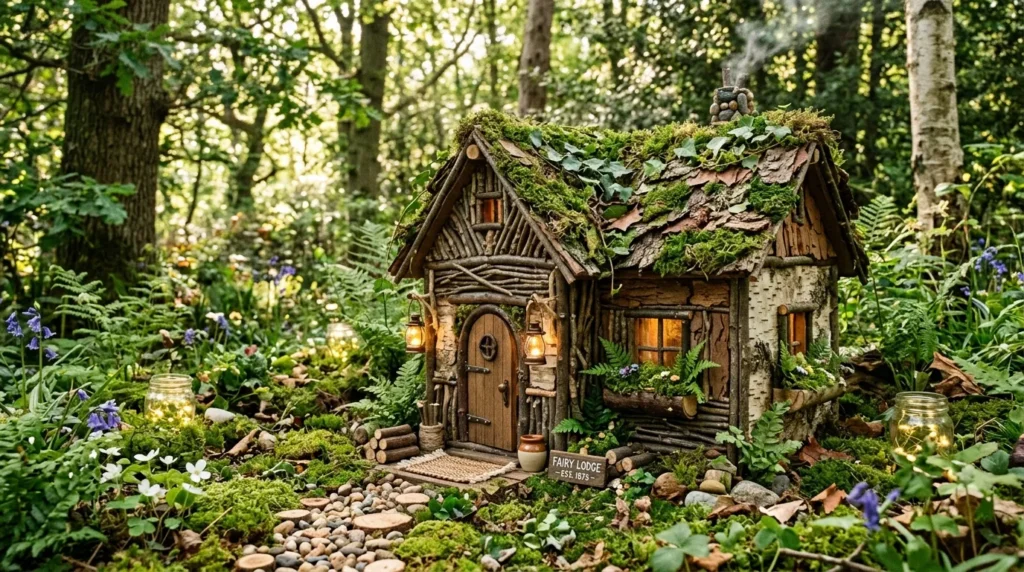
A twig cabin is one of the easiest and most charming fairy house projects to create. Small branches gathered from the yard can be trimmed and arranged to form miniature log-style walls that look surprisingly realistic. The natural texture of the wood instantly creates a cozy woodland atmosphere. Adding a bark roof, pebble chimney, and moss landscaping helps complete the design. This style feels warm and inviting while remaining simple enough for beginners to build without advanced crafting skills.
The beauty of a twig cabin lies in its authenticity. Every branch brings unique color, texture, and character to the finished structure. I’ve seen this work well in many fairy gardens because it blends naturally into outdoor environments. Tiny benches, lanterns, and flower pots can be added to personalize the design even further. The result is a welcoming woodland retreat that feels handcrafted, magical, and perfectly suited for tiny forest visitors.
7. Mushroom Village
Bullet Points
- Creates a fantasy-inspired display
- Adds colorful visual appeal
- Perfect for children’s gardens
- Encourages storytelling
- Supports themed fairy landscapes
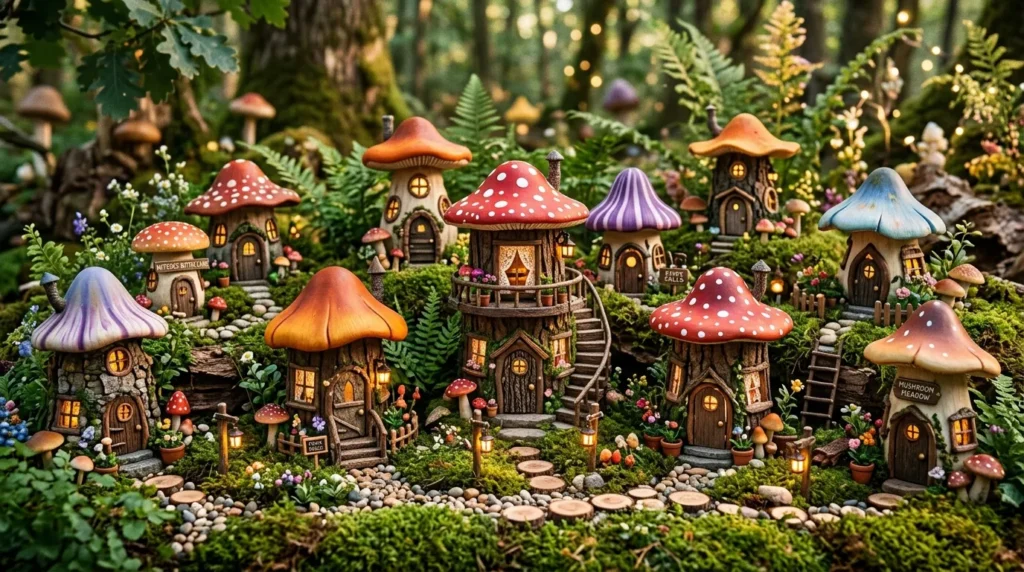
A collection of mushroom-inspired fairy homes creates a magical village that immediately captures attention. The whimsical shapes, colorful caps, and imaginative details make the display feel like it belongs in a fantasy world. Using bark, clay, wood slices, and painted accents allows crafters to create multiple structures with unique personalities. Grouping several mushroom houses together creates a miniature community that encourages creativity and storytelling while adding vibrant character to the garden.
The appeal of a mushroom village comes from its playful nature. Each home can feature different colors, window styles, and decorative details. In my experience, children especially enjoy creating stories around these miniature neighborhoods. Small pathways, pebble roads, and tiny garden features help connect the houses while creating a more immersive display. The finished village feels enchanting and full of life, transforming even a small garden corner into a magical fairy destination.
8. Bark Roof Bungalow
Bullet Points
- Uses realistic natural textures
- Creates a classic cottage appearance
- Blends into garden settings
- Supports rustic design themes
- Adds architectural detail
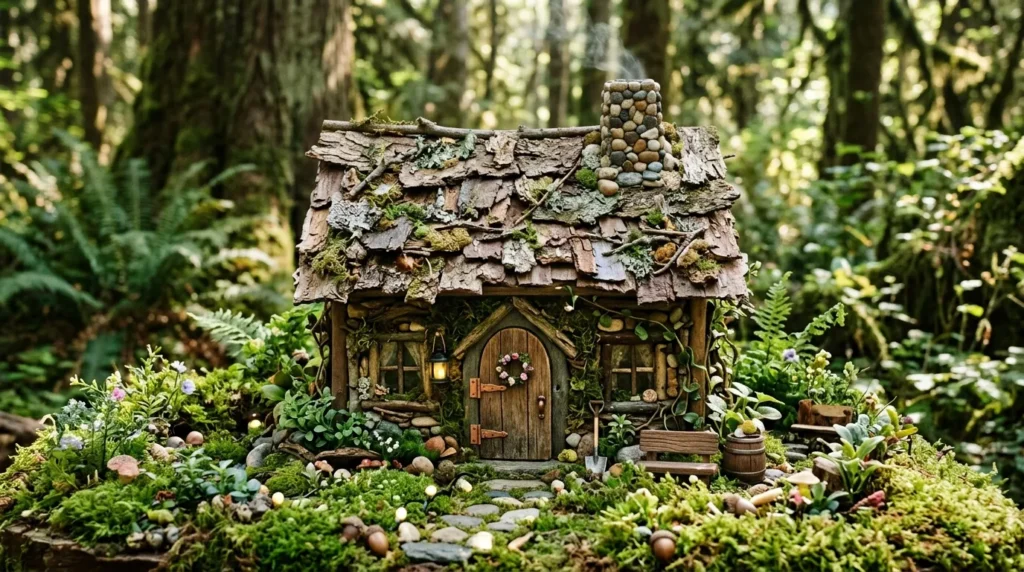
Bark is one of the most versatile materials available for fairy house construction. Its texture naturally resembles weathered roofing and rustic siding, making it ideal for creating miniature cottages. A bark roof bungalow combines simple construction with beautiful visual detail, resulting in a structure that looks both natural and professionally crafted. The rough texture contrasts beautifully with moss, flowers, and stone accents, creating a balanced design full of character.
The structure feels timeless because it relies on materials already found in nature. I’ve noticed that bark roofs photograph especially well due to their texture and depth. Adding tiny wooden shutters, decorative pathways, and miniature gardens further enhances realism. The finished bungalow feels as though it has existed in the forest for generations. The result is a charming fairy home that blends seamlessly into outdoor displays while maintaining strong visual appeal.
9. Stone Path Manor
Bullet Points
- Features elegant landscaping details
- Adds sophistication to fairy gardens
- Creates realistic outdoor scenes
- Supports larger displays
- Enhances visual depth
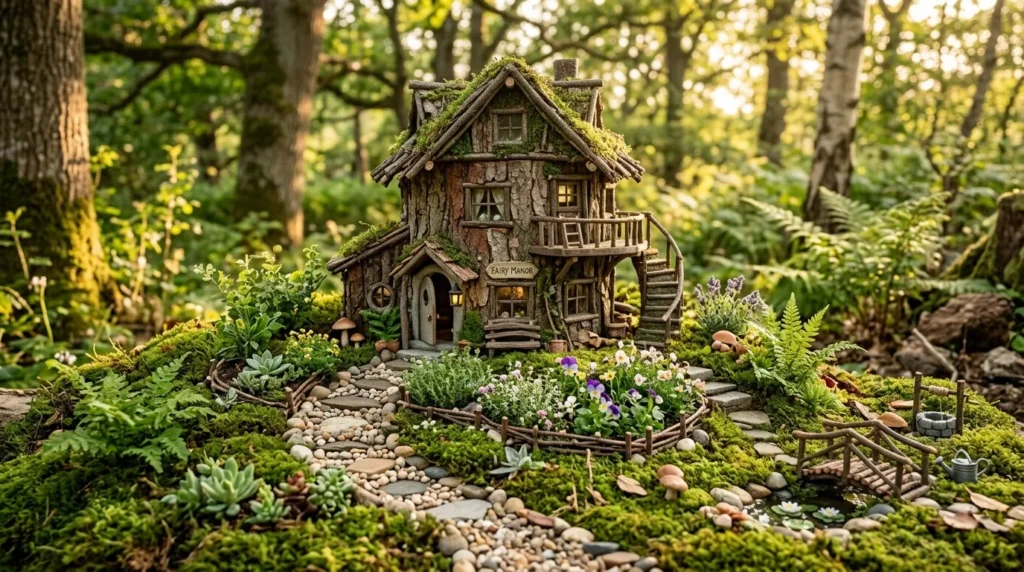
A stone path manor focuses as much on the surrounding landscape as it does on the structure itself. The winding pathway becomes an important design feature that guides the eye toward the fairy home while creating a sense of movement and exploration. Pebbles, gravel, and miniature stepping stones help establish a realistic setting that feels carefully planned. The manor itself often features multiple decorative details, giving the impression of a larger and more established fairy residence.
What makes this design special is its attention to environment and storytelling. The pathway suggests that tiny visitors regularly travel to and from the home. In my experience, adding flower beds, miniature fences, and garden accessories significantly increases realism. These details create a richer visual experience while making the display feel more complete. The finished manor becomes an elegant focal point that elevates the entire fairy garden and encourages closer observation.
10. Enchanted Garden Castle
Bullet Points
- Creates dramatic visual impact
- Uses multiple natural materials
- Perfect as a centerpiece
- Encourages imaginative play
- Adds fantasy-inspired elegance
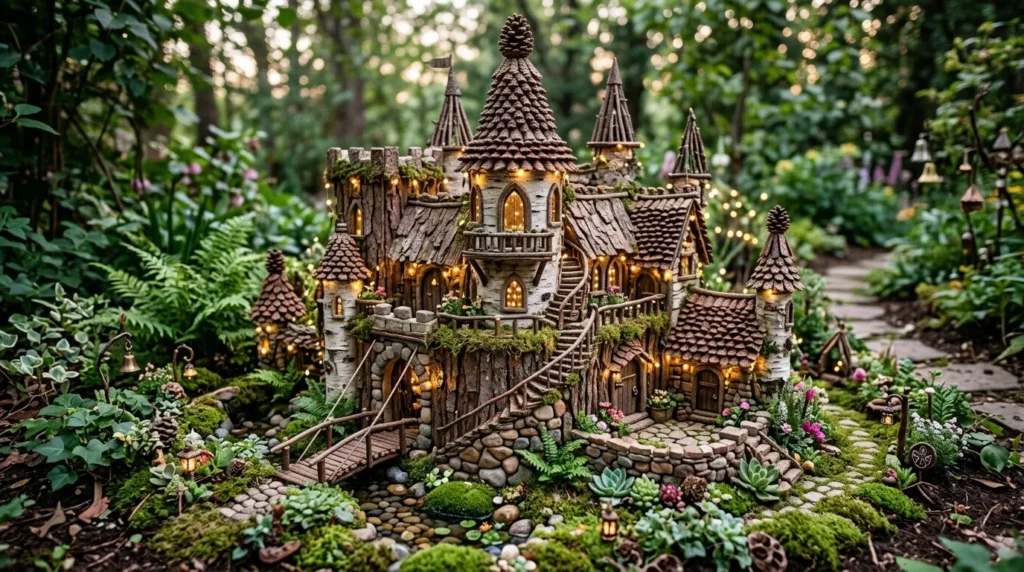
An enchanted garden castle is often the most ambitious fairy house project within a collection. By combining bark, pinecones, stones, twigs, moss, and decorative accents, crafters can create an elaborate structure filled with magical details. Towers, pathways, miniature doors, and tiny balconies help transform the project into a true fairy kingdom. The scale and complexity make it a stunning centerpiece capable of anchoring an entire fairy garden display.
The excitement of building a fairy castle comes from its limitless creative possibilities. Every addition introduces another opportunity for personalization and storytelling. I’ve seen this work beautifully in many gardens because the castle naturally becomes the primary attraction. Decorative lighting, surrounding flowers, and miniature accessories further enhance the magical atmosphere. The result is an unforgettable fairy house that captures imagination while showcasing the beauty of nature-inspired craftsmanship.