
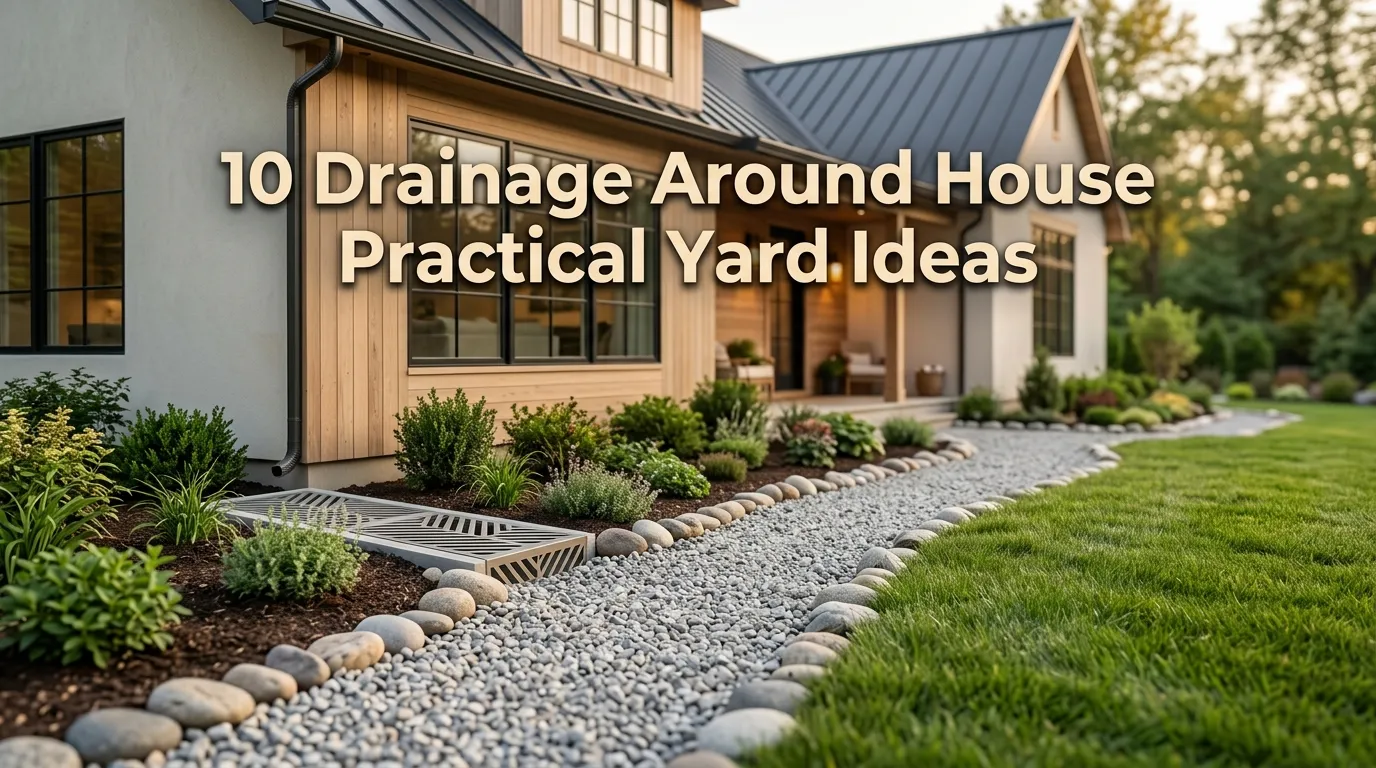
10 Drainage Around House Practical Yard Ideas
Water problems around a home often start small but can quickly become expensive if ignored. Standing water, muddy pathways, foundation moisture, and landscape erosion can all develop when drainage is not planned properly. The good news is that effective yard drainage does not have to look unattractive or overly technical. Many of today’s most successful drainage solutions combine functionality with beautiful landscaping, helping homeowners protect their property while improving curb appeal at the same time.
A thoughtfully designed drainage system can make outdoor spaces more usable, reduce maintenance, and help preserve the long-term value of a property. Whether you are dealing with heavy rainfall, poor grading, or water collecting near the foundation, the following ideas can help create a cleaner, healthier, and more attractive yard. These solutions are practical, visually appealing, and suitable for many American homes and climates.
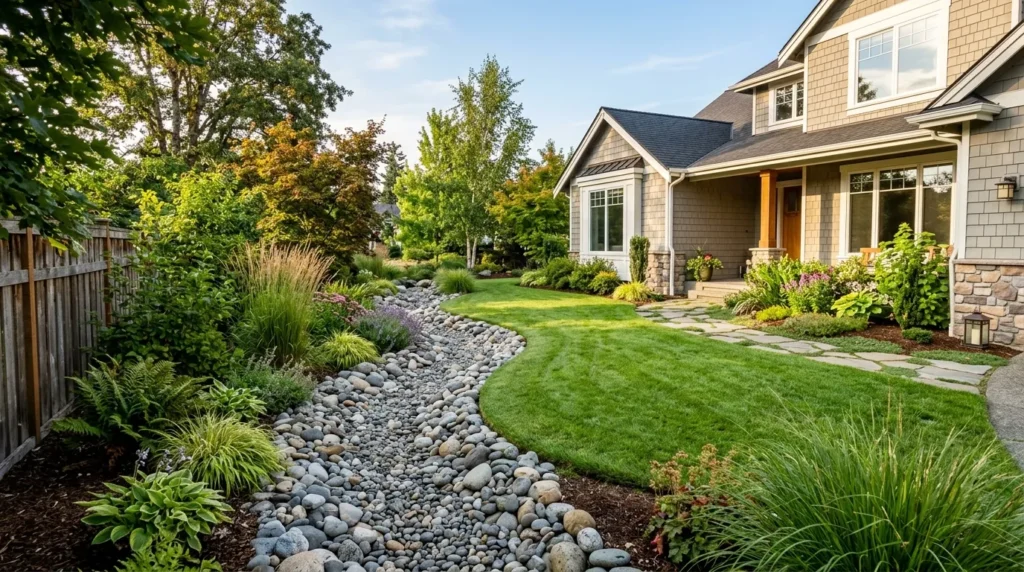
1. River Rock Channel
Bullet Points
- Directs water away naturally
- Enhances landscape appearance
- Reduces soil erosion
- Creates decorative texture
- Works with many home styles
A well-designed river rock channel can completely transform how water moves through a yard. Instead of allowing runoff to collect near foundations or low areas, this feature guides excess water through a designated route lined with smooth decorative stones. The natural appearance blends beautifully into landscaping while performing an important functional role. Homeowners often appreciate that river rocks provide both visual appeal and durability without requiring complicated maintenance. The texture and variation in stone size also help create a more professionally designed outdoor environment that feels intentional rather than purely functional.
Beyond appearance, river rock channels are highly effective during periods of heavy rainfall. Water can flow freely through the stone-lined pathway while minimizing soil displacement and reducing erosion. In my experience, this solution works particularly well when combined with surrounding plants and mulch beds. The finished result feels more like a landscape feature than a drainage system. Homeowners benefit from improved water management while enjoying an attractive outdoor space that contributes positively to the overall look and feel of the property.
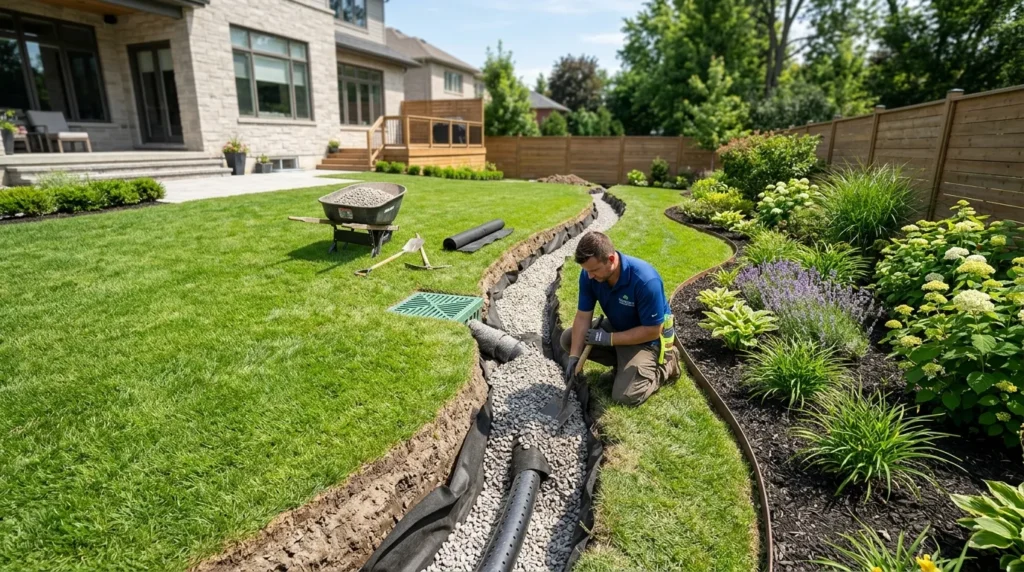
2. French Drain System
Bullet Points
- Protects foundations from moisture
- Reduces standing water
- Works underground discreetly
- Improves long-term drainage
- Supports healthier landscapes
Few drainage solutions are as effective and versatile as a properly installed French drain. This system uses a perforated pipe surrounded by gravel to collect and redirect excess groundwater away from problem areas. Because most of the system remains hidden below the surface, homeowners can maintain attractive landscaping without sacrificing functionality. The discreet design makes it ideal for residential properties where appearance is just as important as performance. When installed correctly, it can dramatically reduce water accumulation around foundations, walkways, and lawn areas.
One of the greatest advantages of a French drain is its ability to address recurring drainage issues at their source. Instead of treating symptoms, it actively redirects water before significant problems develop. I’ve noticed that many homeowners see substantial improvements in lawn health and overall yard usability after installation. The system requires relatively little maintenance while providing years of reliable performance. Combined with proper grading and landscaping, a French drain can become one of the most valuable investments in protecting a home’s outdoor environment.
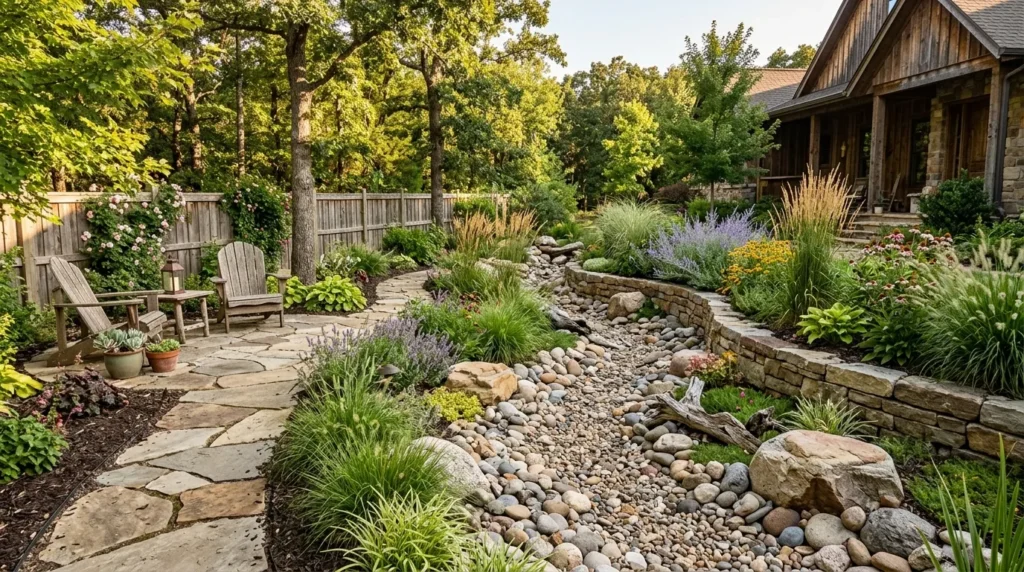
3. Dry Creek Bed
Bullet Points
- Mimics natural waterways
- Controls runoff effectively
- Adds visual interest
- Supports landscape design
- Creates a natural focal point
A dry creek bed combines practicality with beauty in a way few drainage solutions can match. Designed to resemble a natural stream, it uses decorative stones, gravel, and strategic shaping to guide water through the landscape during rain events. During dry weather, it remains an attractive design feature that enhances the yard’s overall appearance. Homeowners often choose this option because it solves drainage concerns while adding character and texture to outdoor spaces. The natural look complements both traditional and modern landscape styles.
The flexibility of this approach allows homeowners to customize the appearance according to their property and preferences. Larger boulders, ornamental grasses, and native plants can be incorporated to create a realistic stream-like effect. I’ve seen this work well in many homes because it turns a functional necessity into a visually engaging feature. Rather than hiding drainage elements, the design embraces them as part of the landscape. The result is a beautiful outdoor solution that manages water efficiently while enhancing curb appeal.
4. Rain Garden Zone
Bullet Points
- Absorbs excess runoff
- Supports pollinator habitats
- Enhances yard beauty
- Reduces drainage pressure
- Encourages sustainable landscaping
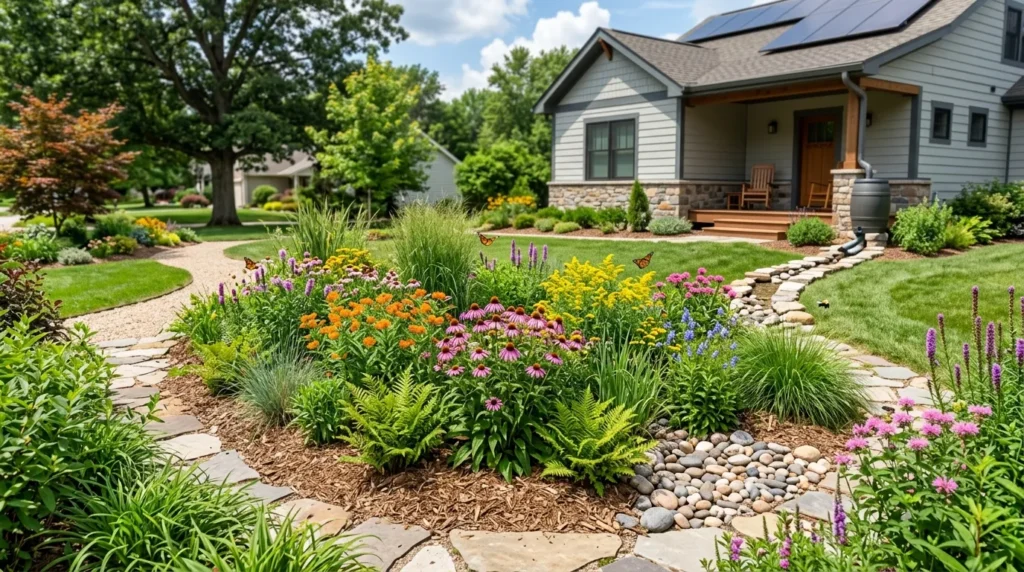
A rain garden offers one of the most environmentally friendly approaches to managing excess water around a property. These specially designed planting areas collect runoff and allow it to soak gradually into the soil rather than flowing directly into storm drains. Filled with moisture-tolerant plants, ornamental grasses, and native species, rain gardens create attractive focal points while improving drainage performance. Homeowners often appreciate how these gardens contribute to both environmental health and landscape aesthetics.
The design process focuses on selecting plants capable of handling occasional wet conditions while remaining attractive throughout the year. In my experience, rain gardens often become some of the most visually interesting areas of a yard. Seasonal flowers, varied foliage textures, and pollinator-friendly plantings create vibrant outdoor spaces that support local ecosystems. At the same time, they reduce water accumulation and improve drainage naturally. The result is a practical solution that adds lasting beauty and ecological value to residential landscapes.
5. Permeable Paver Path
Bullet Points
- Allows water infiltration
- Reduces runoff accumulation
- Improves walkway durability
- Enhances outdoor appearance
- Supports sustainable design
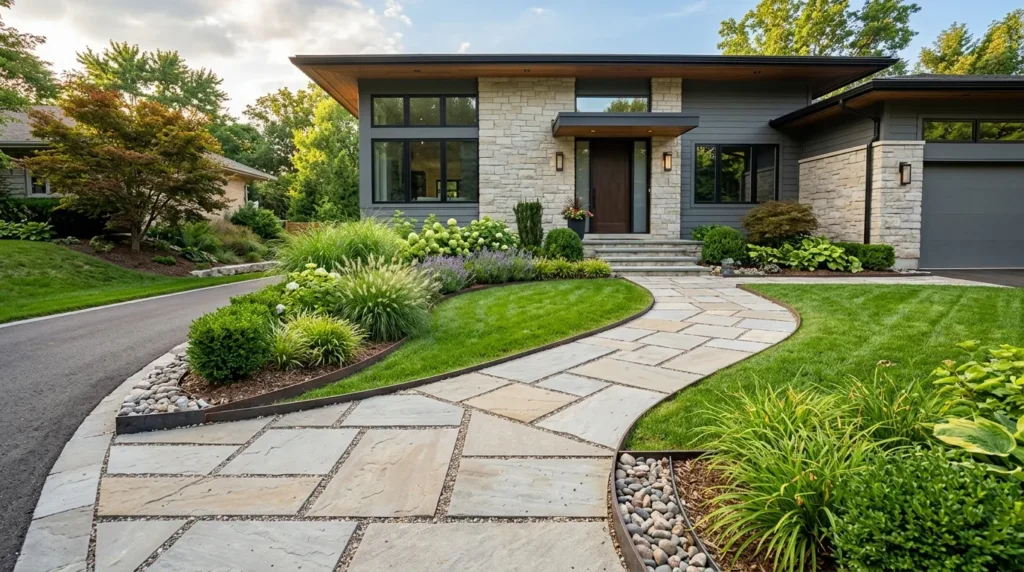
Traditional hard surfaces often contribute to drainage issues because water cannot pass through them effectively. Permeable pavers offer an attractive alternative by allowing rainwater to filter through gaps and into the ground below. This reduces surface runoff while helping replenish natural groundwater. The design provides a stable walking surface while supporting better water management throughout the property. Homeowners who value both function and aesthetics frequently choose permeable paving for walkways, patios, and side-yard pathways.
The visual appeal of permeable pavers is another reason for their growing popularity. Available in numerous shapes, colors, and patterns, they can complement virtually any architectural style. I’ve noticed that these systems often improve both drainage performance and curb appeal simultaneously. Proper installation is important to ensure effective water infiltration and long-term durability. Once completed, the finished surface feels polished, practical, and environmentally responsible while helping protect surrounding landscaping from excessive runoff and erosion.
6. Catch Basin Corner
Bullet Points
- Collects excess surface water
- Prevents pooling near structures
- Improves yard usability
- Works with multiple drainage systems
- Reduces landscape damage
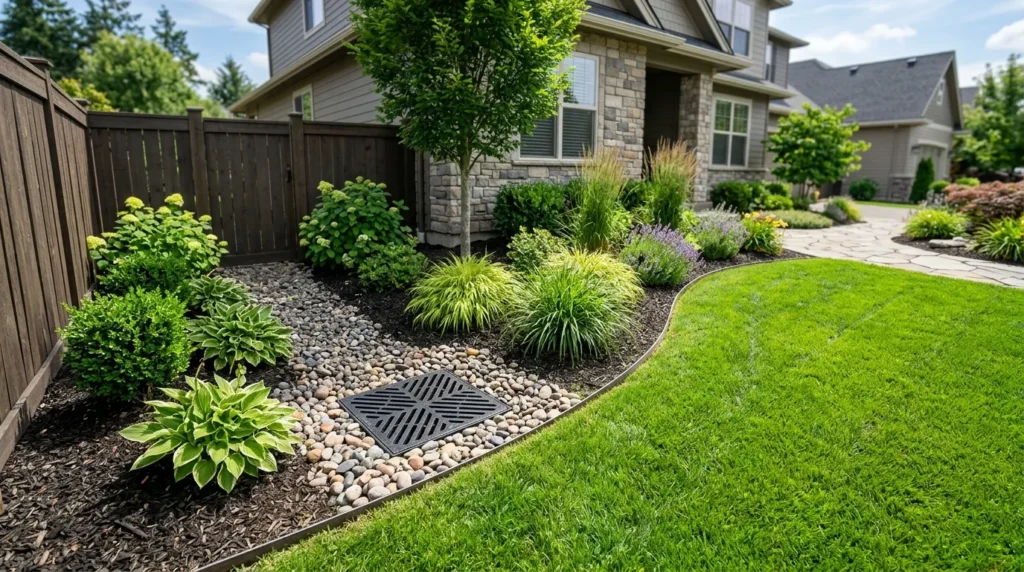
A catch basin is one of the most effective solutions for areas where water repeatedly gathers after storms. Installed at low points in the yard, it captures runoff before it has the opportunity to create muddy patches, damage landscaping, or threaten nearby foundations. The collected water is then directed through underground pipes toward a safer discharge location. Homeowners often appreciate how discreet these systems appear once installed. Most of the functionality remains hidden while the yard continues to look clean, organized, and visually appealing.
The effectiveness of a catch basin becomes especially noticeable during heavy rainfall events. Instead of standing water remaining on the surface for days, runoff is quickly collected and redirected. In my experience, combining catch basins with proper grading creates even better long-term results. The system helps preserve lawns, planting beds, and walkways while reducing maintenance concerns. Over time, homeowners benefit from a healthier landscape and a more usable outdoor environment that remains functional regardless of changing weather conditions.
7. Foundation Gravel Border
Bullet Points
- Improves water movement
- Protects foundation walls
- Creates clean landscaping lines
- Reduces soil splashback
- Enhances curb appeal
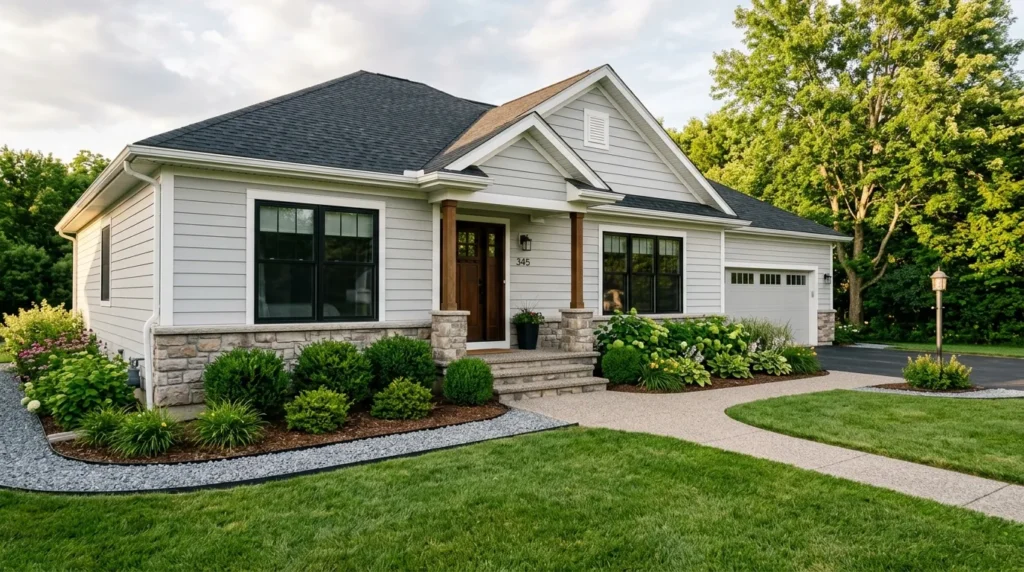
The area surrounding a home’s foundation plays a critical role in water management. Installing a decorative gravel border creates a buffer zone that helps direct moisture away from exterior walls while reducing soil erosion. The gravel allows water to filter through quickly rather than collecting against the structure. This simple improvement can dramatically improve both drainage performance and landscape appearance. Homeowners frequently choose this option because it offers practical protection while creating a polished, professionally landscaped look.
Selecting the right gravel size and color helps integrate the border seamlessly into the property’s overall design. Neutral stones often complement a wide range of exterior materials, including brick, siding, and stucco. I’ve seen this work well in many homes because it combines low maintenance requirements with long-lasting visual appeal. The finished border provides a clean transition between planting beds and the home itself. As a result, the foundation remains better protected while the landscape feels more organized and attractive.
8. Sloped Garden Beds
Bullet Points
- Encourages natural water flow
- Reduces erosion risks
- Improves plant health
- Enhances landscape structure
- Supports drainage performance
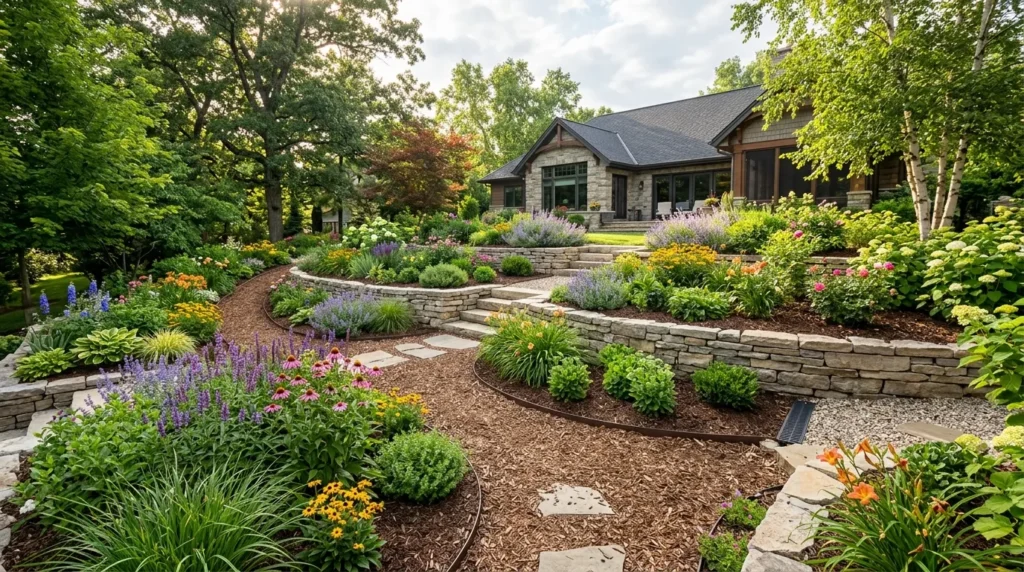
Proper grading remains one of the most important aspects of effective drainage design. Sloped garden beds encourage water to move away from structures naturally while supporting healthier growing conditions for plants. Rather than allowing moisture to collect near foundations, gentle slopes guide runoff toward designated drainage areas. This approach works especially well when integrated into broader landscaping plans. Homeowners often appreciate that grading improvements can solve water problems while enhancing the overall appearance of outdoor spaces.
Thoughtful planting further strengthens the effectiveness of sloped beds. Deep-rooted plants help stabilize soil while supporting water absorption. In my experience, combining strategic grading with layered landscaping creates attractive and highly functional outdoor environments. The visual impact can be significant because sloped beds introduce dimension and structure into otherwise flat yards. The result is a landscape that feels professionally designed while offering practical benefits that help protect the property from moisture-related concerns.
9. Downspout Extension Route
Bullet Points
- Moves water away safely
- Protects foundations
- Reduces erosion near walls
- Supports existing drainage systems
- Easy to install and maintain
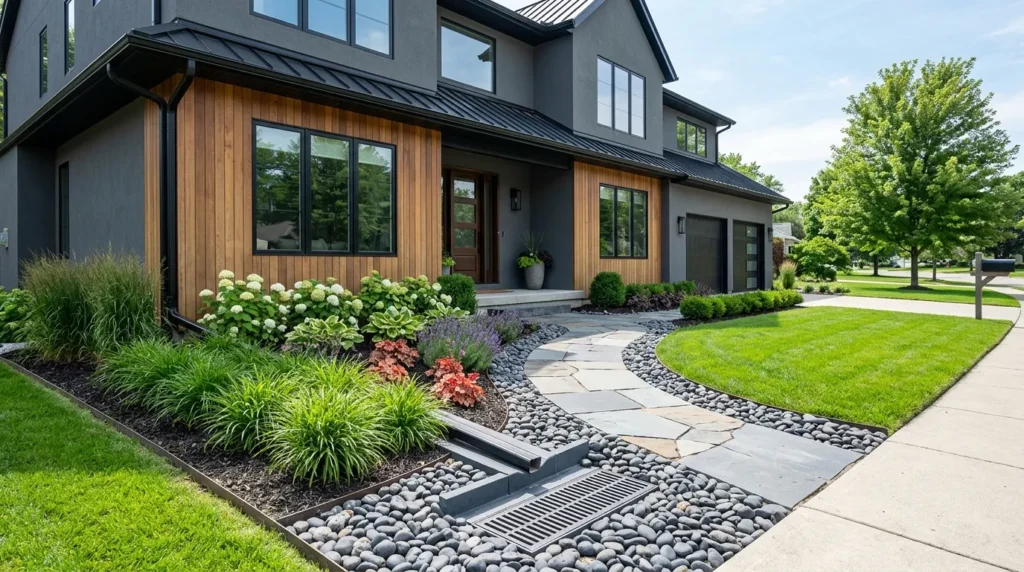
Many drainage issues originate directly from roof runoff. When downspouts discharge water too close to the home, moisture can accumulate around foundations and create long-term problems. Extending downspouts helps redirect water toward safer areas where it can disperse naturally or connect to drainage systems. This relatively simple improvement often delivers significant benefits while requiring minimal disruption to existing landscaping. Homeowners are frequently surprised by how much impact a properly positioned extension can make.
The best installations blend functionality with aesthetics. Extensions can be concealed beneath decorative rock beds, mulch pathways, or landscape features for a cleaner appearance. I’ve noticed that many homeowners overlook this straightforward solution despite its effectiveness. By moving water farther away from the structure, the risk of foundation moisture and erosion decreases considerably. The result is a more resilient landscape and greater peace of mind during periods of heavy rain or seasonal storms.
10. Retaining Wall Drainage
Bullet Points
- Controls hillside runoff
- Protects landscape structures
- Reduces soil erosion
- Improves slope stability
- Adds architectural interest
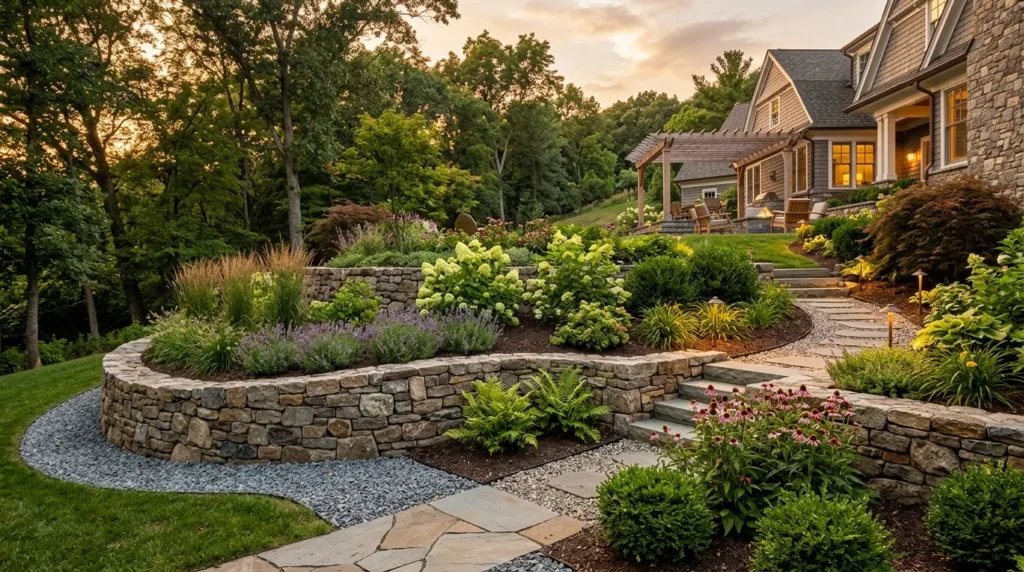
Retaining walls are often installed to manage elevation changes, but proper drainage behind the wall is equally important. Without adequate water management, pressure can build up and eventually compromise structural stability. Incorporating drainage pipes, gravel backfill, and weep holes helps release excess moisture safely. This protects the wall while preserving surrounding landscaping. Homeowners with sloped properties often find that combining structural support with effective drainage creates safer and more attractive outdoor spaces.
Beyond functionality, retaining walls contribute visual interest and architectural character. Natural stone, concrete blocks, and decorative masonry options can complement a wide range of home styles. In my experience, drainage planning should always be considered during the design process rather than as an afterthought. When executed properly, retaining walls become both practical and beautiful landscape features. The result is improved water management, enhanced property appearance, and greater long-term durability for the entire outdoor environment.