10 Garden and Outdoor Ambience Ideas for a More Relaxing Backyard
A beautiful garden isn’t only about the plants you choose. The way a space feels matters just as much.
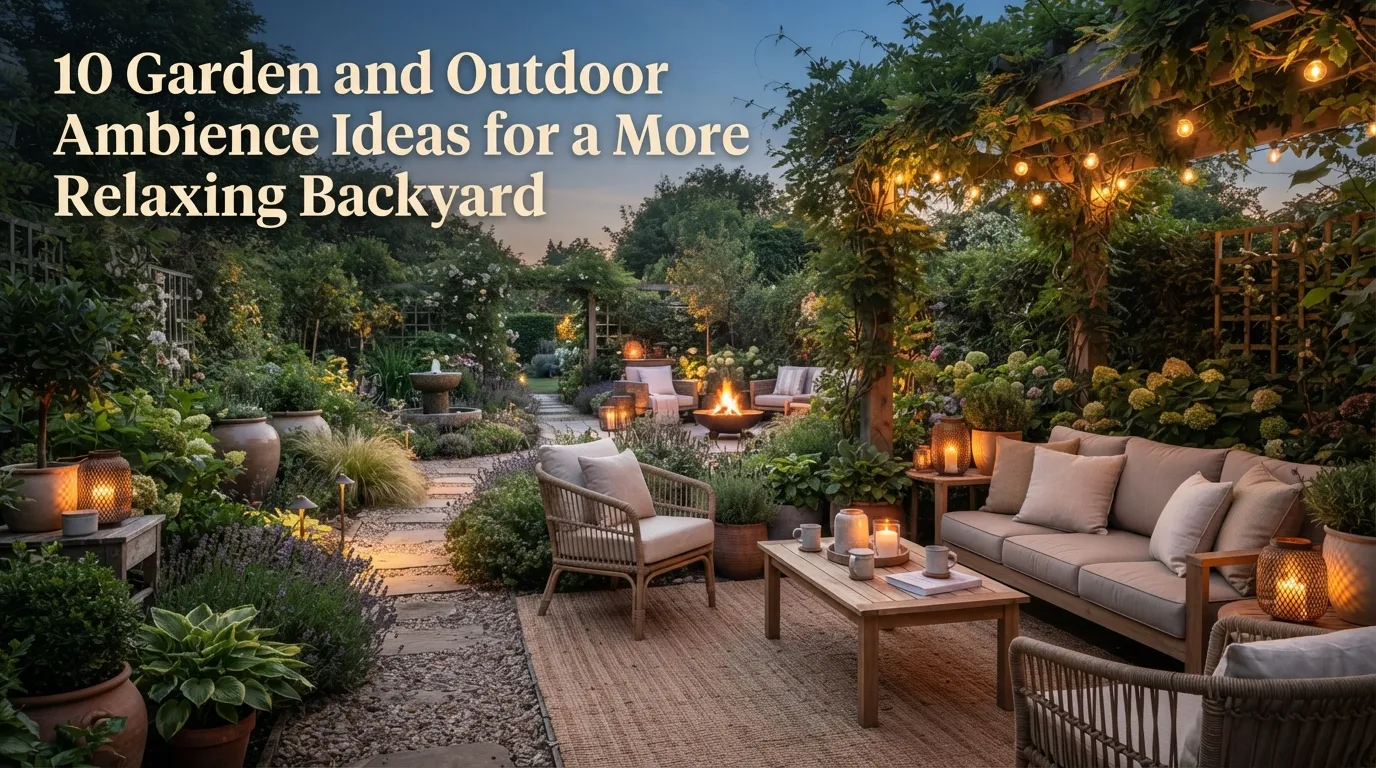
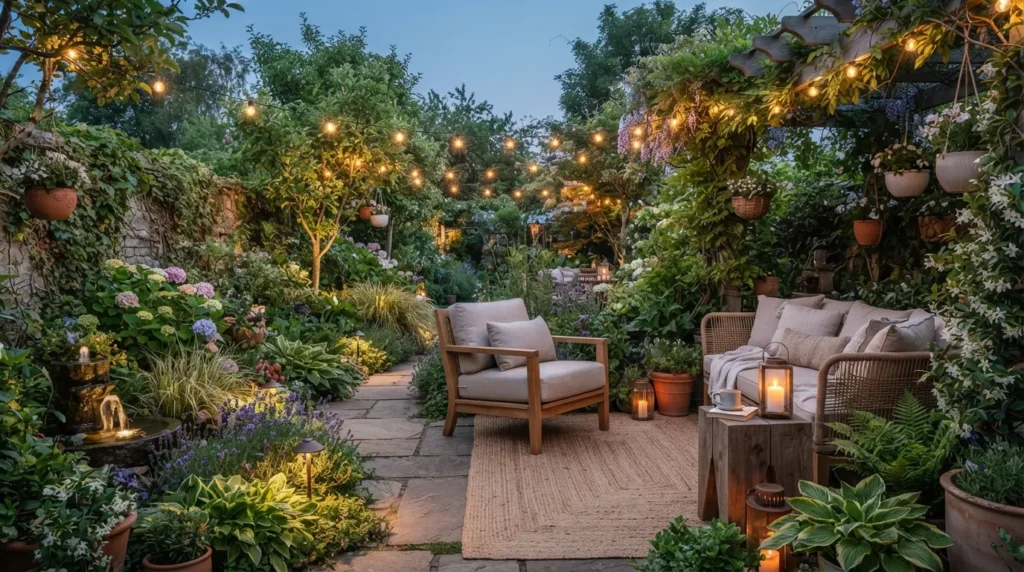
A backyard can have healthy flowers, attractive landscaping, and lovely furniture yet still feel unfinished after sunset or disconnected from the rest of the home. Creating ambience brings those individual elements together. Soft lighting, comfortable seating, natural textures, water, fragrance, and thoughtful planting can turn an ordinary garden into a place that feels inviting throughout the day.
The good news is that creating a better outdoor atmosphere doesn’t require a complete landscape renovation. Sometimes the smallest changes have the strongest effect. A bench beneath a tree can create a quiet reading corner. A few strategically positioned lights can make pathways and plants more interesting after dark. A container filled with fragrant herbs can make a patio feel more connected to the garden.
I’ve noticed that the most enjoyable outdoor spaces usually have layers. There is something to look at, somewhere comfortable to sit, and a reason to stay a little longer. The goal isn’t to decorate every available corner. Instead, think about how different elements work together.
Consider what you want to hear, see, smell, and experience when you’re outside.
Do you want a peaceful garden for morning coffee? A cozy setting for evening conversations? A softly lit entertaining area? Or a private retreat where you can unwind after a busy day?
These garden and outdoor ambience ideas can help you build that feeling gradually. They work across different backyard sizes and can be adapted to modern, cottage, farmhouse, traditional, or naturalistic landscapes.
Table of Contents
1. Layered Garden Lighting
Use several types of outdoor lighting to create depth and atmosphere after sunset.
2. Cozy Garden Seating
Create comfortable places to sit where the garden can actually be enjoyed.
3. Water Feature
Introduce the visual and auditory qualities of moving water into the landscape.
4. Fragrant Planting
Use suitable aromatic plants to make the garden engaging beyond its appearance.
5. Natural Privacy
Combine plants and appropriate structures to create a more secluded atmosphere.
6. Garden Pathways
Guide people through the landscape with attractive, functional paths.
7. Outdoor Fire Feature
Create a warm evening focal point with an appropriately installed fire feature.
8. Layered Container Plants
Use containers to add seasonal color and greenery around patios and seating areas.
9. Soft Outdoor Textiles
Bring comfort and visual softness to outdoor seating with suitable textiles.
10. Garden Soundscape
Create a calmer atmosphere through thoughtful planting, water, and background sounds.
1. Layered Garden Lighting
Quick Benefits
- Creates evening ambience
- Highlights garden features
- Improves pathway visibility
- Adds depth to landscaping
- Makes outdoor areas feel more inviting
Why It Works
A garden can look completely different after dark.
During daylight, plants, trees, walls, and pathways provide natural structure. At night, thoughtful lighting can reveal selected details and create a sense of depth.
The key is layering rather than simply making the entire yard bright.
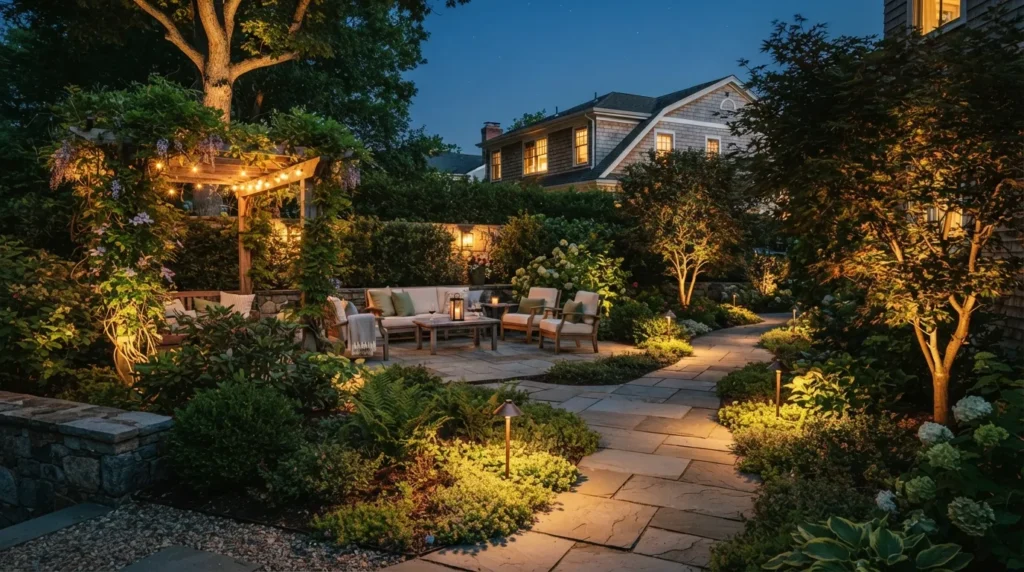
Path lights can define walkways. Low landscape lights can highlight planting. Wall fixtures can illuminate entrances or architectural features. String lights can add a softer decorative glow to suitable structures.
The result is more atmospheric than a single powerful light source.
How To Style It
Start with practical lighting around steps, entrances, and pathways.
Then choose two or three garden features worth highlighting.
A tree trunk, planting bed, textured wall, or water feature can become a nighttime focal point.
Use outdoor-rated products and install them according to manufacturer instructions.
Avoid pointing bright lights directly toward seating areas.
A softer, layered arrangement generally creates a more comfortable evening environment.
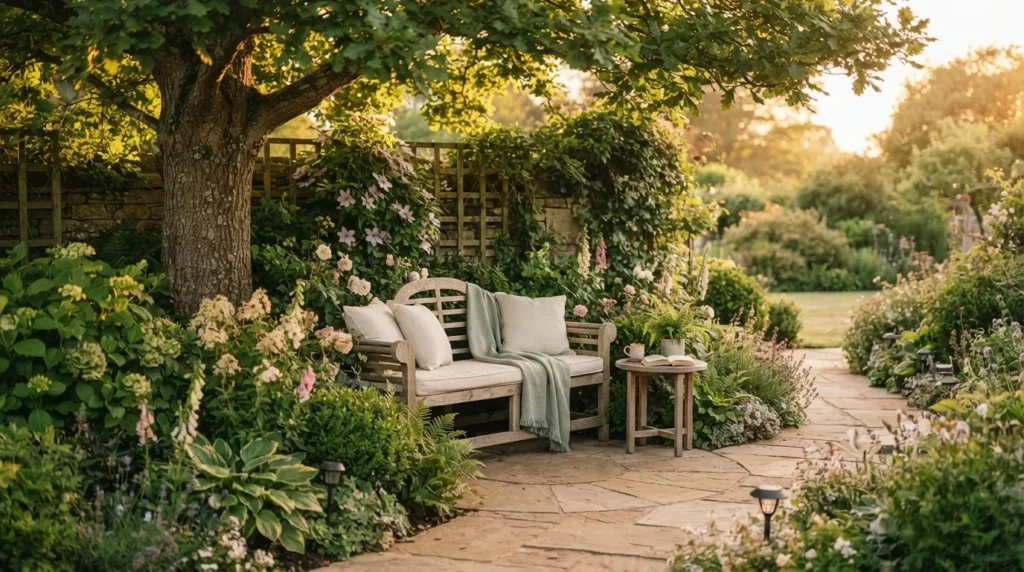
2. Cozy Garden Seating
Quick Benefits
- Encourages outdoor relaxation
- Creates a destination within the garden
- Works in small spaces
- Supports morning and evening use
- Adds structure to landscaping
Why It Works
A garden becomes much more enjoyable when you have somewhere comfortable to experience it.
A seating area doesn’t need to occupy the center of the backyard.
In fact, placing a bench beneath a tree, beside a flower bed, or at the end of a pathway can make the garden feel more exploratory.
Think about the views from the seat.
A beautiful tree, flowering border, water feature, or sunset-facing area can become the natural backdrop.
How To Style It
Choose furniture appropriate for your local weather conditions.
A wooden bench can blend beautifully into a natural garden.
A metal bistro set can work well in a smaller courtyard.
A comfortable outdoor sofa can anchor a larger patio.
Add weather-appropriate cushions where useful.
Surround the seating with plants, but keep enough clearance for comfortable movement.
A small side table provides a convenient place for a drink or book.
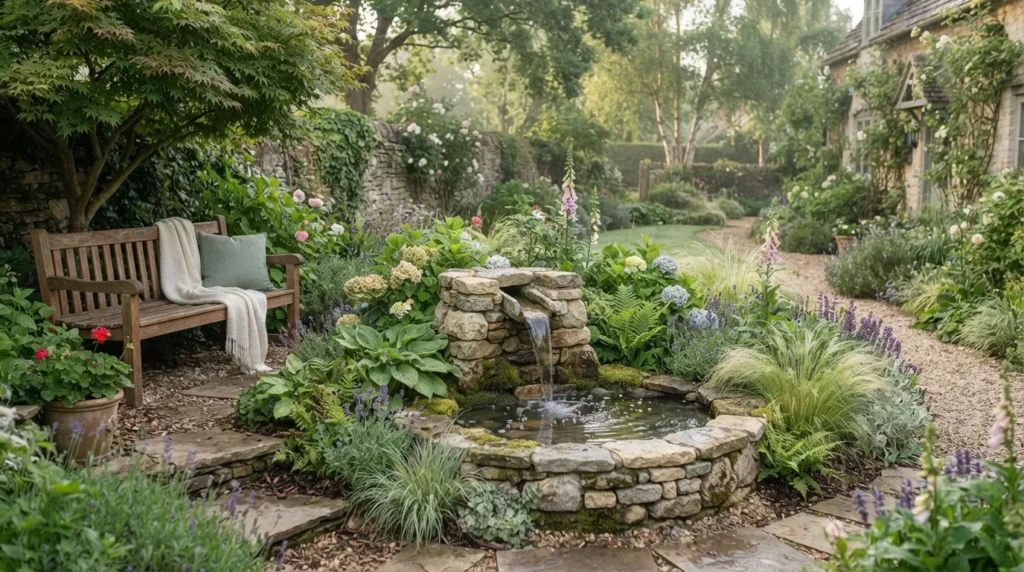
3. Water Feature
Quick Benefits
- Adds movement
- Introduces soothing sound
- Creates a focal point
- Attracts attention to a garden area
- Works with many landscape styles
Why It Works
Water can engage several senses at once.
The movement catches the eye, while the sound can help mask some background noise.
A water feature doesn’t have to be a large pond.
Depending on the property and maintenance preferences, possibilities include a compact fountain, wall-mounted water feature, container fountain, or professionally installed pond.
The right scale is more important than size.
How To Style It
Place the feature where it can be seen from a seating area or frequently used pathway.
Surround it with appropriate plants and natural materials.
Stone, gravel, wood, and greenery can create a cohesive setting.
Avoid placing a small fountain in an enormous empty area where it loses visual impact.
For a compact patio, a container-based feature may provide the ambience without consuming much space.
Consider maintenance, water use, electrical requirements, and local conditions before installation.
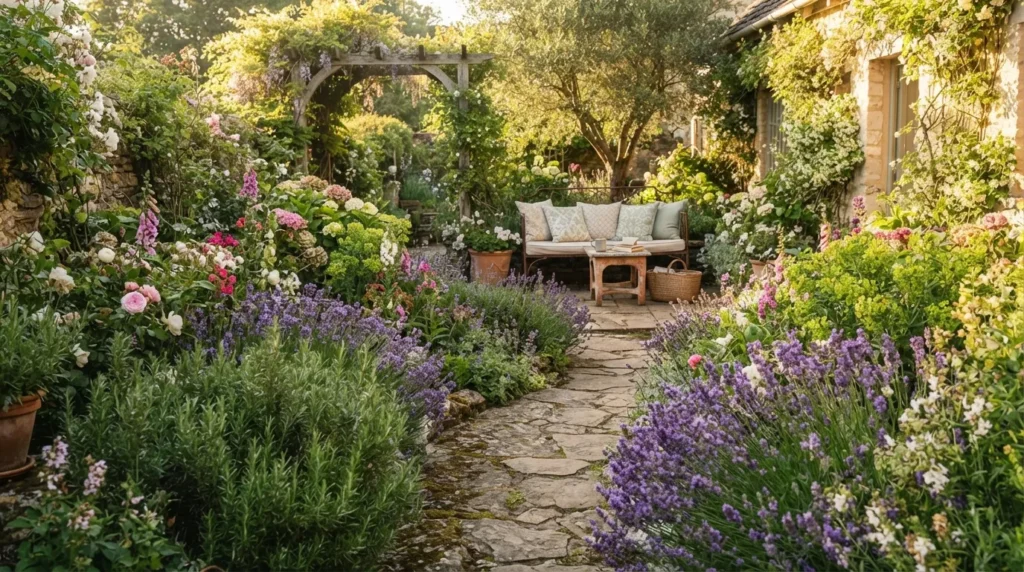
4. Fragrant Planting
Quick Benefits
- Adds another sensory layer
- Creates seasonal interest
- Enhances garden enjoyment
- Works around seating areas
- Can support pollinators depending on plant choice
Why It Works
Many gardens are designed primarily around visual appearance.
Adding fragrance creates another reason to spend time outside.
Aromatic plants can be particularly effective near pathways, entrances, windows, and seating areas where their scent can actually be experienced.
Choose plants suited to your climate and growing conditions.
The strongest fragrance isn’t always the goal. A few well-placed plants can be enough.
How To Style It
Place fragrant plants near areas where people naturally pass or sit.
Lavender, gardenia, jasmine, rosemary, mint, and certain roses are examples of plants that can provide fragrance, but suitability varies by region and growing conditions.
Don’t overcrowd one area with competing scents.
Instead, create small pockets of fragrance throughout the garden.
Use containers when you want flexibility.
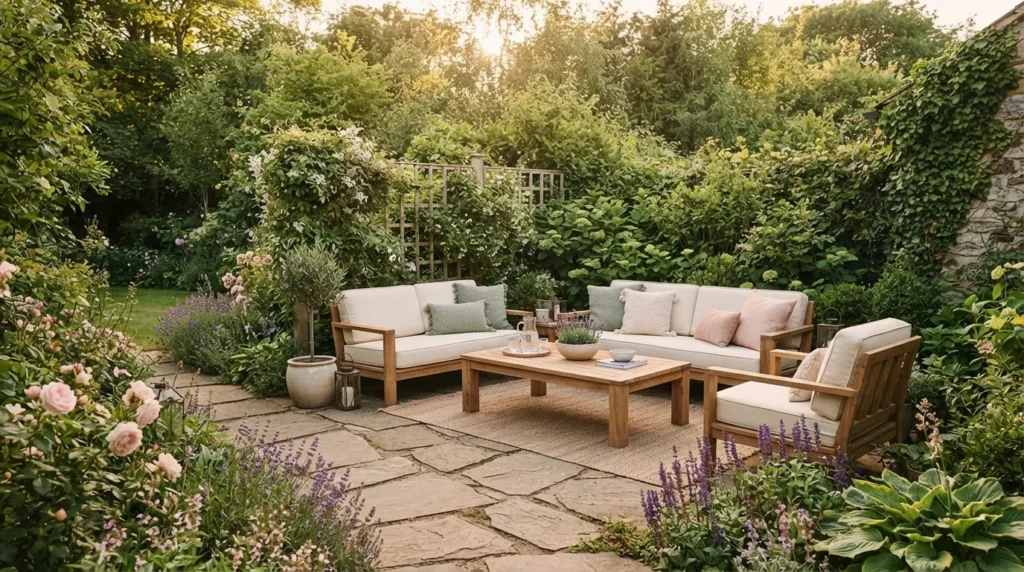
5. Natural Privacy
Quick Benefits
- Creates a more secluded feeling
- Softens property boundaries
- Adds greenery
- Reduces visual exposure
- Can improve the sense of enclosure
Why It Works
Privacy can dramatically affect outdoor comfort.
A backyard that feels exposed to neighboring homes or busy streets may not feel particularly relaxing.
Natural screening can provide separation without creating a harsh visual wall.
Trees, shrubs, hedges, climbing plants, and appropriately designed trellises can all contribute to privacy.
The best solution depends on your property’s size, sunlight, climate, maintenance requirements, and local regulations.
How To Style It
Layer privacy rather than creating one solid barrier.
Use taller plants at the back.
Add medium-height shrubs in front.
Use lower plants near seating.
A trellis with suitable climbing plants can create vertical interest.
Keep pathways open and avoid planting species that will eventually become too large for the available space.
6. Garden Pathways
Quick Benefits
- Adds structure
- Encourages exploration
- Connects different zones
- Creates visual movement
- Improves garden usability
Why It Works
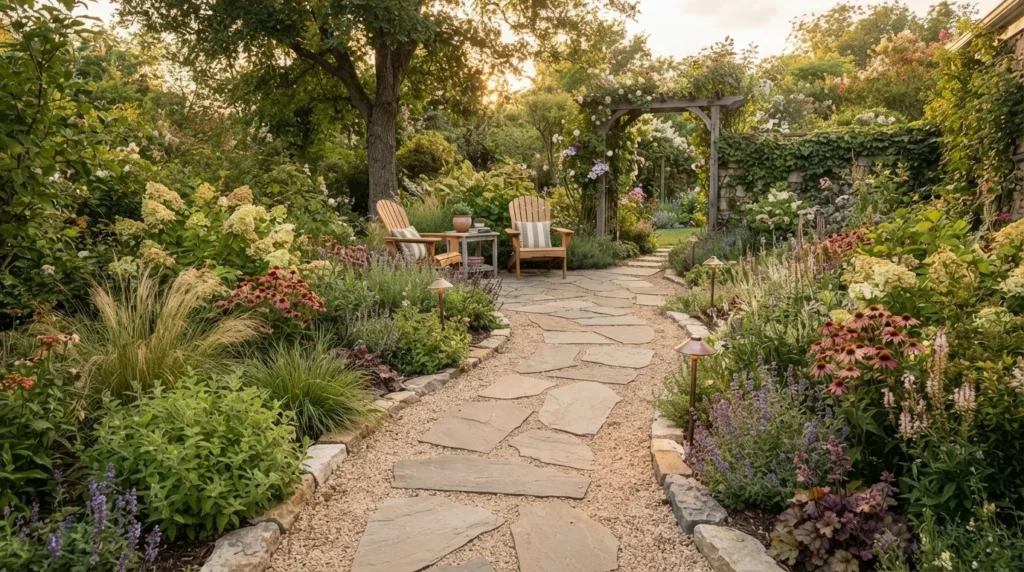
A pathway does more than help people walk from one place to another.
It can guide the eye and create anticipation.
A path that curves gently toward a bench or planting area can make the destination feel more interesting than simply placing the bench in an open lawn.
Materials also influence ambience.
Stone can feel timeless.
Gravel can create a relaxed garden atmosphere.
Brick can complement traditional landscapes.
How To Style It
Match the pathway material to the home’s architecture and existing landscape.
Use plants along the edges to soften hard lines.
Keep walking surfaces reasonably even and maintainable.
Add subtle lighting where needed.
For a more natural look, avoid making every section perfectly symmetrical.
A little variation can make the garden feel less formal and more organic.
7. Outdoor Fire Feature
Quick Benefits
- Creates an evening focal point
- Encourages conversation
- Adds warmth in suitable conditions
- Gives the garden a destination
- Works well for entertaining
Why It Works
Fire naturally attracts attention.
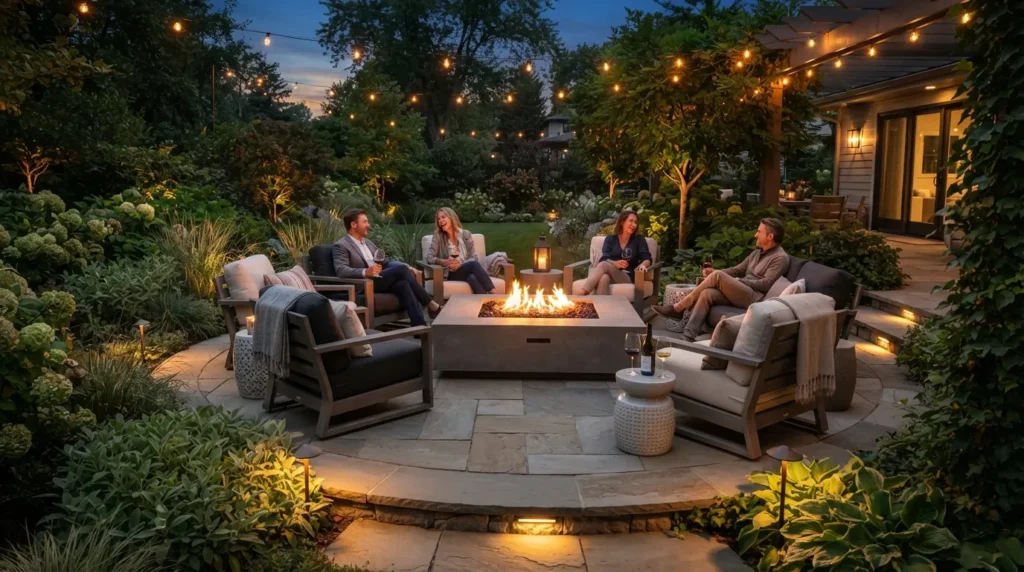
An appropriately designed and safely installed fire feature can become the center of an evening seating arrangement.
It can also give an otherwise unused part of the backyard a clear purpose.
However, fire features require careful planning. Follow local regulations, manufacturer’s instructions, clearance requirements, and appropriate fuel-handling practices.
How To Style It
Position suitable seating around the feature while maintaining required safety distances.
Use natural stone, brick, or concrete around the area.
Keep surrounding plants and combustible materials appropriately separated.
Add low-level lighting along nearby pathways.
Keep the decorative elements simple so the fire remains the focal point.
8. Layered Container Plants
Quick Benefits
- Adds instant greenery
- Provides seasonal color
- Works on patios and decks
- Creates different heights
- Can be rearranged
Why It Works
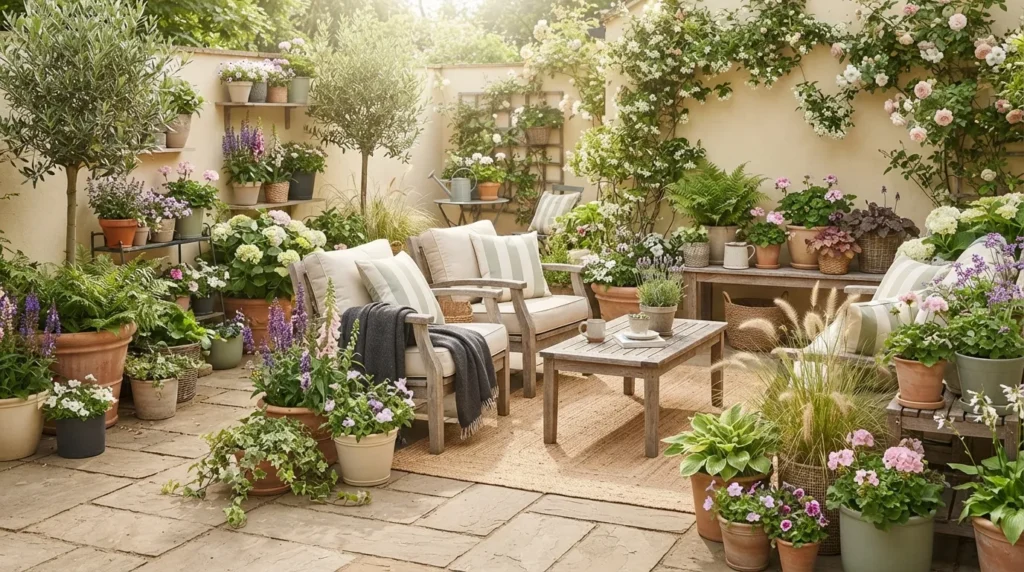
Containers provide an easy way to bring garden ambience closer to the areas where people spend time.
They’re especially useful when the main landscape is separated from the patio.
Large containers can anchor corners.
Medium planters can frame seating.
Smaller pots can decorate tables and steps where appropriate.
The different heights create a layered appearance.
How To Style It
Choose containers in complementary materials.
Terracotta works beautifully with cottage and Mediterranean-inspired spaces.
Stone-look containers can feel traditional.
Simple charcoal or white planters can create a modern appearance.
Group plants in odd numbers when the arrangement allows.
Choose plants according to sunlight, watering requirements, container size, and local climate.
9. Soft Outdoor Textiles
Quick Benefits
- Makes seating more comfortable
- Adds color
- Softens hard furniture
- Creates seasonal flexibility
- Connects indoor and outdoor styling
Why It Works
Outdoor furniture can sometimes feel visually hard and utilitarian.
Textiles add softness.
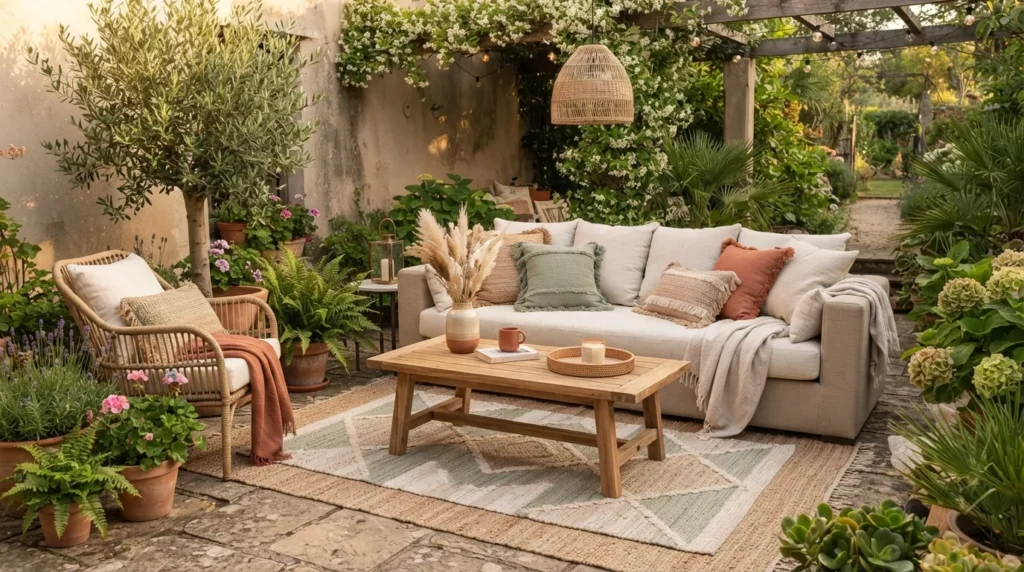
Cushions, outdoor pillows, rugs, and appropriate throws can make a seating area feel more like a genuine outdoor room.
They also provide an easy way to change the look seasonally without replacing major furniture pieces.
Use fabrics specifically designed for outdoor conditions and follow care instructions.
How To Style It
Choose a base color that complements your home’s exterior.
Add one or two accent colors.
For a natural garden, try cream, sage, and warm brown.
For a coastal-inspired setting, consider white, pale blue, and navy.
For a more colorful garden, terracotta, yellow, or soft pink can work beautifully with greenery.
Don’t cover every surface.
A few coordinated pieces usually feel more polished.
10. Garden Soundscape
Quick Benefits
- Adds sensory depth
- Makes the garden feel alive
- Can soften background noise
- Encourages relaxation
- Works naturally with landscaping
Why It Works
Outdoor ambience isn’t only visual.
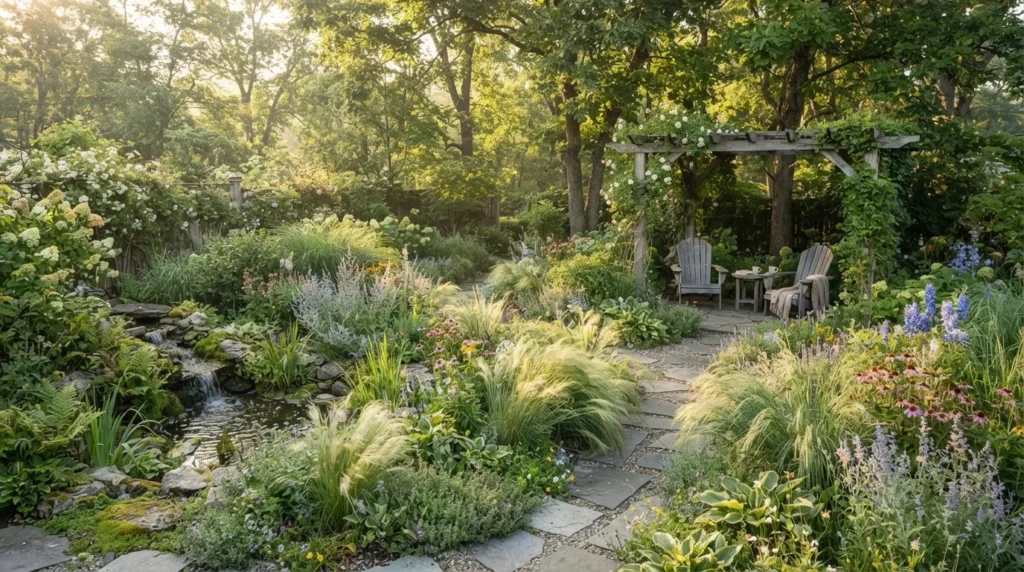
The sound of leaves moving in the breeze, birds visiting the garden, flowing water, or gentle wind through ornamental grasses can change how a space feels.
Instead of trying to add artificial sound everywhere, consider what natural elements already exist and how you can encourage them.
Water features can provide gentle background sound.
Dense planting can create movement.
Plants that attract birds or pollinators can add seasonal activity, depending on your region.
How To Style It
Create a combination of plants with different textures and heights.
Place ornamental grasses where they can move naturally in the breeze.
Add suitable flowering or fruiting plants that support local wildlife.
A small water feature can become an auditory focal point.
Avoid making the garden overly busy.
A quieter arrangement often makes natural sounds more noticeable.
How To Create a Relaxing Outdoor Atmosphere
Start with the senses.
Sight: Use plants, lighting, texture, and thoughtful focal points.
Sound: Consider water, wind through plants, and natural garden activity.
Smell: Add suitable fragrant plants near seating and pathways.
Touch: Use comfortable furniture and weather-appropriate textiles.
Temperature: Provide shade during hot weather and warmth where appropriate.
When these elements work together, the garden feels more immersive.
You don’t need every feature.
Choose the sensory details that fit the way you use your outdoor space.
How To Create Ambience in a Small Backyard
Small spaces can actually be easier to make atmospheric because everything is naturally closer together.
Choose one main seating area.
Use vertical planting to create height.
Add a small water feature if appropriate.
Use layered lighting instead of one bright fixture.
Choose furniture with an appropriate scale.
A compact garden doesn’t need dozens of plants or decorations.
A carefully designed corner can feel much more intimate than a large, empty lawn.
Best Lighting for Garden Ambience
The best lighting depends on what you want to accomplish.
Path lights are useful for walkways.
Spot or accent lighting can highlight trees and architectural features.
Wall lighting can illuminate entrances.
String lights can create decorative overhead illumination where properly installed.
Low-level lighting can help define seating areas.
Use outdoor-rated fixtures and follow installation requirements.
Avoid excessive brightness.
The goal is to reveal the landscape, not erase the darkness completely.
How To Make a Garden Feel Private
Layering is often more effective than one solid wall.
Use trees for height.
Add shrubs underneath.
Use trellises or climbing plants for vertical coverage.
Place containers around patios and seating areas.
Consider the view from the house as well as the view from the backyard.
Privacy should feel natural rather than restrictive.
Garden Ambience Ideas for Evening Entertaining
For evening gatherings, create a clear seating zone.
Add comfortable cushions.
Place drinks and serving surfaces within reach.
Use soft outdoor lighting around the seating area.
If you have an appropriate fire feature, position seating around it while following safety requirements.
Keep pathways illuminated.
Then allow some parts of the garden to remain darker.
That contrast creates depth and makes the lit areas feel more intimate.
Common Garden Ambience Mistakes
Using only one bright light: This can flatten the landscape and create harsh shadows.
Overcrowding the garden: Too many decorative objects can make a relaxing space feel busy.
Ignoring scale: Small features can disappear in a huge garden, while oversized features can overwhelm a compact patio.
Choosing plants without considering maintenance: A beautiful plant isn’t useful if its care requirements don’t fit your routine.
Forgetting seating: A garden is easier to enjoy when it includes a comfortable place to stop.
Ignoring pathways: Beautiful gardens still need safe, practical routes between different areas.
FAQ
How can I create ambience in my garden?
Use several sensory layers rather than relying on decoration alone. Combine comfortable seating, soft outdoor lighting, greenery, natural textures, and suitable fragrant plants. A water feature or fire feature can provide an additional focal point. The best combination depends on the size of the garden and how you plan to use it.
What is the best lighting for a relaxing garden?
Layered, low-intensity outdoor lighting is generally more atmospheric than one very bright fixture. Use practical lights along pathways and steps, then add accent lighting to selected trees, plants, or architectural features. String lights can provide decorative illumination in suitable locations when properly installed.
How do I make my backyard feel cozy?
Create a defined seating area and make it comfortable. Add cushions, an outdoor rug, plants, and suitable lighting. Privacy can also make a backyard feel more intimate. For evening use, a safely installed fire feature or warm layered lighting can create a natural gathering point.
What plants are good for creating garden ambience?
Plants with interesting foliage, flowers, fragrance, movement, or wildlife value can all contribute. Suitable choices vary greatly by climate and growing conditions. Consider aromatic herbs, flowering shrubs, ornamental grasses, trees, and container plants that thrive in your region rather than selecting plants based solely on appearance.
How can I make my garden feel more private?
Use layers of planting at different heights. Trees and tall shrubs can provide upper-level screening, while hedges and lower plants can soften the area beneath them. Trellises with suitable climbing plants can add vertical coverage. Choose species according to mature size and your local climate.
Does a water feature make a garden more relaxing?
A water feature can add both movement and sound, making it an effective ambience element. It doesn’t need to be large. A compact fountain or container feature can work in a smaller space. Consider maintenance, water requirements, electrical needs, and local conditions before installing one.
How can I create a peaceful garden without spending much money?
Start by improving what you already have. Rearrange existing seating, clean pathways, group containers, prune overgrown plants, and add simple outdoor lighting. A small bench beneath a tree or a few well-placed planters can create a destination without requiring a major landscape project.
Conclusion
Creating a beautiful garden atmosphere isn’t about adding as many features as possible.
It’s about choosing elements that make the space more enjoyable to experience.
Start with a comfortable place to sit. Then think about what you want to see, hear, and smell while you’re there. Layer in plants with interesting textures, suitable fragrant varieties, and a few containers around the areas you use most.
Lighting can transform the garden after sunset, while pathways can guide guests through the landscape. A water feature can introduce gentle movement and sound, and an appropriately installed fire feature can create a natural evening gathering point.
If privacy is important, use plants and suitable structures to create a sense of enclosure without making the space feel closed in.
You don’t need to complete the entire backyard at once.
Choose one area and improve it gradually.
A quiet garden bench, a softly illuminated pathway, or a comfortable patio corner can be enough to change how you experience the outdoors.
The most successful outdoor spaces are not necessarily the most elaborate. They’re the ones that encourage you to slow down, sit comfortably, and enjoy the garden around you.
Related Articles
- 10 Outdoor Summer Styling Ideas for a Fresh Backyard
- 10 Outdoor Entertaining Area Ideas for Your Backyard
- 10 Outdoor Lighting Ideas for a Cozy Garden
- 10 Patio Garden Ideas for a Beautiful Outdoor Space
- 10 Backyard Seating Ideas for Relaxing Outdoors