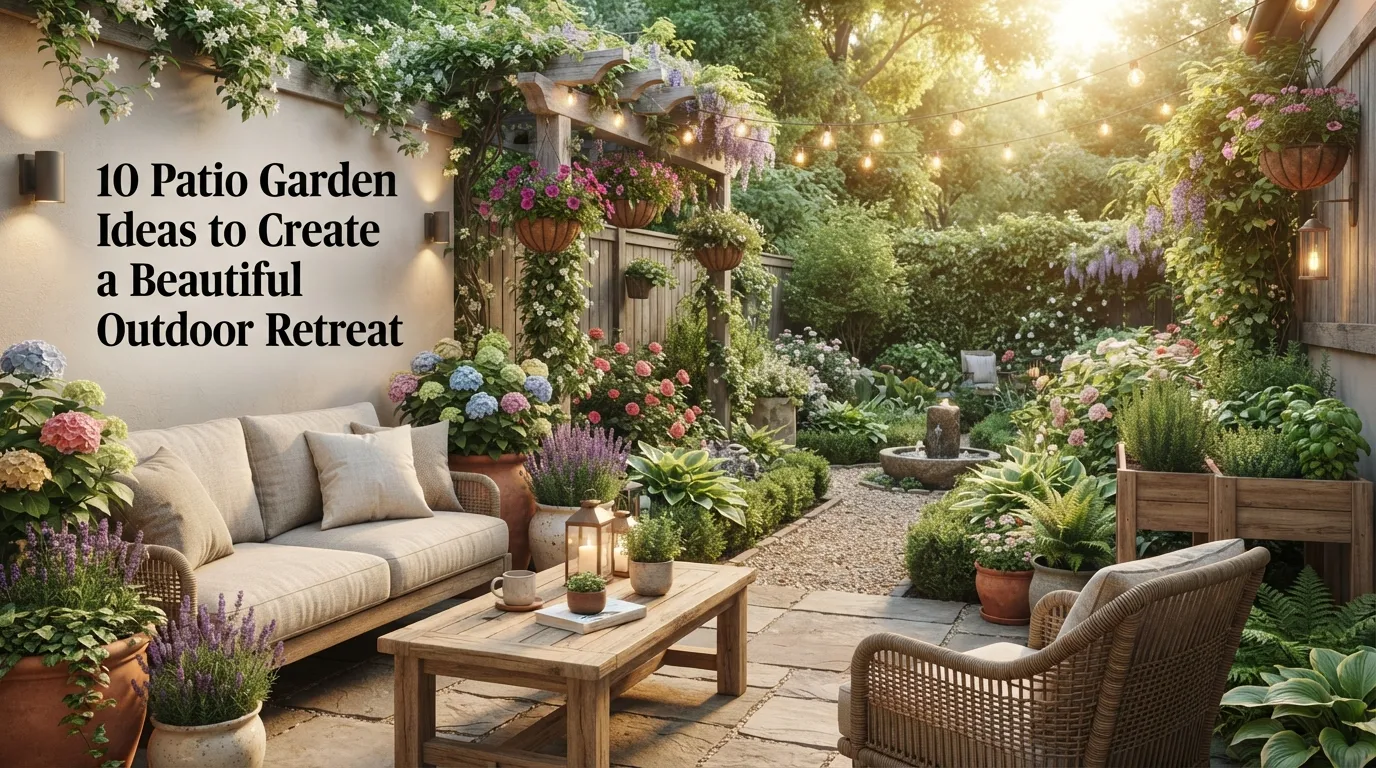
10 Patio Garden Ideas to Create a Beautiful Outdoor Retreat
A patio can be so much more than a place to put a table and a few chairs. With the right plants, containers, textures, and layout, even a modest patio can feel like a private garden room.
The trick is choosing plants and garden features that work with the space you actually have. A sunny patio may be perfect for herbs, flowering containers, and Mediterranean-inspired plants, while a shaded patio might look better with ferns, foliage plants, and other shade-tolerant options. Container size, drainage, watering needs, and mature plant size all matter too.
I’ve noticed that the most inviting patio gardens usually don’t rely on dozens of different plants. Instead, they repeat a few colors and textures throughout the space. A cluster of large containers can look more intentional than a collection of tiny pots scattered everywhere. A trellis can add height and privacy without taking up much floor space, while a narrow planter can soften a hard wall.
You can also design a patio garden around how you use the space. If you love outdoor meals, grow herbs close to the dining area. If relaxing is the priority, surround a lounge chair with leafy plants and fragrant flowers. If privacy is important, use tall containers, screening plants, or vertical greenery along the patio edge.
Whether you’re working with a tiny apartment terrace, a suburban concrete patio, or a spacious backyard entertaining area, these ideas can help you bring more greenery into your outdoor space without making it feel crowded.
From simple container arrangements to lush vertical gardens, these patio garden ideas are designed to be practical, attractive, and easy to adapt to different home styles.
Table of Contents
1. Layered Container Garden
Combine plants at different heights to create a lush garden effect without planting directly into the ground.
2. Herb Patio Garden
Keep useful culinary herbs close to the kitchen and outdoor dining area.
3. Vertical Garden Wall
Use walls and vertical structures to add greenery while preserving floor space.
4. Flowering Container Patio
Create seasonal color with coordinated pots filled with flowering plants.
5. Privacy Planting
Use tall plants and containers to create a softer, more secluded patio.
6. Tropical Patio Garden
Bring bold foliage and a relaxed vacation-inspired atmosphere outdoors.
7. Cottage Patio Garden
Combine flowers, herbs, vintage-style containers, and informal planting for a charming look.
8. Modern Container Garden
Use simple planters, architectural plants, and clean lines for a contemporary patio.
9. Pollinator Patio Garden
Attract bees, butterflies, and other beneficial pollinators with suitable flowering plants.
10. Cozy Garden Retreat
Combine plants, seating, lighting, and garden accessories to create a complete outdoor room.
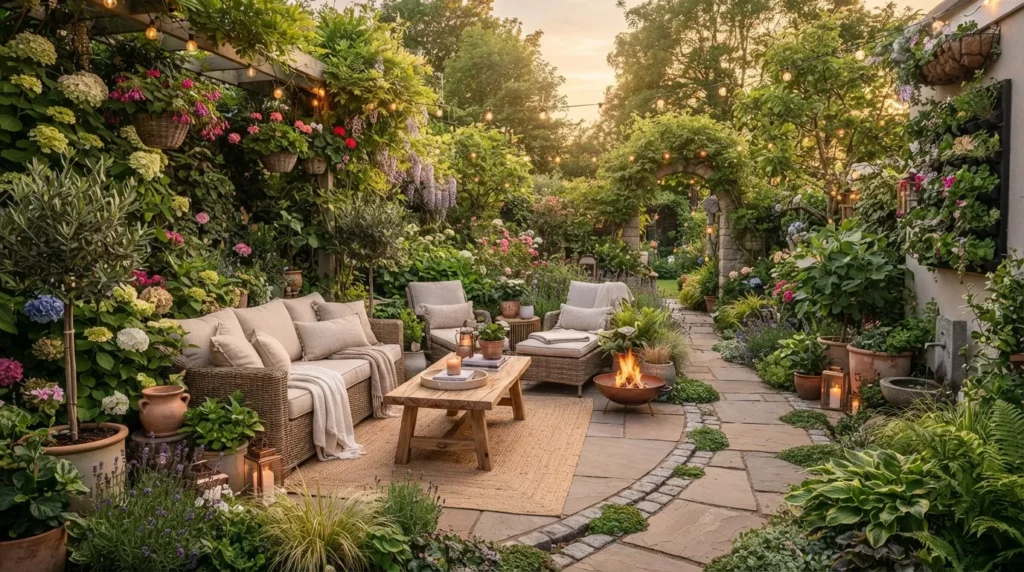
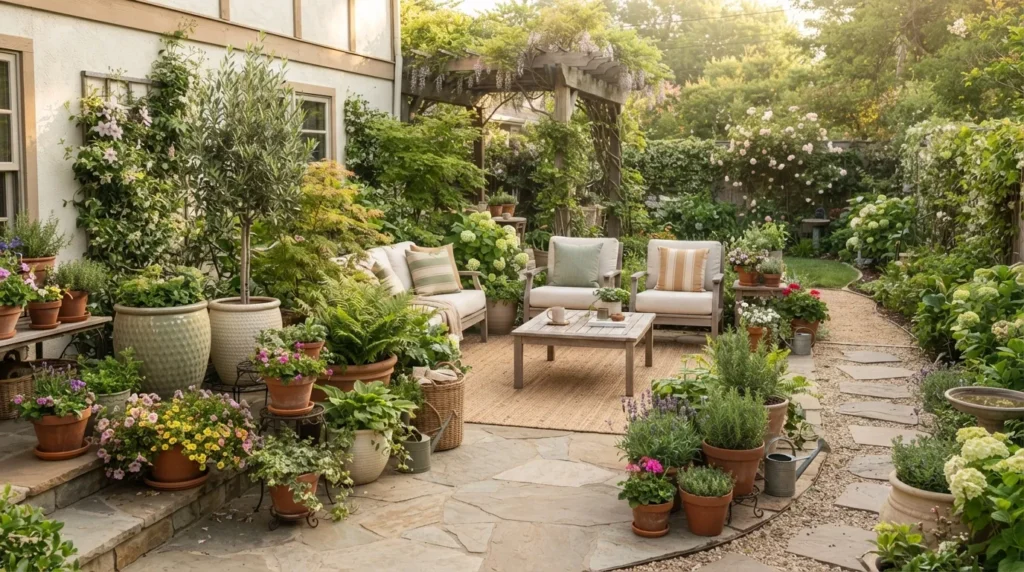
1. Layered Container Garden
Quick Benefits
- Works on patios without garden beds
- Creates visual height
- Easy to rearrange
- Suitable for renters
- Offers flexible seasonal planting
Why It Works
Containers make it possible to create a garden almost anywhere.
The secret to a successful arrangement is layering. Instead of placing every pot at the same height, combine tall plants, medium-sized containers, and low-growing flowers or trailing plants.
This creates depth and makes the patio feel more like a planted landscape.
Large containers can act as anchors, while smaller pots fill visual gaps. The arrangement doesn’t have to be perfectly symmetrical. In fact, slight variations in height often make a patio garden feel more natural.
Think about the mature size of every plant before purchasing it. A plant that looks perfectly proportioned at the garden center may eventually become too large for a compact patio.
How To Style It
Start with two or three larger containers.
Add medium-height plants around them, followed by smaller flowering or trailing plants near the front.
Use containers in complementary materials such as terracotta, stone-look composite, ceramic, or weather-resistant metal.
Repeat one or two colors throughout the arrangement for cohesion.
Make sure every container has appropriate drainage and is suited to the plant growing inside it.
2. Herb Patio Garden
Quick Benefits
- Provides fresh herbs
- Useful for outdoor cooking
- Works in small spaces
- Easy to customize
- Adds fragrance and greenery
Why It Works
A patio garden doesn’t have to be purely decorative.
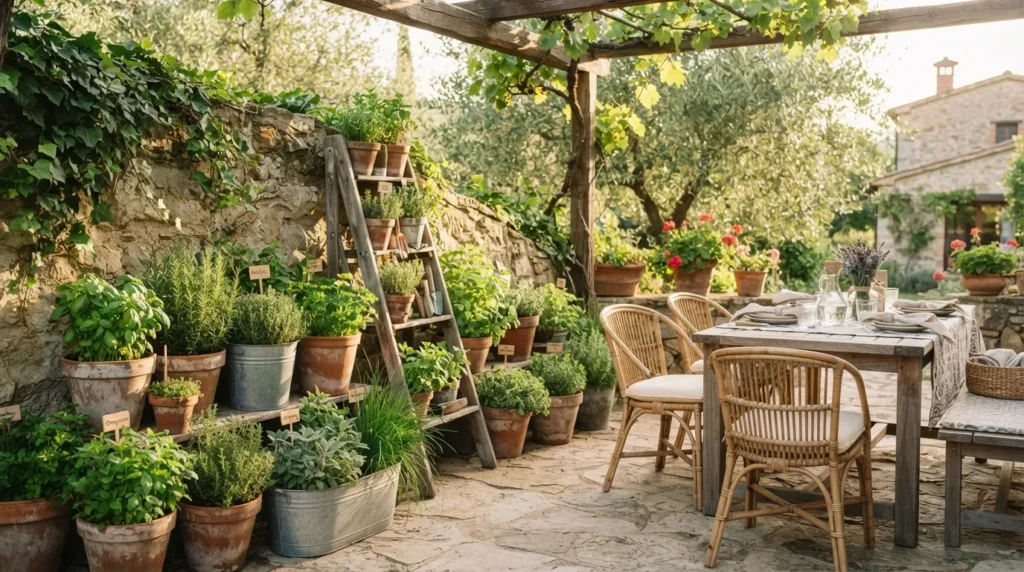
Herbs can turn a small outdoor area into a productive garden while adding attractive foliage and fragrance.
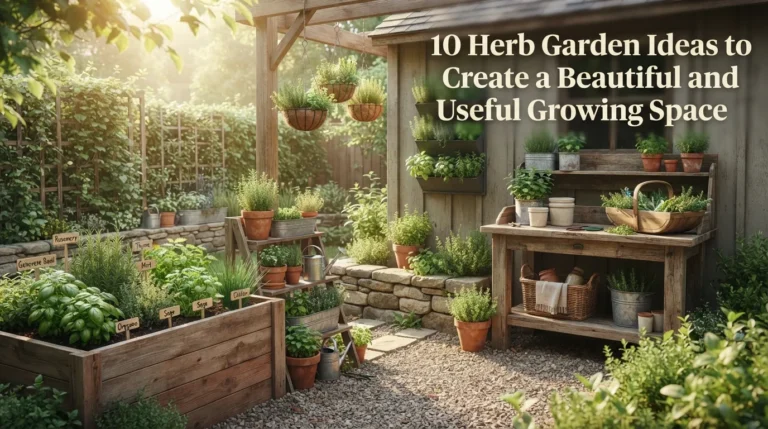
Basil, rosemary, thyme, mint, oregano, parsley, and other culinary herbs can be grown in containers depending on your climate and growing conditions.
Keeping herbs close to the kitchen also makes them easier to remember and harvest.
The key is matching each herb to its sunlight, watering, soil, and temperature requirements. Some herbs prefer drier conditions, while others need more consistent moisture.
How To Style It
Use a series of matching pots for a clean appearance.
For a farmhouse-inspired patio, try galvanized containers or classic terracotta pots.
A narrow shelf or tiered plant stand can hold several herb containers without consuming much floor space.
Place the herbs near an outdoor dining area or kitchen entrance where they’re easy to access.
Labeling the containers can also add a charming garden detail while making harvesting easier.
3. Vertical Garden Wall
Quick Benefits
- Saves floor space
- Adds greenery to blank walls
- Creates privacy
- Adds visual height
- Works well on compact patios
Why It Works
When floor space is limited, look upward.
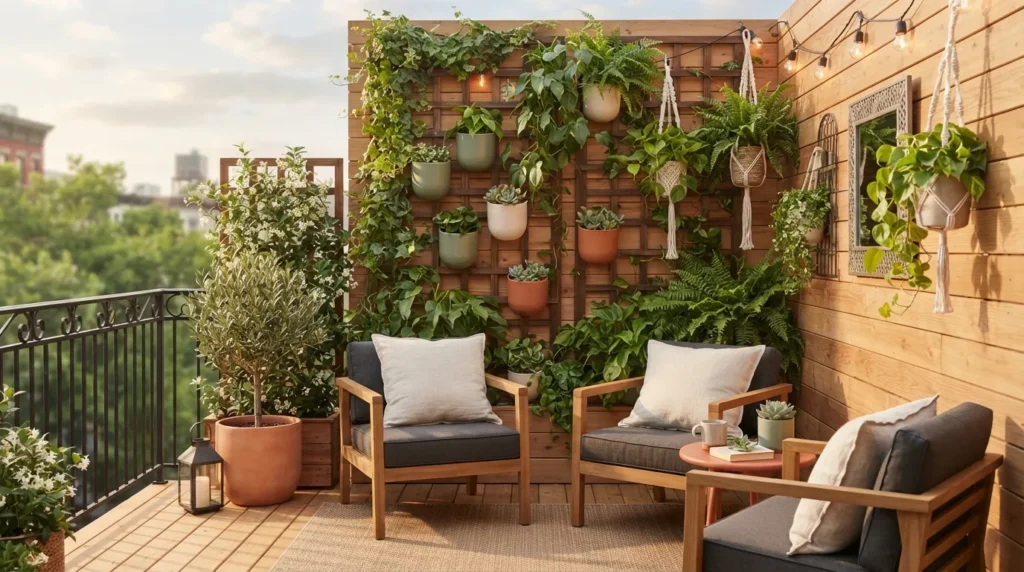
A vertical garden can transform a plain exterior wall, fence, or patio boundary into a living backdrop.
Trellises can support suitable climbing plants, while wall-mounted planters can hold smaller foliage or flowering plants.
This approach is particularly useful for apartment patios and narrow outdoor spaces because it adds substantial visual greenery without requiring a large planting footprint.
It also creates a stronger sense of enclosure.
How To Style It
Choose one main vertical feature rather than covering every available wall.
A wood trellis can provide a warm natural backdrop.
For a modern look, use a structured metal frame with evenly spaced planters.
Leave some wall visible so the garden doesn’t become visually overwhelming.
Select plants based on the available sunlight and the weight limits of any wall-mounted system.
4. Flowering Container Patio
Quick Benefits
- Adds seasonal color
- Easy to refresh
- Works with different design styles
- Creates an inviting entrance
- Doesn’t require permanent planting beds
Why It Works
Flowering containers are one of the easiest ways to bring color to a patio.
Instead of planting flowers directly into the ground, containers allow you to move plants around and change the arrangement as seasons change.
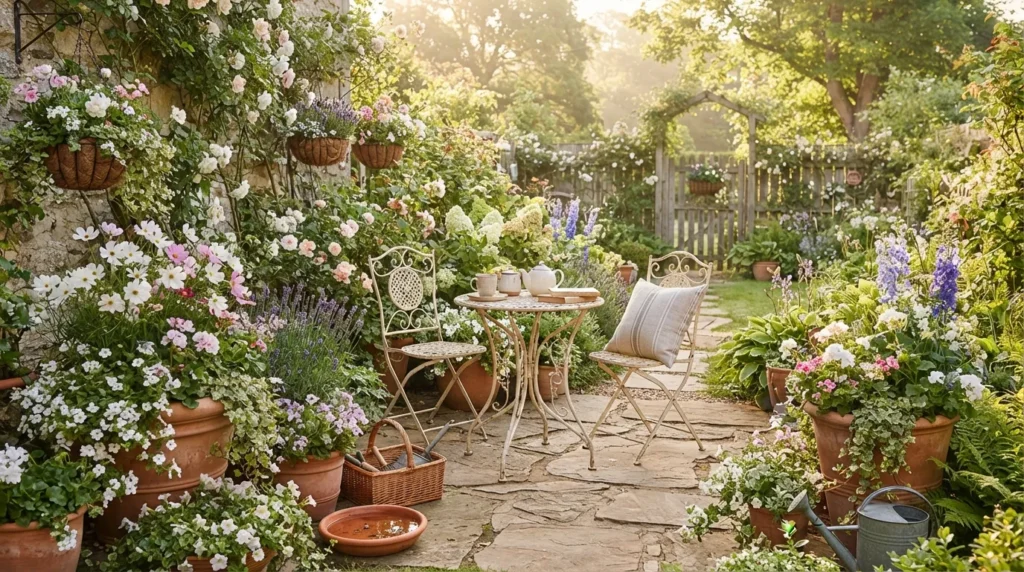
A coordinated collection of flowering pots can make a plain concrete or brick patio feel considerably more welcoming.
The most attractive combinations usually include more than one plant form: a taller focal plant, a fuller middle layer, and a trailing plant spilling over the edge.
How To Style It
Choose a simple color palette.
For a soft garden look, combine white, pale pink, lavender, and green.
For a more energetic patio, use stronger seasonal colors.
Group containers in odd-numbered clusters or vary their heights for visual interest.
Place the tallest arrangements toward the back and keep lower plants near seating areas.
Always choose plants appropriate for your local growing conditions.
5. Privacy Planting
Quick Benefits
- Creates a more secluded feeling
- Softens fences and walls
- Adds greenery
- Can reduce visual exposure
- Makes seating areas feel more intimate
Why It Works
Patios can sometimes feel exposed, especially when they’re close to neighboring homes or streets.
Plants provide a softer alternative to a completely solid barrier.
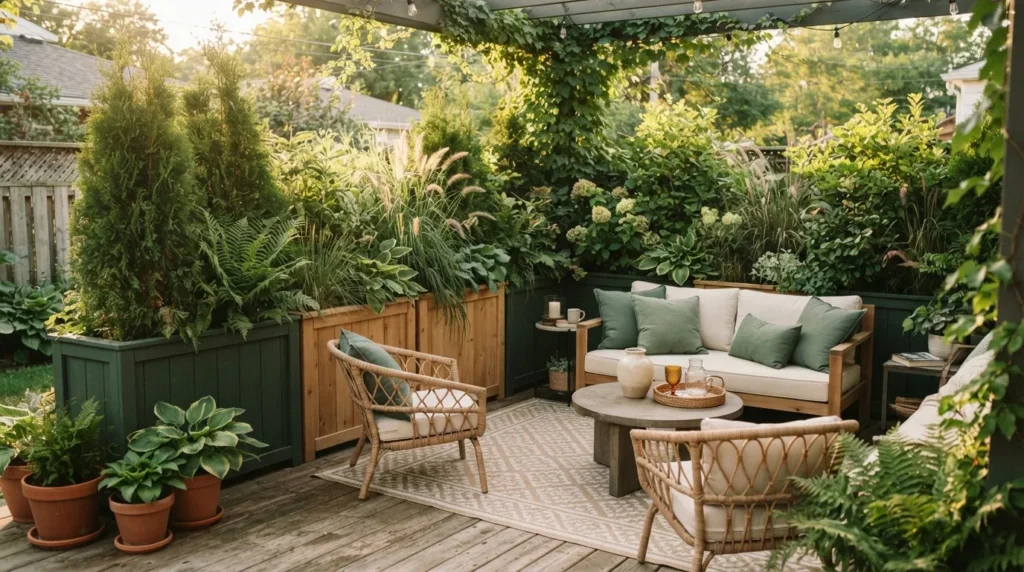
Tall container plants, shrubs, narrow trees, trellises, and climbing plants can help screen selected views while maintaining an attractive garden atmosphere.
The goal isn’t necessarily to block everything. Partial screening can create enough visual separation to make the patio feel significantly more comfortable.
How To Style It
Place taller containers along the patio perimeter.
Use a mixture of heights instead of creating a completely uniform wall.
A trellis behind a seating area can support suitable climbing plants and create a green backdrop.
Choose evergreen plants when year-round screening is important, provided they’re appropriate for your climate.
Leave sufficient space for plants to mature rather than planting based only on their current size.
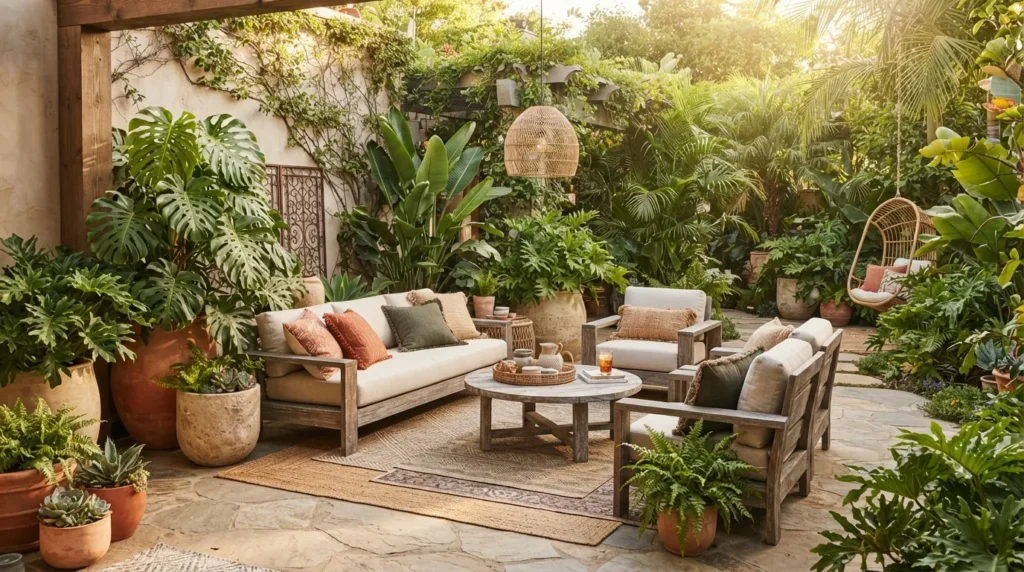
6. Tropical Patio Garden
Quick Benefits
- Creates a vacation-inspired mood
- Adds bold foliage
- Works beautifully around seating
- Provides visual drama
- Can be adapted to containers
Why It Works
Large leaves and lush greenery can give a patio a relaxed resort-like atmosphere.
A tropical-inspired arrangement doesn’t necessarily require a tropical climate. Many patios can achieve a similar visual effect with suitable container plants that thrive in the local growing conditions.
The key visual elements are foliage size, layered greenery, natural textures, and a restrained number of flowering accents.
How To Style It
Choose plants with different leaf shapes and heights.
Combine large statement foliage with smaller leafy plants.
Use natural materials such as wood, rattan-style outdoor furniture, stone, and woven textures.
Terracotta or neutral ceramic containers can complement the greenery.
If you live in a colder climate, use appropriate containers and plan for seasonal plant protection or relocation when necessary.
7. Cottage Patio Garden
Quick Benefits
- Charming and informal
- Works with older homes
- Uses mixed containers
- Creates a romantic garden feel
- Encourages seasonal planting
Why It Works
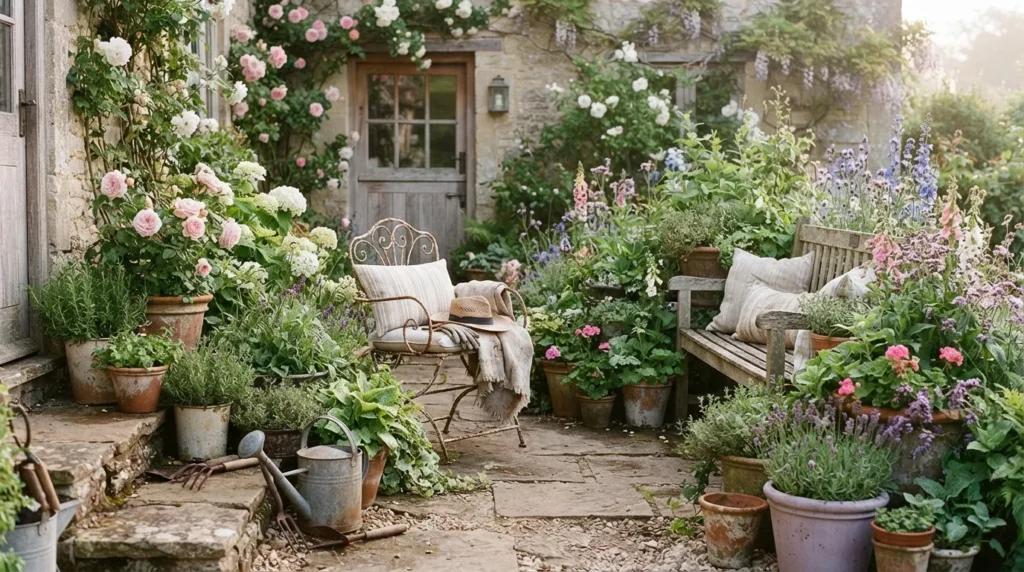
A cottage-inspired patio garden feels collected rather than overly coordinated.
The beauty comes from combining flowers, herbs, greenery, vintage-inspired containers, and natural textures.
This style is particularly effective when the patio already has brick, weathered wood, stone, or other traditional materials.
Instead of creating a perfectly symmetrical arrangement, allow plants to overlap visually and vary in height.
How To Style It
Use terracotta pots, weathered containers, wooden planters, and classic ceramic pieces.
Mix flowering plants with herbs and leafy greenery.
Add a small garden bench or vintage-style chair.
Keep the color palette soft and natural, with seasonal flowers providing the strongest accents.
A small watering can or simple garden accessory can add character without turning the patio into a collection of decorations.
8. Modern Container Garden
Quick Benefits
- Clean and organized
- Easy to maintain visually
- Works with contemporary homes
- Creates strong architectural lines
- Ideal for compact spaces
Why It Works
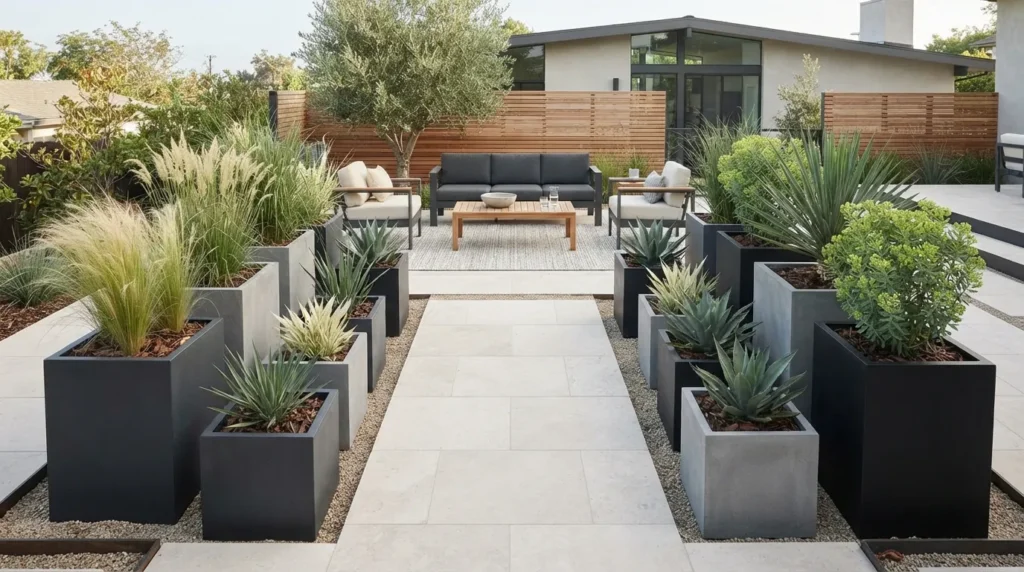
A modern patio garden relies more on structure and repetition than abundance.
Instead of dozens of small pots, use a few larger containers with strong shapes.
Architectural plants can create a striking effect against modern concrete, stone, or wood.
The simplicity is what makes this style effective.
How To Style It
Choose containers in black, charcoal, white, concrete gray, or another restrained finish.
Use plants with distinctive forms and foliage.
Repeat the same container style throughout the patio.
Keep furniture equally simple.
A single large planter beside a doorway can have more impact than several tiny pots scattered around the space.
Use gravel, stone, or clean-lined paving to reinforce the contemporary look.
9. Pollinator Patio Garden
Quick Benefits
- Supports pollinators
- Adds flowers
- Brings movement to the patio
- Creates educational opportunities
- Works in containers
Why It Works
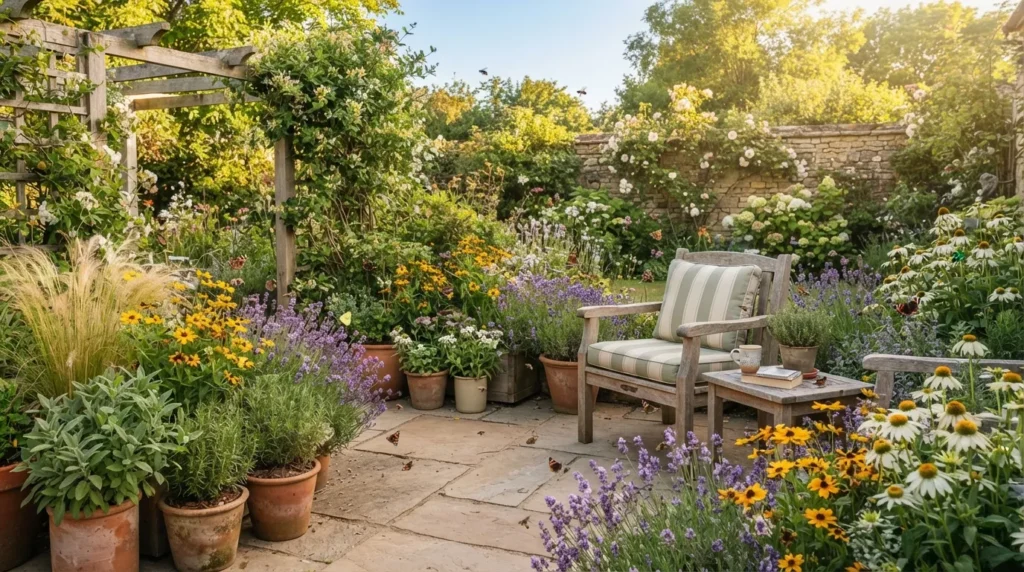
Even a container garden can provide useful habitat and food sources for pollinators.
A selection of flowering plants can attract bees, butterflies, and other beneficial insects when appropriate species are chosen for the region.
The best approach is to select plants suited to your local climate and provide flowers across as much of the growing season as practical.
Avoid treating the patio as an isolated decorative space. A few well-chosen flowering containers can become part of a broader garden ecosystem.
How To Style It
Group flowering plants in sunny locations when their growing requirements call for it.
Choose several species with different bloom times.
Add herbs such as flowering oregano or other suitable plants that provide additional interest.
Use natural containers and keep some foliage around the flowers for texture.
Avoid unnecessary pesticide use and choose gardening practices that are appropriate for beneficial insects.
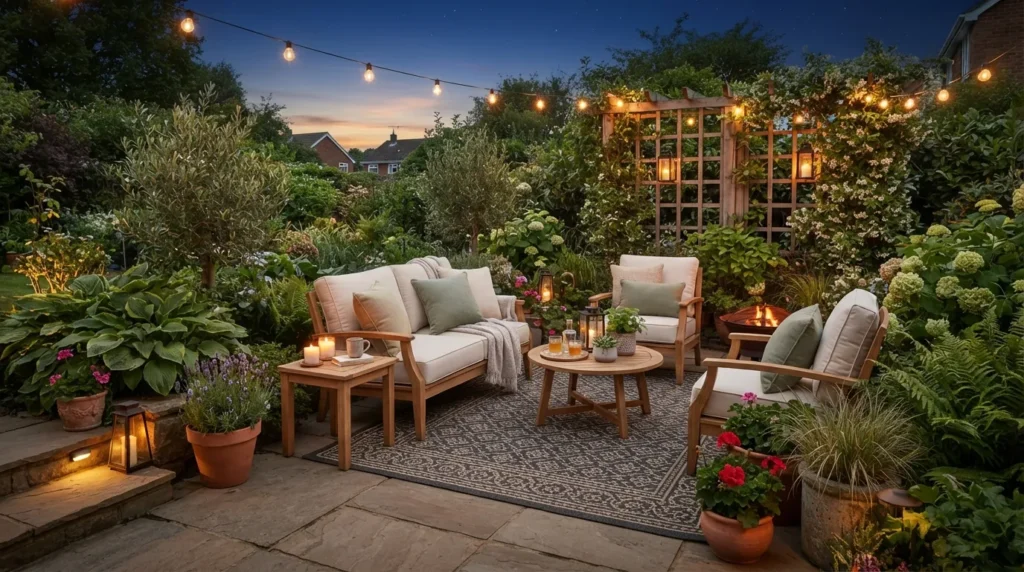
10. Cozy Garden Retreat
Quick Benefits
- Combines gardening and relaxation
- Creates a complete outdoor room
- Works with small or large patios
- Encourages everyday use
- Easy to personalize
Why It Works
A patio garden becomes most useful when the plants support the way you want to spend time outdoors.
Instead of treating the garden and furniture as separate elements, connect them visually.
Plants can frame a chair. A planter can define the edge of a dining area. A trellis can provide a backdrop behind a bench. Lighting can highlight greenery after sunset.
These layers make the patio feel more like a destination than simply an extension of the house.
How To Style It
Begin with comfortable seating.
Add two or three large planters around the perimeter.
Introduce a vertical element behind the seating area.
Use an outdoor rug if appropriate for the setting, followed by subtle lighting.
Finish with a few personal details such as a small side table, lantern, or garden accessory.
Keep the central walking area open so the space remains comfortable and practical.
How To Choose Plants for a Patio Garden
Before buying plants, evaluate the patio itself.
Start with sunlight. Track how many hours of direct light the area receives and whether the light changes throughout the year.
Then consider wind exposure.
A rooftop terrace or exposed balcony can be much windier than a sheltered backyard patio, which affects both plant selection and container stability.
Container size matters too. Small pots dry out faster, while larger containers generally provide more room for roots and moisture.
Finally, consider maintenance.
If you travel frequently or prefer a low-maintenance garden, choose plants that can tolerate the conditions of your patio without constant attention.
Best Containers for Patio Gardens
The right container should match both the plant and the space.
Terracotta provides a classic garden appearance and works well in many traditional settings.
Ceramic containers offer more color and decorative flexibility.
Metal planters can create a modern or industrial look.
Composite and resin containers are often lighter and can be easier to move.
Whatever material you choose, make sure the container is suitable for outdoor conditions and provides proper drainage.
How To Arrange Patio Plants
Start with the largest containers.
These become the visual anchors.
Then add medium-sized plants around them.
Finally, use smaller containers or trailing plants to soften the edges.
Avoid lining every pot along the patio perimeter unless you specifically want a strong border effect.
Instead, create clusters that frame the seating area and important views.
Repeating the same container material or plant color can help the entire garden feel intentional.
Patio Garden Ideas for Small Spaces
If your patio is tiny, prioritize vertical gardening.
A trellis, wall planter, or narrow plant stand can add greenery without consuming much floor space.
Use one or two large containers instead of many small ones.
Choose multipurpose furniture, such as a bench that can also provide storage.
Hanging baskets can also add greenery overhead when safely installed.
The most important rule is to maintain a clear path.
A beautiful patio isn’t useful if plants and furniture make it difficult to move around.
Low-Maintenance Patio Garden Tips
Low maintenance starts with choosing plants that naturally suit your conditions.
Don’t choose a plant simply because it looks attractive online. Check its sunlight, water, temperature, and mature-size requirements.
Use quality potting media suitable for containers.
Group plants with similar watering needs together.
Check containers regularly for drainage.
Mulching the surface of larger containers can help reduce evaporation and keep the planting area looking finished.
And remember that even low-maintenance plants need appropriate care.
How To Make a Patio Garden Look Expensive
You don’t need expensive plants or elaborate landscaping.
Focus on consistency.
Use fewer, larger containers instead of many tiny pots.
Repeat materials and colors.
Choose one strong focal point, such as a large planter, trellis, or specimen plant.
Keep the patio clean and uncluttered.
Good lighting can also make a significant difference. A few strategically positioned fixtures can highlight plants and seating without making the space look overly decorated.
Common Patio Garden Mistakes
One common mistake is choosing plants based only on appearance.
A plant that needs full sun won’t thrive in a deeply shaded patio simply because it looks beautiful.
Another issue is using containers that are too small.
Small containers can restrict root growth and dry out quickly.
Overcrowding is another problem. Plants need room to mature.
Finally, don’t forget drainage. Standing water can damage roots and create other problems.
FAQ
What plants are best for a patio garden?
The best plants depend on sunlight, climate, container size, watering conditions, and your desired appearance. Herbs, flowering annuals, ornamental grasses, shrubs, foliage plants, and suitable small trees can all work in containers. Choose plants according to their growing requirements rather than selecting solely by appearance.
How do I start a patio garden?
Start by measuring the patio and identifying sunny and shaded areas. Decide whether you want flowers, herbs, privacy plants, foliage, or a combination. Choose containers with appropriate drainage and select plants that match the light and climate conditions. Begin with a small group and expand as you learn how the space performs.
Can I grow vegetables on a patio?
Yes. Many vegetables can be grown successfully in containers when they receive appropriate sunlight, moisture, nutrients, and adequate root space. Compact varieties of tomatoes, peppers, lettuce, herbs, and other crops can work well. Check the growing requirements for each variety before planting.
How do I make a patio garden look less cluttered?
Use fewer, larger containers and group plants intentionally. Repeating container materials and plant colors can create visual consistency. Keep pathways open and avoid placing small pots randomly throughout the patio. A strong focal point often makes the entire arrangement feel more organized.
How can I add privacy with patio plants?
Tall containers, narrow shrubs, suitable small trees, trellises, and climbing plants can all provide screening. Choose plants based on mature height and width, sunlight, and local climate. Place screening plants along the areas where privacy is most needed rather than surrounding the entire patio.
How often should patio plants be watered?
There isn’t one schedule that works for every container. Watering frequency depends on the plant, container size, potting mix, weather, sunlight, and season. Check the moisture level of the growing medium and follow the requirements of each plant rather than relying on a fixed calendar schedule.
Can a patio garden work without much sunlight?
Yes, but plant choices need to match the available light. Many foliage plants and shade-tolerant species can perform well in lower-light conditions. Observe how much direct sunlight your patio receives and select plants specifically suited to that environment.
Conclusion
A patio garden can completely change the feeling of an outdoor space.
You don’t need a large yard or permanent garden beds to enjoy the benefits of greenery. Containers, trellises, hanging planters, herbs, flowering plants, and carefully selected foliage can transform even a small paved area into a welcoming garden retreat.
Start by thinking about how you use your patio. If you love cooking, create an herb garden close to your dining area. If privacy is your priority, focus on vertical planting and tall containers. If you want color, build a seasonal collection of flowering pots. And if relaxation is the goal, surround comfortable seating with layers of greenery.
The most successful patio gardens balance beauty with practicality. Leave enough room to walk, choose plants that suit the actual conditions, and resist overcrowding the space.
You can always add more later.
Start with a few strong pieces, observe how your plants grow through the season, and gradually build a patio garden that feels like a natural extension of your home.
Related Articles
- 10 Small Patio Ideas for Making the Most of Your Outdoor Space
- 10 Outdoor Lighting Ideas for a Beautiful Backyard
- 10 Backyard Seating Ideas for Comfortable Outdoor Living
- 10 Backyard Fire Pit Ideas for Cozy Evenings
- 11 Backyard Privacy Ideas for a More Secluded Outdoor Space