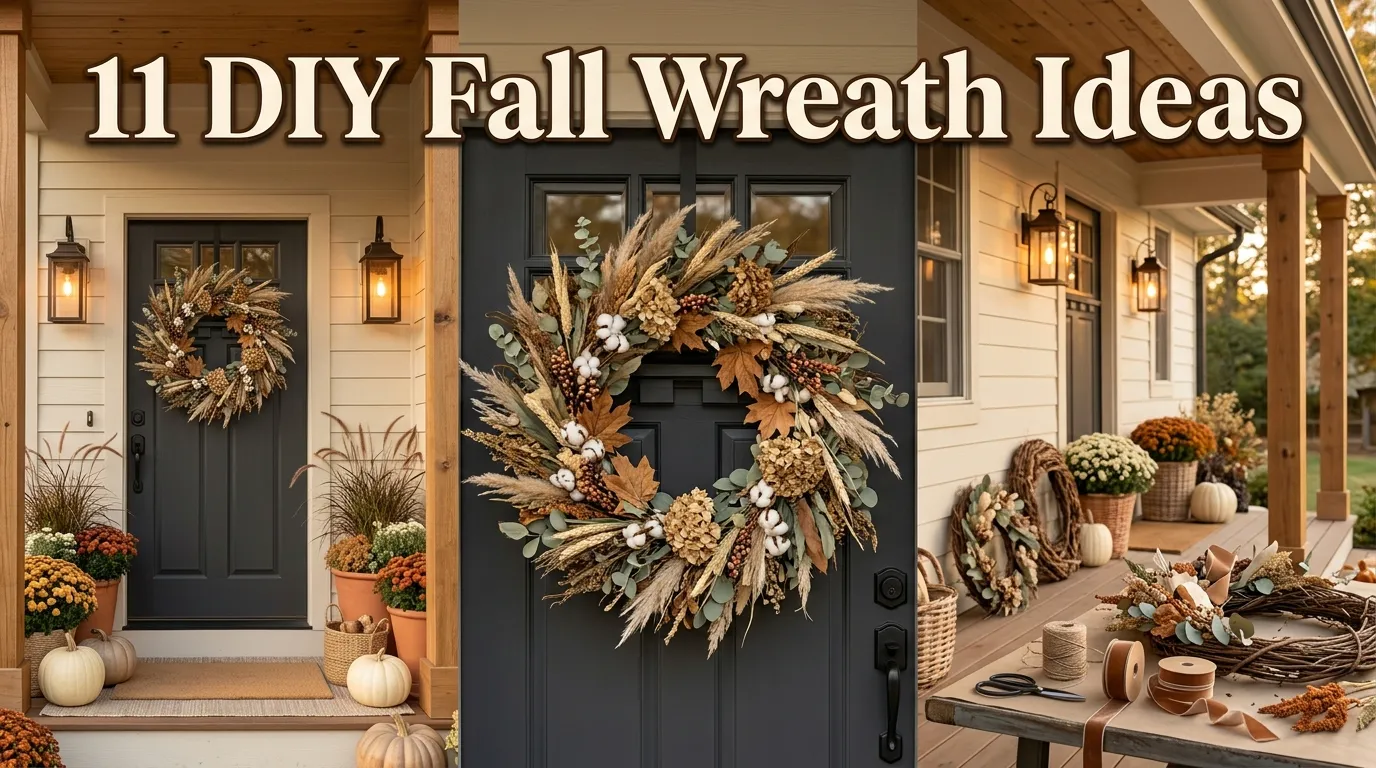
11 DIY Fall Wreath Ideas
Your front door is one of the easiest places to introduce fall style, and a homemade wreath can make the entrance feel seasonal without requiring a complete porch makeover. Even a simple grapevine base can become something special with dried leaves, mini pumpkins, wheat, berries, ribbon, or foliage in warm autumn shades.
The best DIY wreaths don’t necessarily require advanced crafting skills. Many can be assembled in under an afternoon using a premade wreath form and a handful of inexpensive materials. The trick is choosing a clear color palette and creating enough texture to make the wreath interesting from a distance.
I’ve noticed that front-door wreaths tend to look more polished when one element is allowed to be the star. That might be a cluster of miniature pumpkins, a dramatic bow, dried sunflowers, or an arrangement of preserved leaves. Everything else can support that focal point rather than competing with it.
Another advantage of making your own wreath is flexibility. You can create something traditional with orange and burgundy, something farmhouse-inspired with burlap and wheat, or a neutral design using cream pumpkins and eucalyptus. You can also adjust the size and shape to suit your particular door.
Below are 11 DIY fall wreath ideas designed to be approachable, attractive, and practical for a real home. Each project includes styling guidance so you can adapt the materials to your own entryway instead of simply copying one exact design.
Table of Contents
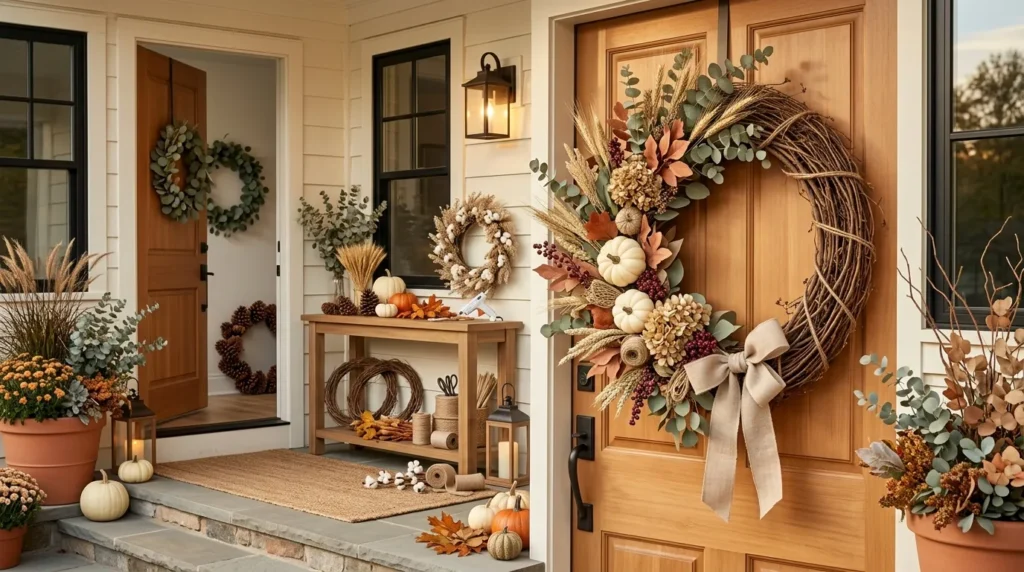
1. Pumpkin Grapevine Wreath
A rustic wreath combining miniature pumpkins, grapevine, and seasonal foliage.
2. Dried Wheat Wreath
A simple natural design built around golden wheat and earthy textures.
3. Maple Leaf Wreath
A colorful autumn wreath featuring layered fall leaves in traditional seasonal shades.
4. Neutral Pumpkin Wreath
A softer alternative using cream pumpkins, beige foliage, and understated accents.
5. Sunflower Harvest Wreath
A cheerful design that combines sunflowers with autumn leaves and rustic textures.
6. Eucalyptus Fall Wreath
A sophisticated option using eucalyptus, berries, and subtle seasonal colors.
7. Burlap Bow Wreath
A farmhouse-inspired project centered around burlap ribbon and natural materials.
8. Berry And Pinecone Wreath
A textured wreath using pinecones, berries, branches, and rustic greenery.
9. Cotton Stem Wreath
A soft neutral design that works beautifully with farmhouse and modern homes.
10. Rustic Basket Wreath
A creative alternative that uses a shallow basket as the foundation for a fall door arrangement.
11. Asymmetrical Harvest Wreath
A modern DIY design that concentrates seasonal materials on one side for a relaxed look.
1. Pumpkin Grapevine Wreath
Quick Benefits
- Easy to customize
- Uses inexpensive materials
- Works with farmhouse interiors
- Creates strong autumn character
- Looks attractive on dark or light doors
Why It Works
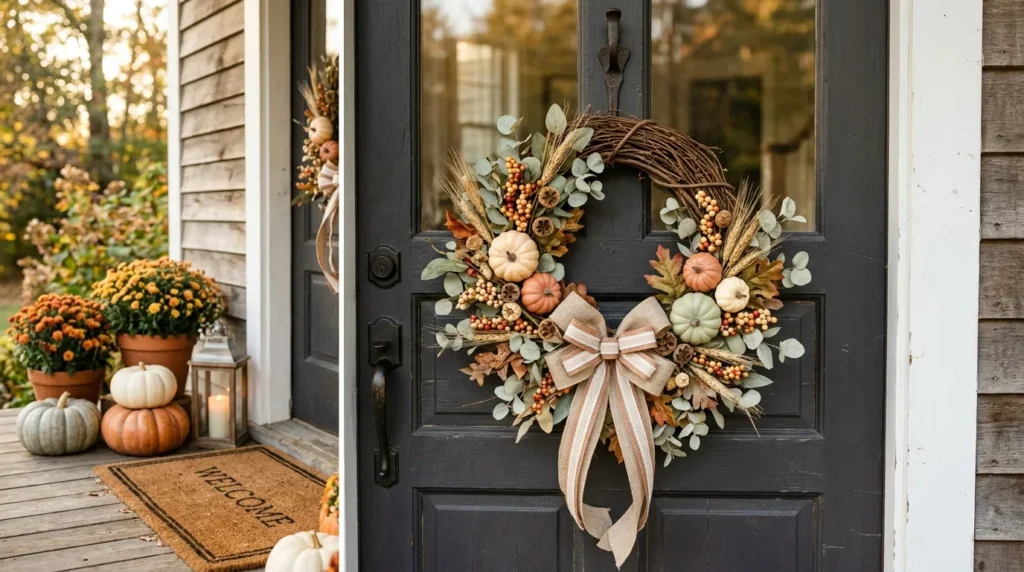
Miniature pumpkins and grapevine are a natural combination for fall. The irregular shape of grapevine gives the wreath a rustic foundation, while small pumpkins immediately establish the seasonal theme.
Because grapevine wreaths already have plenty of texture, you don’t need to cover the entire surface. Leaving some of the branches visible makes the finished wreath feel lighter and more organic.
This is also one of the easiest designs to adapt. You can use orange pumpkins for a traditional appearance, white pumpkins for a neutral look, or green varieties for a more natural palette.
How To Style It
Start with an 18- to 22-inch grapevine wreath. Attach miniature pumpkins using floral wire or strong craft adhesive, concentrating several pieces along one side or at the lower portion.
Add faux maple leaves, eucalyptus, small berries, or dried grasses around the pumpkins. Finish with a simple linen or plaid ribbon.
For a polished arrangement, don’t distribute every element evenly. A concentrated cluster usually looks more intentional than decorations scattered around the entire wreath.
2. Dried Wheat Wreath
Quick Benefits
- Simple material list
- Long-lasting seasonal look
- Beautiful neutral color
- Works with farmhouse decor
- Easy for beginners
Why It Works
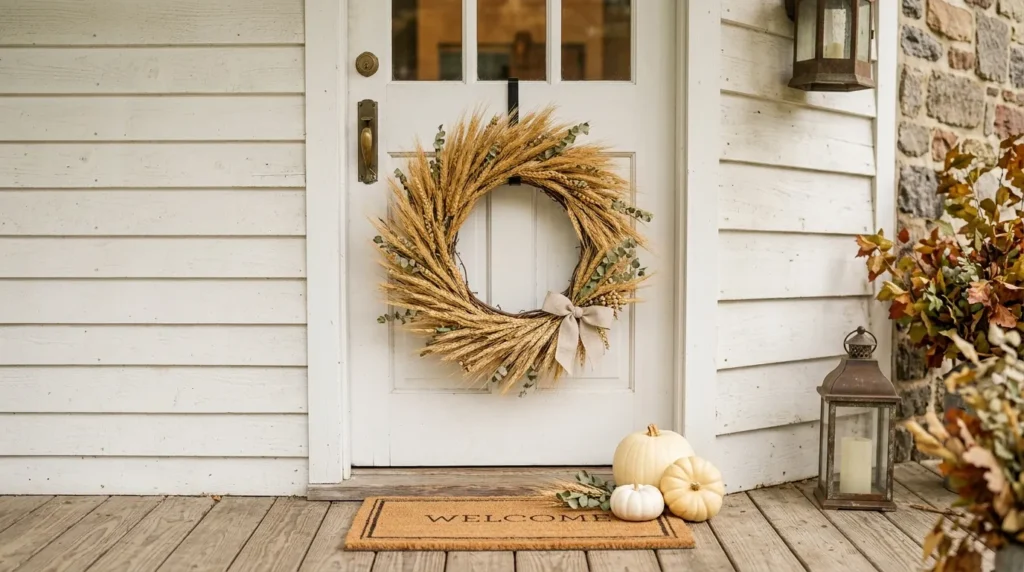
Wheat is one of the most versatile materials for autumn crafts because its golden color immediately suggests harvest season. It also creates beautiful movement and texture around the circular shape of a wreath.
A wheat wreath can be extremely simple, which makes it ideal if you prefer understated decor. You don’t need pumpkins or brightly colored leaves to make the door look seasonal.
The natural straw-like texture also pairs beautifully with wood, stone, brick, and neutral siding.
How To Style It
Use dried wheat stalks and a simple straw or grapevine wreath base. Attach small bundles around the form with floral wire, overlapping each bundle in the same direction.
For a fuller design, layer the wheat in several rows. For a minimalist appearance, leave sections of the grapevine visible.
Add a small linen bow, dried eucalyptus, or a few muted berries near the bottom.
3. Maple Leaf Wreath
Quick Benefits
- Classic fall appearance
- Easy to source materials
- Highly colorful
- Works with many door colors
- Excellent for traditional homes
Why It Works
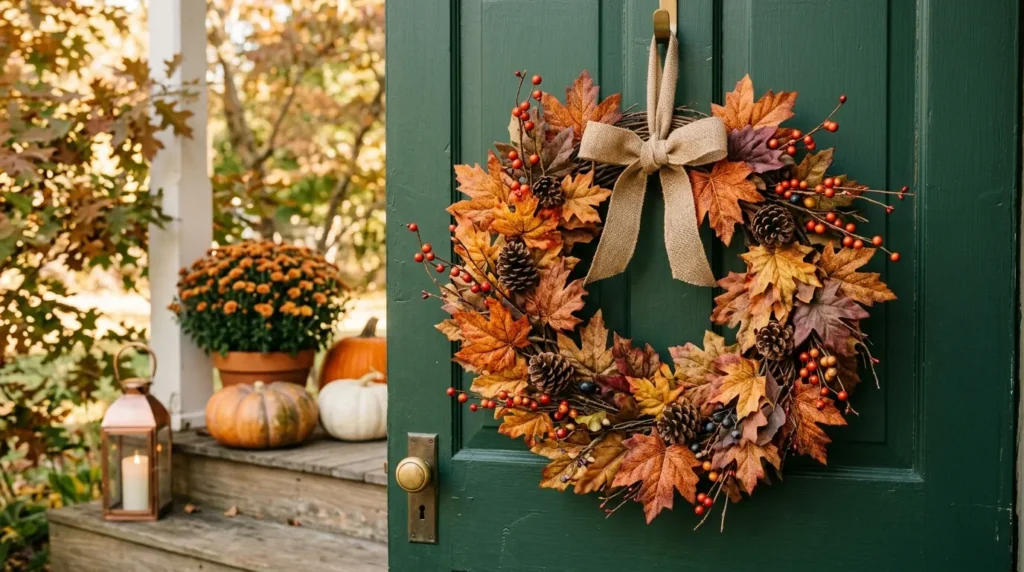
Maple leaves bring the most recognizable fall colors directly to the front door. A mixture of red, orange, rust, yellow, and brown creates visual depth and looks especially beautiful against dark doors.
You can make this wreath entirely from faux leaves, which means it can be reused for several autumn seasons.
The key is avoiding a completely flat layer of leaves. Different sizes and overlapping directions make the finished wreath look more natural.
How To Style It
Begin with a foam, grapevine, or wire wreath form. Attach leaves in overlapping clusters around the circle.
Mix larger maple leaves with smaller foliage to prevent the surface from looking repetitive.
Add a few faux berries or tiny pinecones for texture, then finish with a simple rust-colored ribbon.
If your door is already colorful, consider using mostly muted leaves so the wreath complements rather than competes with the door.
4. Neutral Pumpkin Wreath
Quick Benefits
- Works with modern interiors
- Avoids bright seasonal colors
- Looks sophisticated
- Easy to coordinate with porch decor
- Can transition through late fall
Why It Works
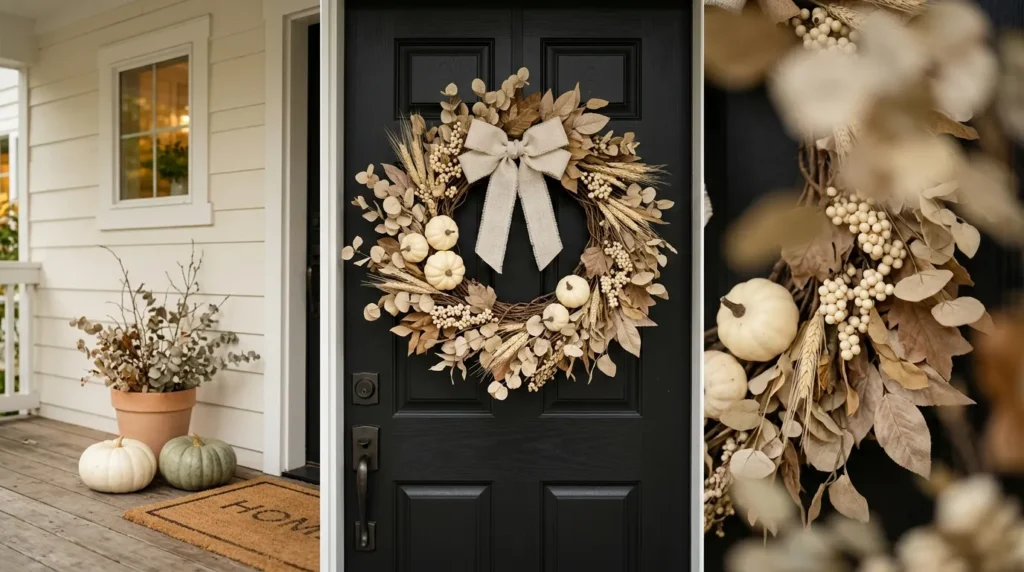
Neutral fall decorating is ideal if you enjoy seasonal decor but prefer a calmer color palette. Cream pumpkins, beige leaves, dried grasses, and warm brown accents can create an unmistakably autumnal wreath without relying on orange.
This style also photographs beautifully because the muted colors create a soft, layered appearance.
The design works particularly well against black, charcoal, natural wood, white, and muted green doors.
How To Style It
Use a grapevine wreath as the foundation. Attach several small cream pumpkins along the lower third of the wreath.
Layer in beige eucalyptus, dried wheat, ivory berries, and small brown leaves.
Finish with a wide linen ribbon in oatmeal, taupe, or warm white.
For extra dimension, use pumpkins in at least two shapes rather than choosing identical pieces.
5. Sunflower Harvest Wreath
Quick Benefits
- Bright and cheerful
- Excellent for traditional fall decorating
- Adds strong visual impact
- Easy to personalize
- Pairs well with orange pumpkins
Why It Works
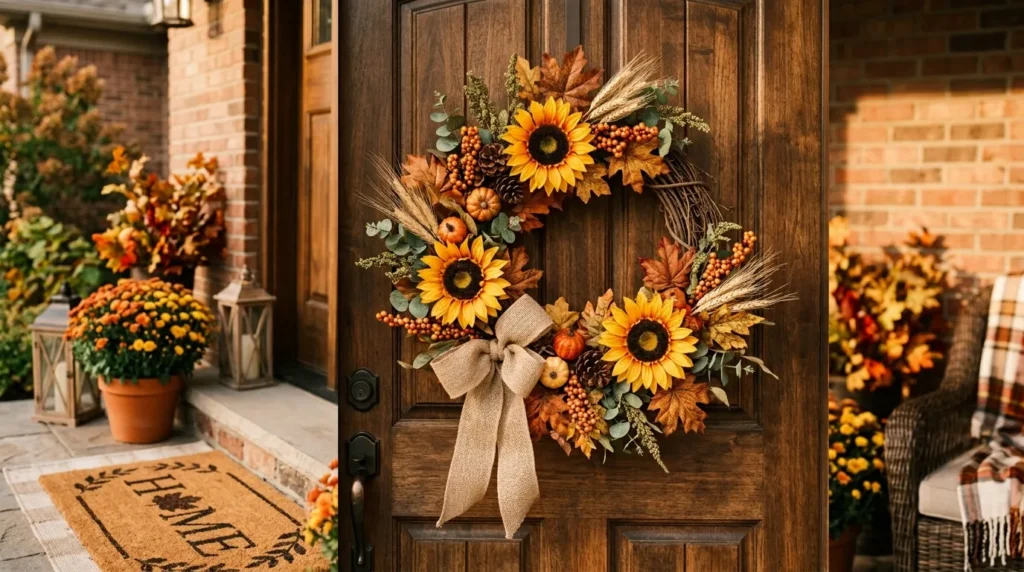
Sunflowers bring a cheerful golden tone to fall decor while still fitting naturally into a harvest-inspired palette. They work especially well when combined with darker foliage and rustic materials.
A sunflower wreath can become the main focal point of the front door, so the rest of your porch doesn’t need to be heavily decorated.
Use varying flower sizes to create a more natural arrangement rather than placing identical blooms at equal intervals.
How To Style It
Start with a grapevine or foam wreath. Place several large faux sunflowers around one side of the form.
Fill the gaps with maple leaves, wheat, berries, and small greenery stems.
Add a few miniature pumpkins if you want a stronger harvest theme.
A burlap or dark brown ribbon works well with the warm yellow petals and rustic foliage.
6. Eucalyptus Fall Wreath
Quick Benefits
- Sophisticated appearance
- Works with neutral homes
- Easy to reuse
- Provides subtle seasonal texture
- Doesn’t feel overly themed
Why It Works
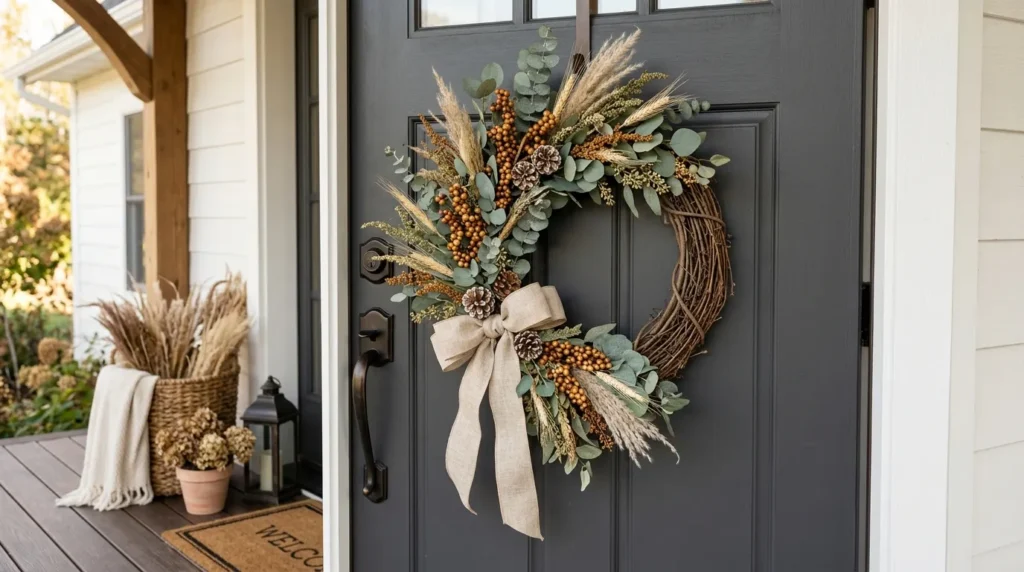
Eucalyptus is useful when you want a wreath that feels seasonal without looking like a traditional fall craft. Its muted green tones provide a calm foundation while small berries, dried grasses, and rust-colored accents introduce autumn.
This style works particularly well with modern farmhouse, Scandinavian-inspired, transitional, and contemporary homes.
It can also remain attractive later in the season when you want the front door to feel winter-adjacent without becoming explicitly Christmas-themed.
How To Style It
Use a grapevine or metal wreath base and layer eucalyptus stems around approximately two-thirds of the circle.
Leave one section relatively open to create an asymmetrical shape.
Add rust berries, dried grasses, small pinecones, or a few muted leaves.
Finish with a neutral linen ribbon.
The more natural the arrangement looks, the better. Avoid making every stem perfectly symmetrical.
7. Burlap Bow Wreath
Quick Benefits
- Budget-friendly
- Beginner-friendly
- Strong farmhouse character
- Easy to customize
- Uses widely available craft materials
Why It Works
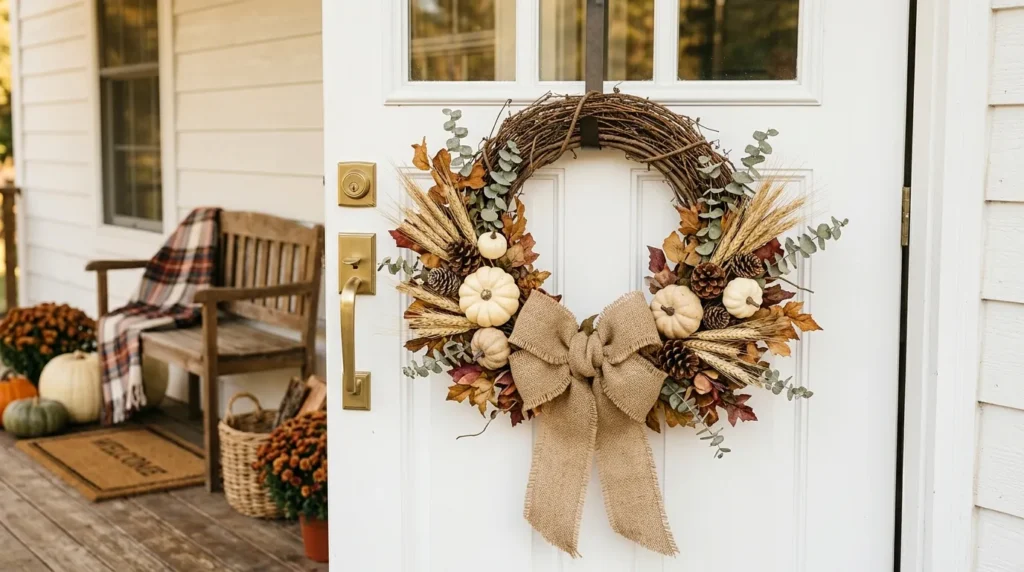
Burlap is a classic farmhouse material because its coarse texture adds warmth and visual interest. When combined with grapevine, pumpkins, wheat, or greenery, it creates an approachable fall look.
This is also a practical design if you’re new to wreath making. Instead of attaching dozens of small decorations, you can allow a large bow to become the main focal point.
How To Style It
Use a grapevine wreath and add a generous burlap bow near the bottom or slightly off-center.
Attach small pumpkins, wheat stems, pinecones, and a few faux leaves around the bow.
For a more modern farmhouse appearance, choose natural burlap with cream accents instead of heavily patterned ribbon.
Keep the bow proportional to the wreath. A very large bow can overwhelm a small door.
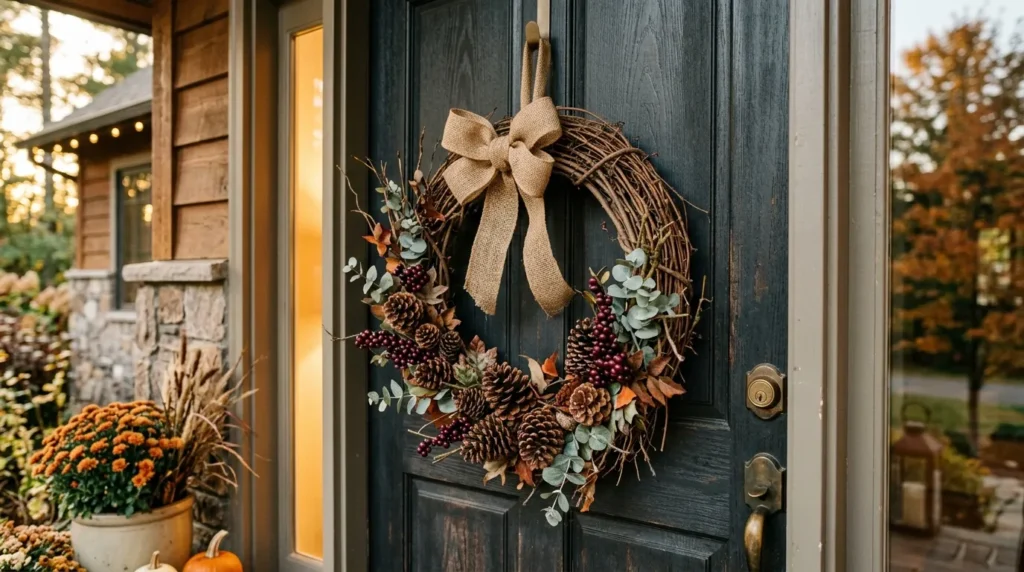
8. Berry And Pinecone Wreath
Quick Benefits
- Rich texture
- Natural-looking materials
- Works through much of fall
- Pairs well with wood finishes
- Easy to make from simple components
Why It Works
Pinecones and berries provide contrasting textures. Pinecones add rough, earthy surfaces while berries introduce small points of color.
This combination can create a rustic wreath that feels closer to nature than a heavily decorated seasonal design.
Deep red berries work well for a traditional appearance, while muted burgundy or brown berries create a more sophisticated palette.
How To Style It
Begin with a grapevine base. Secure pinecones at irregular intervals rather than placing them evenly around the wreath.
Fill the open spaces with faux berries, eucalyptus, dried branches, and small leaves.
A natural jute or brown linen ribbon can complete the look.
If your porch already contains many pumpkins, keep this wreath relatively foliage-focused so the overall entrance doesn’t feel repetitive.
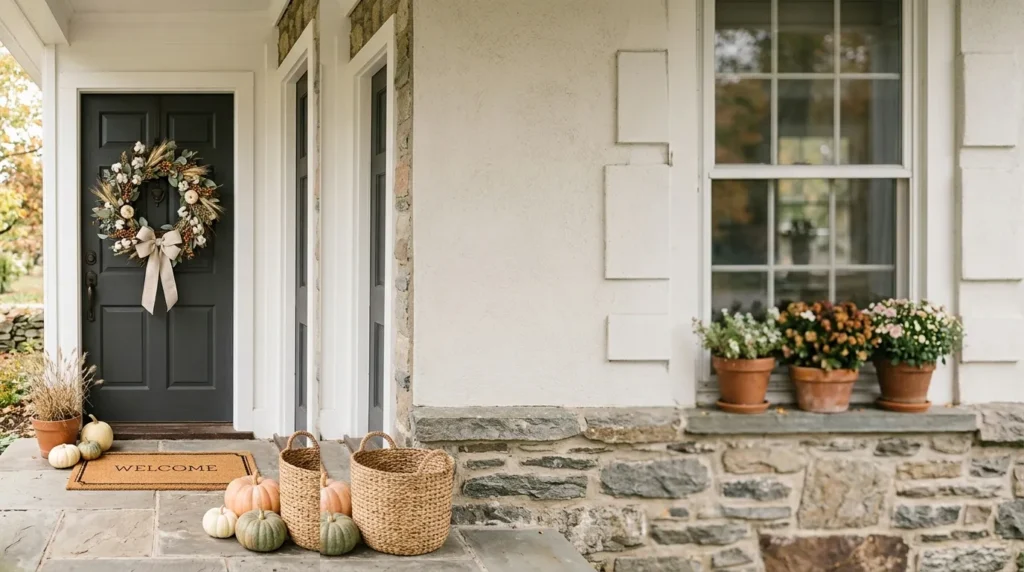
9. Cotton Stem Wreath
Quick Benefits
- Soft neutral appearance
- Works with farmhouse interiors
- Reusable beyond fall
- Easy to pair with other materials
- Creates beautiful texture
Why It Works
Cotton stems have a soft, organic appearance that works especially well in neutral and farmhouse decorating. Their pale color can brighten a dark front door without adding strong seasonal color.
Adding a few autumn accents prevents the wreath from looking like an everyday botanical arrangement.
You can also reuse the cotton-based wreath throughout the year by changing the ribbon and seasonal additions.
How To Style It
Arrange cotton stems around a grapevine wreath, concentrating them along one side for an organic silhouette.
Add dried wheat, muted eucalyptus, small cream pumpkins, or subtle rust berries.
Finish with a linen or ticking-stripe ribbon.
This design looks especially attractive on charcoal, black, dark green, and natural wood doors.
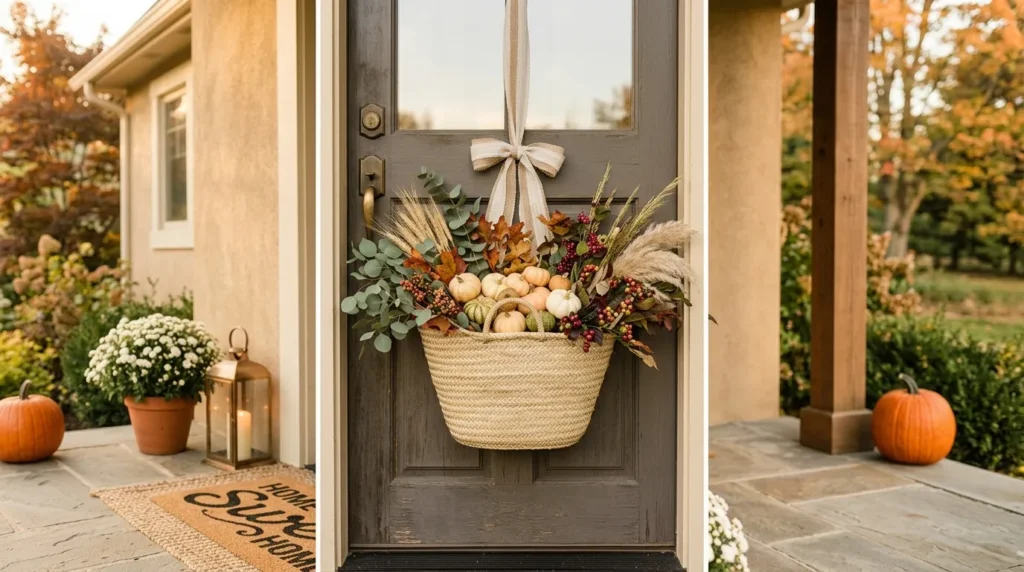
10. Rustic Basket Wreath
Quick Benefits
- Creative alternative to traditional wreaths
- Easy to customize
- Excellent farmhouse style
- Creates a strong focal point
- Can be reused as storage afterward
Why It Works
A shallow woven basket can become an unexpected but beautiful foundation for a fall door arrangement. Instead of creating a perfectly circular design, the basket gives you a container-like shape for foliage, flowers, and seasonal accents.
This is particularly useful if you want your front door decor to look slightly different from the standard wreath arrangement.
Choose a lightweight basket so the door hardware can safely support it.
How To Style It
Use a flat-backed basket with a sturdy handle or hanging loop.
Fill the lower portion with faux eucalyptus, dried grasses, maple leaves, and small pumpkins.
Allow some foliage to extend slightly beyond the basket’s edges for a relaxed appearance.
Finish with a wide ribbon attached near the handle.
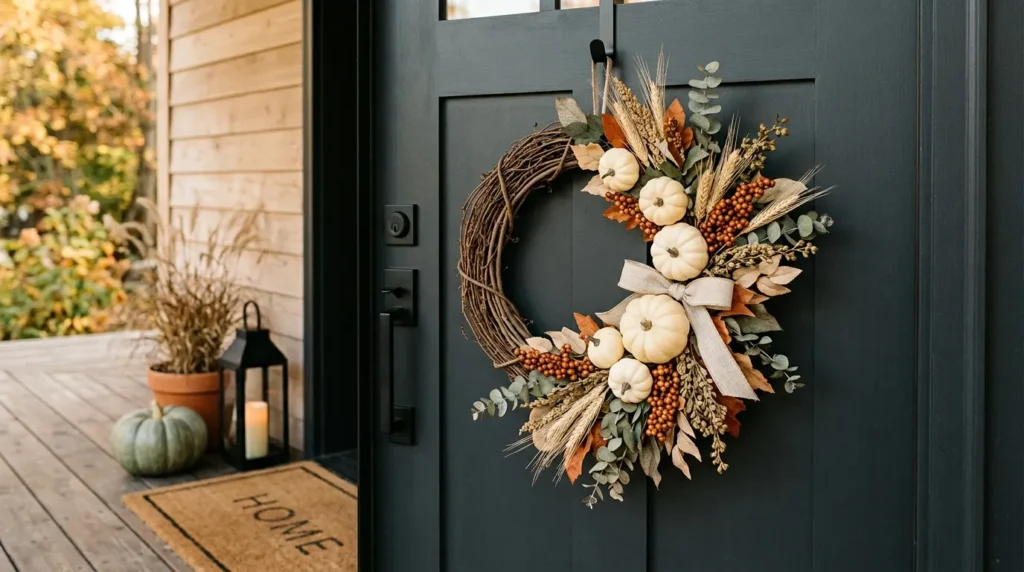
11. Asymmetrical Harvest Wreath
Quick Benefits
- Modern appearance
- Uses fewer materials
- Creates strong visual movement
- Works with contemporary homes
- Easy to personalize
Why It Works
An asymmetrical wreath can look more sophisticated because the eye naturally follows the concentrated arrangement instead of seeing a perfectly repeated circle.
Rather than covering the entire wreath, decorate roughly one-third to one-half of the base. This leaves the remaining grapevine or metal form visible and creates contrast.
This approach is particularly attractive if your home has modern architecture or a simple front door.
How To Style It
Start with a natural grapevine wreath and choose one dominant focal element, such as a cluster of cream pumpkins, dried leaves, or sunflowers.
Build outward with eucalyptus, wheat, berries, and smaller foliage.
Keep most of the decoration on one side of the wreath and gradually taper the stems toward the opposite side.
Finish with a narrow linen ribbon rather than an oversized bow.
The finished wreath should feel organic rather than perfectly engineered.
Frequently Asked Questions
What is the easiest DIY fall wreath to make?
A grapevine wreath decorated with faux leaves, mini pumpkins, and a ribbon is one of the easiest options for beginners. The grapevine base already provides texture, so you don’t need to cover the entire surface. Simply attach a small cluster of seasonal elements and secure them with floral wire or suitable craft adhesive.
What can I use to make a fall wreath?
Common materials include grapevine wreaths, wire or foam wreath forms, faux leaves, dried wheat, eucalyptus, mini pumpkins, berries, pinecones, cotton stems, sunflowers, ribbon, burlap, and dried grasses. Choose materials based on whether you want a rustic, farmhouse, colorful, or neutral finished design.
How do you make a DIY fall wreath look expensive?
Use fewer materials but choose pieces with varied textures and realistic finishes. Concentrate the decorations instead of covering every inch of the wreath, and repeat colors from your porch. A natural grapevine base, high-quality-looking foliage, a substantial ribbon, and a restrained color palette can create a more polished result.
How big should a fall wreath be for a front door?
An 18- to 24-inch wreath is a common starting range for many standard doors, but the ideal size depends on the door and the surrounding architecture. A larger entry can support a more substantial wreath, while a narrow door may look better with a smaller design that leaves plenty of visible door surface around it.
How do I attach decorations to a wreath?
Floral wire is useful for heavier materials such as pinecones, branches, and mini pumpkins because it provides a secure attachment. Lightweight faux leaves and ribbon can often be attached with craft adhesive or thin wire. Always make sure the finished wreath is secure enough to withstand normal door movement and outdoor conditions.
Can I make a fall wreath without using orange?
Absolutely. Cream, beige, sage green, brown, rust, burgundy, natural wheat, eucalyptus, and dried grasses all create beautiful autumn designs. Neutral wreaths can be particularly effective if your home already has a modern or minimalist exterior.
How can I protect a DIY wreath outdoors?
Choose outdoor-rated faux foliage and materials when possible, especially if the door is exposed to rain and strong sunlight. A covered porch can help extend the life of a wreath. During severe weather, consider bringing delicate handmade wreaths indoors until conditions improve.
Conclusion
Making your own fall wreath is a simple way to give your front door a seasonal personality without investing in an entirely new porch design. The beauty of DIY decorating is that you can adjust the colors, materials, size, and level of detail to suit your home.
If you love traditional autumn style, try orange maple leaves, sunflowers, berries, pumpkins, and warm ribbon. For a farmhouse look, grapevine, burlap, wheat, cotton stems, and rustic wood-inspired accents create plenty of texture. If your taste is more modern, a neutral pumpkin wreath or asymmetrical eucalyptus arrangement can feel seasonal while remaining refined.
You also don’t have to finish the wreath in one sitting. Start with your base and one focal element, then step back and look at it from a distance. Add smaller pieces only where the design needs more balance or texture.
Most importantly, make something that works with your front door rather than competing with it. A beautiful wreath should welcome people into your home and complement the rest of your porch.
Choose one of these DIY ideas, gather a few seasonal materials, and create a front-door arrangement that feels personal, warm, and ready for autumn.
Related Articles
- 112 Fall Front Porch Decor Ideas for a Warm Autumn Welcome
- 15 Cozy Fall Entryway Decor Ideas
- 21 Easy DIY Fall Decor Ideas for Your Home
- 17 Neutral Fall Decor Ideas for a Modern Home
- 20 Farmhouse Fall Decorating Ideas for Every Room